Radiation emergency at nuclear reactor near Pretoria

Digital Journal By Adriana Stuijt. 17 March 09 A leak of radiation gases occurred at the Pelindaba nuclear reactors near Pretoria at 10am on Monday, the SA Nuclear Energy Corporation (Necsa) said. “Abnormal levels of gamma radiation associated with xenon and krypton gases were detected.”
These high levels of radiation were detected near the building in which radioisotopes are produced for medical applications,” Necsa said, according to their statement on the South African Press Association website.They didn’t say how these xenon and krypton gases could have escaped. However they did decide to declare an on-site emergency, causing the evacuation of the entire nuclear site by staffers until the radiation levels ‘returned to normal’ readings. The residents of the city of Pretoria were not informed about the radiation leaks until this press statement was issued – after the emergency was all over.
Deep concern
This caused deep worry with Mike Kantey, national chairman for The Coalition Against Nuclear Energy in South Africa, who has expressed ‘deep concern” about Monday’s emergency. Pelindaba ‘s security measures have recently also been breached by armed attack gangs.
………………………….. No civil society for independent verification:
He added that iodine was responsible for illnesses that followed the disaster at the Chernobyl nuclear plant in the Ukraine in 1986. Kantey said it was also a matter of concern that the NNR did not have a civil society representative on its board.
“This is an occasion when we need such a person,” he said, adding that the post had been vacant since June 2008. The NNR could not be reached for comment.
Low-level waste emerges as hurdle for new nuclear reactors
The New York Times By KATHERINE LING, Greenwire
Published: March 16, 2009
While President Obama’s plan to find alternatives to storing high-level nuclear waste at Yucca Mountain, Nev., is grabbing headlines, another problem has begun threatening license applications for new reactors.
What can be done with low-level nuclear waste?
There are dwindling places to put low-level nuclear waste — contaminated resins, filters, wood, paper, plastics, pipes, structural steel and pressure vessels that can be hazardous for up to 500 years. And nuclear-power opponent groups are filing and winning legal fights to force utilities to present disposal plans for low-level waste before they can build a new reactor.
“I’m going to argue low-level waste is a bigger issue than high-level waste right now,” Edward Sproat, then-director of the Energy Department’s Office of Civilian Radioactive Waste Management, warned at a Center for Strategic and International Studies event last fall.
……………… the low-level waste problem is already affecting reactor applications.
The Southern Alliance for Clean Energy this month won a legal contention from the Atomic Safety and Licensing Board against Southern Nuclear Operating’s Vogtle reactor license application for Georgia. The same contention has already been granted in reviews of the Tennessee Valley Authority’s Bellefonte application in Alabama; Unistar’s Calvert Cliffs, Md., application; and Dominion Power’s North Anna application in Virginia.
Advocacy groups plan to similarly contest Progress Energy’s Levy County, Fla., application and have already filed against Detroit Edison’s Fermi application.
Sara Barczak, program director for the Southern Alliance, said the focus on low-level waste represents a significant shift for regulators and utilities. “I think most people, when they see ‘low level,’ they say, ‘Oh, low level of radioactivity,’ but the definition of low level is so broad,” she said.
U.S. low-level waste comes from a wide range of places, including hospitals and laboratories, but the greatest — and most toxic — volume is produced by the Energy Department and the 104 commercial nuclear reactors.
Toxic for up to 100 years, Class A waste has just three storage options — sites at Clive, Utah; Richland, Wash.; and Barnwell, S.C. Only Richland and Barnwell accept Class B waste, which is toxic for up to 300 years, and Class C, toxic up to 500 years.
But there is another complication: Barnwell closed its gates to all states but Connecticut, New Jersey and South Carolina last summer. And Richland only accepts waste from 11 states in the Northwest and Rocky Mountain compacts.
That means 36 states with reactors, hospitals and other industry with radioactive materials have no place to send much of their waste.
……………………………..”The nuclear industry has really been hiding their head in the sand about the waste for all issues,” said Michael Mariotte, executive director of the nonprofit Nuclear Information and Resource Service, which opposes nuclear power…………………….
Gore – on nuclear power
Gore on Lovelock, nuclear power and climate change sceptics
Environment Blog 17 March 09
“………………….Gore on nuclear power
I’m not a reflexive opponent of nuclear. I used to be enthusiastic about it, but I’m now sceptical about it. There’s a few reasons. Let’s assume for the moment that we will solve the problem of long-term storage of radioactive waste. Let’s assume also that we’ll figure out how to standardise their design as [each plant] is currently unique and that enhances the risk of operator accidents. Let’s assume we can solve the terrorism threat to nuclear reactors. That still leaves a couple of very difficult problems.
First and foremost, economics. The nuclear industry cannot give any reliable cost estimate for how much it will take to build a nuclear plant. When a utility is confronted with the absence of any advances for how much the construction cost is going to be, then that’s a problem.
…………………………….. If you’re looking at the trends towards more conservation and the rapid introduction of renewables, it’s hard for you to project what your demand is going to be with as much precision as when the world was more predictable. As a result, you are less inclined to take all of your money and place one big bet on something that matures 12-15 years from now at an uncertain cost. That what’s called a “lumpy investment” and they want smaller increments that give them smaller flexibility. In the US, there hasn’t been a new order for a new reactor in 36 years…………………………………
For the eight years that I spent in the White House every nuclear weapons proliferation problem we dealt with was connected to a reactor programme. People have said for years that there are now completely different [nuclear] technologies. OK, but if you have a team of scientists that can build a reactor, and you’re a dictator, you can make them work at night to build a nuclear weapon. That’s what’s happened in North Korea and Iran. And in Libya before they gave it up. So the idea of, say, Chad, Burma, and Sudan having lots of nuclear reactors is insane and it’s not going to happen…………………………”
http://www.guardian.co.uk/environment/blog/2009/mar/16/climate-change-al-gore
nuclear-free energy solutions
Greenpeace executive eyes nuclear-free energy solutions
The Kingston Whig Standard JENNIFER PRITCHETT 17 March 09
Ontario’s plan to spend billions in taxpayer dollars on nuclear power is standing in the way of the province realizing its goal of becoming a true leader in green energy, says the executive director of Greenpeace.
“You can’t say you’re going to be a green leader and be committed to 50% nuclear power,” Bruce Cox said. “It’s Orwellian.”
Cox, who’ll be speaking in Kingston tonight, argued for nuclear-free solutions to climate change.
He said nuclear power is “dirty, dangerous, expensive and unnecessary.” …………….. Greenpeace is urging the Ontario government to phase out its Pickering B reactors when they reach the end of their natural life and then abandon plans to install new ones.
Instead of nuclear power, the organization is urging the government to invest in conservation, efficiency and cogeneration — methods to recapture by-products such as steam to use as heat — as well as renewable forms of energy such as wind, solar and biomass.
……………….. Cox also warned people about what he terms as “constant ongoing low-level radiation leaks coming out of the generation process.
“We’ve had two this year dumping into the Ottawa River,” he said. “This is not unusual. It’s ongoing … then after 20-25 years of generation, we’re left with literally tons of radioactive, poisonous waste that takes generations to get rid of. So it’s not green.”
He also challenges the position that nuclear power is affordable.
“Actually, it’s not affordable,” he said. “There’s never been a reactor built on time or on budget. The average cost overrun of a reactor in Ontario is four or five times the original estimate. ”
Finally, Cox disagrees with claims that nuclear power is reliable.
“[Reactors] run at about 62% of their life expectancy,” he maintained. “When a nuclear generator goes down, the province suffers.”
Ontario company’s green ads promote nuclear power in Alberta
Environmental groups think ‘that it’s extremely misleading’
CBC News.ca March 16, 2009
Ontario-based Bruce Power has erected billboards in four Alberta communities positioning itself as a provider of green energy, as it prepares to launch its latest proposal for a nuclear power plant in the northern part of Alberta.
“Exploring opportunities for growth in Alberta,” the billboards read. “Next generation nuclear. Hydrogen. Wind. Solar.”
The billboards are up in Edmonton, Calgary and Grande Prairie, and one will soon be in Peace River, the closest town to the proposed location.
……………………. Environmental groups believe the company is adding more favourable energy sources like solar, wind and hydrogen to make the nuclear proposal more accceptable.
“We think that it’s extremely misleading,” said Brenda Brochu, president of the Peace River Environmental Society. “They’re trying to portray themselves as green when, in fact, they really aren’t and we’ll be stuck with radioactive waste for hundreds of thousands of years.”
http://www.cbc.ca/canada/edmonton/story/2009/03/16/edm-bruce-power-billobards.html
French state faces quandary with Areva
 International Herald Tribune
By Marie Maitre Reuters
March 16, 2009
The French state faces a multibillion euro funding shortfall at the nuclear power company, Areva, and needs to take bold steps to keep it at the forefront of a global revival in nuclear power.
The government could raise hundreds of millions of euros by selling Areva’s financial investments or bringing in new investors, people with direct knowledge of the matter say.
But analysts said that such moves would not suffice to finance Areva’s medium-term ambitions.
………………… Areva needs €2.7 billion for capital expenditure in 2009 and another €7 billion for investments between 2010-2012. The money is for modernizing or building new production facilities, financing research and development for new nuclear reactors, and expanding its mining activities.
Areva also needs cash to finance the process of licensing its new-generation nuclear reactors in countries like Britain and the United States. Areva also needs at least €2 billion to buy back Siemens’s 34 percent stake in a reactor joint venture, under a previous agreement.
………………. observers said it might be a tough act to balance, adding that it was impossible to know whether the government would, in the end, opt for bold measures or the bare minimum……………….
http://www.iht.com/articles/2009/03/16/business/deal.php
Green lobby and nuclear groups clash over role of renewable energy
Guardian.co.uk by Terry Macalister 16 March 2009
Greenpeace dismisses EDF for protecting its ‘vested nuclear interests’ by undermining the future of renewable fuels
EDF and E.ON have warned the government they may be forced to drop plans to build a new generation of nuclear power plants unless the government scales back its targets for wind power.
The demands – contained in submissions to the government’s renewable energy consultation – reinforces the worries of wind developers that the two sectors cannot thrive simultaneously.
…………………….. “We’ve always said that nuclear power will undermine renewable energy and will damage the UK’s efforts to tackle climate change – now EDF agrees,” said Nathan Argent, head of Greenpeace’s energy solutions unit.
“The National Grid shows that there is capacity to take well over 30% percent of our electricity from renewables. EDF are trying to block efforts to deliver on the most important technology to the UK to tackle climate change and keeps the light on in order to protect their own vested nuclear interests.”
Friends of the Earth agreed. “The UK is the windiest country in Europe with the best wave and tidal resources,” said Andy Atkins, the group’s executive director. “We should be maximising renewables and harnessing as much of that clean, safe energy as we possibly can – not propping up the French nuclear industry.
“Nuclear power is no green alternative – it leaves a legacy of deadly radioactive waste that remains dangerous for tens of thousands of years. And nuclear power plants simply cannot be built in time to deliver the cuts in carbon dioxide emissions that science says are needed.”
http://www.guardian.co.uk/business/2009/mar/16/nuclear-power-renewables-edf
New Generation of Nuclear Power Stations ‘risk Terrorist Anarchy’
New Generation of Nuclear Power Stations ‘risk Terrorist Anarchy’
Buzzle.com 17 March 09 The new generation of atomic power stations planned for Britain, China and other parts of the world risks proliferation that could lead to ‘nuclear anarchy’, says a public policy report
The new generation of atomic power stations planned for Britain, China and many other parts of the world risks proliferation that could lead to “nuclear anarchy”, a security expert warned in a report published today.
Governments and multilateral organizations must come up with a strategy to deal the impact of the new nuclear age, which will produce enough plutonium to make 1m nuclear weapons by 2075, argues Frank Barnaby from the Oxford Research Group thinktank in a paper for the Institute for Public Policy Research (IPPR).
“We are at a crossroads. Unless governments work together to safeguard nuclear energy supplies, the rise in unsecured nuclear technology will put us all in danger. Without this, we are hurtling towards a state of nuclear anarchy where terrorists or rogue states have the ways and means of making nuclear weapons or ‘dirty bombs’, the consequences of which are unimaginable,” says Barnaby.
Any country choosing to operate new-generation nuclear reactors in future would have relatively easy access to plutonium, which is used to make the most efficient atomic weapons, along with the nuclear physicists and engineers to design them. These countries would be latent nuclear-weapon powers “and it is to be expected that some will take the political decision to become actual nuclear weapons powers,” argues Barnaby in his paper submitted to the IPPR’s independent Commission on National Security chaired by former Nato boss, Lord George Robertson.
The issue of nuclear proliferation security has been largely ignored until today as the nuclear power debate has concentrated on the economics, social issues and how to deal with radioactive waste.
…………………… Companies such as E.ON of Germany who want to build new nuclear plants in Britain declined to comment on the issue.
|
|
Nonproliferation panel urges U.S. to adopt no first use of nuke arms
Nonproliferation panel urges U.S. to adopt no first use of nuke arms
(Source: iStockAnalyst )
Sunday, March 15, 2009
TOKYO, Mar. 15, 2009 (Kyodo News International) — A panel promoting nuclear disarmament and nonproliferation will urge the United States to take a leadership role in nuclear disarmament by developing a nuclear policy of ”no first use,” according to a draft of policy recommendations made available on Sunday.
The International Commission on Nuclear Non-Proliferation and Disarmament will also urge the United States to ratify the Comprehensive Nuclear Test Ban Treaty and restore the U.S.-Russia strategic nuclear arms control process as part of its five-point proposals, according to the draft.
The commission seeks to achieve total abolition of nuclear weapons in three stages, with the five-point recommendations for Washington serving as its initial step, said Nobuyasu Abe, former U.N. undersecretary general for disarmament affairs, who is a member of the panel’s advisory board.
The commission, a joint initiative established by the Australian and Japanese governments, will complete the report by the end of this year as the panel seeks to promote nuclear disarmament ahead of the Nuclear Non-Proliferation Treaty Review Conference in spring 2010.
U.S. President Barack Obama has set a world without nuclear weapons as one of his policy goals.
No first use is a pledge not to use nuclear arms by a nuclear power unless the country or its allies are first attacked by an enemy with a nuclear weapon.
…………………… Australian Prime Minister Kevin Rudd and then Japanese Prime Minister Yasuo Fukuda agreed to establish the commission in July last year, and its members have met last October and February this year since its launch.
http://www.istockanalyst.com/article/viewiStockNews/articleid/311847
Anti-science legislators leading Utah down a rabbit hole – Salt Lake Tribune
Anti-science legislators leading Utah down a rabbit hole
Sixty years after the first nuclear power plant began operation, scientific controversies about safety are at best still unresolved. Nuclear power proponents choose to ignore genuine handicaps for more nuclear power: the public-health consequence of ongoing release of radioactivity from all phases of the nuclear fuel cycle, huge water requirements, the potential for accidents and their liabilities, the unsolvable problem with waste storage, skyrocketing cost estimates of construction, maintenance and eventual dismantling of the plants………
………………. We have been led into the abyss of a dark economic future by breathtaking greed and conflicts of interest in the financial world and our own ignorance. Consider that lesson unlearned. We have elected to Utah’s Capitol Hill a quorum of science antagonists who are eager to lead us into an ecological abyss, exploiting our ignorance and wearing their own lack of scientific background and conflicts of interest as badges of honor…………………..
Anti-science legislators leading Utah down a rabbit hole – Salt Lake Tribune
Is nuclear finally off the table?
Is nuclear finally off the table? Mother Nature Network Mar 12 2009
It’s not looking good for the nuclear industry. Last month, the $50 billion earmark for nuclear energy was removed from Obama’s stimulus bill. And today Yucca Mountain, the problematic nuclear waste containment facility that was supposed to finally legitimate the viability of nuclear energy, just had its plug pulled by Steven Chu, head of the D.O.E.Chu tried to assure jittery senators in the Senate Budget Committee that “Nuclear is going to be part of our energy future,” but many were skeptical. A quiet and growing consensus seems to be emerging among energy experts, cleantech investors and the general public that nuclear just does not seem to add up.When asked about the future of nuclear energy this week at the ECO:nomics summit, Matt C. Rogers stated that nuclear was taken off the table because it didn’t meet the key criterion of the stimulus bill — to get projects underway and create jobs in the next 18 months. That doesn’t mean there won’t be appropriations for nuclear in the upcoming energy bill, but the focus will likely be on creating “next-gen” nuclear which by some estimates is at least 10 years away from deployment.Why the slowdown? I wish I could say it is because nuclear’s many disconcerting ramifications (both political and environmental) have suddenly become clear. But in reality, the real reason is financial………………………..we only have a very small window to solve global warming. Why would we invest our precious time and money on ANY technology (especially one that has so many unsolved problems) knowing that it relies upon a finite resource — coal, gas, oil, uranium — when you could invest in a technology that makes use of fee, infinite and safe resources — solar, wind, geothermal.
Is nuclear finally off the table? | MNN – Mother Nature Network
Alaska Natives protest uranium exploration on Iditarod Trail
Alaska Natives protest uranium exploration on Iditarod Trail Atlantic Free Press by Brenda Norrell Saturday, 14 March 2009 A Coalition of Alaskan Indigenous Peoples, Alaskan citizens, students and community organizations are demonstrating support for students protesting Uranium activity in the traditional cultural use areas near the Arctic Inupiat community of Elim. Alaskans from various organizations and communities gathered at the ceremonial start of the Iditarod on March 7th, downtown Anchorage, to demonstrate support for the students and community of Elim. Students in Elim will be protesting uranium as dog mushers race through the Elim checkpoint 123 miles from Nome.
Funny Murray, an Inupiaq Para-professional in Elim, says that the students are leading the effort to raise awareness on the uranium’s destructive impacts to the environment, ecosystem and people. “The Elim Students Against Uranium (ESAU) researched how uranium development can cause damage to the health of the environment, plants, animals and people. They (ESAU) are speaking up for environmental justice here in Elim, the Bering Sea and the Arctic.”
Carl Wassilie, a Yup’ik biologist for Alaska’s Big Village Network, says that any industrial activity like uranium exploration can have profound impacts on the Earth’s ecosystem, especially for people who continue to hunt and gather from the land and the water. One of the by-products of pulling uranium out of the Earth is radon gas, which can travel thousands of miles with a slight breeze and ‘falls out’ on the surface of the Earth into water systems, plants and animals. “Basically, people, birds, fish, caribou, moose and all animals living hundreds of miles away can get chronic and long-term exposure to radioactive fall-out that cause an array of health problems and cancer; especially vulnerable are elders, pregnant women and young children.”
Alaska Natives protest uranium exploration on Iditarod Trail
Don’t reclassify nuclear power as ‘renewable’
Don’t reclassify nuclear power as ‘renewable’ Arizona Daily Star Tucson, Arizona 03.14.2009
An effort in the Legislature that would redefine “renewable energy” to include nuclear power could do irreparable harm to the state’s budding clean-energy industries and deserves to be thrown onto the trash heap of non-recyclable ideas.House Bill 2623, sponsored by Lucy Mason, R-Prescott, has several problems. First, it would include nuclear and hydroelectric power (dams) in the definition of “renewable energy,” which is generally considered power derived from natural sources — such as the sun, wind, biomass, tides and geothermal heat……………………………….Now that the bill is on hold, we hope this is the last we hear of this misguided effort to label nuclear power as a renewable energy source…………………………….No other state defines nuclear power as a renewable energy source. Similar efforts to do so in South Carolina and Utah have failed. The reasons should be patently obvious.……………………….. its environmental impact and hazardous-waste output make it much less ecologically friendly than solar or wind power.
‘Madame Non’ in battle to keep the nuclear hot seat
‘Madame Non’ in battle to keep the nuclear hot seat FT.com UK By Peggy HollingerPublished: March 13 2009 02:00 “……………….The French government is nearing a decision on the future of Areva, its state-owned nuclear champion, and with it the fate of one of France’s most internationally recognised business figures.In recent weeks criticism has intensified over the chief executive of Areva, Ms Lauvergeon’s management of the group, which she has led since 1999. It has been fuelled by a series of mishaps that could jeopardise France’s proud boast to be the world’s leading player in the nuclear renaissance.
First there was the sudden decision in January by German partner Siemens to withdraw from a long-standing reactor venture, to set up a rival alliance with Russia’s Rosatom.
Then there was the revelation of a staggering €1.7bn ($2.2bn) loss on Areva’s first new generation EPR reactor in Finland, raising questions over the costs of the technology that will spearhead France’s nuclear ambitions…………………………..The setbacks come as the government reflects on how best to guarantee Areva’s future as a nuclear champion, while her relationship with Mr Sarkozy is strained.
FT.com / UK – ‘Madame Non’ in battle to keep the nuclear hot seat
TAKE-A-LOOK-France’s nuclear industry seeks global role
TAKE-A-LOOK-France’s nuclear industry seeks global role REUTERS Mar 13, 2009
 The French nuclear industry aims to turn its decades-long experience in
building and running nuclear power stations into an export engine and the
country's companies are busy scoring contracts around the world as diminishing
reserves of oil and gas facilitate a rise in atomic energy.
But waste and security issues keep nuclear energy a hot political potato and not just another economic option for a country's energy needs.Reuters reporters cover the industry closely and detail its plans and challenges in a series of articles involving EDF (EDF.PA), GDF Suez (GSZ.PA), Areva (CEPFi.PA) and Alstom (ALSO.PA), among others.- (detailed list of articles follows)
TAKE-A-LOOK-France’s nuclear industry seeks global role | Markets | Reuters
1 This Month
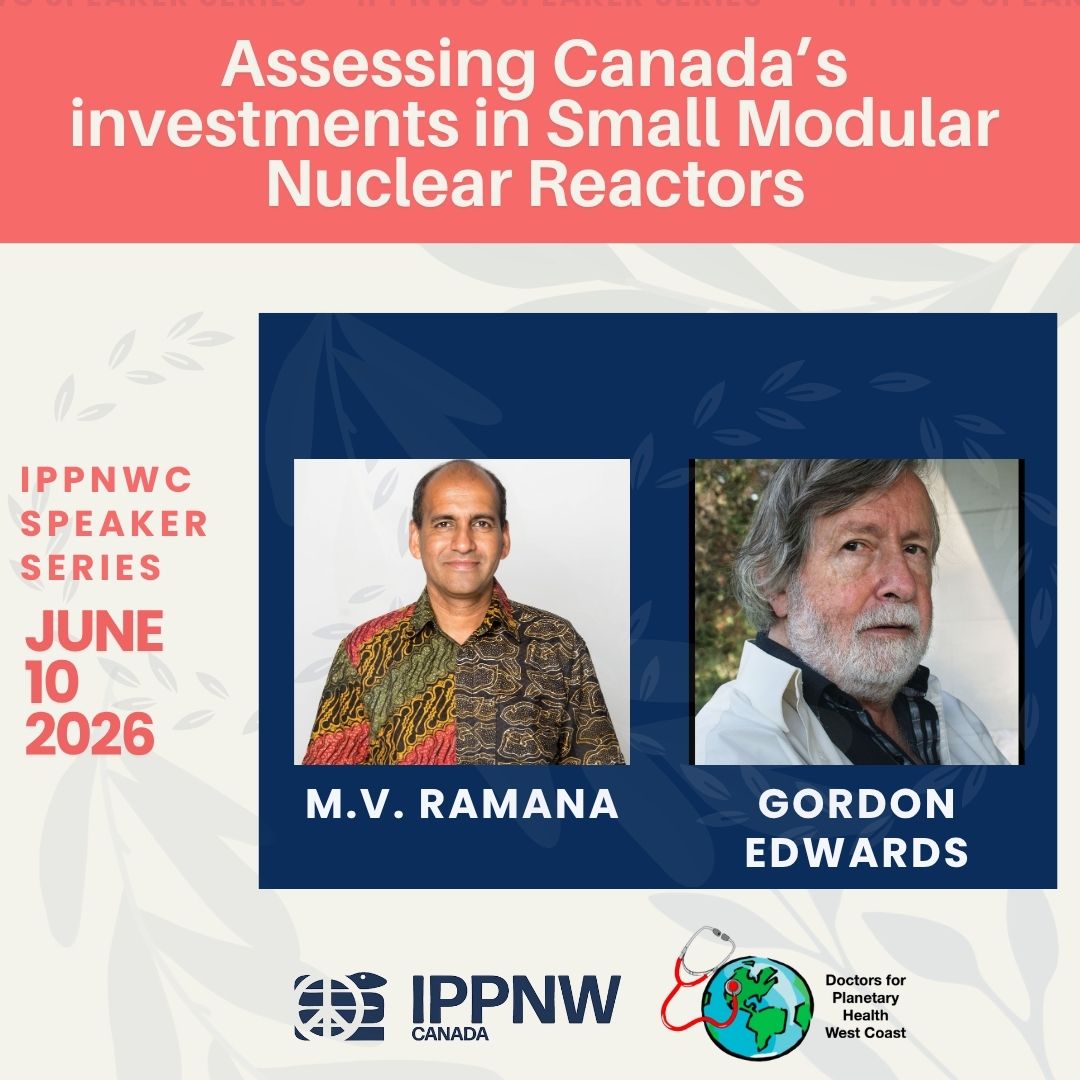
10 June – Assessing Canada’s Investments in Small Modular Nuclear Reactors – https://zoom.us/meeting/register/IiqHA5feRhaEBycOLNTJlA#/registration


Cuba Is Not a Failed State – It Is a Besieged State
PETITION: “Global Appeal to Endorse Palestinian Right of Return of Refugees”
To see nuclear-related stories in greater depth and intensity – go to https://nuclearinformation.wordpress.com
-
Archives
- June 2026 (89)
- May 2026 (306)
- April 2026 (356)
- March 2026 (251)
- February 2026 (268)
- January 2026 (308)
- December 2025 (358)
- November 2025 (359)
- October 2025 (376)
- September 2025 (257)
- August 2025 (319)
- July 2025 (230)
-
Categories
- 1
- 1 NUCLEAR ISSUES
- business and costs
- climate change
- culture and arts
- ENERGY
- environment
- health
- history
- indigenous issues
- Legal
- marketing of nuclear
- media
- opposition to nuclear
- PERSONAL STORIES
- politics
- politics international
- Religion and ethics
- safety
- secrets,lies and civil liberties
- spinbuster
- technology
- Uranium
- wastes
- weapons and war
- Women
- 2 WORLD
- ACTION
- AFRICA
- Atrocities
- AUSTRALIA
- Christina's notes
- Christina's themes
- culture and arts
- Events
- Fuk 2022
- Fuk 2023
- Fukushima 2017
- Fukushima 2018
- fukushima 2019
- Fukushima 2020
- Fukushima 2021
- general
- global warming
- Humour (God we need it)
- Nuclear
- RARE EARTHS
- Reference
- resources – print
- Resources -audiovicual
- Weekly Newsletter
- World
- World Nuclear
- YouTube
-
RSS
Entries RSS
Comments RSS
 nuclear-news