France 24 | Sarkozy backs Areva’s uranium deal in Niger | France 24
Sarkozy backs Areva’s uranium deal in Niger
FRANCE 24.com 27 March 2009
Sarkozy is expected to back a controversial deal signed in January between French nuclear giant Areva and Niger’s government that would lead to the exploitation of the Imouraren mining site in northern Niger, the world’s second biggest uranium deposit……………………………
France takes great pride in a civilian nuclear program that it says is the key to its energy independency. But the reality is more complex, says Yves Marignac, director of the World Information Forum on Energy.
“One hundred percent of uranium in France comes from abroad,” he says. “A large part comes from Niger. With this contract, its share could increase.” The visit comes a day after Areva chief executive Anne Lauvergeon signed an agreement for mining research and exploration with the Congolese government, on the sidelines of Sarkozy’s visit to the Democratic Republic of Congo.
Niger has one big asset compared with rival uranium exporters Australia and Canada, Martignac adds. “It is the only country that has a uranium contract that doesn’t prevent France from using the ore for something else than a civilian nuclear program.”…………………………….
But the deal has come under scrutiny in France. Environmentalists have warned Areva against the temptation to enforce poor safety and environmental standards in the mostly desert region.
There are also mounting allegations that the Niger government expelled nomadic Tuareg tribes to make way for the French operation. Tuareg rebels have threatened to attack the uranium mine and transport as they did once in 2007.
It is a tense situation that contributes to blurring the line between trade relations and neo-colonialism.
“A vice-director of Areva has been quoted saying that the nuclear company has urged the French government to help Niger’s government stamp out the rebellion,” Martignac says.
France 24 | Sarkozy backs Areva’s uranium deal in Niger | France 24
Strong local opposition to storage site in eastern France
Strong local opposition to storage site in eastern France*
Reuters, Thursday March 26 2009
Areva says hopes to find site in exchange for jobsBy Muriel Boselli and Marie MaitrePARIS, March 26 (Reuters) – Public opposition to storage sites for highly radioactive waste could derail France’s prized nuclear energy programme, the scientific adviser at French nuclear energy group Areva told Reuters on Thursday.France, where 58 nuclear reactors produce 80 percent of the country’s electricity, has not found permanent underground storage with the capacity to bury nuclear energy waste it has generated in the past three decades and the waste it will produce in future.
The highly radioactive waste generated so far is currently stored in above ground facilities at Areva’s nuclear fuel reprocessing plant in La Hague on the northwestern coast of Normandy.
Under French law, Areva will have to bury the waste in a permanent repository by 2025.
French nuclear authorities are considering permanently storing the waste, 500 metres below ground, near Bure in eastern France ……….
……………. But the project is being fiercely resisted by the Bure population, which is calling for a moratorium and a national public debate on radioactive waste management in France………..
……. “A general opposition (to underground storage) in France would eventually kill the nuclear (industry),” Bertrand Barre told Reuters in an interview at Areva’s headquarters.
Renewable Energy Could Solve Economic, Environmental and Social Problems:
Scientific American By Douglas Fischer 26 March 09 ASPEN – Shifting the United States to clean-burning renewable fuels has the potential to cut through a thicket of thorny social ills and solve long-standing problems across the entire spectrum of American life, from manufacturing to national security to clean water, the country’s top environmental cop said on Wednesday.
U.S. Environmental Protection Agency Administrator Lisa Jackson spoke before 150 scientists, lawyers, industry executives, activists and others gathered at this alpine town for a three-day conference on the country’s energy future.
She said weaning the country from fossil fuels remains a top priority of the Obama administration because it offers such a broad suite of solutions across all aspects of American life: rewarding innovation, discouraging pollution, investing in jobs and encouraging energy independence………………………………
“It’s extraordinary to be at a time where one answer answers so many extraordinary big issues,” she said.
“If you think climate protection endangers economic growth, wait ’till you see what climate change does.”
Renewable Energy Could Solve Economic, Environmental and Social Problems: Scientific American
Milk teeth and radiation | Out of the mouths of babes
Out of the mouths of babes
Mar 26th 2009 ST LOUIS The Economist What thousands of milk teeth reveal about radiationTHEY were locked away in an old ammunition bunker near St Louis, in dozens of cardboard boxes. Each was in its own manilla envelope, with an index card identifying the donor. These 85,000 baby teeth were collected in the late 1950s and early 1960s from children in the St Louis area to study the effects of radioactive fallout in the environment.The fallout came from hundreds of above-ground nuclear tests in America and other parts of the world. The radioactive isotope Strontium-90, one of the by-products of the bombs, spread into the atmosphere, fell onto the land, was ingested by dairy cows and passed into the milk supply. Strontium-90, like calcium, was concentrated in children’s teeth in detectable amounts…………..……….The undisputed link between the tests and a radioactive element in baby teeth provided much of the impetus for the 1963 Test Ban Treaty, which outlawed above-ground nuclear weapons-testing. The rediscovery of the 85,000 samples, about a quarter of the total collected, has spurred a new effort to study the link between early childhood exposure and health problems in later life.
There is already some evidence that 1950s children in St Louis grew into adults with a higher-than-average rate of cancer. Now researchers at the Radiation and Public Health Project, based in Brooklyn, are attempting to find more than 6,000 of the teeth donors to track their health problems or, in some cases, their premature deaths.
Milk teeth and radiation | Out of the mouths of babes | The Economist
Fallout of Serbia Bombing ‘Continues to Kill’
Fallout of Serbia Bombing ‘Continues to Kill’by Vesna Peric ZimonjicGlobal Research, March 27, 2009
Ten years after the NATO bombing of Serbia, concern is rising over a rise in the number of reported cases of cancer.
Some 15 tons of ammunition fortified with depleted uranium was dropped by way of more than 50,000 bombs and missiles in the 11 weeks of bombing of Serbia in 1999. The targets of the North Atlantic Treaty Organization (NATO) bombing were 116 locations, mostly in southern part of Serbia and the Kosovo region.
Depleted uranium (DU) is placed at the tip of bombs for piercing the armor of tanks and heavy military vehicles. Although weakened in the production process, the uranium remains highly toxic…………………………..
Nebojsa Srbljak, a physician from the Kosovan town Mitrovica, which still has a large Serb population, has spoken of a tenfold rise in leukemia cases. “Leukemia among children in Kosovo was at the rate of one per thousand before 1999,” he told media representatives. “Since 1999, it rose to 1 percent.”
Dr. Srbljak who is cooperating with an oncology clinic in the Kosovan capital Pristina, said that Albanian doctors too had told him there was “a significant rise” in the number of cancer patients since 1999. In the whole of Kosovo the cancer rate before 1999 was 10 among 300,000 people, and “today it stands at 20 among 60,000,” he said.
“It’s one tumor each day we’re discovering now,” radiologist Vlastimir Cvetkovic told IPS. “Prior to 1999 it was one in three months. And this is not just due to better diagnostics, as our working conditions were and remain modest. Besides, it’s now younger and younger people, and children we’re having as patients.”
An alarming rise in cancer cases has been recorded also in neighboring Bosnia-Herzegovina, where DU was used by NATO against Bosnian Serb forces earlier in 1995. According to official figures, more than 300 people from the Sarajevo neighborhoods Hadzici and Han Pijesak in eastern Bosnia died of cancer from 1996 until 2000. Hadzici was inhabited and held by Bosnian Serbs during the war. It later came under the jurisdiction of the central Muslim-Croat government in Sarajevo.
Political Habitat: The lie of Three Mile Island
Political Habitat: The lie of Three Mile Island Thirty years after its near-calamity, the American nuclear industry is still paying for its inability to tell the truth on its worst day. By Peter Dykstra Mar 25 2009 “…………………..
Today, the industry is ready for its comeback: Gone are the days of too-cheap-to-meter propaganda. (My favorite is a 1966 short film by Northeast Utilities: The Atom and Eve shows an alluring dancer, pirouetting around household appliances and fondling a refrigerator — all brought to you by clean, safe nuclear energy.) In its place is a global warming-based sales pitch: Carbon-free nukes, now providing about 20 percent of the nation’s electric supply, could replace a big chunk of the 50 percent provided by coal, and several utilities have plants on the drawing board.All that remains to be conquered are the environmental risks throughout every stage of the nuclear fuel cycle: Uranium mining is inalterably destructive; its legacy was reported in a remarkable series in the Los Angeles Times two years ago; and the end of the cycle — dealing with nuclear waste — is barely closer to resolution than it was 30 years ago. Then there’s winning the faith of Wall Street — and the public. That’s all that’s left to do after the lie of TMI.
Political Habitat: The lie of Three Mile Island | MNN – Mother Nature Network
Los Alamos’ security flaws exposed
Los Alamos’ security flaws exposedAn Energy Department investigation into a plutonium mix-up reveals deficiencies that the New Mexico nuclear weapons lab must address, an official says. Los Angeles Times By Ralph VartabedianMarch 26, 2009An Energy Department investigation has alleviated fears that a significant amount of plutonium was missing from a national laboratory, but it has also heightened concerns about flaws in the system for controlling the U.S. stockpile of weapons materials…………………………………..The inventory miscalculation follows more than a decade of security problems at the bomb design center, including several incidents of lost classified information contained on computers, electronic drives and paper.
Nuclear power in the Peace Countryjust doesn’t make sense
Nuclear power in the Peace Country just doesn’t make sense
Grande Prairie Herald Tribune 27 March 09 You know it baffles me that the idea of creating a nuclear power plant would even be entertained knowing what we know.We don’t know what to do with used tires, but we’re willing to take on the responsibility of nuclear waste. That doesn’t make sense.Nuclear waste not only poisons the earth, but actually alters life on a genetic level with a toxic poisoning that literally keeps killing generation after generation.Haven’t we already learned that the ‘out of sight, out of mind’ attitude doesn’t work now that we’re living in an era where we are taught to recycle, reuse and reduce?
Is the initial investment of funds or the enticement of jobs really worth a facility that creates waste that remains toxic for centuries?
We must learn to live with wind power
We must learn to live with wind power
The zealous backing given to wind farms this week by Ed Miliband, the Climate Change Secretary, and the Royal Society for the Protection of Birds, has stirred up the usual protests about the beautiful British landscape being papered over with metallic monstrosities. But arguing against wind energy is, well, a waste of energy. Denouncing wind turbines in favour of another technology, such as nuclear, tidal and wave, solar or even “cleaner” coal is missing the point. The argument is over.
………………………….There are two standard objections to wind turbines. The first is that wind farms generate negligible amounts of electricity, and cost more carbon to produce than they save. This is a myth: the typical 3MW turbine powers 1,700 homes annually and “pays back” the energy – and saves the carbon emissions – expended to manufacture, transport, install and commission it in a mere six months.
The next objection is aesthetic: we don’t want turbines in our back yards, or in the picturesque areas we like to visit…………………………The future is not a vast forest of wind turbines obliterating every prized view,………………………..In fact, wind turbines can add sparkle to lacklustre locations.
Late support for UN indigenous charter | The Australian
Late support for UN indigenous charter THE AUSTRALIAN Patricia Karvelas, Political correspondent | March 27, 2009
THE Rudd Government will deliver a statement of support next week for the UN’s charter on indigenous rights, its second major symbolic act after the historic apology to the Stolen Generations.
While the Howard government refused to vote for the declaration at the UN, Labor will honour its election pledge to support the charter in front of hundreds of Aboriginal people in parliament next Friday……………………..
The Government will follow the lead of 20 other countries in voting for the declaration, but provided explanatory statements about elements it believed went too far.
Australian of the Year Mick Dodson, who has been urging the Government to support the declaration, has been concerned the Government’s support would offer “too many riders or qualifications or explanatory statements”. He said yesterday he could not comment until he had seen the Government’s statement.
Mr Dodson has said the federal intervention into remote communities in the Northern Territory breaches many of the declaration’s 46 articles.
The statement of support for the charter comes as Australia seeks a non-permanent seat on the UN Security Council.
We saved the ozone layer; now it’s time to save the climate
We saved the ozone layer; now it’s time to save the climate Brisbane Times Ben Cubby March 26, 2009 ” …………………………
With Earth Hour being held tomorrow night, the story of the ozone layer is a reminder that when the world decides to act, it can solve problems that seem too big and bizarre to get to grips with, and solve them quickly.
Earth Hour is a brave initiative, because it brings the conflict between materialism and sustainability into people’s homes, where we are used to doing what we like and not feeling guilty about it. Our energy-hungry fridges and TVs are literally part of the furniture, and it is uncomfortable to think that they are also part of the problem.
Earth Hour risks turning people off along with their lights, especially when the act of flicking a switch is so trivial and the problems are so decidedly not.
But it is a problem that we might as well start to face at 8.30pm tomorrow, because it is only going to get harder the longer we wait.
The message from two scientific conferences this month is clear. They brought together state-of-the-art global climate change research to confirm: the world is heating up faster than we can handle; humans are making it happen; we have the tools to stop it happening, but not yet the political will………………………No one claims Earth Hour will solve climate change, but it is a key part of the public conversation…………………………It is important because, sooner or later, politicians tend to do what citizens tell them to, and Earth Hour’s rapid spread is unlikely to be ignored when leaders meet in December to nut out a global deal to cut emissions.
Uranium: Wealth or Woe?
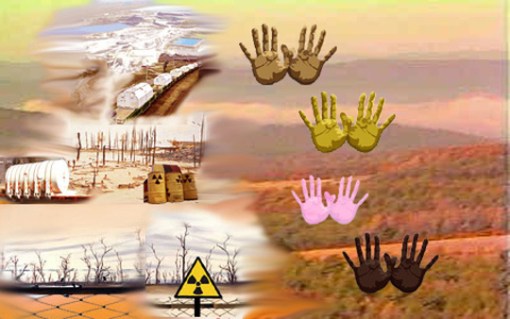
Uranium: Wealth or Woe World Sihk News Gunter Wippel and Norbert Suchanek 26 March 09 Whilst tragic results of the atomic bombs dropped on Hiroshima and Nagasaki are well documented, the environmental and health problems that are a consequence of uranium exploration are less well known by the general global public.
During the development of the atomic bomb, thousands of mines were built in the Southwest of the United States and Northern Canada. The radioactive waste, known as tailings, that builds up in huge piles of rocks and slush outside the mines continues to threaten the wellbeing of local populations and contaminates the environment.
The sad truth is that Governments are fully aware of the dangers but still refuse to implement adequate protection measures.
Uranium is not only radioactive but chemically toxic too. 80% of the radioactivity of the original uranium ore is left behind in highly acidic ‘tailings’. It remains radioactive for hundreds-of-thousands of years and should be kept safely isolated from the environment.
Uranium can cause a wide variety of health problems. Miners and local communities drink contaminated water, eat contaminated food and breathe in radon gas and dust from the tailings. In addition to this, the extraction and processing of uranium ore uses huge amounts of highly sought-after water that cannot be recycled.
It has been argued by mining companies that uranium extraction brings jobs to local populations, thus creating better living conditions, and for a few this was true. However the companies also quietly ignore the health and environmental effects of the process. ……………….After 30 years living alongside uranium mines, the Tuareg of Niger refer to uranium as a ‘curse’ rather than a blessing. They say the North of Niger “suffer[s] from its wealth’, rather than reap supposed rich rewards. ………………………t appears that financial institutions within the country, such as the Bank of Namibia, have found the potential income that mining may bring too attractive to reject. This is despite studies in other African countries that demonstrates only a small percentage of the worth of the resources extracted actually stay in the country.
NRC racing to answer questions on depleted uranium
NRC racing to answer questions on depleted uranium chron.com By BROCK VERGAKIS Associated Press Writer © 2009 The Associated PressMarch 25, 2009,
SALT LAKE CITY — The Nuclear Regulatory Commission is rushing to meet an April 2 deadline to turn over stacks of internal documents that could shed light on why it recently decided to classify large quantities of depleted uranium as the least hazardous type of low-level radioactive waste.
The NRC’s decision, which still must undergo a rule-making process that could take up to two years, would open the door for federal facilities and companies around the country to dispose of more than 1 million tons of depleted uranium in Utah and Texas.
Democratic Reps. Jim Matheson of Utah and Edward Markey of Massachusetts, who is chairman of the subcommittee that oversees the NRC, have demanded the documents because they believe the agency’s March 18 decision disregards the risk depleted uranium poses to public health and safety.
They called the NRC’s decision an “arbitrary and capricious mischaracterization” of the waste…………………………………..
Depleted uranium is unique in that unlike other waste, it becomes more radioactive over time, leading to criticism from environmental groups that the NRC is downplaying the long-term risks of radiological exposure.
“It’s kind of like saying someone isn’t a drunk driver because he passed a breathalyzer test before he started drinking,” said Christopher Thomas, public policy director for the nuclear waste watchdog group Healthy Environment Alliance of Utah………………………………
Matheson and Markey’s letter questioned how the NRC could make the ruling when in the 1980s it was considering higher classification.
“The depleted uranium waste stream which will flow from commercial uranium enrichment facilities is expected to be … ten times greater than what the commission believed was safe,” the letter says.
NRC racing to answer questions on depleted uranium | AP Texas News | Chron.com – Houston Chronicle
Opposition to nuclear is getting stronger
Opposition to nuclear is getting stronger The Nipawn Journal By Steve Lawrence 25 March 09 Prince Albert – “………………..people should be alert to nuclear risks. If citizens are willing to make an informed decision to take nuclear risks anyway, then that is democracy. Based on actual bids last year, Moody’s rating service and Standards and Poor noted the cost of nuclear was 3.5 times the cost of wind and at least double that of solar. Since then the cost of nuclear has continued to rise, and the solar technologies have become dramatically cheaper and closer to zero carbon footprint. This makes promoters of nuclear technologies look like dreamers, considering financers require the public assume 100% risk for new nuclear projects……………
Investors will find renewable energy cheaper, a good investment, provides five times the jobs, buildable where and when needed without major transmission lines. Countries like Germany are proving renewable energy production provides reliable base load 24/7, their waste stream is negligible and won’t prove a burden to future generations, plus they are approaching zero carbon. Conservation has an even better return.
Nuclear does poorly on all counts, and its large capacity demands we provide for 2000 MW additional backup for downtime. The more expensive our energy, the less competitive our economy. Nuclear – a high-priced risk!
Opposition to nuclear is getting stronger – Nipawin Journal – Saskatchewan, CA
Khatami: Israeli nukes the problem
Khatami: Israeli nukes the problem
The Age Daniel Flitton * March 26, 2009IRAN’s former president, Mohammad Khatami, has rejected claims that the Islamic republic is secretly developing nuclear weapons.Speaking in Melbourne yesterday, Dr Khatami said neighbouring countries with atomic arsenal pose a far greater threat to Middle East stability.”If there is a real concern about proliferation, we have to tackle the problem of these countries right now having nuclear arms in the region, not putting pressure on a country that doesn’t have such intention and there is no strategy of having nuclear weapons,” he said.Dr Khatami did not name countries, however Israel is the only Middle Eastern country said to posses nuclear weapons — a program Tel Aviv has never officially acknowledged.
1 This Month
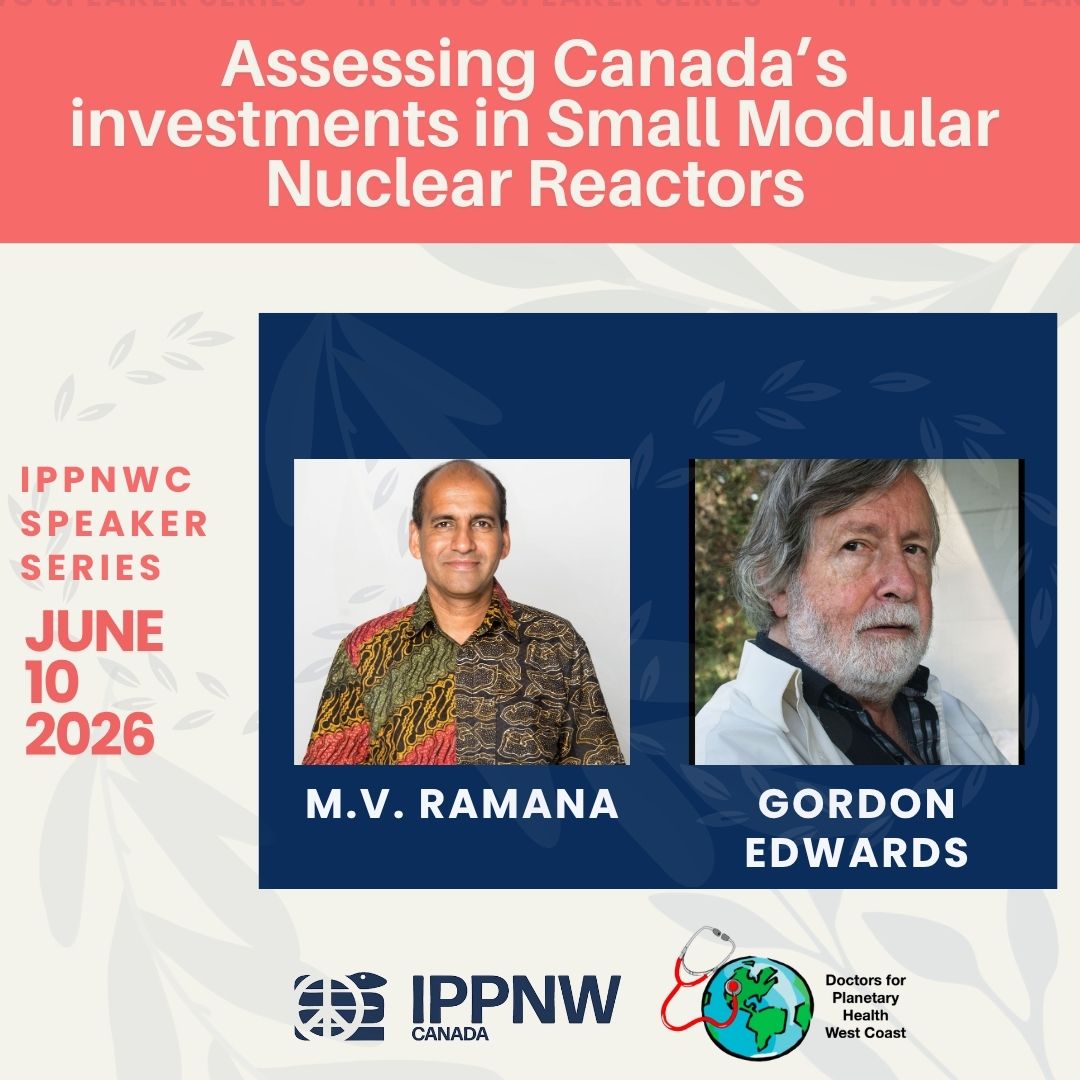
10 June – Assessing Canada’s Investments in Small Modular Nuclear Reactors – https://zoom.us/meeting/register/IiqHA5feRhaEBycOLNTJlA#/registration


Cuba Is Not a Failed State – It Is a Besieged State
PETITION: “Global Appeal to Endorse Palestinian Right of Return of Refugees”
To see nuclear-related stories in greater depth and intensity – go to https://nuclearinformation.wordpress.com
-
Archives
- June 2026 (84)
- May 2026 (306)
- April 2026 (356)
- March 2026 (251)
- February 2026 (268)
- January 2026 (308)
- December 2025 (358)
- November 2025 (359)
- October 2025 (376)
- September 2025 (257)
- August 2025 (319)
- July 2025 (230)
-
Categories
- 1
- 1 NUCLEAR ISSUES
- business and costs
- climate change
- culture and arts
- ENERGY
- environment
- health
- history
- indigenous issues
- Legal
- marketing of nuclear
- media
- opposition to nuclear
- PERSONAL STORIES
- politics
- politics international
- Religion and ethics
- safety
- secrets,lies and civil liberties
- spinbuster
- technology
- Uranium
- wastes
- weapons and war
- Women
- 2 WORLD
- ACTION
- AFRICA
- Atrocities
- AUSTRALIA
- Christina's notes
- Christina's themes
- culture and arts
- Events
- Fuk 2022
- Fuk 2023
- Fukushima 2017
- Fukushima 2018
- fukushima 2019
- Fukushima 2020
- Fukushima 2021
- general
- global warming
- Humour (God we need it)
- Nuclear
- RARE EARTHS
- Reference
- resources – print
- Resources -audiovicual
- Weekly Newsletter
- World
- World Nuclear
- YouTube
-
RSS
Entries RSS
Comments RSS
 nuclear-news