Nuclear Plant Fine
Editorial: Nuclear Plant Fine
Nodding off The Philadelphi Inquirer Jan. 12, 2009 A U.S. Nuclear Regulatory Commission decision last week is another blow to efforts to build greater public trust in nuclear power as an alternative to the nation’s expensive appetite for foreign oil.The NRC proposed a paltry $65,000 fine against the owner of Peach Bottom nuclear plant, where investigators found that security guards routinely napped on the job. The NRC last year issued a color-coded “white” finding – a low-to-moderate safety violation – for the incident.The agency’s actions seem more like a slap on the wrist for Chicago-based Exelon, rather than a strong message about safety and accountability. Exelon says it plans to pay the fine for the NRC’s findings, which were confirmed by its internal investigation at the York County nuclear power facility.It took the utility and its regulators more than a year to reach this disappointing conclusion to what should have been an open-and-shut case, with indisputable evidence.
The investigations were launched in September 2007, but only after a videotape of the sleeping guards had surfaced. After receiving a tip in a letter from a former employee at the nuclear plant, the NRC allowed Exelon to do its own investigation of the allegations. Talk about the fox guarding the hen house! It came as no surprise that Exelon initially found no evidence of guards napping. That quickly changed when the video became public.
Editorial: Nuclear Plant Fine | Philadelphia Inquirer | 01/12/2009
Pakistani Nuclear Security Worries U.S. Officials
Pakistani Nuclear Security Worries U.S. Officials
Global Security Newswire Jan. 12, 2009 Preventing Pakistan’s nuclear arsenal from falling into extremist hands is a more important security priority for the United States than stabilizing Afghanistan and Iraq, according to a Bush administration report delivered to the team preparing for Barack Obama’s presidency, the New York Times reported yesterday“Only one of those countries has a hundred nuclear weapons,” the report’s lead author said. Concerns persist over Islamabad’s ability to protect the arsenal, according to the Times.
U.S. intelligence officials have briefed Obama on the possibility that some Pakistani scientists with radical Islamic sympathies have sought to join the ranks of the nation’s nuclear elite……………………….The official also expressed concern that militants could try to steal nuclear weapons that were being transferred between facilities. Some U.S. officials were concerned that the recent terrorist attacks in the Indian city of Mumbai might have been intended to spur Pakistan to move tactical nuclear weapons to border positions so they could be stolen, the Times reported.
NTI: Global Security Newswire – Pakistani Nuclear Security Worries U.S. Officials
Critics oppose Georgia Power’s nuclear plan
Critics oppose Georgia Power’s nuclear plan
pbaonline Charles Edwards
WABE: Critics oppose Georgia Power’s nuclear plan (2009-01-12)
U.S. targets A.Q. Khan nuclear network
U.S. targets A.Q. Khan nuclear network WASHINGTON (CNN) — Sanctions will be placed on 13 people and three companies “for their involvement in the A.Q. Khan nuclear proliferation network,” the U.S. State Department said Monday.
Khan, a Pakistani scientist, operated an international black market in nuclear material to a number of states with a history of poor relations with the United States.
He was arrested in February 2004 and eventually pardoned by former Pakistani President Pervez Musharraf.
The sanctions, which follow a U.S. review of the network, “will help prevent future proliferation-related activities by these private entities, provide a warning to other would-be proliferators, and demonstrate our ongoing commitment to using all available tools to address proliferation-related activities.”
The department notes that Khan spearheaded an “extensive international network for the proliferation of nuclear equipment and know-how that provided one-stop shopping for countries seeking to develop nuclear weapons.”
Iran and Libya received centrifuge components, centrifuges, and designs from Khan and his associates, and the United States believes the network “provided centrifuge designs, equipment, and technology to North Korea.”………………”While we believe the A.Q. Khan network is no longer operating, countries should remain vigilant to ensure that Khan network associates, or others seeking to pursue similar proliferation activities, will not become a future source for sensitive nuclear information or equipment.”
US blacklists father and son over alleged nuclear racket
US blacklists father and son over alleged nuclear racket
The Guardian, Ian Traynor, 13 January 2009Two British businessmen, a father and son, were yesterday blacklisted by the US government for their alleged involvement in the world’s worst illicit nuclear proliferation racket.
Peter Griffin, a 73-year-old believed to be living in the south of France, and his son, Paul, 44, were among 13 individuals and three companies named by the US state department and treasury for involvement in the nuclear smuggling network headed by the disgraced Pakistani metallurgist, Abdul Qadeer Khan.
The Khan network supplied much of the technology and knowhow for Iran’s clandestine nuclear projects which were discovered in 2003, triggering a major, inconclusive, international crisis that looks like being one of the toughest problems confronting the incoming Obama administration………………The Griffins were joined on the blacklist by several other engineers and businessmen from Germany, Switzerland, and South Africa, as well as Sri Lanka, Turkey and the Middle East, where Khan’s network was based in Dubai. Several of those named have been jailed.
US blacklists father and son over alleged nuclear racket | World news | The Guardian
U.S. Rejected Aid for Israeli Raid on Iranian Nuclear Site – NYTimes.com
U.S. Rejected Aid for Israeli Raid on Iranian Nuclear Site
WASHINGTON — President Bush deflected a secret request by Israel last year for specialized bunker-busting bombs it wanted for an attack on Iran’s main nuclear complex and told the Israelis that he had authorized new covert action intended to sabotage Iran’s suspected effort to develop nuclear weapons, according to senior American and foreign officials.
White House officials never conclusively determined whether Israel had decided to go ahead with the strike before the United States protested, or whether Prime Minister Ehud Olmert of Israel was trying to goad the White House into more decisive action before Mr. Bush left office. But the Bush administration was particularly alarmed by an Israeli request to fly over Iraq to reach Iran’s major nuclear complex at Natanz, where the country’s only known uranium enrichment plant is located.
The White House denied that request outright, American officials said, and the Israelis backed off their plans, at least temporarily. But the tense exchanges also prompted the White House to step up intelligence-sharing with Israel and brief Israeli officials on new American efforts to subtly sabotage Iran’s nuclear infrastructure, a major covert program that Mr. Bush is about to hand off to President-elect Barack Obama.
U.S. Rejected Aid for Israeli Raid on Iranian Nuclear Site – NYTimes.com
Austria furious at re-opening of nuclear plant
Austria furious at re-opening of nuclear plant
Radio Netherlands 12 Jan 09 “We were really aghast when we heard that it’s being taken back into use,” was the angry comment from Herwig Schuster – spokesperson for the Austrian branch of Greenpeace – at the news that the Bohunice V 2 nuclear power station, located just 100 km from Vienna in neighbouring Slovakia, is to re-open. After numerous protests, from Austria in particular, the power station was officially closed at the end of last year. But now, because of the problems with the supply of gas from Russia, the Slovak government has indicated that it wants to bring the reactor back into use.Greenpeace’s Herwig Schuster argues that the re-opening would involve an enormous risk:
“Bohunice V 2 is an old Soviet-made power station. The casing is porous, and the level of protection so weak that anything that lands on it – an aircraft for example – would damage it”.
Austria furious at re-opening of nuclear plant – Radio Netherlands Worldwide – English
H-bomb ‘guinea pigs’ claim compensation
H-BOMB ‘GUINEA PIGS’ CLAIM COMPENSATION
DAILY EXPRESS January 12,2009
By John Ingham NUCLEAR test veterans will this month launch their case for compensation, claiming they were used as guinea pigs. About 22,000 British servicemen from attended H-bomb tests in Australia and the South Pacific between 1952 and 1958.
Every other country that had servicemen at the tests has provided them with help.
Campaigners say many British veterans died young, had diseases like cancer or saw their wives suffer miscarriages or give birth to deformed children. Next week lawyers representing 1,000 survivors and their widows will launch an action for compensation which could cost the Ministry of Defence millions.
Veterans accuse the MoD of stalling, knowing the longer the process goes on the fewer will be left alive.
Daily Express | UK News :: H-bomb ‘guinea pigs’ claim compensation
Climate refugees – the hidden cost of climate change
Climate refugees – the hidden cost of climate change
BY GREEN LEFT ONLINESolomon Times Online January 13, 2009 By Margarita Windisch (Green Left Weekly) 3 December 2008 – The culturally diverse 7 million Pacific Islanders live in 22 nations. They only contribute 0.06 percent to global greenhouse gas emissions but are three times more vulnerable to climate change than countries of the global North, according to the IPCC.
“If these people can spend millions and millions on sending troops to fight other countries, why can’t they spend maybe a couple of billions just to save people, like ourselves; the marginalised, poorest of the poor. Why? Because we are taking the brunt, we are the victims of these green[house] gas emissions, the pollution made by industrialised countries.”
These words were spoken by a Carteret Islander in an unfinished documentary, The First Wave, the evacuation of the Carteret Islands. For the inhabitants of Pacific and Indian Ocean island nations, such as the Carteret Islands, climate change is already a devastating reality.
……………………….The Intergovernmental Panel on Climate Change (IPCC) fourth assessment report identifies small islands, including those in the South Pacific, as one of the key global regions to be most affected by climate change.The IPCC report predicts an estimated 150 million environmental refugees worldwide by the middle of this century, citing coastal flooding, shoreline erosion and agricultural degradation as major factors.
The culturally diverse 7 million Pacific Islanders live in 22 nations. They only contribute 0.06% to global greenhouse gas emissions but are three times more vulnerable to climate change than countries of the global North, according to the IPCC.
Climate refugees – the hidden cost of climate change | Regional | Solomon Islands News
NT denies uranium mine to blame for cancer | National News | News.com.au
NT denies uranium mine to blame for cancer
AAP
THE Northern Territory Government has rejected any link between Australia’s largest uranium mine and higher levels of cancer among Aboriginal people living nearby.
The disturbing findings are part of a preliminary discussion paper into the health affects of Energy Resources of Australia’s (ERA) Ranger mine, which is surrounded by the world heritage-listed Kakadu National Park.
The NT Government says the cancers found in nearby Aboriginal communities are of the type caused by lifestyle and not radiation.
However the Commonwealth’s peak indigenous research body, which commissioned the report, says its discovery of a near doubling in the overall cancer incidence rate, compared to other areas of the territory, is a cause for “serious concern”.
It wants an investigation into a possible link with the mine.
“There is an excess of cancer in the Aboriginal communities of the Kakadu region,” says the leaked report from the Australian Institute of Aboriginal and Torres Strait Islanders Studies (AIATSIS)………………………The report is the first to examine health issues since ERA first started mining at Ranger in the 1980s, despite more than 120 recorded “mishaps” including leakages, spillages and breaches of regulations……………………..traditional owners in the region welcomed the report’s findings.
“Scant attention has been paid to the health effects of this development … these health effects include the social and cultural impacts of mining,” said the Gundjeihmi Aboriginal Corporation, representing the Mirarr People.
One of the report’s four authors, Alan Cass from Sydney University, said he stood by the report’s cancer findings.
“This was exploratory research and the report indicates the limitations of the data collected,” he said.
NT denies uranium mine to blame for cancer | National News | News.com.au
Climate will hit indigenous Australians hardest: report
Climate will hit indigenous Australians hardest: report
Sydney Morning HeraldJoel Gibson Indigenous Affairs Reporter January 13, 2009INDIGENOUS Australians in remote areas will be hardest hit by climate change because of their poorer health and access to services, a team of environment and indigenous health experts has warned.
And the documented link between the health of traditional Aborigines and the health of their ancestral country could make them more vulnerable to the effects of climate change.
In an editorial in the Medical Journal Of Australia, three authors from different fields argued that the vulnerability of indigenous people should be recognised so health policy could be adjusted to counter the effects of rising temperatures in some of the hottest reaches of central and northern Australia……………….
The authors said the challenge for Australian doctors would be to look beyond a Western, scientific approach to indigenous health and acknowledge the influence of ecology and other factors on indigenous lives.
More services would be needed in northern Australia, as well as cross-cultural training for medical professionals and changes to the teaching practices in medical schools.
If done properly, that approach would raise social and economic indicators, not just health, they said.
“Ignoring the warning signs and failing to take action is no lo
The Faustian Bargain
The Faustian Bargain
WebDiary 13 Jan 09 Dr Andrew Glikson is an earth and paleo-climate research scientist at the Australian National University. This is his second article for Webdiary (the first was Dangerous climate change: Lessons from the recent history of the atmosphere). References for this article can be found here.THE FAUSTIAN BARGAINHow a carbon-emitting atom-splitting species threatens to turn a planet into a radioactive3 to 6 degrees c high sea level world The sensitivity of the Earth’s atmosphere to anthropogenic carbon gases has been underestimated. As the orgy of burning carbon products of 400 million of biological evolution continues unabated, pushed by business, advertisers and consumption-promoting governments, global warming proceeds at a pace faster than projected by the IPCC (Houghton et al., 2001; Rahmstorf, 2007), tracking toward likely climate tipping points. The science fiction-like specter of global warming precludes many from discriminating between the climate and the weather. A well financed denial syndrome frustrates 11th hour attempts at mitigation. Governments, caught between the climate and fossil fuel interests, debate woefully inadequate carbon emission targets (Garnaut, 2008) unlikely to stabilize the rise of temperature, migration of climate zones, sea level and storm intensities (Anderson and Bowes, 2008). Politicians don’t get it, failing to understand they cannot argue with the atmosphere and the oceans. Only a global strategy aimed at immediate deep cuts of carbon gas emissions, innovation of technology for CO2-sequestration and down-draw to levels below 350 ppm (Hansen et al., 2008), albedo enhancement over polar regions and fast tracked reforestation campaigns may be capable of mitigating the worst consequences of runaway global warming. As times goes on, in an increasingly stressed world, the possibility of a nuclear conflagration of hair-trigger missile fleets, by accident or design, becomes a probability. Hapeless populations are faced with a non-choice between a greenhouse summer and/or a nuclear winter. Will the powers to be, always willing to use $trillions to bomb peasants in remote corners of the globe (in the name of freedom and democracy), or rescue corrupt bankers, be willing to take all the measures needed to protect the young, future generations and nature?…………….
………The denial syndromeFor the last 20 years or so, through numerous public presentations, articles published in economic and social journals (but rarely in the peer-reviewed scientific literature), extensive media exposure and intense political lobbying, so-called climate change “skeptics”, many of whom affiliated with right-wing groups and fossil fuel corporations, have attempted, continue to deny the reality of climate change, or interpret global warming in terms of natural processes, or claim it is beneficial.
Climate “skeptics”, more suitably referred to as denialists, attempt to advance their cause in two principal ways: (1) present outdated or imaginary technical arguments; (2) claim conspiracy on the part of climate science research organizations and climate scientists, to whom the often refer in derogatory ad-hominem terms.
Using terms such as “alarmism”, denialists do not appear to recognize the professional and ethical responsibility of scientists to alert society to dangers, whether of natural or anthropogenic origin, such as looming epidemics, ultraviolet and cosmic radiation, smoking-related cancer, ozone depletion or the climate impasse.
The Faustian Bargain | Webdiary – Founded and Inspired by Margo Kingston
The Sydney Morning Herald Blogs: Innovator
Rudd’s 5 per cent – another lost opportunity Sydney Morning Herald 13 Jan 09
On December 15 the Rudd Government announced a plan to reduce greenhouse gas emissions by a mere 5 per cent by the year 2020 – far less than the 25 to 40 per cent cut the United Nations has been advocating for developed countries.
Beyond bitter disappointment and frustration for those who know that we have to take climate change seriously is the blow that this announcement deals to Australia’s ability to innovate and lead the world in clean technology.
Just 12 months ago, while ratifying the Kyoto Protocol, Kevin Rudd hailed the UN’s target of 25 to 40 per cent the roadmap to the future and pledged to commit to a similar target to tackle greenhouse gas emissions, lead the world by example, and leave our children a better world than the one we inherited.
One year later and now in power the Labor Party has ditched responsibility and switched tact. Rather than setting out to embrace change and opportunity, the Labor Party has bowed to powerful oil lobbyists and stooped to protectionist policy – why embrace change when China and India might not, Rudd claims defiantly?
This is short termism at its worst. It risks the death knell to future international agreements and sets the bar low for other countries who have not yet set their targets. Why would other countries such as India and China, who have just as much claim to fossil fuels as we do (if not more given the size of their populations), agree to targets of 40 per cent when countries in the west say 5 per cent is as much as they can commit to without harming their economies?
As things stand today, serious government targets are the only way forward.The playing field is well and truly tipped in favour of the established oil, gas and nuclear companies. As Greenpeace and GetUp highlighted last year, the government currently hands the fossil fuel industry $9 billion in subsidies each year. That’s $28 handed to the fossil fuel industry for every $1 spent on renewables………………………..
The Labor Party has made lots of pledges to make renewables the centre of climate change policy since getting into power. But the truth is that the renewables industry will survive despite of, not because of, the government’s climate change policy.
Without the incentives that create markets and drive innovation and entrepreneurship, the renewables industry will keep plugging away in the background. And in 10 years time, Australia will wake up and realise it lost the biggest opportunity of the 21st century.
Posted by Kristen Le Mesurier
January 12, 2009 1:24 PM
Report: International Energy Agency Deliberately Undermined Growth Potential of Renewable Energy : Red, Green, and Blue
Report: International Energy Agency Deliberately Undermined Growth Potential of Renewable Energy : Red, Green, and Blue Mridul Chadha 11 Jan 09 A group of scientists and politicians has accused the International Energy Agency of publishing false data about the growth potential of the renewable energy in the future. The Energy Watch Group said that the IEA “consistently underestimated the amount of electricity generated by wind power while advising various governments.” The group holds IEA’s close ties to oil, gas and nuclear sectors responsible for the its “ignorance and contempt” towards renewable energy.
The International Energy Agency is an intergovernmental organization which publishes reports about future trends of energy generation and use which help governments across the world to chalk out energy production plans. The Energy Watch group says that the IEA reports glorify fossil fuels deeming them irreplaceable by renewable energy
sources.
The group compared the production projections of wind energy that the IEA presented in the past
In 1998, the IEA predicted that global wind electricity generation would total 47.4GW by 2020. This figure was reached in December 2004. In 2002, the IEA revised its estimate to 104GW wind by 2020 – a capacity that had been exceeded by last summer.
In 2007, net additions of wind power across the world were more than four-fold the average IEA estimate from its 1995-2004 predictions.
The IEA report predicts a five-fold increase in wind energy from 2006-2015 but then assumes an abrupt & unexplained downturn in production. A Swiss parliament member also notes that IEA derives most of its employees from the oil industry and raised questions about its intent regarding the energy outlook reports.
One has to question the wind energy growth numbers that IEA puts in its reports. Investments in renewable energy have grown tremendously around the world. The European Union has been very open about its huge investment plans in renewable energy keeping with the emissions reduction targets and the clean energy targets it has set for 2010 and 2020. China has become the largest investor in clean energy, pumping in billions of dollars in building some of the biggest wind and solar energy plants in the world.
Tags: nuclear, antinuclear, uranium, radioactive, renewables
Obama’s worst fear: Hijacked nukes
Obama’s worst fear: Hijacked nukes
THE TIMES OF INDIA 12 Jan 2009, David E Sanger, NYT News Service “……………………………….. Just last month in Washington, members of the federally appointed bipartisan Commission on the Prevention of Weapons of Mass Destruction Proliferation and Terrorism made it clear that for sheer scariness, nothing could compete with what they had heard in a series of high-level intelligence briefings about the dangers of Pakistan’s nuclear technology going awry. “When you map WMD and terrorism, all roads intersect in Pakistan,” said Graham Allison, a Harvard professor and a leading nuclear expert on the commission. “The nuclear security of the arsenal is now a lot better than it was. But the unknown variable here is the future of Pakistan itself, because it’s not hard to envision a situation in which the state’s authority falls apart and you’re not sure who’s in control of the weapons, the nuclear labs, the materials.” ……………………………. What Obama now inherits in Pakistan is a fully dysfunctional relationship between that country and the US. Last summer, Bush signed secret orders allowing American special forces to run ground raids into Pakistani territory to root out not only al-Qaida but also a list of other militants who could be targeted by either the CIA or American military. At the end of Bush’s term, his aides handed over to Obama’s transition team a lengthy review of policy in Afghanistan and Pakistan, concluding that in the end, the US has far more at stake in preventing Pakistan’s collapse than it does in stabilizing Afghanistan or Iraq.
Obama’s worst fear: Hijacked nukes-US-World-The Times of India
Tags: nuclear, antinuclear, uranium, radioactive
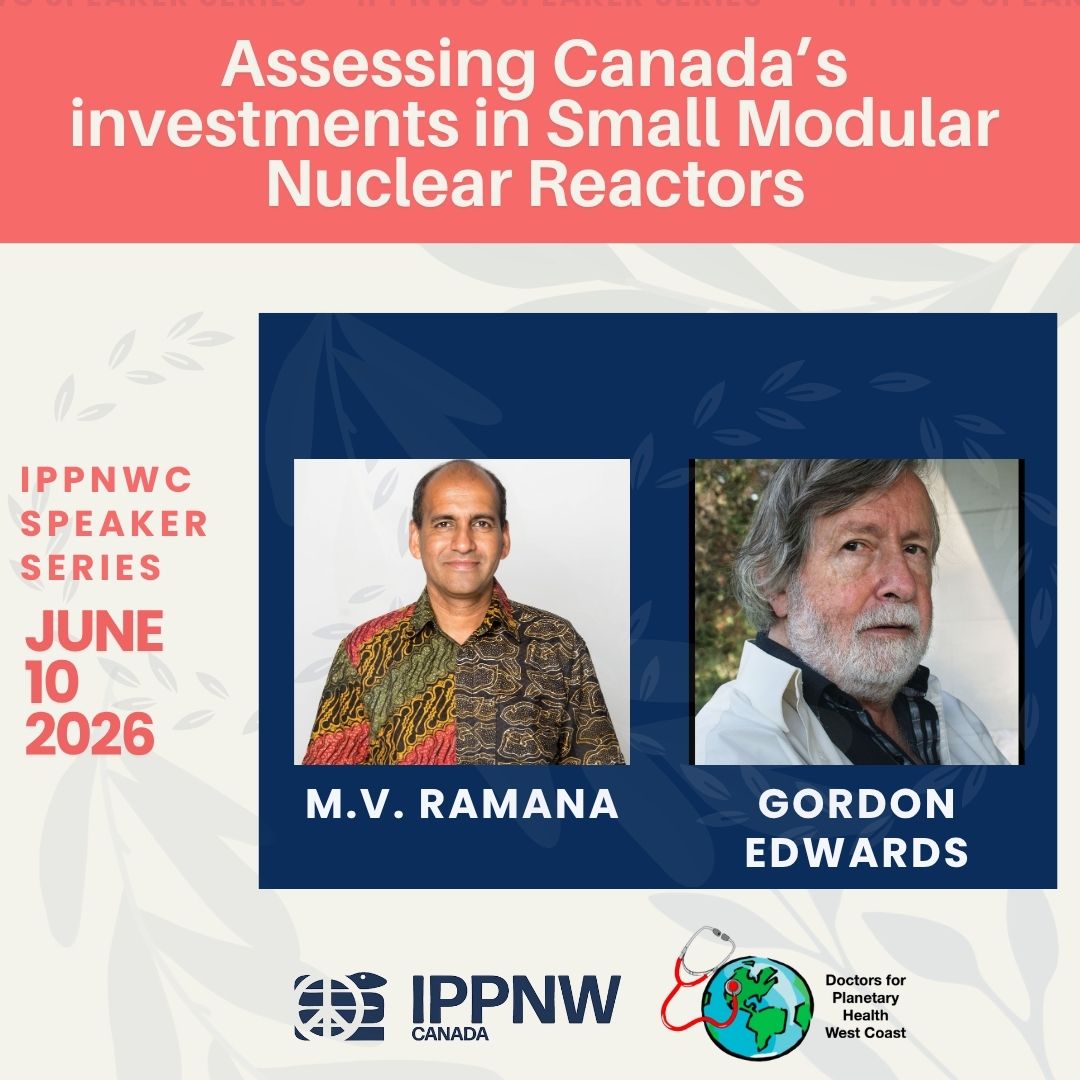
1 This Month
10 June – Assessing Canada’s Investments in Small Modular Nuclear Reactors – https://zoom.us/meeting/register/IiqHA5feRhaEBycOLNTJlA#/registration


Cuba Is Not a Failed State – It Is a Besieged State
PETITION: “Global Appeal to Endorse Palestinian Right of Return of Refugees”
To see nuclear-related stories in greater depth and intensity – go to https://nuclearinformation.wordpress.com
-
Archives
- June 2026 (89)
- May 2026 (306)
- April 2026 (356)
- March 2026 (251)
- February 2026 (268)
- January 2026 (308)
- December 2025 (358)
- November 2025 (359)
- October 2025 (376)
- September 2025 (257)
- August 2025 (319)
- July 2025 (230)
-
Categories
- 1
- 1 NUCLEAR ISSUES
- business and costs
- climate change
- culture and arts
- ENERGY
- environment
- health
- history
- indigenous issues
- Legal
- marketing of nuclear
- media
- opposition to nuclear
- PERSONAL STORIES
- politics
- politics international
- Religion and ethics
- safety
- secrets,lies and civil liberties
- spinbuster
- technology
- Uranium
- wastes
- weapons and war
- Women
- 2 WORLD
- ACTION
- AFRICA
- Atrocities
- AUSTRALIA
- Christina's notes
- Christina's themes
- culture and arts
- Events
- Fuk 2022
- Fuk 2023
- Fukushima 2017
- Fukushima 2018
- fukushima 2019
- Fukushima 2020
- Fukushima 2021
- general
- global warming
- Humour (God we need it)
- Nuclear
- RARE EARTHS
- Reference
- resources – print
- Resources -audiovicual
- Weekly Newsletter
- World
- World Nuclear
- YouTube
-
RSS
Entries RSS
Comments RSS
 nuclear-news