The Promise of Wind : Embracing America’s Fastest-Growing Form of Renewable Energy (By Joe Provey)
The Promise of WindEmbracing America’s Fastest-Growing Form of Renewable Energy Emagazine.com By Joe Provey 6 Jan 09 “……………………..
Big Possibilities
Power production aside, wind is one of the most environmentally friendly energy sources. Estimates by the American Wind Energy Association (AWEA) show that wind currently generates as much electricity as nearly 30 million tons of coal or 90 million barrels of oil. In 2008, wind displaced about 34 million tons of carbon dioxide, equivalent to taking 5.8 million vehicles off the road. In 20 years, if we reach the industry goal of supplying 20% of our national energy from wind, it will be the equivalent of taking 140 million vehicles off the road. Unlike oil, wind will not pollute our waterways or contaminate our national wildlife refuges. Unlike coal, it doesn’t release mercury into the air or leave permanent, ugly scars across the landscape. And unlike nuclear, there is no spent fuel to bury or protect from terrorist threats.
In addition to the obvious environmental benefits, there are other compelling arguments for promoting wind power. First, the resource is huge. “There’s something like 600 gigawatts of wind that can be developed in the U.S.,” says Jim Walker of Enxco, a company that develops wind farms in North America. That’s about 60% of our current electricity consumption, according to the Energy Information Administration.
And the cost is already competitive with gas. Says Walker, “Wind energy can be developed for under 10 cents per kilowatt hour, about the same as gas.” This assumes the continuation of production tax credits that contribute about two cents for each kilowatt-hour produced.
Perhaps most impressive is that wind is one of the few energy sources that can be brought online quickly. Says Walker, “You can build a 400-million-dollar, 200-MW wind plant in nine months. And you know exactly what it’s going to cost.” You can’t say that for a nuclear plant or even one of the newer coal plants that are designed to capture pollutants.
The build-out of wind has some important economic fringe benefits, too, including a lot of new jobs.
The Promise of Wind : Embracing America’s Fastest-Growing Form of Renewable Energy (By Joe Provey)
Chris Goodall on the rising costs of UK nuclear energy | Environment | guardian.co.uk
The rising costs of UK nuclear energyThe fall in the pound’s value undermines any financial case for nuclear energy, writes Chris Goodall from Carbon Commentary, part of the Guardian Environment Network 6 Jan 09
“……………………………Since the government’s paper, nuclear power has suffered two huge blows. First, the pound has declined in value against the euro. This makes the core components of a nuclear power station more expensive as they are priced in the European currency. Second, the construction of the new nuclear power station in Finland has descended almost into farce as costs have ballooned and progress has slowed. The Finnish power station is much the more advanced of the two new nuclear plants currently under construction in Europe. If Finland is any guide, nuclear power is far more expensive than anybody expected……………………………………….The Finnish debacle
The French nuclear specialist Areva signed a fixed price contract with the Finnish consortium TVO. The value was about €3bn, in addition to the costs that TVO incurred readying the site for construction work and taking the plans through the Finnish approval processes. Areva has since taken several financial provisions in its accounts, reflecting the problems it has faced in completing the work to its initial budget. A provision is a way of recognising that a firm is going to make a future loss on a contract. So, for example, banks make provisions when it is apparent that a loan to a near-bankrupt company is unlikely ever to be repaid.Areva is largely owned by the French state, although some of its shares are held by investment institutions and others. In the Anglo-Saxon world, having private shareholders would oblige the company to state the absolute size of these provisions. In France it is different and Areva has consistently refused to state their actual size. But the French press recently offered the opinion that total provisions may now be €1.5bn, suggesting that Areva thinks that the total cost of fulfilling the contract is already €4.5bn, a rise of 50% on the initial price.
This will not be the end of the matter. Areva has recently indicated that the final completion date of the plant will be sometime in 2012, making the station over three years late. Any further construction problems will raise the total eventual cost yet further……………………………..The value of the euro
If the Finnish construction costs were replicated in the UK, and the euro/pound exchange rate had remained at around £1/€1.50, the cost of the project would imply a cost to generate electricity of over £50 per megawatt hour. This is more than the current wholesale price in the UK (although the wholesale price has been much higher than this figure for most of the last 12 months).
Chris Goodall on the rising costs of UK nuclear energy | Environment | guardian.co.uk
Baby tooth study resumes, seeking links between fallout radiation and cancer
Baby tooth study resumes, seeking links between fallout from radiation and cancer
by Robert KellyST. LOUIS POST-DISPATCH01/02/2009Questionnaires will soon be sent to thousands of men who donated their baby teeth half a century ago to scientists seeking to learn whether radioactive fallout in milk the donors drank as children affected their health later in life.It’s the latest step in a study that began in the 1950s and 1960s at Washington University, but then stalled for decades.Fifty years ago, concern about atmospheric tests of nuclear weapons spurred a group of local scientists and other area residents to begin the project, then called the St. Louis Baby Tooth Survey.An early apparent link between fallout and health problems was established by the study. But now, more than 40 years later, the study is resuming. Researchers now hope to find links between fallout and instances of cancer in children born in the 1950s and early 1960s…………………………… Preliminary results of the new study are expected by the middle of 2009, a New York-based scientist says.
Why Obama’s green jobs plan might work
Why Obama’s green jobs plan might work
Los Angeles Times Marla Dickerson 4 Jan 09Some states — including Michigan — already see renewable energy as their future: It’s the only sector that appears to be making room for more employees despite the recession.
Why Obama’s green jobs plan might work – Los Angeles Times
Tags: renewab;\les
6 Reasons Why Nuclear Power Can’t Save Us | Environment | AlterNet
6 Reasons Why Nuclear Power Can’t Save Us
AlterNet by Rob Hopkins, Chelsea Green Publishing.
January 3, 2009. A new book shows that it is not just the cost of nuke plants and their deadly waste that is the energy source’s only problems. The following is an excerpt from The Transition Handbook: From oil dependency to local resilience by Rob Hopkins, founder of the Transition movement. It has been adapted for the web.1. Length of time to come on stream
Commissioning and building new plants is a time-consuming business (at least twenty years), so they would have little or no impact on cutting emissions over the next twenty years, nor build any resilience in the face of peak oil.
2. Insurance
The insurance industry refuses to underwrite nuclear power, a gap it looks like the government will have to fill, resulting in a huge invisible subsidy for nuclear power.
3. Waste
Nuclear waste is a huge problem. The UK alone has 10,000 tons of nuclear waste, a pile which will increase 25-fold when the existing plants are decommissioned, with no solution in sight 4. Cost 5. Peak Uranium
6. Carbon Emissions
Nuclear is often said to be a carbon-free way of generating electricity. While that may be true for the actual generation, it is not when the entire process is looked at. The mining, processing, enrichment, treatment and disposal all have significant impacts,
6 Reasons Why Nuclear Power Can’t Save Us | Environment | AlterNet
Tags: energy
the carbon footprint of nuclear war
The carbon footprint of nuclear war
The Guardian Duncan Clarke 2 January 2009 Almost 700m tonnes of CO2 would be released into the Earth’s atmosphere by even the smallest nuclear conflict, according to a US study that compares the environmental costs of developing various power sources Just when you might have thought it was ethically sound to unleash a nuclear attack on a nearby city, along comes a pesky scientist and points out that atomic warfare is bad for the climate.According to a new paper in the journal Energy & Environmental Science, even a very limited nuclear exchange, using just a thousandth of the weaponry of a full-scale nuclear war, would cause up to 690m tonnes of CO2 to enter the atmosphere – more than UK’s annual total.The upside (kind of) is that the conflict would also generate as much as 313m tonnes of soot. This would stop a great deal of sunlight reaching the earth, creating a significant regional cooling effect in the short and medium terms – just like when a major volcano erupts. Ultimately, though, the CO2 would win out and crank up global temperatures an extra few notches…………………
……………The purpose of the paper is to compare the total human and environmental costs of a wide range of different power sources, from solar and wind to nuclear and biofuels.One of the side-effects of nuclear power, the report argues, is an increased risk of nuclear war: “Because the production of nuclear weapons material is occurring only in countries that have developed civilian nuclear energy programs, the risk of a limited nuclear exchange between countries or the detonation of a nuclear device by terrorists has increased due to the dissemination of nuclear energy facilities worldwide.”…………..
………it’s interesting to note that nuclear looks very bad in the report even if you ignore the warfare component of the carbon footprint. Far more serious (by a factor of 15 to 25) is nuclear’s opportunity cost: the emissions savings lost during the decades of planning and building of each nuclear station.
Keep to emission cuts, say economists
Keep to emission cuts, say economists
The Age Ari Sharp
January 3, 2009
ECONOMISTS have given a lukewarm response to Kevin Rudd’s carbon emission reduction targets, but have urged the Federal Government not to be spooked by the global economic downturn.
Last month, the Government revealed it would be seeking to reduce carbon emissions by 5 per cent on 2000 levels by 2020 unless an international agreement on carbon trading could be reached. In that case, the reduction target rises to 15 per cent. The 2050 target is a 60 per cent reduction.
“There’s never going to be a good time to introduce this, so the current crisis should not be used as an excuse to delay,” said Chris Caton from BT Financial Group. So far, the timing of the carbon pollution reduction scheme (CPRS) does not appear to have been affected, with the Government committed to a 2010 start date.
University of Queensland academic John Quiggin argued that the pursuit of environmental policies could in fact bolster the economic recovery. “Use green jobs programs as a focus of expansionary policy,” he said………………………….Monash University academic Jakob Madsen said steep price increases on carbon were needed to encourage the development of alternative fuel sources. “In Denmark, 40 per cent of the energy will come from renewable resources by 2020. Australia should easily be able to meet that target.”………………………..
The Scandinavian social democracy will be in the spotlight in December when world leaders gather in Copenhagen in an attempt to nut out a global agreement on emission reductions beyond 2012.
“The world is watching Australia and we can use this opportunity to help broker an international agreement,” said Austrade’s Tim Harcourt.
Bush administration’s uranium mining decision could affect tribes | Indian Country Today | Content
Bush administration’s uranium mining decision could affect tribes INDIAN COUNTRY TODAY By Rob Capriccioso
WASHINGTON – The Bureau of Land Management, an agency within the Department of the Interior, in early December eliminated a regulation that gave two congressional committees the power to require the secretary of interior to set aside public lands from uranium mining and other extractive activities. The action, coupled with renewed federal interest in uranium mining, is causing concern for some Western tribes.
In effect, the Bush administration’s decision could open up public lands in and around the Grand Canyon to uranium mining. The aftereffects of such developments could have devastating effects on the health of tribes in and around the Grand Canyon, according to environmentalists and health and legal experts………………………“The Havasupai have been ardent opponents of uranium mining in the watersheds above where they live,” Clark said. “If mining is occurring in these watersheds, it increases the potential for radioactive material to be transmitted to surface waters and groundwater aquifers.”
The Hualapai Tribe has also come out strongly against uranium mining in its area, having recently passed a tribal resolution banning the practice on its lands……………………Charles Vaughn, chairman of the Hualapai Tribe:“We do not want to see the byproducts of uranium production stored in places like Yucca Mountain for the remainder of our lifetimes and leave others with the concern of the potential harm this would bring to our progenitors Grandfather Water and Mother Earth.
“We as an indigenous people are taught to respect and hold sacred those elements that provide the essence of our life. It is out of this belief that we share our concerns for proposed uranium mining near Grand Canyon National Park.”…………………..Rep. Raúl M. Grijalva, D-Ariz. “I am disappointed that the Interior Department under the Bush administration has chosen to throw out federal rules it finds inconvenient to its goal of allowing uranium mining within a few miles of our nation’s premiere National Park, the Grand Canyon,”
“This last minute change puts at risk the health of millions of citizens of the West who rely on the Colorado River of the Grand Canyon for their drinking water supply, as well as visitors to the park and tribal communities within and around the Grand Canyon.”
Bush administration’s uranium mining decision could affect tribes | Indian Country Today | Content
Groups press for tribe-friendly renewable energy policies | Indian Country Today | Living
Groups press for tribe-friendly renewable energy policies INDIAN COUNTRY TODAY By Rob CapricciosoStory Published: Jan 2, 2009Story Updated: Jan 2, 2009WASHINGTON – As more tribes explore and get involved in the renewable energy field, a network of tribal groups is asking President-elect Barack Obama to support tribally owned and operated renewable energy projects, along with economic development initiatives that could reduce dependence on fossil fuels.
“The Obama economic stimulus plan that incorporates a green economy and green jobs portfolio must include provisions for access of these resources by our Native nations, our tribal education and training institutions and Native organizations and communities,” according to a policy statement released jointly Dec. 17 by the Intertribal Council on Utility Policy, the Indigenous Environmental Network, the International Indian Treaty Council and the Honor the Earth environmental group.“When considering energy production, resource extraction, housing and energy efficiency, it is essential that the incoming administration takes into account the disproportionate impacts of climate change and energy development on American Indian reservations and Alaska Native villages, and the potential for catalyzing green reservation economies.”
The groups represent approximately 250 grassroots tribal organizations and tribes that want to ensure American Indian participation and prosperity in the green economy of the future.
The statement says that federal government subsidies for the nuclear, coal, gas and oil industry should be rapidly phased out with a proportional ramp up of subsidies for renewable technologies and locally administered conservation and efficiency improvements. ………………………………..In sum, members of the tribal network believe that forward thinking energy and climate policy will have the ability to transform tribal and other rural economies, while also providing a basis for an overall economic recovery in the U.S.
Groups press for tribe-friendly renewable energy policies | Indian Country Today | Living
Going Nuclear – TIME
Going Nuclear
TIME By Michael Grunwald Dec. 31, 2008Samuel Kubani / AFP / Getty – “…………………………..some little-noticed rain has fallen on the nuclear parade. It turns out that new plants would be not just extremely expensive but spectacularly expensive. The first detailed cost estimate, filed by Florida Power & Light (FPL) for a large plant off the Keys, came in at a shocking $12 billion to $18 billion. Progress Energy announced a $17 billion plan for a similar Florida plant, tripling its estimate in just a year. “Completely mind-boggling,” says Charlie Beck, who represents ratepayers for Florida’s Office of Public Counsel. “A real wake-up call,” says Dale Klein, President Bush’s chairman of the Nuclear Regulatory Commission (NRC). “I’ll admit, the costs are daunting,” says Richard Myers, NEI’s vice president for policy development.The math gets ugly in a hurry. McCain called for 45 new plants by 2030; given the nuclear industry’s history of 250% cost overruns, that could rise to well over $1 trillion. Ratepayers would take the main hit, but taxpayers could be on the hook for billions in loan guarantees, tax breaks, insurance benefits and direct subsidies–not to mention the problem of storing radioactive waste, if Congress can ever figure out where to put it. And those 45 new plants would barely replace the existing plants scheduled for decommissioning before 2030.
This sticker shock has unnerved Wall Street. A Warren Buffett–owned company has scrapped plans for an Idaho nuclear plant; banks and bond-rating agencies are skeptical as well. In fact, renewables attracted $71 billion globally in private capital during 2007 while nukes got zero. The reactors under construction around the world are all government-financed. “I have to keep explaining: France and China are not capitalist countries!” says Congressman Ed Markey, an antinuclear Massachusetts Democrat. “Nobody wants to put their own money into this so-called renaissance–just ours.”……………………………France has 104 varieties of cheese but only one standard reactor, while the U.S. has one cheese but 104 different reactors. The NRC is fast-tracking applications, combining construction and operating licenses into a single permit and taking other steps to, as Myers puts it, “strip the risk out of the regulatory process.” Congress has even approved “risk insurance” to reimburse the industry for regulatory delays; that’s in addition to the government-issued liability insurance it already enjoys……………………Industry officials argue that if you disregard capital costs, nuclear plants are the cheapest source of power. But you can’t disregard capital costs–they’re out of control………………..Meanwhile, radioactive waste languishes in temporary storage pools and casks at plants around the country…………………..the key will be reducing demand through energy efficiency and conservation. Most efficiency improvements have been priced at 1¢ to 3¢ per kilowatt-hour, while new nuclear energy is on track to cost 15¢ to 20¢ per kilowatt-hour. And no nuclear plant has ever been completed on budget.
Tags: nuclear
Deceiving a People
Families Torn Apart Deceiving a People
IslamOnLine.net Commentary from PalestineBy Samah JabrP sychiatrist, Writer – Palestine Dec. 31, 2008 – “…………………………While the occupation is being soft on settlers, the international community is also being soft on Israel. Israel has always been singled out for “special treatment” by both the EU and the US. Unlike other countries in the surrounding region, Israel was allowed to develop nuclear weapons. It has never been held to account for ignoring many resolutions of the UN Security Council.
Deceiving a People – IslamOnline.net – Family
Tags: nuclear
radioactive waste problems
Shumlin says state should consider moving radioactive waste out of Vernon .Shumlin . News December 29, 2008 Bob Kinzel Montpelier, VT Senate President Peter Shumlin says he wants lawmakers to consider moving high level radioactive waste from southern Vermont to somewhere else in the state……………Shumlin says it’s critical for the Legislature to look at this issue because the owners of Vermont Yankee want to extend its license for another 20 years.
Shumlin argues that when Vermont Yankee went on line in 1972, it was assumed that the federal government would build a national waste repository. But the debate over a national site has dragged on for years and the development of a location in Nevada is now the subject of numerous lawsuits.
Originally, Vermont Yankee stored their spent fuel rods in a pool at the facility in Vernon. When the pool became full, it received permission to put the rods in steel and concrete casks next to the plant………………………….Shumlin -`Any reasonable person, I believe, would agree that Vermont is now stuck with high level nuclear waste for the next 80 to 100 years, that the feds will never take it. So if that’s the case, it seems reasonable to have the discussion, when we talk about running the plant for another 20 years, where is the best-worst place in Vermont to store high level nuclear waste in the safest way possible?”………………Shumlin – “No one’s ever asked, `Is a floodplain on the banks of the Connecticut River the best place to store high level nuclear waste?’ And we need to have that question answered by experts who have actually thought it out. And I’m going to ask geologists to give us those answer – scientists, not politicians.”
VPR Regional News: Shumlin says state should consider moving radioactive waste out of Vernon
Tags: nuclear
Study on wind energy shows job potential
Study on wind energy shows job potential
NTV Nebraska TV Associated Press – January 1, 2009 8:15 AM ETLINCOLN, Neb. (AP) – A study of the potential for wind energy in Nebraska shows a jump in jobs if new wind farms are developed.The report from the National Renewable Energy Laboratory says construction of wind farms could create 20,600 to 36,500 short-term construction jobs between 2011 and 2020, and up to another 4,000 long-term operations and maintenance jobs.And the report suggests that Nebraska’s economy could grow $7.8 billion to $14.1 billion over the next 40 years if infrastructure for 7,800 megawatts of wind power is built.The National Renewable Energy Laboratory is a division of the U.S. Department of Energy.
Tags: renewables
Wasting Our Watts – TIME
Wasting Our Watts TIME By Michael Grunwald Wednesday, Dec. 31,2008 This may sound too good to be true, but the U.S. has a renewable-energy resource that is perfectly clean, remarkably cheap, surprisingly abundant and immediately available. It has astounding potential to reduce the carbon emissions that threaten our planet, the dependence on foreign oil that threatens our security and the energy costs that threaten our wallets. Unlike coal and petroleum, it doesn’t pollute; unlike solar and wind, it doesn’t depend on the weather; unlike ethanol, it doesn’t accelerate deforestation or inflate food prices; unlike nuclear plants, it doesn’t raise uncomfortable questions about meltdowns or terrorist attacks or radioactive-waste storage, and it doesn’t take a decade to build. It isn’t what-if like hydrogen, clean coal and tidal power; it’s already proven to be workable, scalable and cost-effective. And we don’t need to import it.
This miracle juice goes by the distinctly boring name of energy efficiency, and it’s often ignored in the hubbub over alternative fuels, the nuclear renaissance, T. Boone Pickens and the green-tech economy. Clearly, it needs an agent. But it’s a simple concept: wasting less energy. Or more precisely, consuming less energy to get the same amount of heat for your shower, light for your office and power for your factory. It turns out to be much less expensive, destructive and time-intensive to reduce demand through efficiency than to increase supply through new drilling or new power plants. A nationwide push to save “negawatts” instead of building more megawatts could help reverse our unsustainable increases in energy-hogging and carbon-spewing while creating a slew of jobs and saving a load of cash………………………………A McKinsey study found that a global effort to boost efficiency with existing technologies could have “spectacular results,” eliminating more than 20% of world energy demand by 2020.
State report backs nuclear power as clean energy
State report backs nuclear power as clean energy
Palm Beach Post Staff Writer
Wednesday, December 31, 2008
Florida’s energy future should be “clean” – not just “renewable” – and include nuclear power as a source of green energy, according to recommendations from the staff of utility regulators released Wednesday.
The 111-page report is the latest step in the debate over whether power companies can count new nuclear power toward their obligation to generate renewable energy…………………………. The report follows months of lobbying by Florida Power & Light – the state’s largest utility and producer of nuclear power – to persuade regulators to create a “Clean Energy Portfolio Standard” rather than a “Renewable Portfolio Standard.” Florida statues do not include nuclear power in the definition of “renewable” energy. FPL generates no renewable energy in Florida………………..Including nuclear power in the green energy mix “could make it easier” for investor-owned utilities, such as FPL, to meet an earlier deadline to go green.
1 This Month
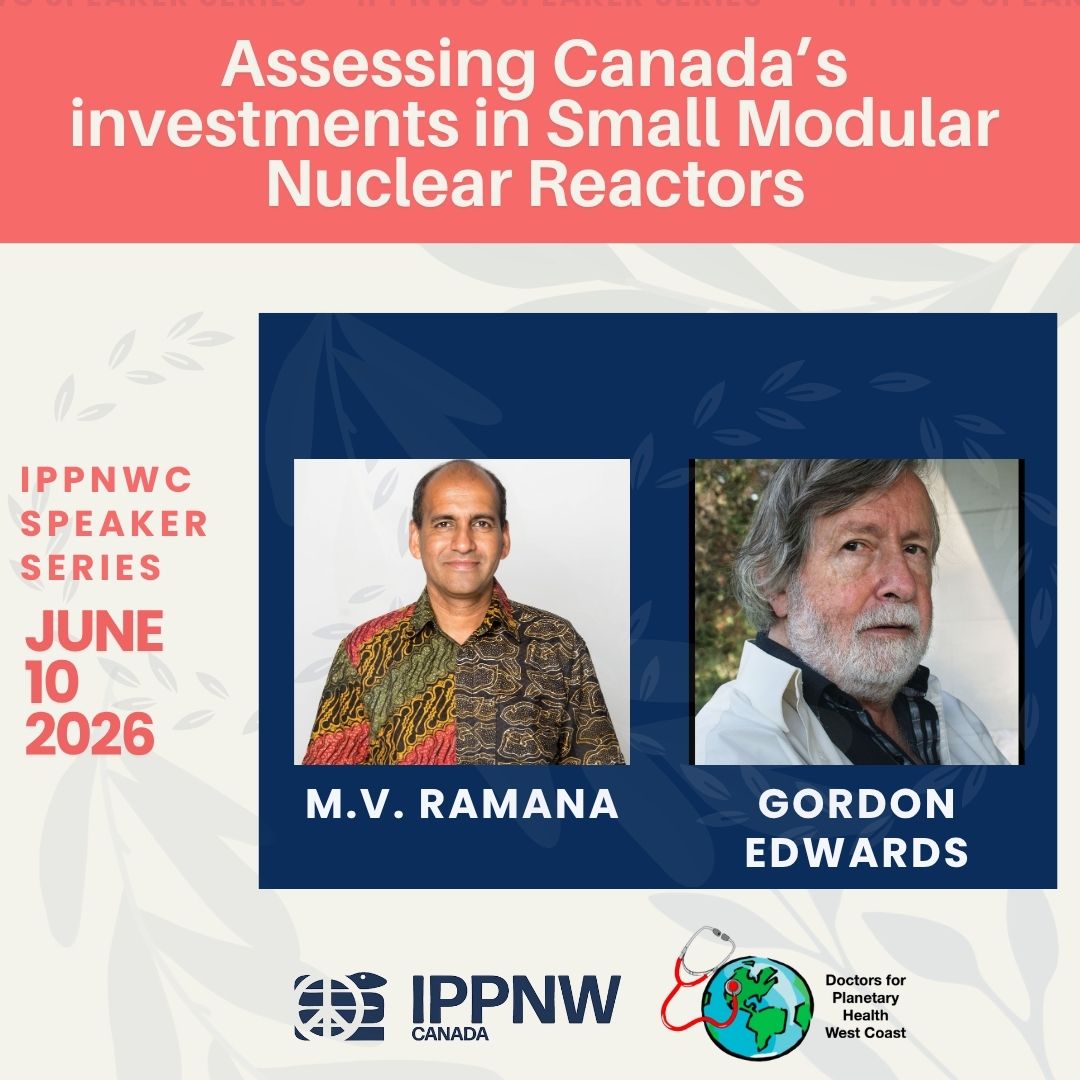
10 June – Assessing Canada’s Investments in Small Modular Nuclear Reactors – https://zoom.us/meeting/register/IiqHA5feRhaEBycOLNTJlA#/registration


Cuba Is Not a Failed State – It Is a Besieged State
PETITION: “Global Appeal to Endorse Palestinian Right of Return of Refugees”
To see nuclear-related stories in greater depth and intensity – go to https://nuclearinformation.wordpress.com
-
Archives
- June 2026 (89)
- May 2026 (306)
- April 2026 (356)
- March 2026 (251)
- February 2026 (268)
- January 2026 (308)
- December 2025 (358)
- November 2025 (359)
- October 2025 (376)
- September 2025 (257)
- August 2025 (319)
- July 2025 (230)
-
Categories
- 1
- 1 NUCLEAR ISSUES
- business and costs
- climate change
- culture and arts
- ENERGY
- environment
- health
- history
- indigenous issues
- Legal
- marketing of nuclear
- media
- opposition to nuclear
- PERSONAL STORIES
- politics
- politics international
- Religion and ethics
- safety
- secrets,lies and civil liberties
- spinbuster
- technology
- Uranium
- wastes
- weapons and war
- Women
- 2 WORLD
- ACTION
- AFRICA
- Atrocities
- AUSTRALIA
- Christina's notes
- Christina's themes
- culture and arts
- Events
- Fuk 2022
- Fuk 2023
- Fukushima 2017
- Fukushima 2018
- fukushima 2019
- Fukushima 2020
- Fukushima 2021
- general
- global warming
- Humour (God we need it)
- Nuclear
- RARE EARTHS
- Reference
- resources – print
- Resources -audiovicual
- Weekly Newsletter
- World
- World Nuclear
- YouTube
-
RSS
Entries RSS
Comments RSS
 nuclear-news