Backlash at Aboriginal mining loss | theage.com.au
Backlash at Aboriginal mining loss The Age * Russell Skelton * December 8, 2008 “……………….
Documents to be released today reveal that the system of devising and collecting royalties flowing from deals under the Native Title Act is shrouded in secrecy, lacks accountability and seldom creates jobs or lasting economic benefits.
An expert group advising the Rudd Government — drawn from mining industry, academia and indigenous bodies — has urged an overhaul in the way agreements are negotiated between the mining industry and indigenous organisations……………….60 per cent of mining operations are carried out next to indigenous communities, yet communities had missed out on the resources boom. “It is generally acknowledged that many indigenous Australians live on land rich in resources that create wealth for the nation and businesses but delivers little in respect to equitable wealth distribution and wealth generation,” it says………………..
Major flaws include:
■ Of the hundreds of agreements already struck between indigenous communities and industry, only 12 had provided substantial benefits to Aborigines.
■ Unnecessary confidentiality clauses had resulted in a lack of transparency and accountability. Little data was available on the structure and equitably of agreements.
■ A serious lack of expertise among native title representative bodies and traditional owners had created an unlevel playing field between mining companies and communities.
Backlash at Aboriginal mining loss | theage.com.au
Tags: aborigines
Two Good Reasons to Reconsider Scans, such as CT and MRI
Two Good Reasons to Reconsider Scans, such as CT and MRI
Natural News December 05, 2008 by: Reuben Chow, citizen journalist – “……………….A recent study conducted by a team from the University of California-San Francisco has found that the use of such medical imaging tools is playing its part in rising health care costs, while at the same time subjecting patients to increasing levels of radiation exposure……………………………ne of the main problems, in my book, is that we cannot effectively quantity the damage done by advanced medical imaging. How many cases of breast cancer, for example, are caused in large part by excessive exposure to radiation from annual mammograms?
Some research has also suggested that such tests uncover problems which might have gone away on their own anyway, and carrying out the tests could have unnecessarily opened a can of worms. Recent research in Norway, for example, suggested the “possibility that the natural course of some screen-detected invasive breast cancers is to spontaneously regress”. Once discovered, however, the medical-go-round usually begins – more tests, surgeries, chemotherapy, radiation, the works. In this scenario, how many women are actually hurt by the results of the scans they went through?……………
When it comes to medical imaging, is more necessarily better? As Dr Smith-Bindman said, “The new technologies are fantastic, but they should be used judiciously.”
The Hindu : Front Page : Mega uranium deal with Russia
Mega uranium deal with Russia
THE HINDU Sandeep Dikshit 6 Dec 08 Two sides agree to set up four more nuclear power plants at Kudankulam……………….At a summit meeting with Prime Minister Manmohan Singh, Russian President Dmitry Medvedev put the final touches on a mega agreement to supply nearly 2,000 tonnes of uranium. ……………..……..Significantly, Mr. Medvedev said he discussed the development and leasing of nuclear powered submarines. He admitted that the military relationship had both problems and prospects
Activists to appeal nuke waste storage approval
Activists to appeal nuke waste storage approval
SF Gate December 5, 2008 An activist group has decided to appeal federal regulators’ approval of a radioactive waste storage plan at the Diablo Canyon nuclear power plant near San Luis Obispo.Mothers for Peace suffered a setback in October when the Nuclear Regulatory Commission rejected their argument that there hadn’t been sufficient study of whether planned storage casks for used nuclear fuel rods could survive a terrorist attack at the PG&E plant.
A spokeswoman for the group said Friday that Mothers for Peace will appeal the ruling to the 9th U.S. Circuit Court of Appeals.
Obama’s nuclear problem — Plenty Magazine
Obama’s nuclear problem
PLENTY 6 Dec 08 Earlier this week, Senate leader Harry Reid presented Barack Obama with what might just be the first ultimatum of his presidency. Speaking to reporters, the Nevada Democrat lavished praise upon the incoming president – then announced that he’d work to block the appointment of any Energy Secretary who backed the construction of a controversial national nuclear-waste repository at Yucca Mountain, a rocky bluff a few dozen miles from Las Vegas…….
…….It may not be easy for Obama to duck the nuclear issue altogether, though. America’s domestic nuclear problems are deeply entangled with the equally thorny issue of international nuclear proliferation – an issue made all the more pressing by a new congressional report warning that terrorists will likely launch an attack using WMD by 2013. Preventing proliferation will require the President-Elect to work to secure loose nukes overseas, of course, but it will also require him to clarify the role of nuclear power in America’s own energy revolution.
At present, about 50 countries around the world are interested in acquiring civilian nuclear technology. That’s something of a nightmare scenario for the nonproliferation crowd: with dozens of countries processing atomic fuel, it would be all too easy for nuclear materials to fall into the wrong hands.
The Hindu Business Line : ‘I’ve never seen such a positive environment for renewable energy’
I’ve never seen such a positive environment for renewable energy’
All energy is politically driven and politically regulated, says Vestas President & CEO. The Hindu, Business Line N. RamakrishnanWind is the only type of energy where you can hedge your risk 100 per cent for the next 20 years. – Mr Ditlev Engel, President & CEO – “………We have learned from the financial crisis that big is not equivalent to good. Those, who do not have good projects or whose financing situation is more complicated, will have a bigger challenge……
……..Wind is the only type of energy where you can hedge your risk 100 per cent for the next 20 years.………Another issue that people haven’t spent so much time on, but I know that some of our customers are factoring in into their business price model is that they don’t believe the price of water for exploration and so many other things will remain at this cost. China has invested $10 billion in pumping water from the South to the North because of drought. Drought is a huge issue in Australia and in certain states in the US. That water will come at a cost. Water is an important part of energy exploration. When you start to factor these things in, which many of the major utilities are doing, you start getting many different mechanisms in your pricing model for wind versus other types of energy. Y
The Hindu Business Line : ‘I’ve never seen such a positive environment for renewable energy’
Uranium – a blessing or a curse?
Uranium – a blessing or a curse?
Marketplace Herbert Jauch 5 Dec 08 “………………….. Following the release of a uranium study by the director of the Labour Resource and Research Institute, Hilma Shindondola-Mote, earlier this year, mineworkers and environmental organisations have raised concerns.At the heart of the dispute is whether a mushrooming uranium mining industry is a curse or a blessing for Namibia………………………..Exposure to even relatively low levels of radiation over a long period can be extremely harmful to the health of workers and communities living around uranium mines.
Several workers who spent long years working at uranium mines developed serious health problems.
Cancerous strains are commonplace as workers are exposed to dust and radon gas daily and thus develop diseases such as TB and lung cancer.
Although mining companies usually deny any responsibility and refuse to compensate workers, there is increasing evidence of a link between uranium mining and workers’ health problems.
Uranium mining uses an enormous amount of water.
In a recent article in The Namibian, the writer pointed out that the proposed uranium mine by the Canadian company Forsys Metal, would use 1 million litres of water each day……………….
Situated on the Valencia farm in the Erongo region, the mine would consume in only three months the amount of water that the current users in the area would consume in 36 years.
Given that all existing and envisaged uranium mines are in the Namib desert, one needs to ask if it is wise to spend Namibia’s most scarce resource – water – on mining operations that may only bring short-term benefits.
All existing and proposed uranium mining sites are in the Namib desert, mostly in the protected area of the Namib Naukluft Park.
Besides using huge amounts of water, uranium mining also leaves large craters as it relies on open-pit operations.
Once mining activities cease, the huge holes remain.
Furthermore, radioactive dust particles may be blown over many kilometres.
This brings mining into direct conflict with tourism ventures that rely on Namibia’s natural beauty as a main attraction.
Reid submits testimony against rail line to Yucca – Las Vegas Sun
Reid submits testimony against rail line to Yucca
LAS VEGAS SUN Dec 4, 2008 – “….text of U.S. Senate Majority Leader Harry Reid ‘s testimony ,………………..’Nevadans and their leaders have not been reassured that Yucca Mountain will safely contain nuclear waste. We haven’t been reassured that transporting nuclear waste through our communities, over our grazing land, and past our schools and businesses can be done without incident. The Federal government has had more than two decades to reassure us, yet we still point to myriad safety and security flaws that have brought the Yucca project to its knees…………………..Nevadans will not benefit from this rail line – shipping nuclear waste through our state will hurt our economy many more times than it will help.
Stating that this railroad is for general freight is misleading subterfuge. It is forum shopping of the worst kind……………………Transportation may be the Achilles heel of the Yucca Mountain project. It is extremely costly, affects millions of Americans and almost all of the states, is fraught with danger from terrorism, sabotage and accidents, and has potential to greatly impact states, cities, and local communities all across the nation.
Reid submits testimony against rail line to Yucca – Las Vegas Sun
Nation & World | Feds to fine Hanford contractor $385,000 | Seattle Times Newspaper
Feds to fine Hanford contractor $385,000
RICHLAND — The U.S. Department of Energy plans to issue a $385,000 fine to Bechtel National, the contractor building a nuclear waste treatment plant at the Hanford nuclear reservation………
……..The largest portion of the fine, $220,000, will be for failing to improve quality. The rest will cover problems related to piping used in “black cells,” or areas that will be so radioactively hot that workers cannot enter them during the 40 years the plant may operate.
Nation & World | Feds to fine Hanford contractor $385,000 | Seattle Times Newspaper
Nuclear industry claims it is now ‘sexy’ but admits to rising costs | Environment | The Guardian
Nuclear industry claims it is now ‘sexy’ but admits to rising costs
The Guardian Terry Macalister 5 Dec 08Widespread doubts about the ability of nuclear power companies to bring a new generation of reactors on stream at the right time and on budget were raised yesterday within an industry that the UK government is relying on to meet its climate change and energy security goals.
EDF, the French power company that has positioned itself as a leading player in the market, admitted that its new European Pressurised Reactor programme at Flamanville in France was already 20% over budget, while delays continue to plague a Finnish facility, the only other new plant under construction in Europe……………………..Lady Barbara Judge, chairwoman of the Atomic Energy Authority, warned that the safety of existing plants remained paramount……..”Everyone knows just one accident [need occur] and the industry will be shut down for 20 years,” she said.
Nuclear industry claims it is now ‘sexy’ but admits to rising costs | Environment | The Guardian
SFGate: World Views : Mumbai attacks postmortem: Anger, tension and shifting geopolitical power
Mumbai attacks postmortem: Anger, tension and shifting geopolitical power
SFGate.com 5 Dec 08 Edward M Gomez “………………..The Bush-Cheney gang cut a special, nuclear-cooperation deal with India, “lean[ing] over backward” to help the Asian economic giant but at the same time “demanding few concessions.” The result “was to compromise the Nuclear Non-proliferation Treaty by seeming to reward India despite its refusal to join, and despite its development of nuclear weapons. Even more uncomfortably[,] the Bush administration leaned on members of the Nuclear Suppliers Group to treat India as a special case deserving access to nuclear technology.” Maddox points out that the American government’s “position has been that India is an exception that brooks no comparison with Iran, North Korea and other proliferation threats. But [U.S. President-elect Barack] Obama has already said that the first problems facing Hillary Clinton as his secretary of state [will] include North Korea and Iran” and that the long-simmering dispute between Pakistan and India over the Kashmir region “deserves ‘serious diplomatic resources’….
SFGate: World Views : Mumbai attacks postmortem: Anger, tension and shifting geopolitical power
The Prince Albert Daily Herald: Letters | There are no merits to nuclear power
There are no merits to nuclear power
The Prince Albert Daily Herald Jacqueline Swiderski,4 Dec 08 :I am very concerned about the possible nuclear reactor in Saskatchewan, and scared to death that it could be in the Prince Albert area. It is bad enough that we are mining the uranium out of the ground, but to build a reactor would be insane. There is no safe storage option for uranium products and wastes. Radium, radon gas and polonium are highly radioactive byproducts. Storage methods are at best controversial and at worst responsible for death and a toxic legacy for generations.Mining poses serious health risks. Radon gas is a known cancer-causing agent. Uranium mining can poison water sources. Reactors need a lot of water. They, too, can leak radioactive substances into both watersheds and ground water.We cannot even know until it is too late, because radioactivity cannot be detected by our senses. We cannot see it, smell it, hear it or feel it. There is no such thing as clean nuclear power.The uranium industry and our politicians are trying to trick us by dangling jobs as a carrot to entice us into allowing a reactor.Our politicians should not waste time and resources revisiting the idea of a nuclear reactor. Instead, put that time and energy into developing renewable safe resources like sun, wind and tides in order to satisfy our insatiable thirst for electrical power in a way that is safe for our earth and our people. This would also provide jobs in an industry that permits our workers, their children and their grandchildren to live in health.
The Prince Albert Daily Herald: Letters | There are no merits to nuclear power
The fall out of the Mumbai crisis
The fall out of the Mumbai crisis WA Today
- Kim Beazley
- December 5, 2008 “………………….India and Pakistan approached five minutes to midnight on the South Asian nuclear war clock.That was in 2002……………
We are some way from that boiling point, but we are on the same line now.
Australia’s interest lies not only in the human devastation such a conflagration would cause in India and Pakistan. Though wind systems keep the toxic detritus of nuclear explosions within the hemisphere in which they occur, some high altitude materials, under certain weather conditions, could drift south over WA. In nuclear war, no man or woman is an island…………………….If India decides on active retaliation as opposed to criminal investigation, Lashkar-e-Toiba (LET), provides a target-rich environment for special forces and the Indian airforce. Such actions will, however, bring us closer to that possible nuclear horror.
Kevin Rudd wants to redraw security priorities | The Australian
Kevin Rudd wants to redraw security priorities
THE AUSTRALIAN Mark Dodd | December 05, 2008KEVIN Rudd says Australia must adopt a new concept of national security to cope with an array of complex new challenges ranging from climate change to energy security and nuclear proliferation.
The Prime Minister yesterday nominated climate change as a “fundamental national security challenge” for Australia in the long term as he delivered the first annual national security statement to parliament.
“Significant climate change will bring about unregulated population movements, declining food production, reductions in arable land, violent weather patterns and resulting catastrophic events,” the Prime Minister said.
“This is an area of emerging consequences which will require the formal incorporation of climate change within Australia’s national security policy and analysis process.”…………………….While the US alliance remained the cornerstone of the country’s security architecture, the growing rise of India and China required a fresh diplomatic focus, the Prime Minister said. A stronger engagement with the UN was also needed.
Kevin Rudd wants to redraw security priorities | The Australian
National Survey of Radiologists Reveals Systemic Problems Hurting Industry and Patient Care
National Survey of Radiologists Reveals Systemic Problems Hurting Industry and Patient Care
Almost Seventy Percent Report Unnecessary or Duplicative Scans
RSNA 2008CHICAGO–(BUSINESS WIRE) 3 Dec 08 –A national survey released today (at RSNA) uncovers a host of systemic problems and challenges that are hindering radiologists’ ability to control skyrocketing demand and negatively impacting patient diagnosis and care……………… The study also discovered that almost seven in ten radiologists surveyed (69%) reported experiencing unnecessary or duplicative scans in the past six months. The growing national concern over the dramatic rise in CT scans nationally stems from evidence of increased cancer risk due to overexposure to radiation. Totaling 62 million CT scans annually1, the amount performed in the U.S. has nearly doubled between 2000 and 20052 with more than 30 percent deemed to be unnecessary or redundant each year3.
National Survey of Radiologists Reveals Systemic Problems Hurting Industry and Patient Care
1 This Month
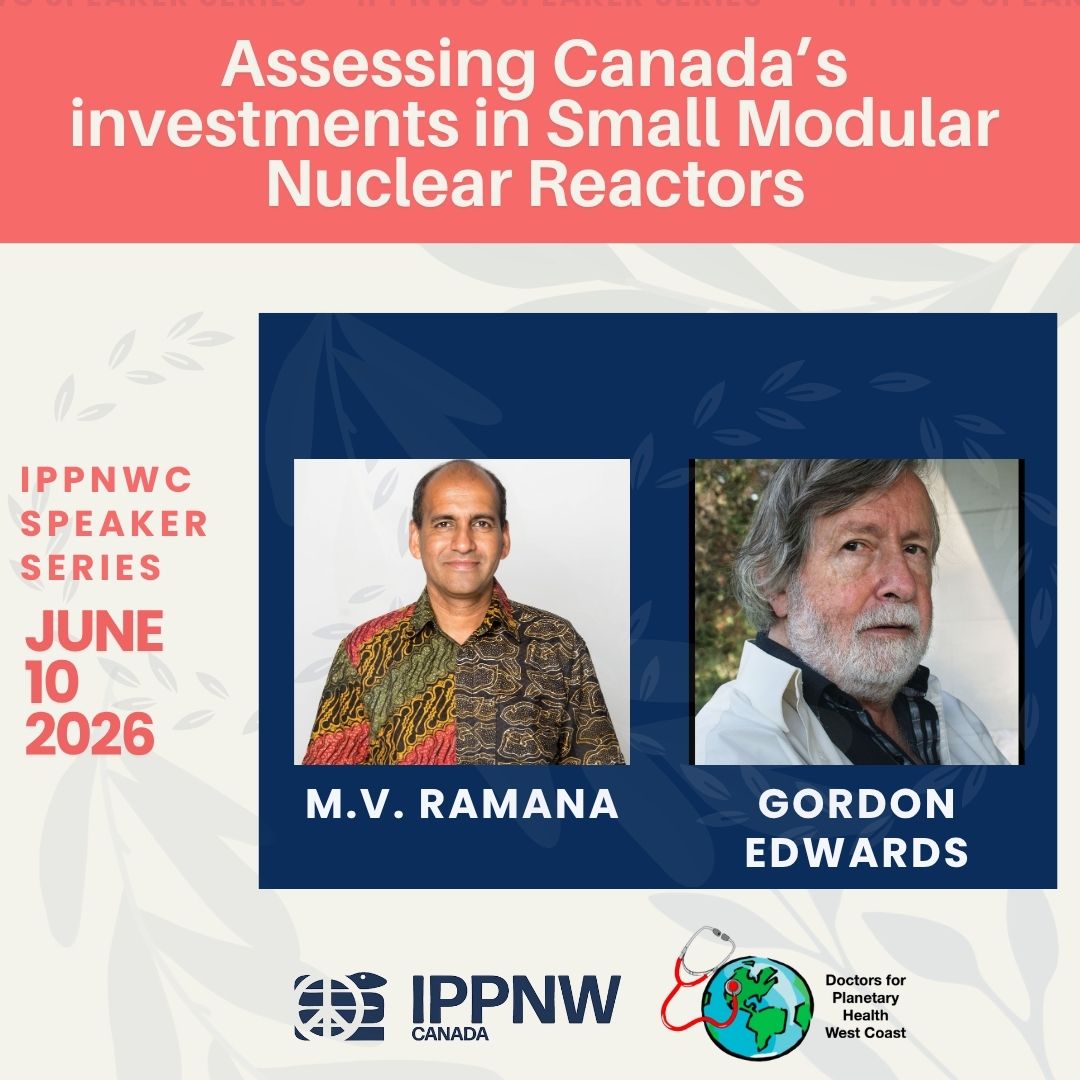
10 June – Assessing Canada’s Investments in Small Modular Nuclear Reactors – https://zoom.us/meeting/register/IiqHA5feRhaEBycOLNTJlA#/registration


Cuba Is Not a Failed State – It Is a Besieged State
PETITION: “Global Appeal to Endorse Palestinian Right of Return of Refugees”
To see nuclear-related stories in greater depth and intensity – go to https://nuclearinformation.wordpress.com
-
Archives
- June 2026 (89)
- May 2026 (306)
- April 2026 (356)
- March 2026 (251)
- February 2026 (268)
- January 2026 (308)
- December 2025 (358)
- November 2025 (359)
- October 2025 (376)
- September 2025 (257)
- August 2025 (319)
- July 2025 (230)
-
Categories
- 1
- 1 NUCLEAR ISSUES
- business and costs
- climate change
- culture and arts
- ENERGY
- environment
- health
- history
- indigenous issues
- Legal
- marketing of nuclear
- media
- opposition to nuclear
- PERSONAL STORIES
- politics
- politics international
- Religion and ethics
- safety
- secrets,lies and civil liberties
- spinbuster
- technology
- Uranium
- wastes
- weapons and war
- Women
- 2 WORLD
- ACTION
- AFRICA
- Atrocities
- AUSTRALIA
- Christina's notes
- Christina's themes
- culture and arts
- Events
- Fuk 2022
- Fuk 2023
- Fukushima 2017
- Fukushima 2018
- fukushima 2019
- Fukushima 2020
- Fukushima 2021
- general
- global warming
- Humour (God we need it)
- Nuclear
- RARE EARTHS
- Reference
- resources – print
- Resources -audiovicual
- Weekly Newsletter
- World
- World Nuclear
- YouTube
-
RSS
Entries RSS
Comments RSS
 nuclear-news