Revealed: USAID, National Endowment for Democracy & Open Society Quietly Bankroll Cuba’s “Independent” Media In Push for Regime Change

All this, however, pales in comparison to the resources the U.S. has dedicated to Radio and TV Martí. Founded in 1985 by the Reagan administration, the Miami-based network boasts dozens of full-time employees and receives tens of millions of dollars from Washington annually.
Anti-government media are only a small portion of the huge array of groups Washington secretly funds and supports. From musicians and academics, to civil society, educational, and religious groups, to think tanks, charities and NGOs, there exists a vast nexus of organizations receiving vast sums of money from the U.S. government.
Alan Macleod, 6 June 26, https://www.mintpressnews.com/revealed-usaid-ned-open-society-quietly-bankroll-cubas-independent-media-in-push-for-regime-change/290942/
Amid escalating U.S. aggression towards the Cuban island through a maximum pressure campaign and the threat of military intervention, the United States government has been covertly funding a huge network of Cuban media outlets that claim to be independent in a push for regime change against the independent socialist government.
These outlets present themselves as unbiased investigative journalism, but are quietly being financed by Washington through USAID, the National Endowment for Democracy and the Open Society Foundation in order to sow discontent across the Caribbean nation, softening it up for a potentially “imminent” invasion by the Trump administration.
Cuba faces some of its worst energy blackouts in its history, thanks to the U.S. blockade, which is attempting to strange the island into submission. As a Communist state defying U.S. orders, Cuba has, since 1959, been in the crosshairs of Washington, who are attempting to overthrow the government. MintPress sheds light on this shady regime change nexus.
CubaNet is one of the most influential and well-established news outlets covering affairs on the Caribbean island. Founded by anti-government activists in 1994, the site has become the go-to source of information for corporate media, who regularly cite it, and present it as an objective and unbiased independent media (e.g., The Washington Post, The Wall Street Journal, Fox News, and The Los Angeles Times). CubaNet reporters have written op-eds in major U.S. newspapers such as USA Today, calling for an immediate change in government on the island.
‘Independent Journalism,’ Brought To You By The U.S. State Department
But CubaNet is not as independent as it seems. The outlet is bankrolled by the U.S. national security state. CubaNet has received millions of dollars in funding from USAID and the National Endowment for Democracy, as well as the Open Society Foundation.
One currently active $500,000 USAID grant, for instance, was awarded to CubaNet to “engage on-island young Cubans through objective and uncensored multimedia journalism.” While ostensibly a laudable goal, even the grant’s own one-sentence description hints that its purpose is to undermine and attack the Cuban government. It states that it will (emphasis added) “increase the free flow of information to and from Cuba in order to offset the regime’s disinformation campaigns.”
Another news organization receiving huge sums of money from Washington is ADN Cuba. Literally meaning “Cuba’s DNA,” the outlet has amassed a significant following online, boasting over 100,000 subscribers on YouTube, over 200,000 on Instagram, and over 1.3 million on Facebook. It describes itself as “an independent media outlet committed to freedom and democracy in Cuba.” Yet it is actually based in Spain. And it does not seem particularly committed to transparency about its funding.
What is clear, however, is that ADN Cuba has received millions of dollars from the U.S. national security state. In September 2024, USAID approved a $1.1 million grant to ADN Cuba – a gigantic amount of money for an organization that publishes barely one story per day on its website. This was on top of a $1.5 million allocation for the 2022-2024 period. Indeed, since 2020, ADN Cuba has received in excess of $3 million from USAID alone. This relationship is not disclosed to readers– even in stories directly covering USAID funding Cuban media– and is relegated to the footnotes of obscure U.S. government funding databases.
Diario de Cuba is another Spanish-based news outlet that publishes a wide variety of stories, all with one thing in common: a deep aversion to the Cuban government. The BBC describes it and CubaNet as key sources for impartial news, run by journalists who “report without censorship and to paint a broader picture on the country’s reality.”
And just like CubaNet, Diario de Cuba has received seven-figure funding from Washington. Between 2016 and 2020, Diario de Cuba received $1.3 million in USAID cash – almost as much as CubaNet over the same period. This generous funding has allowed it to reach a global audience, with over 600,000 followers on Facebook alone.
Regime Change Networks
Read more: Revealed: USAID, National Endowment for Democracy & Open Society Quietly Bankroll Cuba’s “Independent” Media In Push for Regime ChangeThe Central Intelligence Agency used to directly (and secretly) sponsor hundreds of media outlets across the world. However, after a series of scandals and more information about its nefarious activities came to public attention, Washington decided to outsource many of its most controversial foreign operations to organizations such as the National Endowment for Democracy and the U.S. Agency for International Development.
“It would be terrible for democratic groups around the world to be seen as subsidized by the CIA,” Carl Gershman, the NED’s longtime president, said, explaining the 1983 decision to create his organization. NED co-founder Allen Weinstein agreed: “A lot of what we do today was done covertly 25 years ago by the CIA,” he told The Washington Post.
Under the guise of democracy promotion and human rights, the U.S. government channels money to political and social groups across the world in order to maximize its strategic goals, including regime change.
In recent years, the U.S. has used the twin organizations of the NED and USAID to bankroll anti-government protests in Hong Kong, to attempt a color revolution in Belarus, to overthrow the government of Ukraine in 2014, and to organize riots across Iran earlier this year.
In Cuba, the NED and USAID played a critical role in organizing a (failed) uprising against the government in 2021. USAID in particular spent millions of dollars funding, organizing and promoting the San Isidro Movement – a collective of musicians, artists, and journalists– to lead a counter-revolution on the island.
San Isidro members were at the forefront of a wave of nationwide protests that July. The demonstrations were immediately signal boosted by Western corporate media, top celebrities, and U.S. politicians, including President Biden. Neitzens were flooded with the astroturfed “SOS Cuba” campaign, that trended across the Internet for days.
In the end, however, the coordinated efforts of the U.S. failed to convince ordinary Cubans to take to the streets, and the movement quickly petered out.
Esteban Rodríguez, a key member of the San Isidro movement, is a producer at ADN Cuba.
When U.S. Money Is Paused, “Independent” Media Immediately Collapse
The importance of U.S. government money to the survival and operations of these outlets was underlined early last year when the Trump administration chose to freeze funding to USAID and the NED. Announcing the decision, Elon Musk, then head of the Department of Government Efficiency, described USAID in particular as a “viper’s nest of radical-left Marxists who hate America.”
The effect on Cuban media was immediate. As soon as the money stopped flowing, dozens of organizations faced immediate liquidation. CubaNet published an emergency editorial asking readers to make up the shortfall. “We are facing an unexpected challenge: the suspension of key funding that sustained part of our work.” they wrote; “If you value our work and believe in keeping the truth alive, we ask for your support.” “Without [USAID] funds, it will be extremely difficult to continue,” CubaNet director Roberto Hechavarría Pilia added.
Diario de Cuba was in similarly dire straits. Its director, Pablo Díaz Espí, noted that “aid to independent journalism from the government of the United States has been suspended, which makes our work more difficult,” asking readers to donate.
Musk’s decision accidentally revealed a sprawling network of over 6,200 reporters and nearly 1,000 outlets worldwide that were quietly being trained, supported, and bankrolled by the CIA front, all under the banner of promoting “independent” media and freedom of information.
Another supposedly independent Cuban outlet plunged into crisis was El Toque (The Touch). Founded in 2014 and receiving hundreds of thousands of dollars from the NED, El Toque publishes in Spanish and English, and attempts to manipulate the exchange rates in Cuba.
The funding cut hit them badly, with editors announcing that they would immediately have to lay off half their staff (15 people) and stop working with dozens of freelancers, while looking for alternative funding sources.
El Estornudo (The Sneeze), is also generously financed by NED. In 2021 alone, the endowment awarded the investigative journalism outlet $180,000. It also receives copious support from the Open Society Foundation, although it insists that none of this U.S. money comes with any strings attached or affects its output.
While Western media often portray the Cuban media landscape as a David-and-Goliath fight between plucky independent media facing repression, and a sprawling state-sponsored propaganda apparatus, the gigantic sums handed out to these “underdogs” make them by far and away the best funded outlets on the island. A 2023 Guardian article, for instance, profiled 24-year-old photojournalist Pedro Sosa, who worked for both El Toque and El Estornudo. It presented the pair as “offer[ing] real reporting over stodgy state media” and journalists as poor and vulnerable truth tellers standing up for “freedom,” and facing a “crackdown” from the state.
But it also let slip that working for U.S.-backed media is not as bad a career move as portrayed, and is, in fact, an extremely lucrative profession. It casually mentions that salaries at tiny El Toque are ten times that of even the most senior journalists working in Cuban state media. In reality, then, these oppressed free speech warriors are actually some of the richest individuals on the entire island, thanks to the power of the U.S. dollar, which pays them handsomely to produce a constant stream of anti-government news.
In the end, the U.S.-backed outlets need not have worried, and NED and USAID funding resumed after some restructuring.
Jobs For the Boys
All this, however, pales in comparison to the resources the U.S. has dedicated to Radio and TV Martí. Founded in 1985 by the Reagan administration, the Miami-based network boasts dozens of full-time employees and receives tens of millions of dollars from Washington annually.
Unlike the rest of the journalism industry, workers at Radio and TV Martí enjoy strong job security and six-figure wages, despite the fact that the Cuban government is able to jam and block many of their broadcasts from reaching Cuba, meaning precious few people consume its content.
Since its creation, Washington has spent at least $800 million on Radio and TV Martí.
The outlets profiled make up only a small portion of the network of anti-government media being funded by the United States. Most of the recipients of American money remain anonymous – a decision taken in part to hide their identities and preserve their credibility inside Cuba.
The National Endowment for Democracy considers Cuba a “long-standing priority,” and is currently officially funding 32 separate projects on the island.
Media related grants include one $80,000 project titled “Strengthening Access to Information,” which promises to:
“[E]nhance access to information and promote critical thinking, the organization will produce daily reporting and analysis across various formats, providing independent perspectives on issues affecting citizens’ daily lives, including freedom of expression, public safety, human rights, and other pressing social concerns.”
Another $115,000 grant, titled “Expanding Access to Uncensored Media” notes that it will:
“[P]romote independent information, the organization will provide narrative journalism on censored topics, conduct investigations, and produce in-depth articles, photo essays, and opinion pieces while strengthening the media’s operational capacity.”
Thirty-one of the thirty-two projects hide the recipient’s name and identification, meaning that those groups working with the CIA cutout organization are generally only ever identified if they advertise this relationship, or, like when U.S. money was temporarily halted in 2025, they call for help.
Anti-government media are only a small portion of the huge array of groups Washington secretly funds and supports. From musicians and academics, to civil society, educational, and religious groups, to think tanks, charities and NGOs, there exists a vast nexus of organizations receiving vast sums of money from the U.S. government.
Two of these bodies include The Observatorio Cubano de Derechos Humanos (Cuban Observatory of Human Rights, or OCDH) and lawyers’ group, Cubalex.
Both groups produce reports denouncing the Cuban government, and are regularly cited as impartial authorities on human rights on the island in Western outlets, such as The New York Times, CNN, and The Washington Post. But what readers are not told is that both organizations are bankrolled by the U.S. national security state.
Records show that USAID has given almost $1.5 million to the OCDH. NED support, meanwhile, was crucial to Cubalex’s inception in 2010, and Washington continues to pay its staff wages to this day. As the company’s executive director, Laritza Diversent said last year,
“Without the support of National Endowment for Democracy, Cubalex would not have existed; to do the work we do requires resources. For 14 years, NED has been supporting us. Last October, after trying a lot of times, we [also] achieved a state Department grant.”
Thus, there is barely a corner of the anti-government Cuban opposition that has not been reached by U.S. money, either through government organizations such as the NED or USAID, or through institutions such as the Ford Foundation and Open Societies Foundation, which have historically performed a similar role in promoting American interests abroad.
Many of these groups are headquartered in South Florida, where U.S. government money is helping to subsidize thousands of jobs for the Cuban-American community. It is therefore no exaggeration to say that a significant part of Miami economy is propped by taxpayer money funding counter-revolutionary forces. Ironic, considering that conservative Cubans often vehemently object to government welfare programs in both the U.S. and Cuba.
Digital Bombardment
In 2010, a new social media and messaging app, Zunzuneo, took Cuba by storm. From nowhere, it went viral, picking up tens of thousands of users – a very large number for the time on such an internet-sparse island.
None of its users, however, were aware that the platform had been secretly created by USAID in order to promote regime change. Their plan was to first provide an excellent service that would capture the market, then to slowly drip feed Cubans anti-government messaging, and finally to direct them to join “smart mobs”, aimed at triggering a color revolution.
In an effort to hide its ownership of the project, the U.S. government held a secret meeting with Twitter founder Jack Dorsey, aimed at getting him to invest in the project. It is unclear to what extent, if any, Dorsey helped, as he has declined to speak on the matter.
Zunzuneo was abruptly shut down in 2012, perhaps because the Office of Cuba Broadcasting (which oversees TV and Radio Marti) had already created a new program called Piramideo.
Piramideo marketed itself as an app that allowed Cubans to receive world news for free, and without censorship. Almost immediately, however, locals reported being deluged with fake news about anti-government protests that never happened. Piramideo was shut down in 2015, after reporting on U.S. government meddling in Cuba caused a scandal and diplomatic embarrassment.
Today, however, with Cubans increasingly using American social media apps, this kind of subterfuge is largely unnecessary, as it can be done out in the open. During the 2021 San Isidro protests, apps such as Instagram and Twitter were openly participating in the attempt to overthrow the government, taking no action against a massive boom of clearly fake bot accounts parroting the exact same messages (down to the typos) and using the same astroturfed hashtag. Twitter’s editorial team even placed the protests – which drew barely a few thousand people into the streets nationwide – at the top of its “What’s Happening” for over 24 hours, meaning that every user worldwide would be notified. The failed putsch has come to be known as the “Bay of Tweets.”
Unending War on Cuba
In October, for the 33rd consecutive year, the United Nations voted overwhelmingly (165-7) to call for an end to the American blockade against Cuba. This economic war was established by the Eisenhower administration, in response to the Cuban Revolution of 1959, which overthrew the U.S.-backed dictator, Fulgencio Batista.
These illegal unilateral coercive measures, which an internal U.S. government memo states are designed to “decrease monetary and real wages, to bring about hunger, desperation and overthrow of government,” cost Cuba billions every year, and severely impede its development.
The U.S. attempted to invade Cuba in 1961, and brought the world to the brink of annihilation during the subsequent Cuban missile crisis. It reportedly attempted to kill its leader Fidel Castro hundreds of times, and carried out waves of terror attacks against the country, including using biological weapons on the island.
Successive administrations continued the economic war against Cuba, which was ramped up after the fall of the Soviet Union. But the Trump State Department, run by Cuban-American Marco Rubio, has taken it to a new level, declaring the island to be one of its top priorities.
Trump himself has declared that Cuba is “next” on the list of countries being targeted for regime change. “We may stop by Cuba after we’re finished” with Iran he said last month.
In response, Cuban president Miguel Díaz-Canel said his country was ready to repel any U.S. invasion, as it did during the Bay of Pigs, stating:
“The moment is extremely challenging and calls upon us once again, as on April 16, 1961, to be ready to confront serious threats, including military aggression. We do not want it, but it is our duty to prepare to avoid it and, if it becomes inevitable, to defeat it.”
It is in this context that the U.S. government’s funding of a vast array of media outlets targeting Cuba should be seen; the media attack is just one facet of Washington’s multipronged approach to regime change.
Many of the organizations profiled here publish in English, and nearly all are used as supposedly credible sources of information on Cuba for Western corporate media, meaning that U.S. State Department narratives are laundered into the public consciousness through this network.
Many Cubans and Americans are completely unaware that their news about the island comes largely through a matrix of shady outlets quietly funded by the U.S. national security state via the NED and USAID. Their purpose is to keep up the flow of negative stories in order to soften the public up into accepting regime change on the island. After all, in war, truth is always the first casualty.
Alan MacLeod is Senior Staff Writer for MintPress News. He completed his PhD in 2017 and has since authored two acclaimed books: Bad News From Venezuela: Twenty Years of Fake News and Misreporting and Propaganda in the Information Age: Still Manufacturing Consent, as well as a number of academic articles. He has also contributed to FAIR.org, The Guardian, Salon, The Grayzone, Jacobin Magazine, and Common Dreams. Follow Alan on Twitter for more of his work and commentary: @AlanRMacLeod.
 Republish our stories! MintPress News is licensed under a Creative Commons Attribution-NonCommercial-ShareAlike 3.0 International License.
3 CommentsMay 15th, 2026

Alan Macleod
What’s Hot
Hezbollah’s Cheap FPV Drones Are Making Israel’s High-Tech Military Obsolete
The Battle for Bint Jbeil: Israel Revisits A Symbolic Defeat As Resistance Holds The Line
Iranian Jewish Association Describe Israel as “Ominous Zionist Regime” After Israeli Strikes Destroy Historic Synagogue on Passover
US & Israel Bomb 307+ Medical Facilities in Iran Carrying on Long Tradition of Targeting Medical Workers
Hezbollah Destroys 50 Israeli Merkava Tanks in Three Weeks As Israel Fails to Occupy South Lebanon
Starve, Strangle, Invade: How Washington’s Siege of Cuba Is Pushing a Nation to the Brink
What makes the situation particularly tragic, Benjamin argued, is Cuba’s long history of providing medical assistance to the world. She recalled being treated by Cuban doctors while working in Africa and noted that Cuba has trained physicians and deployed medical missions across dozens of countries. Even under severe economic constraints, Cuba has maintained a reputation for international medical solidarity that far exceeds what might be expected from a small island nation.
Yet today, she says, the country that has helped save lives around the globe is struggling to obtain the fuel and medical supplies needed to care for its own people.
June 3, 2026, Joshua Scheer, https://scheerpost.com/2026/06/03/starve-strangle-invade-how-washingtons-siege-of-cuba-is-pushing-a-nation-to-the-brink/
Medea Benjamin warns that a decades-long economic war against Cuba has escalated into what she calls a “medieval siege,” as fuel shortages cripple hospitals, food systems and daily life while U.S. officials openly discuss military options.
For more than six decades, Washington has tried to force Cuba to its knees. Today, according to peace activist Medea Benjamin, that campaign has reached a new and dangerous stage. Fuel shipments have been blocked, foreign companies threatened, humanitarian aid obstructed and military rhetoric intensified, creating what Benjamin describes as a modern-day siege designed to break the Cuban economy and the Cuban people alike.
In this wide-ranging conversation with Dr. Margaret Flowers, Benjamin argues that the crisis unfolding on the island is not the result of natural disaster or governmental incompetence, but of deliberate U.S. policy. She details how shortages of fuel have crippled transportation, disrupted hospitals, spoiled food supplies and contributed to worsening public health conditions. The goal, she says, remains largely unchanged from the earliest days of the Cold War: create enough hardship that Cubans turn against their government.
But the discussion goes beyond Cuba. Benjamin places the escalating pressure on Havana within a broader pattern of U.S. foreign policy — one that relies on sanctions, coercion and military power to maintain global influence even as that influence declines. From Venezuela and Iran to Palestine and beyond, she argues that economic warfare has become a preferred tool of empire, inflicting immense humanitarian costs while remaining largely invisible to the American public.
At a moment when reports of possible military action against Cuba are once again circulating, Benjamin issues a stark warning: what is happening in Cuba today is not simply a foreign policy dispute. It is a test of whether the United States will continue down a path of punishment, intervention and regime change, or whether ordinary people can build enough pressure to choose diplomacy, solidarity and peace instead.
For more than sixty years, the United States has sought to isolate, punish and ultimately reshape Cuba through economic warfare. Yet according to longtime peace activist and CODEPINK co-founder Medea Benjamin, what is happening today goes far beyond the familiar story of sanctions and diplomatic hostility. Speaking with Margaret Flowers on Clearing the FOG, Benjamin described a rapidly escalating campaign that she says has pushed Cuba into a humanitarian emergency while raising fears that Washington could be laying the groundwork for direct military intervention.
Benjamin did not mince words when describing current U.S. policy.
“I struggle to find the correct adjective,” she said. “It is so horrific that there’s almost no words.” What began decades ago as an attempt to create economic pressure on Cuba has, in her view, evolved into something far more extreme: a policy designed to systematically cut off every possible source of fuel, trade, investment and survival.
The consequences are visible throughout Cuban society.
According to Benjamin, the island is facing severe fuel shortages that have crippled transportation, disrupted industrial production and created rolling blackouts that affect nearly every aspect of daily life. Hospitals struggle to maintain services. Refrigerators stop working, causing food to spoil. Public transportation becomes unreliable or nonexistent. Families living in apartment buildings face interruptions in water supplies because pumps cannot operate consistently without electricity.
Perhaps most alarming, Benjamin pointed to rising infant mortality rates as evidence of a public health crisis that she believes is directly connected to the tightening blockade. Cuba once boasted one of the lowest infant mortality rates in the Western Hemisphere, often outperforming wealthier nations including the United States. That achievement, she warned, is now being undermined by shortages of medicine, medical equipment and basic necessities.
What makes the situation particularly tragic, Benjamin argued, is Cuba’s long history of providing medical assistance to the world. She recalled being treated by Cuban doctors while working in Africa and noted that Cuba has trained physicians and deployed medical missions across dozens of countries. Even under severe economic constraints, Cuba has maintained a reputation for international medical solidarity that far exceeds what might be expected from a small island nation.
Yet today, she says, the country that has helped save lives around the globe is struggling to obtain the fuel and medical supplies needed to care for its own people.
At the center of the crisis is oil.
Benjamin explained that the Trump administration has effectively declared that “not one drop of oil” should reach Cuba. Since January, she said, only a single Russian tanker has successfully delivered oil to the island, while other shipments have reportedly been pressured, delayed or canceled. Countries that might normally assist Cuba have faced threats of sanctions, tariffs or other forms of retaliation from Washington.
The blockade’s reach extends beyond governments. New sanctions target foreign companies operating in key Cuban sectors such as energy and mining. Benjamin cited the example of a Canadian company that had worked in Cuba for decades but is now severing ties under mounting U.S. pressure. The strategy, she argued, is designed not merely to isolate Cuba economically but to make normal commerce virtually impossible.
China has attempted to provide assistance, sending rice and helping construct solar energy projects, while solidarity groups continue delivering humanitarian aid. But Benjamin stressed that food aid alone cannot solve the crisis. Without sufficient fuel, transportation networks collapse, power grids remain unstable and basic economic activity becomes impossible.
The contradiction at the heart of U.S. policy became especially clear when Flowers asked about Washington’s proposal to provide roughly $100 million in assistance to Cuba through selected organizations.
Benjamin called the offer deeply hypocritical.
The economic damage caused by sanctions, she argued, amounts to billions of dollars annually. Offering a fraction of that amount while continuing the policies responsible for the suffering is akin to creating a crisis and then presenting oneself as the rescuer. She noted that Cuban officials estimated the proposed aid represented only a tiny portion of what sanctions cost the country.
While humanitarian groups continue delivering food and medicine under limited exemptions to U.S. sanctions, Benjamin warned that aid alone cannot address the scale of the crisis. Organizations including CODEPINK, Global Exchange, Global Health Partners and others have mobilized delegations and donations, but they are attempting to fill a gap created by a policy that deliberately restricts Cuba’s access to international trade and finance.
More troubling still is the growing discussion of military action.
Benjamin pointed to reports that U.S. military assets have been repositioned in the Caribbean and that officials connected to Southern Command have indicated preparations exist for a possible operation against Cuba. While she acknowledged uncertainty about whether Washington intends a full-scale invasion, targeted regime-change operation or continued economic strangulation, she argued that the rhetoric itself creates instability and fear.
She believes advocates of regime change are hoping that worsening conditions will eventually provoke unrest and political upheaval on the island.
The recent U.S. indictment of Raul Castro, now 94 years old, further fuels those concerns. Benjamin argued that reviving a decades-old case involving the “Brothers to the Rescue” aircraft serves less as a legal action than as a political pretext. She compared it to earlier efforts to criminalize leaders in other targeted countries before pursuing broader interventionist objectives.
The larger issue, however, extends far beyond Cuba.
Throughout the interview, Benjamin repeatedly returned to a theme that has defined much of her activism: the connection between U.S. foreign policy and domestic inequality.
America’s military spending, she argued, continues to grow even as political leaders claim there is insufficient money for healthcare, affordable housing, education and other public needs. She pointed to a Pentagon budget that now exceeds one trillion dollars annually and questioned why basic social investments remain politically impossible while military expenditures expand almost without debate.
Benjamin also linked foreign intervention to migration, surveillance, policing and the erosion of civil liberties at home. The consequences of empire, she suggested, do not remain overseas. They eventually return to shape life inside the United States itself.
Yet despite her grim assessment of current events, Benjamin ended on a note of cautious optimism.
She argued that the global balance of power is shifting. Countries across the Global South are developing alternatives to U.S. dominance through new economic partnerships and institutions. China, BRICS nations and other emerging centers of influence are creating a world that is increasingly multipolar, reducing Washington’s ability to dictate outcomes unilaterally.
At home, Benjamin believes ordinary people must build new forms of solidarity and political engagement. She highlighted the “Summer of Peace and Love” initiative, which seeks to create community spaces for organizing, education, mutual aid and antiwar activism. Drawing inspiration from movements such as Occupy Wall Street, she argued that people need opportunities not only to protest existing systems but to model alternatives rooted in cooperation and democracy.
As the interview concluded, Benjamin delivered a straightforward message: Americans who oppose military escalation should pressure Congress to support measures that would block any invasion of Cuba and reject another chapter of interventionist foreign policy.
Whether one agrees with her analysis or not, the warning she offers is unmistakable. Cuba is not simply facing another round of sanctions. According to Benjamin, the island is confronting a coordinated campaign of economic suffocation whose human costs are already being measured in shortages, blackouts, deteriorating health conditions and growing uncertainty about what comes next. In a world already scarred by war and confrontation, she argues that the last thing the Caribbean needs is another conflict manufactured in Washington.
15TH INTERNATIONAL URANIUM FILM FESTIVAL RIO DE JANEIRO AWARDS
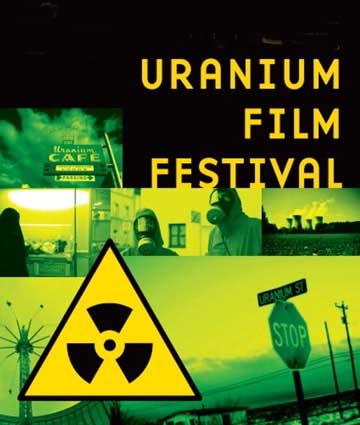
Uranium Film Festival, Jun 03, 2026
Films from Canada, Spain, Germany, Brazil and the USA won the top awards at the 15th International Uranium Film Festival of Rio de Janeiro. The awards ceremony took place on Saturday, May 30, 2026, at the Cinematheque of the renowned Museum of Modern Art (MAM Rio). Bye, Bye Rio, hello Las Vegas. For those who could not make it to the Rio de Janeiro International Uranium Film Festival in time this year, you may join us in Las Vegas, Nevada. The 3rd International Uranium Film Festival in Vegas will be held this fall at the University of Nevada Boyd School of Law in cooperation with Principal Man Ian Zabarte from the Western Bands of the Shoshone Nation of Indians. The Shoshone are the most atomic bombed nation on earth. More than 900 atmospheric and underground nuclear explosions were conducted on their territory in Nevada by the US and 28 nuclear full-scale nuclear weapon detonations by the United Kingdom.
And these are the winners of the 15th International Uranium Film Festival of Rio de Janeiro, May 21 – 30, 2026.
EMERGING FILMMAKER AWARD
ALBRAUM
Germany, 2026, Directed by Maja Hohenberg, Poetic Documentary, 20 min. (Photo: Maja Hohenberg)
BEST INVESTIGATIVE DOCUMENTARY FILM
BOMBSHELL
USA, 2025, Directed by Ben Loeterman & Gaia De Simoni, Documentary Feature, 80 min.
BEST EXPERIMENTAL DOCUMENTARY
OUT OF CONTROL. REPORTS ON THE ATOMIC BOMB
Spain, 2023, Directed by Beatriz Caravaggio, Experimental Documentary, 50 min.
BEST DOCUMENTARY FEATURE FILM
THE ATOMIC SCREEN
Canada, 2025, Directed by Alain Vézina, Documentary, 52 min.
NATIVE SPIRIT AWARD
THE MOTH
Canada, 2025, Directed by: Michelle Derosier and Zoe Gordon, Short Fiction, 20 min. (Photo: Zoe Gordon)
HONORABLE MENTIONS
HIBAKUSHA – WANDERING SOUL
Brazil, 2025, Director: Joel Yamaji, Short documentary, 20 min. (Photo: Joel Yamaji)
HOLLYWOOD BOMB – HOW PRESIDENT TRUMAN AND GENERAL GROVES DESTROYED THE FIRST NUCLEAR EPIC
USA, 2026, Director: Greg Mitchell, Short documentary, 15 min.
THE ALPACA CONNECTION
USA, 2025, Director: Tom Brown, Comedy thriller short, 18 min.
TOO LATE TO LEARN
USA, 2026, Director: Thomas Kanady, Documentary, 68 min.
Statements of the Award Winners…………………………………………………………………………………………………………………………………………………………………………………………………………………………………. https://www.filmfestivals.us/blog/uranium_film_festival/15th_international_uranium_film_festival_rio_de_janeiro_awards
128 years of US exploitation, degradation of Cuba continues on steroids
17 May 2026 AIMN Editorial, By Walt Zlotow , West Suburban Peace Coalition Glen Ellyn IL, 128 years of US exploitation, degradation of Cuba continues on steroids – The Australian Independent Media Network
One must go back to 1898 for the last time the US was not exploiting Cuba and its people to benefit rapacious US capitalism and organized crime. That year the US cooked up fairy tale about Spain blowing up the US Maine, sent to Havana Harbor to intimidate Cuba’s Spanish ruler. The Maine did blow up but from an accidental internal explosion, not a Spanish mine. Those 261 sailors could not be said to have died in vain so President McKinley and his war party blamed Spain in order to declare war, kick Spain out of the Americas and take over Cuba for US exploitation.
But nothing in the previous 126 years compares to the diabolical cruelty, including death, the US has inflicted upon Cuba by President Trump and his bloodthirsty Secretary of State Marco Rubio.
This is not exaggeration. Need a lifesaving operation in Cuba under the Trump, Rubio oil blockade? Faggedaboudit. Much medical care is unavailable in oil starved Cuba when the lights go dark. Food and life sustaining supplies are becoming scares as farmers and merchants cannot get their wares to the people with a transport system largely shut down. Nearly a fifth of Cubans have fled the Trump, Rubio regime change operation.
Trump glories in their death and destruction he’s unleased. “THERE WILL BE NO MORE OIL OR MONEY GOING TO CUBA – ZERO! I strongly suggest they make a deal, BEFORE IT IS TOO LATE.”
Trump is expanding in more grotesque terms US policy to degrade Cuba into submission going back to 1960. A secret State Department memo back then under Eisenhower promoted overthrowing Castro thru:
“… a line of action, while adroit and inconspicuous as possible, denies money and supplies to Cuba to bring about hunger, desperation and overthrow of the Castro government.”
Trump simply dropped the “adroit and inconspicuous” fig leaf.
Ironically, the first US embargo in Cuba was good for the Cuban people. In April, 1958, Eisenhower imposed an arms embargo on the Batista regime. The US had been supporting Batista’s murderous rule for 25 years to insure his support of US economic control, both legal and criminal that enriched US capitalists and Mafia enterprises to the detriment of the Cuban people. Eisenhower didn’t have an epiphany to help the Cuban people. He simply saw the inevitable triumph of Castro’s revolution and sought to curry favor with its eventual rulers.
Twenty months later Castro prevailed, Batista fled and Cuba finally ended 62 years of US cruelty and exploitation. Not quite. Within year the US imposed Cuban embargo 2.0 designed not to facilitate the inevitable revolution but to destroy it. Sixty-six years on, with the entire world community except Israel voting year after year in the UN for the US to stop, America’s endless lust to crush the Cuban revolution continues apace. And under the depraved Trump, Rubio oil embargo, it has become a monumental war crime against the 11 million sorrowful Cuban souls.
Nobody Sincerely Believes Cuba Threatens The United States
Caitlin Johnstone, May 22, 2026, https://www.caitlinjohnst.one/p/nobody-sincerely-believes-cuba-threatens?utm_source=post-email-title&publication_id=82124&post_id=198793245&utm_campaign=email-post-title&isFreemail=true&r=1ise1&triedRedirect=true&utm_medium=email
In a sign that the US is preparing for yet another evil war, Marco Rubio is now claiming that Cuba poses a “national security threat” to the United States, saying the likelihood of a peaceful agreement is “not high”.
“Cuba not only has weapons that they’ve acquired from Russia and China over the years, but they also host Russian and Chinese intelligence presence in their country — not far from where we’re standing right now,” Rubio told the press on Thursday. “So Cuba has always posed a national security threat to the United States. They, by the way, have been one of the leading sponsors of terrorism in the entire region.”
Rubio’s comments come as a US intelligence report laundered through Axios claims that Cuba may be preparing to launch a drone strike against US military forces. Havana said the Axios report misrepresents Cuba’s defensive measures as a preparation to attack, accusing the US of “fabricating pretexts, creating and spreading falsehoods, and distorting as extraordinary the logical preparation required to face a potential aggression.”
The US has also unsealed an indictment for Raul Castro, the 94 year-old brother of Fidel Castro, in a move that resembles the playbook used for the kidnapping of Venezuela’s President Nicolas Maduro.
The excuses for military action are already being rolled out. This happens as US war machinery relocates to the Caribbean, and as Cuba flounders under a crushing US oil blockade that is already inflicting a severe humanitarian toll.
And everyone knows it’s all based on lies. You know it. I know it. Marco Rubio knows it. The war propagandists know it. The gusanos brigading social media begging for war know it. We all know it’s a sham.
Not one person sincerely believes Cuba poses a threat to the United States.
No one sincerely believes Cuba just coincidentally became an urgent menace to US national security all of a sudden right when the US began scrambling to consolidate geostrategic control in the middle east and the western hemisphere.
Nobody actually thinks that a tiny, impoverished island nation is preparing to launch a war of aggression against the United States.
This is a performance put on by warmongers and bootlickers. It insults our intelligence and robs us of dignity.
If things cool down with Iran, then it’s a safe bet they’re going in for the kill shot on Cuba. The US empire never makes peace, it just moves the crosshairs of its war machinery from nation to nation.
We see this over and over again.
Yay! The troops are leaving Afghanistan — oh, now they’re waging a proxy war in Ukraine.
Excellent, they’re deescalating against Yemen — whoa, now they’re kidnapping the president of Venezuela.
Oh hey, it looks like the mass slaughter in Gaza has slowed down — oh, now they’re going to war with Iran.
Look, they’re pulling thousands of troops out of Germany — oh, it’s so they can move them to Poland.
Hey these Iran negotiations are finally getting somewhere — ah man, now they’re invading Cuba.
Over and over and over and over again. As soon as the human butchery slows down in one place, it picks up somewhere else.
The US empire exists in a constant state of war. War is the glue that holds the empire together. If the wars stop, the empire stops.
That’s why the denizens of the empire are never allowed to vote for an end to wars. You can vote for candidates who will end abortions or trans rights or corporate regulations, but you can’t vote for a candidate who will actually end the wars. Peace is never on the ballot, because war is too critical for the functioning of the empire.
Which is why it’s so important for us all to stand against the war machine. If we can end the wars, we can end the empire. Not until then will we have a shot at building a healthy world.
Cuba Has a Rich History of International Solidarity. US Wants to Extinguish It.
While tightening sanctions, the U.S, State Department has boosted funding for regime change programs.
A darling of the Cuban American right, Secretary of State Marco Rubio is leading the latest drive to destabilize the island.
Ultimately, the blockade isolates Cuba precisely because its revolutionary idealism mocks U.S. imperial ambitions. The sanctions are the culmination of seven decades of coercion and obscene hypocrisy. An empire that spreads war is strangling a country that exports doctors. Indeed, a rich government that claims vaccines are dangerous is persecuting a poor society that not only invents vaccines, but shares them with the world. And while celebrating genocide and deportations, U.S. leaders throttle a nation for its defiant tradition of solidarity: Its refusal to tolerate the suffering of the exploited. Decades after the Cold War, Cuba remains an obsessive target of a U.S.-backed counterrevolution, as well as the storm-lashed epicenter of the struggle against U.S. imperialism
Trump’s economic powerplay and preparations for a potential invasion are only the latest moves in an ongoing saga of aggression toward Cuba
Washington has long deployed economic pressure to challenge Cuba’s fiercely independent social and foreign policies
By Jonathan Ng , Truthout, May 20, 2026 https://truthout.org/articles/cuba-has-a-rich-history-of-international-solidarity-us-wants-to-extinguish-it/?utm_source=Truthout&utm_campaign=073831ce6e-EMAIL_CAMPAIGN_2026_05_20_08_57&utm_medium=email&utm_term=0_bbb541a1db-073831ce6e-650192793
At night, the U.S. Naval Base in Guantánamo, Cuba appears like a tangled string of Christmas lights along the coastline, casting colored silhouettes across the waves that lap ashore. Sailors and Marines pack the local sports bar blaring pop music. Others frequent the bowling alley or play video games under intense strobe lights. Yet in contrast to the brightly illuminated base, nighttime blots out the nearby town of Caimanera, as a result of the energy blockade on Cuba that President Donald Trump tightened this January.
Trump claims that the embargo is necessary to promote a democratic transition in Cuba. Similarly, U.S.-backed opposition leaders in Miami such as Rosa María Payá argue that “the Cuban people [are] grateful” for the sanctions, which will help “make Cuba great again.”
But the truth is far more bitter. Trump’s sanctions are accelerating a social crisis that has immobilized Cuban industry, gutted public services, and forced over 10 percent of the population to leave the island in recent years. Hospitals lack electricity, and grocery store shelves are empty amid rolling blackouts. Ratcheting up pressure, U.S. authorities issued a new raft of sanctions against senior Cuban officials this May, while conducting military reconnaissance flights off the coastline.
Trump’s economic powerplay and preparations for a potential invasion are only the latest moves in an ongoing saga of aggression toward Cuba. Rather than prioritizing democracy, Washington has long deployed economic pressure to challenge the island’s fiercely independent social and foreign policies — above all, its commitment to wealth redistribution, solidarity with liberation struggles, and opposition to U.S. imperial hubris.
Forming the Noose
Washington’s professed support for democracy in Cuba rings hollow when placed against the historical backdrop. In the 1950s, U.S. officials assisted the island’s dictator Fulgencio Batista, as he attempted to extinguish a popular revolution spearheaded by Fidel Castro. His regime tortured over 700 dissidents to death, dangling mutilated bodies from telegraph poles and tossing them into gutters. While training Batista’s forces, the CIA confided that they were “too enthusiastic” about torture. Nonetheless, Washington organized “to prevent a Castro victory,” fearing that his leftist agenda would undermine its vice-like grip over Cuban politics and commerce.
After taking power in January 1959, revolutionary leaders nationalized strategic industries, outlawed formal racial segregation, and pursued a breathtaking array of anti-poverty reforms. In response, the State Department promoted “economic warfare” by plotting to reduce access to oil and the U.S. sugar market. Officials emphasized that they should “disguise these actions” as peaceful. But their objective was clear: “to bring about hunger, desperation and overthrow of [the Castro] government.”
In 1961, President John F. Kennedy escalated pressure by bankrolling terrorist operations and a failed invasion at the Bay of Pigs. He also armed counterrevolutionaries that targeted the revolution’s literacy campaign, butchering teachers for teaching peasants to read.
To defend Cuba, Castro stationed Soviet missiles on the island. At the brink of nuclear war, Kennedy vehemently opposed a “no-invasion guarantee” in negotiations with Soviet leaders, while refusing to even talk to Cuban officials. Privately, he was blunt: “our objective is to preserve our right to invade” in an emergency. After the Soviets withdrew the missiles, U.S. officials insisted that their “ultimate objective” remained “the overthrow of… Castro,” sponsoring attacks against industrial sites and “tighten[ing] the noose around the Cuban economy.”
Yet their most cynical ploy targeted Cuba’s youth. As relations deteriorated, the U.S. government organized Operation Peter Pan, which sowed chaos and fractured families by convincing Cubans to ship their children to the United States. To spark a mass exodus, the CIA published false propaganda announcing that authorities planned to abolish parental authority. Radio advertisements warned that socialists would seize and “indoctrinate” every minor. “Don’t let your child be taken!” broadcasts warned.
Meanwhile, the State Department colluded with Father Bryan Walsh and the Catholic Welfare Bureau in Miami, which oversaw the transfer of over 14,000 Cuban children to the United States. Many never reunited with their families. Walsh packed Cuban children into orphanages, foster homes, and makeshift facilities. One Peter Pan survivor, Alex López, recalled living for one year in a snake-infested camp in the Everglades. Residents slept in canvas tents and washed in the swamp. But the worst part was the priests. López described the sadistic cruelty of one of the camp rectors and “being raped by that horrible man.” Many others also experienced sexual abuse, violence, and neglect. Walsh himself forced campers to strip before beating them with paddles. In 2006, one survivor claimed that the priest raped him.
Today, Cuban American leaders cite Operation Peter Pan as an example of principled resistance against communist tyranny. In reality, the operation was a cruel microcosm of U.S. policy toward Cuba, revealing both the cynicism of the counterrevolution and rapacity of Washington. Although under siege, the island became the only Latin American country without malnutrition or illiteracy, prompting UNICEF to call it a “paradise for children” in the region in 2010. Yet it was precisely these reforms that infuriated the U.S. and Cuban elite, turning Cuba into an intolerable symbol of dignity and defiance.
The Reverse Passage
The United States has not only targeted Cuba because of its socialist system but also due to the country’s commitment to radical solidarity. Throughout the Cold War, Cuban leaders repeatedly challenged U.S. aggression abroad and efforts to assert Western supremacy in the Global South.
In particular, Cuba offered a model for decolonization, while actively supporting national liberation movements. In 1959, the Cuban-Argentine revolutionary Ernesto “Che” Guevara led a solidarity trip to Gaza. Afterward, Cuba became a leading champion of Palestinian rights, offering substantial economic and military aid to the Palestine Liberation Organization. It also was a major ally to Vietnamese nationalists during the Vietnam War, sending equipment to build the Ho Chi Minh Trail. And Cuba became a safe haven for political refugees as U.S.-backed dictatorships ravaged Latin America through the 1980s.
Read more: Cuba Has a Rich History of International Solidarity. US Wants to Extinguish It.Most notably, half a million Cubans fought for decolonization in Africa. Their sacrifices helped Mozambique, Guinea-Bissau, Namibia, and other countries gain independence. Recognizing their contribution, the Algerian leader and herald of Pan-Africanism, Ahmed Ben Bella, declared that without the Cuban Revolution, “no place for justice, for dignity [would exist] in this world.”
Above all, Cuban support for Angola proved decisive. In 1975, U.S. officials encouraged apartheid South Africa to topple President Agostinho Neto and the Popular Movement for the Liberation of Angola (MPLA), which had recently wrested independence from Portugal. Secretary of State Henry Kissinger hoped that ousting Neto’s leftist government would enhance U.S. prestige. But as South African armor approached Luanda, Castro initiated Operation Carlota — airlifting thousands of Cuban troops to repel the invasion.
The historian Piero Gleijeses concludes that the operation embodied a genuine commitment to racial justice. It entailed a sort of reverse passage, as the Cuban descendants of African slaves crossed the Atlantic to vanquish white supremacy and the last vestiges of colonialism. Within months, Black Cuban and Angolan troops repelled the offensive. A South African military analyst lamented that “over 300 years of colonialism” was disappearing. “White elitism has suffered an irreversible blow.”
Within months, Black Cuban and Angolan troops repelled the offensive. A South African military analyst lamented that “over 300 years of colonialism” was disappearing. “White elitism has suffered an irreversible blow.”
In 1987, the United States again conspired with South Africa, as apartheid forces streamed across the border and cornered Angolan units at the town of Cuito Cuanavale. Cuba responded with a massive troop surge. “[W]e placed ourselves in the lion’s jaws,” Castro recalled, claiming that his soldiers maneuvered “like a boxer who with his left hand blocks the blow and with his right – strikes.” Against the odds, Cuban reinforcements secured a smashing victory. The counteroffensive not only preserved Angola’s sovereignty, but forced South Africa to grant Namibia independence and fatally weakened the apartheid regime. Nelson Mandela concluded that Cuba’s victory was “the turning point for the liberation of our continent, and of my people, from the scourge of apartheid.”
In short, the island’s pugnacious opposition to imperialism made it a permanent target of U.S. aggression. Historically, Cuba has spent a greater proportion of its GDP on foreign aid than virtually any other country. And unlike the United States, it is famous for fighting colonialism and directing medical missions, treating millions of poor patients across the world. Demonstrating their anticolonial convictions, 32 Cuban security personnel died defending Venezuelan territory from Trump’s illegal invasion this January. For these reasons, Washington has regarded Cuba as a threat to U.S. imperial leadership and the geographical hierarchies — in Venezuela, Palestine, Africa, and elsewhere — that it aims to preserve.
Unrestrained Extremism
After the Soviet Union dissolved, Cuba lost an essential lifeline, and its economy slid into a prolonged crisis. Smelling blood, Cuban American conservatives lobbied to tighten the blockade in order to instigate regime change. Miami remained the strategic base of the counterrevolution, as right-wing residents flexed their political connections to block the normalization of relations, strengthen the embargo, and trigger an uprising.
Despite their pro-democracy rhetoric, conservative Cuban American activists had an embarrassing record. For decades, they had used Florida as a launching pad for violent operations against Cuba, while viciously attacking moderate voices — at one point, perpetrating 45 percent of all terrorist bombings in the world. Far-right community leaders such as Jorge Mas Canosa, Luis Posada Carriles, and Orlando Bosch strafed beaches with machine guns, planted explosives, and even bombed a Cuban airplane killing 73 civilians. “All of Castro’s planes are warplanes,” Bosch explained in a chilling deadpan.
Under Mas Canosa’s guidance, the Cuban American National Foundation (CANF) became the main powerbroker shaping policy. Although posing as an independent grassroots actor, the foundation maintained deep ties to the U.S. government. CANF co-founder Raul Masvidal explained that “the National Security Council wanted to start an organization that would help popularize” its campaign of economic pressure and diplomatic isolation against Cuba.
And the foundation was its answer. Over the 1990s and 2000s, CANF laundered federal funds for activists bombing the island and the electoral campaigns of hardline politicians. The godfather of the Cuban American exile community, CANF president Mas Canosa aimed to turn Cuba into an anarcho-capitalist paradise, promoting “a very aggressive privatization campaign” that “has to be radical and… immediate. Privatize everything.” In 1992, he revamped sanctions with the Cuban Democracy Act, which Sen. Robert Torricelli (D-New Jersey), a leading recipient of foundation funds, designed to “wreak havoc on that island.”
Meanwhile, CANF financed Brothers to the Rescue, a self-identified humanitarian group of airplane pilots helping Cuban rafters reach the U.S. shoreline. Yet Fernando Morais’s book The Last Soldiers of the Cold War demonstrates that the Brothers were intensely political. Flying U.S. government aircraft, they frequently penetrated Cuban airspace to jam transmissions at Havana’s international airport, putting thousands of lives in danger. Director José Basulto boasted that pilots dumped a “tremendous amount” of propaganda exhorting citizens to “overthrow” the socialist state. The Brothers even passed reconnaissance information from flights to Cuban Americans planting bombs on beaches.
In 1996, Cuba shot down two of their aircraft, after persistently warning U.S. authorities against future incursions. Exploiting the incident, CANF pressed President Bill Clinton to sign the Helms-Burton Act, which drastically tightened the blockade. Facing an election year, Clinton signed the bill to win Cuban American votes, while privately recognizing that it violated international law. Beside themselves with victory, CANF then ramped up bombing attacks in Havana to undermine the tourist industry. Posada, who directed the strikes, admitted that Mas Canosa “controlled everything,” slipping him cash “[w]henver I needed money.”
Despite relentless harassment, Cubans successfully rebuilt their economy. Between 1999 and 2014, the election of left-leaning “Pink Tide” governments in Latin America allowed Cuba to escape its isolation, while securing new allies and trade partners. In 2015, President Barack Obama opened talks with Havana, taking the first step toward the normalization of relations. The diplomatic thaw eased restrictions on travel and remittances, relaxed controls on investment, and promoted bilateral cooperation in medical research and other areas.
More than anything, it signaled the failure of U.S. aggression. Since the 1990s, the Cuban American right had led a campaign to strangle the island, attempting everything from economic subterfuge to terrorism. Instead, its efforts revealed the revolution’s resilience, as well as the unrestrained extremism of its leading adversaries.
The Price of Dignity
The thaw did not last long. In 2017, the State Department claimed that Cuba launched “acoustic attacks” against its Havana embassy, harassing U.S. diplomats with a weapon that emitted a high-pitched noise powerful enough to inflict brain injuries. FBI investigators and medical specialists found no evidence that Cuba deployed such technology, or that the sci-fi device even existed. The most likely culprit for the sound was crickets chirping.
Yet Trump exploited the scandal to slam Cubans with heavy sanctions, which President Joe Biden later maintained, instigating a humanitarian crisis. In 2018, Cuba’s infant mortality rate was lower than the rate in the United States. Since then, it has increased 148 percent, as hospitals face acute shortages of medicine and equipment. The Center for Economic and Policy Research bluntly concluded this May that the blockade “has killed a lot of babies.”
While tightening sanctions, the State Department has boosted funding for regime change programs. Leaked documents reveal that officials have plotted in recent decades to build a militant opposition movement. They hope to respond “rapidly, discreetly, and opportunistically” to crises, “hastening a peaceful transition to a… market-oriented society.” The department has funneled illegal funding to government critics, sponsored dissident rappers, and attempted to create a social media platform to spark an uprising. To block access to foreign currency, it is even bullying poor countries into expelling Cuban doctors, depriving some communities of healthcare altogether.
A darling of the Cuban American right, Secretary of State Marco Rubio is leading the latest drive to destabilize the island. Rubio grew up amid the rabid politics and violence of counterrevolutionary Miami. In his memoir, he fondly recalls buying baseball tickets with cocaine money from his brother-in-law, who smuggled drugs with a Bay of Pigs veteran. Since January, he has overseen the energy embargo that frequently plunges the island into darkness.
Claiming Rubio as “one of our own,” CANF debuted a “roadmap” for the island this May, promoting the privatization of healthcare and education, dismantling of welfare programs, and end to “restrictions on profit repatriation.” Authors portray the United States as “the salvation of Cuba,” while asking Cubans to accept Cuban American leadership since, they say, “We know how a capitalist system works.” As the humanitarian disaster worsens, CANF continues to champion hardline tactics, including the indictment against Raúl Castro announced by the U.S. on Tuesday for his role in the 1996 defensive operation against Brothers to the Rescue. Appealing to Cuban American extremists, Trump now speculates about “taking Cuba.”
Nevertheless, Cubans continue to challenge oppression worldwide. The Palestinian doctor Murid Abukhater, who recently studied medicine in Cuba, emphasizes that they educate Palestinians for free to “save the lives of our people” from genocide. This solidarity is breathtakingly poignant since the island’s population has itself lived “under a long siege, just like us in Gaza,” Abukhater explained.
Ultimately, the blockade isolates Cuba precisely because its revolutionary idealism mocks U.S. imperial ambitions. The sanctions are the culmination of seven decades of coercion and obscene hypocrisy. An empire that spreads war is strangling a country that exports doctors. Indeed, a rich government that claims vaccines are dangerous is persecuting a poor society that not only invents vaccines, but shares them with the world. And while celebrating genocide and deportations, U.S. leaders throttle a nation for its defiant tradition of solidarity: Its refusal to tolerate the suffering of the exploited. Decades after the Cold War, Cuba remains an obsessive target of a U.S.-backed counterrevolution, as well as the storm-lashed epicenter of the struggle against U.S. imperialism.
The author would like to thank Sarah Priscilla Lee of the Learning Sciences program at Northwestern University for reviewing this article.
The CIA’s Cuba Ultimatum: Regime Change With a Diplomatic Smile
create the crisis, punish the population, scare off investment, then demand political surrender from the government you have spent decades trying to brea. – — force Cuba to bend to Washington’s will.
SCHEERPOST, May 19, 2026.
The CIA did not sneak into Havana this time. It landed in broad daylight.
Peter Kornbluh reports in The Nation that CIA Director John Ratcliffe led a high-level U.S. delegation to Cuba on May 14, delivering what amounted to a blunt Trump administration ultimatum: Washington is willing to “engage” on economic and security issues, but only if Cuba makes “fundamental changes.”
The message is hard to miss. After decades of sabotage, sanctions, assassination plots, covert operations and economic strangulation, the U.S. is now packaging regime-change pressure as diplomacy. Cuba is facing severe fuel shortages, blackouts and growing hardship — conditions Washington’s policy has helped intensify — while Trump officials tighten sanctions, target foreign investors and float military threats.
This is not diplomacy. It is submission politics.
Kornbluh’s piece lays out the old imperial script in its newest form: create the crisis, punish the population, scare off investment, then demand political surrender from the government you have spent decades trying to break. The CIA’s public trip to Havana may look different from Bay of Pigs secrecy or Operation Mongoose sabotage, but the goal remains painfully familiar — force Cuba to bend to Washington’s will.
The danger now is that economic warfare is being paired with open military signaling. Reports of increased U.S. intelligence flights near Cuba, threats involving aircraft carriers, possible indictments of Cuban leaders and leaked claims about Cuban drones all point toward a familiar pretext-building machine.
Once again, the United States claims to be defending freedom while tightening the noose around an island it has never forgiven for refusing to obey.
The CIA has spent decades trying to overthrow the Cuban government through covert operations, assassination plots, sabotage, and economic warfare — from the Bay of Pigs to Operation Mongoose and countless regime-change schemes. But now Washington isn’t even pretending anymore. CIA Director John Ratcliffe’s very public trip to Havana marks a dangerous new phase in the long U.S. campaign to force Cuba into submission politically and economically.
According to reports, Ratcliffe delivered what was essentially a “do or die” ultimatum from the Trump administration: either Cuba accepts Washington’s demands for change, or the window for diplomacy closes. He reportedly pointed to what happened in Venezuela after Maduro refused to bend to Trump’s threats, making clear the White House is prepared to “enforce its red lines” if Cuba refuses to capitulate.
The timing says everything. Ratcliffe arrived just one day after Cuba publicly admitted the country has effectively run out of fuel. “We have absolutely no fuel oil, and absolutely no diesel,” Cuba’s energy minister said on state television. That crisis didn’t happen in a vacuum. Cutting off Cuba’s access to fuel, electricity, and basic economic survival has become central to Trump’s pressure campaign against the island.
As one analyst put it, previous administrations tried to lure Cuba with carrots. Trump’s strategy is to beat Cuba with a stick until it collapses. And with U.S. military activity escalating around the region, it’s becoming harder to ignore the possibility that Washington is preparing for something even more dangerous if Cuba refuses to surrender to its imperial demands.
Read The CIA Goes to Cuba from Peter Kornbluh at The Nation
Trump Sends CIA Chief — Not Diplomats — To Deliver Cuba Threat
……………………………………………………………………………………………………………… https://scheerpost.com/2026/05/19/the-cias-cuba-ultimatum-regime-change-with-a-diplomatic-smile/
128 years of US exploitation, degradation of Cuba continues on steroids – Walt Zlotow
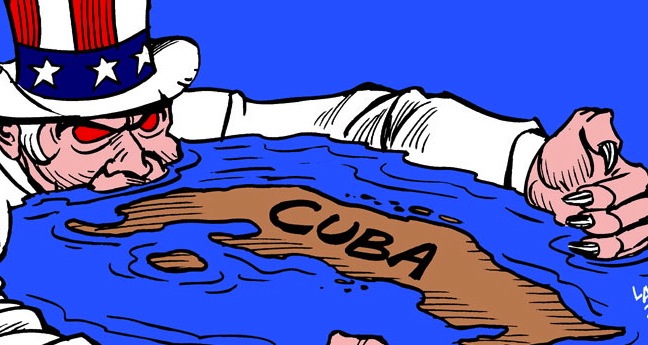
Walt Zlotow West Suburban Peace Coalition Glen Ellyn IL, 16 May 2026, https://theaimn.net/128-years-of-us-exploitation-degradation-of-cuba-continues-on-steroids/
One must go back to 1898 for the last time the US was not exploiting Cuba and its people to benefit rapacious US capitalism and organized crime. That year the US cooked up fairy tale about Spain blowing up the US Maine, sent to Havana Harbor to intimidate Cuba’s Spanish ruler. The Maine did blow up but from an accidental internal explosion, not a Spanish mine. Those 261 sailors could not to die in vain so President McKinley and his war party blamed Spain in order to declare war, kick Spain out of the Americas and take over Cuba for US exploitation.
But nothing in the previous 126 years compares to the diabolical cruelty, including death, the US has inflicted upon Cuba by President Trump and his bloodthirsty Secretary of State Marco Rubio.
This is not exaggeration. Need a lifesaving operation in Cuba under the Trump, Rubio oil blockade? Faggedaboudit. Much medical care is unavailable in oil starved Cuba when the lights go dark. Food and life sustaining supplies are becoming scares as farmers and merchants cannot get their wares to the people with a transport system largely shut down. Nearly a fifth of Cubans have fled the Trump, Rubio regime change operation.
Trump glories in their death and destruction he’s unleased. “THERE WILL BE NO MORE OIL OR MONEY GOING TO CUBA – ZERO! I strongly suggest they make a deal, BEFORE IT IS TOO LATE.” Trump is simply expanding in more grotesque terms US policy to degrade Cuba into submission going back to 1960. A secret State Department memo back then under Eisenhower promoted overthrowing Castro thru “a line of action, while adroit and inconspicuous as possible, denies money and supplies to Cuba to bring about hunger, desperation and overthrow of the Castro government.” Trump simply dropped the “adroit and inconspicuous” fig leaf.
Ironically, the first US embargo in Cuba was good for the Cuban people. In April, 1958, Eisenhower imposed an arms embargo on the Batista regime. The US had been supporting Batista’s murderous rule for 25 years to insure his support of US economic control, both legal and criminal that enriched US capitalists and Mafia enterprises to the detriment of the Cuban people. Eisenhower didn’t have an epiphany to help the Cuban people. He simply saw the inevitable triumph of Castro’s revolution and sought to curry favor with its eventual rulers.
Twenty months later Castro prevailed, Batista fled and Cuba finally ended 62 years of US cruelty and exploitation. Not quite. Within year the US imposed Cuban embargo 2.0 designed not to facilitate the inevitable revolution but to destroy it. Sixty-six years on, with the entire world community except Israel voting year after year in the UN for the US to stop, America’s endless lust to crush the Cuban revolution continues apace. And under the depraved Trump, Rubio oil embargo, it has become a monumental war crime against the 11 million sorrowful Cuban souls.
US Mining Plan Will Sacrifice Mexico’s Environment for Weapons and Tech
A new mining agreement provides no benefits for Mexico and fails to address health and environmental impacts.
By Tamara Pearson , Truthout, April 18, 2026
The U.S. and Mexico have established a mining agreement which has Indigenous and other residents of the Sierra Norte mountains, as well as activists around Mexico, worried.
Announced on February 4, the U.S.-Mexico Action Plan on Critical Minerals aims to guarantee the U.S.’s supply of minerals for its arms industry, technology like data centers and smartphones, and the so-called energy transition. It sets out price floors, identification of mining projects, geological mapping coordination, and mineral location identification for the U.S., but provides no benefits for Mexico and fails to address health and environmental impacts.
“They want us to show these gringo companies where the minerals are and then go and hand over everything, all without a fuss,” said Miguel Sánchez Olvera, a Totonac man from the Sierra Norte region who has been at the forefront of struggles that have expelled mines from the area. “That’s concerning, because where does it leave us, as Mexicans? Basically, they are going to keep stealing from us.”
The beautiful Sierra Norte — teeming with rivers and sprawling forests, and where a majority of people speak Indigenous languages — has massive amounts of minerals that the U.S. has identified as “critical,” such as manganese, gold, silver, and copper.
According to NATO, manganese is one of 12 minerals critical for the weapons industry; it is used in submarines, fighter aircraft, tanks, and torpedoes. For Mexico, however, manganese is a source of distress before it is even processed. In the lush Sierra Norte cordillera, stark black mountains of manganese ore and slag piles are set off by smoking chimneys from a plant run by Autlán, a major Mexican mining company. Homes nearby are drenched in black stains. Residents describe mornings of black clouds along the ground and black dust covering their windows.
Autlán operates four electric furnaces in its Teziutlán plant to smelt manganese ore, producing ferroalloys. Manganese is also on the U.S.’s critical minerals list and aside from weapons, it is vital to batteries and other steel applications.
Mexico as a whole is the top silver-producing country, and among the top producers of copper, lead, and zinc — all on the U.S.’s list. Silver is vital for new weapon systems, hypersonic missiles, bombs, fighter jets, satellites, torpedoes, radar systems, AI data centers, electric vehicles, 5G infrastructure, and smartphones. Demand for copper for munitions is skyrocketing as the U.S. restocks its arsenal, and it is essential for armor and electronics. Copper supply problems can cause significant weapon production delays, and supply chain vulnerabilities for weapons manufacturers.
The U.S. is home to 6 of the top 10 global arms companies and 13 of the top 15 global tech companies. The White House’s 2027 budget includes over 18 billion U.S dollars for the Department of Defense to stockpile minerals that are critical to the military industry. That figure is up from the current 2 billion U.S. dollars.
A few days before the U.S.-Mexico plan was signed, the White House had also announced Project Vault, which will establish a public-private partnership to stockpile critical minerals for U.S. businesses. These moves “imply hyper-extractivism — or basically, renewed extractivism,” César Enrique Pineda, a researcher and professor of geopolitical and capitalist intersections with the environment at the José María Luis Mora Research Institute, told Truthout……………………………………………………………………………………………………………………………………………………………………………………………..
Nobody Benefits From Weapons Except Weapons Companies
But while the mining industry is being heard, the mines bring no economic benefits to the country or to nearby communities.
“I very much doubt that Mexico would benefit economically from this plan because it has never been that way with mining projects. Extraction only contributes 0.9 percent to the GDP, for example,” said Olivera. “Mining represents just 0.66 percent of formal employment, and in terms of taxes, they contribute very little.” There are 22,247 active mining concessions in Mexico, with a total surface area of 10.2 million hectares, or 5.2 percent of Mexico’s territory………………………………………………………………………………………………………
Mining’s Legacy of Environmental Disaster
The U.S.-Mexico action plan “benefits investors, but it doesn’t benefit us at all,” said Urbano Córdova Guerraas, a local resident and also a member of Servicios Ambientales Amelatzin Hualactoc as we chatted in a small eatery near the Autlán plant. To extract copious amounts of manganese, Autlán has destroyed whole mountain tops in nearby Hidalgo state, buying off local politicians in order to do so. In Zoquitlán, Autlán chopped down 77 hectares of forest for a hydroelectric plant…………………………………………………………………………………………………………………………………………………….
Imposing Destruction
In order to operate without disruption, mining companies in Mexico are often involved in the disappearance of activists and with organized crime. The top minerals that attract organized crime groups are the same critical minerals that Mexico plans to supply to the U.S…………………………………………………………………………………………………………………………………….
Over the years, thousands of organized communities have declared themselves “mining-free territory” to legally prohibit mining in their territory.
Stopping mines after the fact is much harder, but many communities are willing to wage the legal and organizational battle. Even after victory, the struggle continues.
“We want to clean our rivers, so that the Sierra Norte de Puebla can be a paradise again,” said Sánchez. https://truthout.org/articles/us-mining-plan-will-sacrifice-mexicos-environment-for-weapons-and-tech/
Goiânia Survivors Challenge Netflix: ‘A Crime Against the Truth’
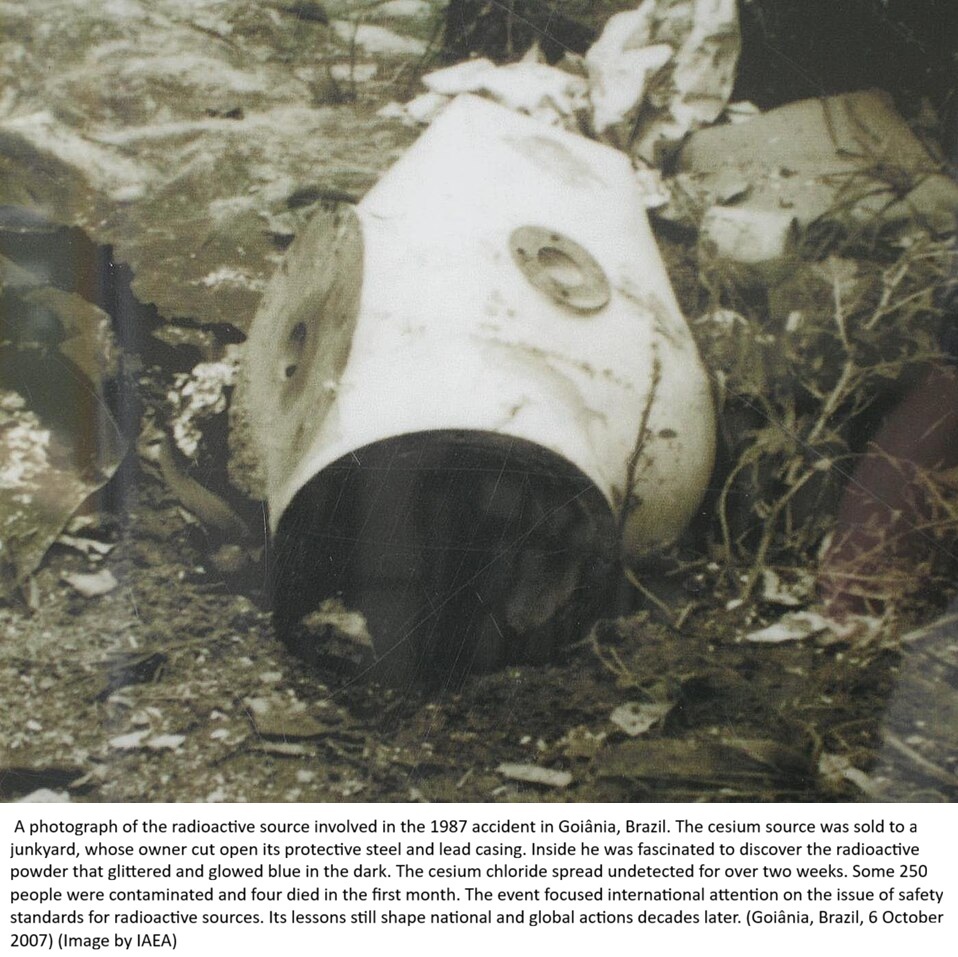
09.04.26 – Rio de Janeiro, Brazil – Pressenza New York, https://www.pressenza.com/2026/04/goiania-survivors-challenge-netflix-a-crime-against-the-truth/
In 2017, Odesson Alves Ferreira, a survivor of the 1987 Goiânia nuclear disaster in central Brazil, received the Lifetime Achievement Award of the International Uranium Film Festival. Odesson himself was severely contaminated by the highly radioactive cesium-137 and lives with the consequences. For over 30 years, he has campaigned for the recognition and fair compensation of the hundreds of cesium victims and for ensuring that this radioactive disaster in Goiânia is never forgotten and never repeated. Now he is strongly criticizing the new Netflix miniseries “Radioactive Emergency”.
By Norbert Suchanek
Netflix series “Radioactive Emergency” distorts facts
In September 1987, the worst nuclear disaster in Latin American history occurred in the central Brazilian city of Goiânia. A scrap metal dealer unknowingly released highly radioactive cesium-137 from an abandoned cancer treatment device, contaminating parts of the city and hundreds of people. Now, in March Netflix has released the miniseries “Radioactive Emergency,” based on this nuclear disaster and claiming to be inspired by true events. However, cesium-137-survivors dispute this. They argue that the Netflix series distorts the facts and ignores the victims.
“The distortion of historical facts is not only a narrative error, but in my view, also a profound disrespect to the memory of the victims and to us survivors,” criticizes Odesson Alves Ferreira, brother of scrap metal dealer Devair Alves Ferreira, who in 1987 bought the lead-encased radioactive head from two young waste pickers without even suspecting that it contained radioactive material.
In his statement to the Brazilian news portal Metrópoles regarding “Radioactive Emergency,” Odesson says: “By distorting the tragic historical facts for the sake of expediency, to make the plot more scientific and commercial, Netflix committed a crime against the truth. The true story we experienced doesn’t need sensational embellishments; it was tragic enough in itself.”
According to the 71-year-old, the streaming service “turns the victims of an irresponsible system into perpetrators and trivializes the tragedy. The memory of Brazil’s worst radioactive tragedy must be protected. We will not simply accept history being rewritten for convenience, because those who ignore the past are doomed to repeat its mistakes.” The former president of the Association of Cesium Victims (AVCésio) also criticizes that the Netflix film crew did not consult those actually affected beforehand.
According to the association, which represents more than 1,000 victims of the Goiânia radioactive disaster, its members were neither consulted on the script nor asked to share their experiences.
“We were not consulted during the production of the series based on our story. Filming didn’t even take place in Goiânia, but in São Paulo. How can you make a series about this story and not let those who experienced it firsthand have their say?” Metropóles quotes the association’s current president, Marcelo Santos Neves. He says, the film crew only contacted the former president, Suely Lina Moraes Silva, once. She reports that she accompanied a small group from the production team on a visit to the contaminated areas in Goiânia. After that, however, there were no further discussions with the team.
Although the International Atomic Energy Agency (IAEA) described the “Cesium-137 disaster” in Goiânia as an “accident,” it was, in the opinion of the victims and others, a crime. However, the villains are not the two young waste pickers, as the Netflix production suggests. “One of the most dangerous nuclear disasters in the world started with a stolen medical device,” the streaming service emphasizes on its website.
In fact, the two youngsters didn’t steal the device; they found it in a partially demolished building, where it had been left behind like trash. And collecting discarded waste for recycling isn’t a crime.
The real culprits are the owners of the partially demolished former cancer treatment center “Instituto Goiano de Radiologia”, who left the dangerous radiotherapy machine there unattended and unsecured like garbage, while at the same time the Brazilian Atomic Energy Commission (CNEN) failed to fulfill its supervisory responsibility for radioactive materials.
Therefore, years later, in the 1990s, the Brazilian judiciary sentenced CNEN to a fine of one million reais (about 200,000 US dollars) and the owners of the Instituto Goiano de Radioterapia to three years in prison.
In its statement to Metrópoles regarding criticism of “Radioactive Emergency,” Netflix affirmed that historical accuracy was a priority in the production of the miniseries. And according to its website, the responsible film team consulted experts from various fields, including doctors and physicists, during the development of the screenplay.
Brasiliens Tschernobyl
Exposição “Mãos de Césio”
Cuba has saved millions of lives across the world – we must fight for its survival as a duty to humanity
By Mike Treen, GPJA, Global Peace and Justice, AOTEAROA, 5 April 26
Since the Cuban revolution triumphed on January 1, 1959, Cuba has initiated a medical revolution as part of the social revolution. As Wikipedia noted:
The new Cuban government stated that universal healthcare would become a priority of state planning. In 1960 revolutionary and physician Che Guevara outlined his aims for the future of Cuban healthcare in an essay entitled On Revolutionary Medicine, stating: “The work that today is entrusted to the Ministry of Health and similar organizations is to provide public health services for the greatest possible number of persons, institute a program of preventive medicine, and orient the public to the performance of hygienic practices.”[15] These aims were hampered almost immediately by an exodus of almost half of Cuba’s physicians to the United States, leaving the country with only 3,000 doctors and 16 professors in the University of Havana’s medical college.
The Cuban leaders ordered new medical schools to be built to train the doctors needed to replace those who left with doctors who adhered less to the mercenary spirit of the leavers. The doctor-resident ratio increased six-fold by the late 1990s. Cuba has three times the rate of the US, UK or New Zealand – 9 per 1000 compared to 2.5 for the US and UK and 3.5 for New Zealand.
By 2012, infant mortality had dropped to 4.8 per 1,000 live births compared to 6 for the US. Life expectancy is one year less that the US (although it exceeded the US briefly during Covid). Cuba’s GDP per capita is one tenth of the US when measured in US dollars.
UK academic and Cuban expert, Helen Yaffe writes in the March 8, 2025, Jacobin entitled “Cuba Sends Doctors, the US Sends Sanctions”:
“Since 1960, some 600,000 Cuban medical professionals have provided free health care in over 180 countries. The government of Cuba has assumed the lion’s share of the cost of its medical internationalism, a huge contribution to the Global South, particularly given the impact of the US blockade and Cuba’s own development challenges. ‘Some will wonder how it is possible that a small country with few resources can carry out a task of this magnitude in fields as decisive as education and health,’ noted Fidel Castro in 2008.”
Cuba has also helped train doctors from across the globe at no cost to the tens of thousands given scholarships. Helen Yaffe writes: “In the 1960s, it began training foreigners in their own countries when suitable facilities were available, or in Cuba when they were not. By 2016, 73,848 foreign students from eighty-five countries had graduated in Cuba while that nation was running twelve medical schools overseas, mostly in Africa, where over 54,000 students were enrolled. In 1999, the Latin American School of Medicine (ELAM), the world’s largest medical school, was established in Havana. By 2019, ELAM had graduated 29,000 doctors from 105 countries (including the United States) representing 100 ethnic groups. Half were women, and 75 percent from worker or campesino families.”
There are currently 20,000 Cuban doctors working in 50 countries. The US NPR reported March 24, 2026, that the U.S. also recently passed a law allowing it to impose sanctions on countries that work with Cuban doctors.
“The countries that have broken off these contracts are afraid. They are afraid of retaliation by the United States,” says William LeoGrande, a professor of government in the School of Public Affairs at American University. “This is typical of Donald Trump’s foreign policy, which is based essentially on coercive diplomacy: ‘Do it our way, or else.’ So: ‘Get rid of the Cuban doctors, or else.’ ”
Sanctions deepened in 2019 by US President Trump
The deepening of sanctions since 2019 has resulted in the first deterioration of health statistics in Cuba ever. Even during the very difficult period in the early 1990s when the Soviet Unon collapsed and Cuba lost 90% of its trade partners and GDP declined 25%, they were able to maintain progress on health care. That is not the case today. The fuel blockade has resulted in blackouts that prevent medical institutions from functioning. Infant mortality is increasing. Life expectancy is declining.
A Science Magazine report from March 30, 2026 headed “As US blockade bites, Cuba’s health care and science suffer” is very dark and worth quoting at some length:
Cuba’s downward spiral accelerated in January, after the U.S. capture of Venezuelan President Nicolás Maduro choked off oil from Cuba’s main benefactor. (As Science went to press, the U.S. signaled it would allow a Russian tanker full of crude oil to reach Cuba this week.) The U.S. government hopes the crisis will finally dislodge the island’s Communist regime. “I do believe I will have the honor of taking Cuba,” U.S. President Donald Trump told journalists this month. Cuba’s science is collateral damage. “There’s an effort to degrade everything Cuba has achieved in education and science, and send us back to the Stone Age,” says Mitchell Valdés Sosa, director of the Cuban Neurosciences Center.
Nationwide electricity blackouts lasting 20 or more hours a day are forcing doctors to triage care and putting lives at risk. At the Hermanos Ameijeiras Hospital in Havana, “we receive the most complex neurosurgical cases in the country,” says neurosurgeon Marlon Manuel Ortiz Machín. “Surgeries must not stop; it’s sometimes a patient’s last chance.” Yet he’s been “caught in the dark” during complex operations. “All you can do is pray until the generator comes back on.”
Gail Reed, a volunteer for the U.S. nonprofit MEDICC who was in Havana last week, fears Cuba’s medical system is on the brink of collapse. “Hospitals are running out of supplies. It’s heartbreaking and unconscionable,” she says. With Cuba’s infant mortality rate rising, MEDICC is “trying to protect women with high-risk pregnancies” by installing solar panels in maternity homes, Reed says.
“We’re seeing malnourishment, people losing weight,” says Angela Garcia, executive director of Global Links, a Pittsburgh-based nonprofit. Flying into Havana last month, she says, “the first thing I noticed was an acrid odor”—from burning mounds of trash that has gone uncollected because of fuel shortages.
Damage to Cuba’s vaunted biotech sector could have an outsize impact on health and the economy. The 51 enterprises that make up BioCubaFarma, a government entity, produce scores of drugs, vaccines, and reagents, many of which are exported to 77 countries. One high-profile compound is CIMAvax-EGF, an immunotherapy against lung cancer that had positive results in early clinical trials in the U.S., done in partnership with the Roswell Park Comprehensive Cancer Center in Buffalo, New York.…………………………………………………………………………………………………………………………………………………………………………………………………………………………………………………………..
Cuba’s role fighting the Ebola crisis………………………………………………………………………………………………………………………………………………………………
Cuba’s role in training doctors for Timor Leste and many Pacific Islands
Unknown to most of us in this part of the world, Cuba is also providing doctors and training locals in most of the Pacific Island states in a special medical school in Cuba, The Latin American School of Medicine. The Australian Development Policy Centre blog reported in February 2012: (https://devpolicy.org/cuba-in-the-pacific-more-than-rum-and-coke-2-20120224/):………………………………………………………………………………………………………………………………………………………………………………………………………………………
Cuba has also run a programme over the last two decades that has cured millions of people of functional blindness. It is very similar to great programme established by the late New Zealand doctor Professor Fred Hollows who was a renowned New Zealand-born eye surgeon who dedicated his life to restoring sight. A good socialist himself, he was horrified at the neglect that Aboriginal Australians in particur were forced to endure. The Fred Hollows Foundation NZ continues his legacy by fighting to end avoidable blindness in the Pacific region, training local eye care specialists, and conducting thousands of sight-restoring surgeries.
Set in motion on July 8, 2004, Operation Miracle took shape within the context of the Bolivarian Alliance for the Peoples of Our America – otherwise known as ALBA – which Cuba and Venezuela established that year also.
By 2019, over four million people in 34 countries had been cured of their ailments through a similar but far larger programme run by Cuban doctors dubbed Operation Milagro. One recipient in 2007 was a pensioned sergeant from the Bolivian Army who had captured and executed the great Argentine-born Cuban revolutionary Che Guevara in 1967………………………………………………………………………
In 2019, Cuba was itself hit by the Covid crisis and had to invent three vaccines to treat itself and achieved the same 90% effectiveness as the Western drugs they were not allowed to get. Cuba has also developed advanced medical sciences and hundreds of patented drugs that we can’t access. This includes treatments for Dementia, Cancer, and Polio that would be very welcome in our own communities which suffer significantly from these ailments. My own brother has dementia and look at what Cuba has achieved here. U.S. Citizens in Cuba for New Breakthrough Alzheimer’s Treatment
But the lockdowns saw a collapse in tourism to Cuba, which was their main foreign currency earner. The newly elected US President Trump also imposed new extreme sanctions, which were maintained by President Biden despite promises to remove them during the election period. When Trump returned in 2025, Cuba was subjected to a renewed and even more extreme embargo from the US empire (including fuel). This has led to very harsh conditions in Cuba and a collapse in their ability to deliver the same medical internationalism as before, including for the Pacific.
Working people worldwide need to take our own lessons from the Ebola, Covid, and similar health crises facing the world. Public health should be promoted and available to everyone on Earth. Ebola and Covid demonstrated that neglect of the Earth and its people anywhere will ultimately be a threat to human survival everywhere. Putting profits before people is a dead end, literally. The monopoly control over drugs and other aspects of medical research by the drug companies needs to be broken. Finding an alternative way of running this world which puts people and the planet before profit also must involve defending Cuba and its revolutionary example.
The world owes a giant debt to Cuba. The Nuestra America solidarity convoys are an example of what needs to be done until Cuba is free of all threats. What we can be sure of is that Cuba will not surrender despite the hardship they face. Hundreds of thousands will fight if invaded. Cuba’s most famous singer, 79-year-old Silvio Rodriguez, volunteered to fight and demanded an AK47 which was delivered by the Cuban President. This week, fuel has arrived on a Russian ship despite threats. More will come as the world increasingly wins its freedom from the US empire and its domination. That empire is declining and nations are asserting their independence as best they can. Some (like Cuba, Iran, Palestine, Lebanon, Venezuela) are fighting for their survival and we must fight side by side with them for the future of humanity and the planet. The empire’s alternative is permanent war and economic collapse. Peace with justice comes when we defeat that empire once and for all. https://gpja.org.nz/2026/04/05/cuba-has-saved-millions-of-lives-across-the-world-we-must-fight-for-its-survival-as-a-duty-to-humanity/
As Trump Talks of Taking Cuba, Havana Promises “Impregnable Resistance”
March 18, 2026, Joshua Scheer, https://scheerpost.com/2026/03/18/as-trump-talks-of-taking-cuba-havana-promises-impregnable-resistance/
As Miguel Díaz-Canel denounced escalating threats from Donald Trump, Havana made clear that any U.S. attempt to impose regime change by force would not go unanswered.
“The United States threatens Cuba publicly, almost daily, with overthrowing the constitutional order by force,” Díaz-Canel wrote, accusing Washington of manufacturing crisis conditions through an economic siege that has targeted the island for more than sixty years.
He argued that the same powers tightening sanctions and restricting fuel are now presenting Cuba’s hardship as justification for intervention — a pattern familiar across decades of U.S. policy toward governments unwilling to submit to Washington’s demands.
“They announce plans to seize the country, its resources, its property, even the economy they themselves are trying to suffocate,” Díaz-Canel said, warning that collective punishment of the Cuban people is being openly paired with renewed language of occupation. “Any external aggressor will collide with impregnable resistance.”
The warning came after Trump declared from the White House that he believed he would have “the honor of taking Cuba,” speaking as if sovereignty itself were negotiable.
The remark landed amid intensifying pressure on the island, where fuel shortages and blackout conditions have deepened under a tightening oil embargo imposed after the U.S. confrontation with Nicolás Maduro.
According to recent reporting, officials inside the administration are treating Díaz-Canel’s removal as a condition for any future talks, reviving a familiar regime-change formula dressed up as diplomacy.
Marco Rubio, long one of Washington’s most aggressive voices on Cuba, reinforced that message by saying the island “has to get new people in charge,” a statement widely read in Havana as confirmation that coercion — not negotiation — remains U.S. policy.
Yet public support inside the United States for another foreign intervention appears thin. Recent polling shows more Americans oppose than support the embargo, while only a small minority back military action against Cuba.
Meanwhile, the economic war continues to hit ordinary Cubans hardest: prolonged blackouts, fuel shortages, and collapsing infrastructure remain the immediate consequences of sanctions that Washington insists are aimed at the government.
Against that backdrop, the first delegation of the Nuestra América Convoy reached Havana this week carrying humanitarian aid — food, medicine, and energy supplies intended to bypass the blockade’s human toll.
Editors from Current Affairs joining the mission said the convoy is meant not only to deliver material support but to send a political message: that many Americans reject threats of annexation, strangulation, and forced political change carried out in their name.
“Words like “sanctions” and “restrictions” really don’t capture the reality. This is an undeclared economic war, and a lethal one. Trump and Secretary of State Marco Rubio want to bring about regime change in Cuba, and have demanded that President Miguel Díaz-Canel resign from office. So they’re inflicting as much pain and suffering on the Cuban people as they can, in hopes of bringing the entire nation to its knees. If the blackouts continue, they will kill people; it’s possible they already have.
Now, it’s the rest of the world’s turn to come to Cuba’s aid. This month, a coalition of activists from around the globe are launching a humanitarian aid mission to Cuba to break the siege. Modeled after the Global Sumud Flotilla that attempted to bring aid to Gaza last year, the Nuestra América Convoy will converge in Havana on March 21, with participants coming from around the world by air and sea… Alex Skopic and Nathan J. Robinson: Why We’re Going to Cuba
For many on the American left, the convoy is more than a humanitarian delivery — it is a direct rejection of a foreign policy that continues to treat economic deprivation as leverage and sovereignty as conditional. At a moment when Washington openly discusses who should govern Cuba while tightening measures that deepen daily hardship on the island, the mission underscores a longer political truth: sanctions are never merely abstract instruments of pressure. They land in darkened homes, empty pharmacies, strained hospitals, and disrupted food supplies, while officials in Washington frame that suffering as evidence that the system must collapse. In traveling to Havana, the delegation is asserting that solidarity means refusing the logic that punishment can be called diplomacy when an entire population is made to absorb its cost.
At a time when American officials speak casually of deciding Cuba’s future, the deeper question is whether empire still assumes it owns that right. For Cuba, the message from Havana is equally blunt: pressure may deepen, but surrender is not on offer.
Trump hints U.S. will turn to Cuba after Iran: ‘Just a question of time’
Kevin Breuninger, Fri, Mar 6 2026, https://www.cnbc.com/2026/03/05/trump-cuba-iran-regime-change.html
Key Points
- President Donald Trump suggested his administration will turn its sights to Cuba after U.S. military operations in Iran are done.
- It “will be just a question of time before you and a lot of unbelievable people are going to be going back to Cuba, hopefully not to stay,” Trump told a crowd at the White House.
- On Iran, Trump said the U.S. and Israeli militaries are continuing to “totally demolish the enemy.”
President Donald Trump on Thursday suggested his administration will turn its sights to Cuba after U.S. military operations in Iran are finished.
“What’s happening with Cuba is amazing,” Trump said at the White House while participating in a visit of Inter Miami CF, the 2025 Major League Soccer champions.
“We think that we want to fix — finish this one first, but that will be just a question of time before you and a lot of unbelievable people are going to be going back to Cuba, hopefully not to stay,” Trump said to the Miami-heavy audience that included people of Cuban heritage.
The comments show Trump, less than a week into an escalating military conflict in the Middle East, is considering another major foreign policy move.
“We want you back, and we don’t want to lose you. We don’t want to make it so nice that they stay. But some people probably do want to stay. They love Cuba so much,” he said. “That was another one that wasn’t supposed to happen.”
Trump turned his focus to Cuba after providing a boastful update on the war in Iran, where he said the U.S. and Israeli militaries are continuing to “totally demolish the enemy.”
Trump said Secretary of State Marco Rubio has been “doing a fantastic job.”
“And you’ve been doing a fantastic job on a place called Cuba,” Trump added, prompting applause from the room.
Trump’s latest remarks on Cuba follow previous hints, some less subtle than others, that he and his allies have dropped about their plans for the Caribbean island nation.
“Cuba’s next,” Sen. Lindsey Graham, R-S.C., said Sunday on Fox News after the Iran strikes began.
In an interview with Politico earlier Thursday, Trump predicted that after Iran’s regime is toppled, “Cuba’s going to fall, too.”
Trump also took credit for choking Cuba’s economy to force them to the negotiating table, which he had vowed to do after the U.S. military in January attacked Venezuela, a major supplier of oil to Cuba.
“We cut off all oil, all money, or we cut off everything coming in from Venezuela, which was the sole source. And they want to make a deal,” he told Politico.
“We are talking to Cuba,” Trump also said in that interview. “How long have you been hearing about Cuba — Cuba, Cuba — for 50 years?” he added. “And that’s one of the small ones for me.”
New Addition to List of Nuclear Near Catastrophes

By David Swanson, World BEYOND War, February 23, 2026, https://worldbeyondwar.org/new-addition-to-list-of-nuclear-near-catastrophes/
There are many lists of nuclear close calls. We have a new one to add.
On Monday I visited a site in Caracas, Venezuela, where, very early in the morning on January 3, two powerful missiles slammed into the top of a hill, several feet apart, both beneath a tall telecommunications tower. The tower is largely gone. Debris flew for great distances — many times the distance of 270 meters to a nuclear reactor (white in the background in the photo above on original) and nuclear storage facility. The Earth shook. Buildings a great distance away were damaged and glass windows broken. A building adjacent to the nuclear reactor had rooms most significantly damaged. Electricity was cut off to a wide area, including to the nuclear reactor.
Any use of force whatsoever on any target at all is excessive when attacking someone’s country with violence, but it’s likely that much less force than two massive missiles could have sufficed for the crime of depriving people of electricity and communications. It’s also possible that something could have gone slightly wrong, resulting in a need to evacuate millions of men, women, children, and infants.
Does this bode well for the crime, threatened yet again, of attacking Iran? Will care be taken to avoid nuclear disasters, or in fact will such care be strictly avoided?
Or if Trump loses interest in Iran, could worse be in store for Venezuela?
The site of this nearly nuclear attack was the Venezuelan Institute of Scientific Research, a non-military facility. The nuclear reactor is for medical purposes, and nuclear materials are returned to this site from hospitals for storage.
The missiles were reportedly fired from perhaps a kilometer away by an F-35 — a wonderful airplane with its own long list of horrors and disasters.
The attack put a halt to research at the institute, and — according to people who had worked there for 30 years — was the first crime of any kind committed on the campus.
Workers were able to use generators and then to restore some power to the reactor in 4 days and full power in 10 days. There is talk of rebuilding the tower. There has also been a proposal to build a memorial on the site.
Visiting this location was part of the fourth day of a peace delegation to Venezuela. See reports on the first three days here:
66 years of US sanctions and embargo degrading Cuba have become depraved under Trump.
Walt Zlotow West Suburban Peace Coalition Glen Ellyn IL 19 Feb 26, https://theaimn.net/66-years-of-us-sanctions-and-embargo-degrading-cuba-have-come-to-this/
President Trump just made one of the most depraved statements about destroying living conditions for a foreign people ever uttered by a US president. “THERE WILL BE NO MORE OIL OR MONEY GOING TO CUBA – ZERO! I strongly suggest they make a deal, BEFORE IT IS TOO LATE.”
Trump doesn’t just talk depravity. He practices depravity. He’s ratcheted up America’s 66 yearlong campaign of economic sanctions and embargo to unprecedented heights. For the 11 million beleaguered Cuban people that means a new low in living standards from Trump’s cruelty.
Trump‘s criminal intervention in Venezuela allows him to cut off Venezuelan oil which suppled one third of Cuba’s oil. Not satisfied with that, Trump is pressuring Mexico to cut off the 44% of Cuban oil it supplies. If successful that would cut Cuba’s oil supplies by 78%. Mexican President Claudia Sheinbaum cancel one oil shipment but says Mexico will still provide Cuba oil based on “humanitarian needs.” Tho reducing oil shipments, Mexico is sending two ships containing 800 tons of desperately needed food, water and hygiene products. Hopefully Trump won’t mistake the Mexican ships for drug boats to be obliterated.
The oil shortage has already created a humanitarian crisis as less than half of Havana’s garbage trucks have fuel to cope with mountains of waste. Russia has ordered all its tourists out of Cuba. The collapsing tourist industry is destroying one of Cuba’s last economic lifelines.
But that is not good enough for Trump who’s considering a total blockade on oil imports to collapse the Cuban economy and depose the communist government. Last month Trump signed an executive order imposing tariffs on any country that sends oil to Cuba. Seeking to out-deprave the depraved Trump when it comes to Cuba, U.S. Charge d Affaires in Havana Mike Hammer told his staff “Now there is going to be a real blockade. Nothing is getting in. No more oil is coming.”
Nine years ago my wife and I visited Cuba for 10 days before newly elected Trump began dismantling Obama’s wonderful détente with Cuba. While his détente reestablished diplomatic relations and increased badly needed US tourism, it did not end the embargo which requires Congressional legislation. It was heartbreaking being there to ponder the madness of US policy inflicting such cruelty on such a beautiful country and its people for the past 57 years.
I’d been studying US Cuban relations since January 1, 1959 when news broke on Castro’s successful takedown of the brutal US supported Batista regime. I welcomed the news that 60 years of US exploitation of Cuba following our takeover of Cuba from Spain in 1898 had ended. Sadly, Ike rescinded his initial outreach to Castro within a year over US obsession in destroying any popular left wing government seeking to uplift its people suffering under colonialism.
My visit greatly expanded all I’d been studying about Cuba since 1959. It inspired me to develop a talk entitled ‘US Cuban Relations 1898 to Present: What They Didn’t Teach Us in School’ which I’ve presented many times. I end the talk imploring attendees to stay informed, support end to America’s cruel, heatless embargo, and visit Cuba to see for yourself its beauty and the need to end senseless US cruelty.
Alas, at next presentation I’ll drop the third request they visit Cuba to see for themselves its beauty and its people. The current depraved US administration is making Cuba unlivable for its 11 million citizens and any tourist who dares visit.
1 This Month
10 June – Assessing Canada’s Investments in Small Modular Nuclear Reactors – https://zoom.us/meeting/register/IiqHA5feRhaEBycOLNTJlA#/registration


Cuba Is Not a Failed State – It Is a Besieged State
PETITION: “Global Appeal to Endorse Palestinian Right of Return of Refugees”
To see nuclear-related stories in greater depth and intensity – go to https://nuclearinformation.wordpress.com
-
Archives
- June 2026 (79)
- May 2026 (306)
- April 2026 (356)
- March 2026 (251)
- February 2026 (268)
- January 2026 (308)
- December 2025 (358)
- November 2025 (359)
- October 2025 (376)
- September 2025 (257)
- August 2025 (319)
- July 2025 (230)
-
Categories
- 1
- 1 NUCLEAR ISSUES
- business and costs
- climate change
- culture and arts
- ENERGY
- environment
- health
- history
- indigenous issues
- Legal
- marketing of nuclear
- media
- opposition to nuclear
- PERSONAL STORIES
- politics
- politics international
- Religion and ethics
- safety
- secrets,lies and civil liberties
- spinbuster
- technology
- Uranium
- wastes
- weapons and war
- Women
- 2 WORLD
- ACTION
- AFRICA
- Atrocities
- AUSTRALIA
- Christina's notes
- Christina's themes
- culture and arts
- Events
- Fuk 2022
- Fuk 2023
- Fukushima 2017
- Fukushima 2018
- fukushima 2019
- Fukushima 2020
- Fukushima 2021
- general
- global warming
- Humour (God we need it)
- Nuclear
- RARE EARTHS
- Reference
- resources – print
- Resources -audiovicual
- Weekly Newsletter
- World
- World Nuclear
- YouTube
-
RSS
Entries RSS
Comments RSS
 nuclear-news