Trump Finally Admits Aloud: “We Shouldn’t Have Been in Iran”
June 1, 2026 Joshua Scheer, https://scheerpost.com/2026/06/01/trump-finally-admits-aloud-we-shouldnt-have-been-in-iran/
Donald Trump may have delivered the most honest assessment of the Iran War yet — entirely by accident.
In an interview conducted not by a journalist but by his daughter-in-law on Fox News, Trump stumbled into a confession that cuts through months of White House triumphalism, media cheerleading, and endless declarations of victory. After boasting that Iran’s navy was “100% gone,” its air force was “100% gone,” and that the United States had effectively defeated the country militarily, Trump casually admitted something extraordinary:
“We should not have been in Iran.”
There it was. Buried beneath the bluster, threats, and self-congratulation was the truth opponents of the war have been shouting since the first bombs fell.
The problem is that Trump wasn’t offering a reckoning. He wasn’t acknowledging the thousands killed, the billions spent, the global economic disruption, or the dangerous precedent of launching another war based on claims that Iran was racing toward a nuclear weapon despite years of intelligence assessments saying otherwise. Instead, he delivered the admission while simultaneously threatening to “finish it off militarily” if negotiations fail.
This is the defining contradiction of American empire. Leaders admit the wars were mistakes only after they’ve launched them. They acknowledge the disasters while preparing the next escalation. Iraq was a mistake. Afghanistan was a mistake. Libya was a mistake. Yet the machinery that produced those catastrophes continues to operate exactly as designed.
Trump’s interview wasn’t merely a display of contradiction. It was a rare glimpse into a political system so detached from accountability that a president can openly admit a war should never have happened while still insisting it was necessary, successful, and ready to resume at any moment.
For the families burying loved ones, for Americans paying the bill, and for a region left smoldering in the wake of another U.S. intervention, that isn’t leadership.
It’s a confession.
Will Trump sideline Israel in order to make a deal with Iran?
Donald Trump reportedly has a deal on the table to suspend fighting and begin negotiations to end the Iran war and the resulting global economic crisis. But Israel and Iran hawks see it as a disaster and are working to undermine it. Who will win out?
Mondoweiss, By Mitchell Plitnick May 31, 2026
According to available reports, the purported agreement on a Memorandum of Understanding (MOU) between the United States and Iran to entrench the current ceasefire was ready to be signed and presented to the public, and Trump was going to retire to his “situation room” to confer with his people and announce it.
If that seemed too good to be true, it turns out it was, at least for the moment.
Eventually, Trump is going to have to decide whether to accept an MOU that will be harshly attacked by Israel and Iran hawks or resume the fighting. Choosing the former is out of character for the beleaguered president, but resuming the fighting will bury him deeper in this quagmire and will intensify the global economic crisis.
This mistrust is why Iran wants this MOU rather than a comprehensive deal. They want to move slowly, confirming American sincerity with actions, not words, every step of the way.
Trump, on the other hand, is struggling to decide what to do amid conflicting, powerful political pressures. His team has, apparently, negotiated the terms of the MOU, but he is indecisive about implementing it. These are the consequences of a weak, unqualified person in the White House.
This political quicksand that Trump continues to sink into is another in the long list of reasons why other presidents have refused to let Israel draw them into a war with Iran. Now that Iran has the upper hand, it is dictating the framework of ending the war.
Trump wanted to end it with a comprehensive deal, a grand bargain. That has been completely thwarted by Iran, which insists on a staged process to confirm American intentions after two surprise attacks. Trump’s absurd idea of expanding the Abraham Accords was a last, desperate attempt to try to come out of this debacle with a win big enough for him to claim that it was all worth it.
He made that desperate grab because the MOU, although not addressing some of the biggest issues, would include some immediate concessions to Iran that will be viewed by Trump’s allies as significant setbacks.
The concessions that have been rumored—which include funding Iran’s reconstruction, sanctions relief, and releasing frozen Iranian funds, for which he will be accused of “sending pallets of cash” to Iran, just as Trump once accused Barack Obama—are going to be attacked by Iran hawks. But for Trump, the immediate priority is reopening the Strait of Hormuz quickly and doing as much damage control as he can before the congressional elections in November.
The MOU would, according to the reports, accomplish that. Iran would allow ships to move through the Strait and would start removing impediments, such as mines, from the area, while concurrently, the U.S. would gradually lift its blockade of Iranian ports. The fighting would stop, including in Lebanon, although the specific terms of that and whether Israel would be forced to completely withdraw from southern Lebanon have not been mentioned. Iran would reiterate its long-standing pledge not to create a nuclear weapon.
Beyond that, the MOU would outline the topics for further talks that would, it is hoped, lead to a permanent peace deal. 60 days would be allotted for those talks, which would include Iran’s nuclear program, a proposed $300 billion reconstruction fund for Iran, a permanent system for managing the Strait, the lifting of sanctions, and the release of frozen Iranian assets.
Trump unintentionally confirmed much of the rumored content and limitations of the MOU:
“Iran must agree that they will never have a Nuclear Weapon or Bomb. The Hormuz Strait must be immediately open, no tolls, for unrestricted shipping traffic, in both directions. All water mines (bombs), if any, will be terminated (we have removed, through detonation, numerous such mines with our great underwater mine sweepers. Iran will complete the immediate removal and/or detonation of any mines that are left, which will not be many!). … The enriched material, sometimes referred to as “Nuclear Dust,” … will be unearthed by the United States (which, it is agreed, is the only Country, along with China, with the mechanical capability of doing so!), in close coordination and conjunction with the Islamic Republic of Iran, plus the International Atomic Energy Agency, and DESTROYED. No money will be exchanged, until further notice.”
Though the language is Trumpian, there is much to read into this message, both in its contents and its omissions.
Trump’s demand about destroying the so-called “nuclear dust” leaves open the option of Iran diluting its highly enriched uranium and agreeing to IAEA inspections going forward. That’s an Iranian proposal, which Trump is trying to own. Doubtless, Iran would be fine with him making that claim for his own political purposes.
Dilution, however, would not be good enough for Israel or its allies in Washington. Nor are they going to be happy about Trump even mentioning money. His declaration that no money will change hands “until further notice” implies that there will, eventually, be such “further notice” if the process of the MOU is followed.
It is worth noting that nowhere in any of the talk of either the immediate terms of the MOU or the framework for negotiations going forward that it would imply is there any mention at all of Iran’s missile and drone programs or its support of regional allies, which are often termed “proxies” by the media.
A disaster for Netanyahu and Iran hawks
Israeli reporter Ben Caspit, citing a “senior Israeli political source,” reports that Benjamin Netanyahu faces a political disaster if Trump ends the war.
“This time, the prime minister’s hands are tied. He is completely paralyzed and knows that he will not be able to do anything, even if the agreement signed between the United States and Iran remains the disaster he now defines it as,” an anonymous Netanyahu associate told Caspit.
That same insider also said that Netanyahu now longs for the days of Joe Biden. It is a classic case of being careful what you wish for……………………………………………………………………………………………………………………………………………………………………………………….
The next president, whomever that might be, will have the same opportunity. The terms for a permanent agreement with Iran will be clear: a workable agreement on the Strait, IAEA inspections ensuring Iran doesn’t develop a nuclear weapon, and a path forward that includes a resuscitation of the Iranian economy, and regional agreements to ensure the security of the Gulf states, including Iran.
In other words, the JCPOA, in all the dimensions Obama envisioned. All we need to get there is the same resolute determination to do the sensible thing that Obama showed when he too froze Israel out of the process so he could do something wise. https://mondoweiss.net/2026/05/will-trump-sideline-israel-is-order-to-make-a-deal-with-iran/
Israeli claims about an Iran ‘threat’ were always a lie. Now we have proof

The disinformation about Iran should have been all too glaring back in 2006, had any of it been reported properly – just as it should be now, two decades later, were western journalists doing their job rather than acting as stenographers for Israel and the White House.
This is another swindle, like Trump’s “Board of Peace”, which dresses up US and Israeli criminal aggression and genocide as peacemaking.
It is not Tehran led by unhinged, genocidal megalomaniacs threatening the security of the region and the world. It is Tel Aviv and Washington
Jonathan Cook, Middle East Eye, 30 May 2026
ould it be that Israel’s 30-year narrative about Iran – one that persuaded US President Donald Trump to wage a criminal and disastrous war of aggression – was always a fiction, an invention cooked up in Tel Aviv?
Far from Tehran posing an existential danger to Israel, as Prime Minister Benjamin Netanyahu has claimed for decades, might Israel’s real fear be that a stronger Iran would undermine its unique leverage over Washington, threatening its status as the region’s sole – and unmonitored – nuclear power?
Might large parts of the globe be facing economic meltdown simply so that Israel can remain the Middle East’s top dog – an unaccountable apartheid state committing genocide against the Palestinian people and ethnically cleansing southern Lebanon?
We got a definitive answer last week, care of the New York Times. It is an uncompromising yes to all of these questions.
The newspaper reported that Netanyahu not only mis-sold Trump on the idea of quick regime change in Iran following a short “shock and awe” bombing campaign. He also identified to the White House who was going to replace Ayatollah Ali Khamenei, Iran’s supreme religious leader.
Extraordinarily, according to the Times, Netanyahu named the man for the job as former Iranian President Mahmoud Ahmadinejad. The aim at the start of the air campaign was for Israel to kill Khamenei, then liberate Ahmadinejad from house arrest by striking the guards who were confining him.
Presumably, Ahmadinejad was then supposed to storm the citadel and seize the keys to the palace. But only Khamenei’s assassination went according to plan.
Ahmadinejad, who had reportedly been consulted on the scheme beforehand, is believed to have been injured in the Israeli strike near his home. He got cold feet, possibly suspecting he was being set up for assassination too, and went into hiding. His current whereabouts and medical condition are unknown.
Ultimate bogeyman
Neither US nor Israeli officials would comment to the Times on the alleged regime-change plot, a scheme that the newspaper called “audacious”. That is the understatement of all understatements.
The idea that Ahmadinejad had the popular support, let alone the religious authority and military muscle behind him, to take on the Islamic Revolutionary Guard Corps, Iran’s crack military force responsible for protecting the clerical regime, is for the birds.
That anyone in the White House took this plan seriously, let alone acted on it, is a genuinely staggering notion. But the proposition that Ahmadinejad could retake the reins of power in Iran is possibly the least preposterous part of the scheme.
While younger readers may not recognise Ahmadinejad’s name, everyone else should. He made headlines on an almost weekly basis during much of his eight-year presidency, starting in 2005. Why? Because Israel turned him into the ultimate bogeyman.
After neighbouring Iraq’s Saddam Hussein was toppled and executed in 2006, following an illegal invasion by the US and Britain, Ahmadinejad was hyped as the new implacable threat to regional peace.
Claims about Ahmadinejad first breathed an illusory substance into Israel’s now-unchallenged script that a supposedly fanatical, deranged Iran would leave no stone unturned in seeking to destroy Israel. Ahmadinejad, we were told time and again, was seeking to pursue a nuclear bomb – even after Khamenei had issued a religious edict in 2003 strictly banning its development.
In 2006, Ehud Olmert, then the Israeli prime minister, warned the world that Ahmadinejad was a “psychopath of the worst kind”, adding: “He speaks as Hitler did in his time of the extermination of the entire Jewish nation.”
Olmert was echoing a panic-inducing campaign led by Netanyahu, then Israel’s opposition leader, that Iran needed to be attacked immediately to save Israel and the world.
“It’s 1938 and Iran is Germany,” Netanyahu told a meeting of American Jewish leaders that same year. “And Iran is racing to arm itself with atomic bombs.” Of Ahmadinejad, he said: “Believe him and stop him … He is preparing another Holocaust for the Jewish state.”
Under Ahmadinejad, Iran was supposedly hellbent on destroying Israel, turning it into a giant Auschwitz. Also in 2006, Netanyahu told Israeli Army Radio: “Israel would certainly be the first stop on Iran’s tour of destruction.”
Ahmadinejad was so unhinged, Netanyahu said, that he would not stop at Israel’s eradication: “Iran is developing ballistic missiles that would reach America, and now they prepare missiles with an adequate range to cover the whole of Europe
‘Genocidal intent’
A short time later, Israel’s fear-mongering operation reached a crescendo in London.
Netanyahu told members of the British parliament that Ahmadinejad had to be urgently brought before the International Criminal Court – the war crimes court in the Hague – for his “messianic apocalyptic view of the world”.
Irony of ironies, Netanyahu – who 20 years later is a fugitive from that same court, accused of crimes against humanity for starving the people of Gaza – emphasised Ahmadinejad’s supposed genocidal intent towards Israel. ……………………………………………………………………………………………………………………………………
Smoke and mirrors
Two decades ago, the message from Netanyahu was clear: Ahmadinejad was so rabidly antisemitic that he deserved to be compared to Hitler.
Ahmadinejad was so eager to pursue a nuclear weapons programme that he was prepared to defy the country’s supreme religious leader. He was so mentally unstable that he was ready to use those weapons to exterminate Israel, even though such a move would ensure a retaliatory nuclear counter-strike on his own country.
Lest we forget, Ahmadinejad had a reputation for such ruthless crackdowns on political opponents that Amnesty International noted in 2014 that his rule had “sounded the death knell for academic freedom in Iran”.
Yet, fast forward two decades, and Netanyahu reportedly now thinks Ahmadinejad is the best person to lead Iran; the person for whom it was worth killing Khamenei, Iran’s most influential opponent of nuclear weapons.
Iran has won the war. Trump and Netanyahu now face a reckoning
The New York Times reports that in recent years, there were strong suspicions inside Iran that Israel, Britain and the US were cultivating ties with Ahmadinejad and those around him – suspicions that now seem to be confirmed by Israel’s apparent regime-change plan.
The newspaper further reports that Ahmadinejad had recently travelled to both Guatemala and Hungary, countries with very close ties to Israel.
Does any of this make sense? And yet for western media, the fact that Netanyahu was championing Ahmadinejad as Iran’s saviour, and that the US administration wholeheartedly bought into this idea, is little more than “surprising”.
In truth, it wrecks Israel’s entire narrative about Iran. It is a telling reminder of the yawning gap between what we have been told about Iran for decades, and what has actually been going on.
Image and reality bear almost no resemblance to each other. This has all been smoke and mirrors.
‘Wiped off the map’
In my 2008 book Israel and the Clash of Civilisations, I pointed out that nothing Israel was telling us about its Middle Eastern rival could be accepted at face value – least of all Israel’s assertion that Ahmadinejad was a Jew-hating “new Hitler”.
Many of the claims promoted 20 years ago by Israel about Ahmadinejad’s genocidal intent stemmed from a mistranslation of a speech in which the Iranian leader had quoted the late Ayatollah Ruhollah Khomeini, who led the 1979 Islamic Revolution.
According to western politicians and media, Ahmadinejad had called for Israel to be “wiped off the map” – widely portrayed as an ambition to launch a nuclear strike on Israel.
In fact, Ahmadinejad had been repeating Khomeini’s observation that Israel could not survive indefinitely in the form of an illegitimate Jewish supremacist state oppressing another people. He was pointing out that Israel’s days as a racist state were numbered, just as apartheid South Africa’s had been.
The sentiment behind Khomeini’s statement should be much clearer in the present circumstances, when it is Israel, not Iran, that has been busy wiping people off the map – in Gaza and southern Lebanon.
Similarly, Israel and its western allies made a great deal of noise in 2006 when Ahmadinejad called what was widely misrepresented as a “Holocaust denial” conference in Tehran. In fact, Ahmadinejad had organised what was intended to be a provocative – and to some, offensive – stunt to challenge western taboos about Israel and underscore the West’s hypocrisy towards Muslims.
Ahmadinejad’s point was twofold: firstly, if Muslims are not entitled to have their beliefs and sensitivities respected by westerners – as evidenced by the 2005 “Danish cartoon affair” and the “free speech” defence for presenting caricatures of the Prophet Muhammad – why should westerners expect their own sensitivities about Israel and the Holocaust to be exempt from challenge?
He also wanted to dissect the western belief that someone else, the Palestinian people, should pay a heavy price, including decades of dispossession and abuse, for the West’s crimes against Europe’s Jews.
Horror show
The disinformation about Iran should have been all too glaring back in 2006, had any of it been reported properly – just as it should be now, two decades later, were western journalists doing their job rather than acting as stenographers for Israel and the White House.
The lies, now as then, serve the same end: to justify crushing Iran – then through sanctions, later through the addition of illegal bombing – so that Israel’s right to trample over the lives of people across the region without consequence can be protected.
Iran, now refusing to release its chokehold over the Strait of Hormuz and the global supply of oil, is demanding that the price include an end to US backing for the Israeli-directed horror show in the Middle East.
Like a spoiled toddler, Trump is thrashing around – while cashing in on the volatility of the oil markets – trying to impose the old rules, when the terms of the confrontation are no longer under his exclusive control.
His latest tantrum – one cooked up in Tel Aviv as much as Washington – is that most Arab states, including Iran’s neighbours in the Gulf, be forced to sign the so-called Abraham Accords with Israel. This is being presented as the framework for a regional “peace deal” involving Iran. In truth, it is the very opposite.
The accords are designed to cement Israel’s status as the Middle East’s top dog, subordinating Arab states’ interests to Israel’s, and thereby isolating Iran in the region and leaving the Palestinian people and Lebanon to a genocidal Israel’s mercy.
This is another swindle, like Trump’s “Board of Peace”, which dresses up US and Israeli criminal aggression and genocide as peacemaking.
What the past 20 years of lies and misdirections have sought to hide is a simple fact: it is not Tehran that is led by unhinged, genocidal megalomaniacs threatening the security of the region and the world. It is Tel Aviv and Washington.
Since the pair launched their criminal war of aggression against Iran three months ago, Tehran has shown restraint, acted with caution, and displayed a willingness to negotiate in good faith. Too bad there are no responsible adults on the other side with whom it can make a deal. https://www.middleeasteye.net/opinion/israeli-claims-about-iran-threat-were-always-lie-now-we-have-proof
Warmongers Keep Generating AI Atrocity Propaganda About Iran
Caitlin Johnstone, May 29, 2026, https://www.caitlinjohnst.one/p/warmongers-keep-generating-ai-atrocity?utm_source=post-email-title&publication_id=82124&post_id=199683036&utm_campaign=email-post-title&isFreemail=true&r=1ise1&triedRedirect=true&utm_medium=email
Another AI atrocity propaganda project about Iran has been unleashed, this time in the form of a movie titled “Dreams of Violets” at the Tribeca film festival.
Variety calls the flick “the first full-length, live-action film generated by AI to be accepted by a major film festival,” describing the plot as follows:
“The film, which will premiere June 10 during the festival’s 25th anniversary, is a 75-minute docudrama inspired by the protests that swept Tehran in January, highlighting five Iranians who meet in a Tehran alley before they’re executed, all witnessed from a window by Amir, a 10-year-old boy with cerebral palsy. The clashes reflect the real-world protests between Iranian authorities and civilians, which left at least 7,000 people dead and more than 50,000 people arrested, according to the Human Rights Activists News Agency.”
The film’s trailer depicts sympathetic protagonists being brutally victimized by Iranian authorities, and concludes with the image of fighter jets soaring overhead while an English-captioned Persian voiceover says “If Iran gets liberated, celebrate for me. Enjoy it for us!”
Tribeca Festival co-founder Jane Rosenthal gushed enthusiastically about the so-called “docudrama” and its implications, telling The Hollywood Reporter that “At this time in history when both artificial intelligence and Iran are central to global conversation, this film offers audiences a rare and intimate perspective into a conflict many have not been able to fully see or understand.”
Well hey, now they can see and understand the conflict! They can see and understand it with the help of completely fake AI video footage! Golly gosh, isn’t that deliciously convenient?
This follows our discussion last month about another project using AI-generated atrocity propaganda to manufacture consent for war with Iran called Generative AI for Good, which creates deepfakes of supposedly real women who say they were sexually assaulted by Iranian government forces.
The Canary reports:
“An Israel-based AI firm, Generative AI for Good, claims to be using deepfake technologies for positive ends. ‘Positive’ appears to mean creating deepfake videos to help the illegal US-Israel war on Iran.
“Generative AI for Good claims that it uses AI to ‘help survivors testify safely — in their real voice, without revealing their identity’. But Israel and its mouthpieces have been shown to have used false allegations of rapes and other atrocities on 7 October 2023 to justify its genocide in Gaza.”
The Canary notes that Generative AI for Good is staffed with Israelis who have very conspicuous agendas, including a creative director who pushes the discredited narrative about mass rapes on October 7, a marketing manager who served in the IDF’s “Psychotechnical Headquarter”, and a founder who said in early 2024 that “Artificial intelligence is a secret weapon of ours” in using the revolutionary technology to bolster the military’s efforts both online and on the ground in the information war being waged alongside the military battlefields in Gaza.
It is unsurprising that generative AI is being used to churn out atrocity propaganda to manufacture consent for imperial war projects, because these new technologies lend themselves perfectly to the task of creating realistic-looking video footage of events which never transpired. If you want to tug at people’s heart strings and push them toward anger at an empire-targeted government, generative AI is a cheap and easy tool for doing so.
We are only just beginning to catch the first glimpses of the ways in which AI-generated videos will be used to manipulate the minds of the public to advance imperial agendas. The projects we are seeing today are just the first droplets of ocean mist from a tsunami that is roaring to shore.
Getting Iran’s Right to Enrich Wrong (RealClearDefense)
May 28, 2026, https://npolicy.org/getting-irans-right-to-enrich-wrong-realcleardefense/
It’s unclear if the United States and Iran will be able to reach an agreement on Iran’s suspect nuclear weapons-related activities and stockpiles. What should be obvious, however, is that whatever Washington proposes will be seen by Iran’s neighbors and other would-be bombmakers as a standard that might be applied to them next.
As I explain in the attached RealClearDefense piece, “Getting Iran’s Right to Enrich Wrong,” whatever the United States calls upon Iran to do will be seen by Saudi Arabia, the United Arab Emirates (UAE), Turkey, and Egypt as a nuclear standard for their own nuclear behavior. If President Trump says Iran has a conditional right to make nuclear fuel after a moratorium, it will be easier for the United States to strike a cooperative civilian nuclear agreement with Saudi Arabia that would help Riyadh enrich uranium as well.
This, in turn, is almost certain to prompt the UAE to demand equal treatment under its own nuclear deal with the United States. Finally, Turkey and Egypt, which have large civilian reactor construction projects underway and have previously rejected U.S. pleas to foreswear enriching uranium or reprocessing plutonium, would be even more inclined to do so.
How a Middle East loaded up with nuclear fuel-making nations, only months away from being able to make bombs, will be able to remain peaceful is anybody’s guess. As I argue, this is a path best not taken. The alternative is to hang tough, not only against nuclear fuel-making in Iran, but in Saudi Arabia as well.
Even American war hawks now admit Iran is defeating the US – and it will change the world
It is so widely accepted that the USA is losing the war that now even neoconservative hawks admit it. They lament that Iran’s victory reflects the decline of US hegemony and rise of multipolarity.
By Ben Norton, Geopolitical economy, May 25, 2026
It is now widely acknowledged that the United States is losing the war against Iran, which Washington itself started.
Even some neoconservative hawks — who were architects of the wars on Iraq, Libya, and Syria, and who for years advocated for an attack on Iran — have now reluctantly acknowledged that Tehran is winning this war, and that Washington’s loss will have massive geopolitical repercussions.
“There will be no return to the status quo ante, no ultimate American triumph that will undo or overcome the harm done”, wrote the prominent neocon Robert Kagan in The Atlantic. “With control of the strait [of Hormuz], Iran emerges as the key player in the region and one of the key players in the world. The roles of China and Russia, as Iran’s allies, are strengthened; the role of the United States, substantially diminished”.
Western media outlets report that the US is losing the war with Iran
Just a few weeks after the United States and Israel launched this war of aggression on 28 February, British newspaper The Independent acknowledged that “Iran is the clear winner, as Trump’s desperate bid for peace shows he wants out of the war”.
Soon after, the US corporate media began to concede the same.
In mid-April, the Wall Street Journal published an op-ed observing that “the Iran War seems to be failing”. This was written by Gerard Baker, the conservative former editor-in-chief of the newspaper, and an erstwhile Trump supporter.
Meanwhile, US intelligence agencies have been feeding information to US media outlets, disclosing that the war has been going very badly.
The New York Times reported in May, citing US intelligence sources, that Iran still has access to the vast majority of its missile capabilities.
Tehran can still use 30 of its 33 missile sites on the Strait of Hormuz, the world’s most important oil transit chokepoint, through which roughly 20% of globally traded crude passed on a daily basis before the war.
Trump declared a US naval blockade of the Strait of Hormuz, to try to choke off Iran’s oil exports.
However, US intelligence officials acknowledged in an article in the Washington Post that Iran is able to withstand this US military blockade for many months.
Moreover, US intelligence officials told numerous media outlets — including CNN, NBC News, the New York Times, and the Washington Post — that Iran has succeeded in destroying or at least heavily damaging the majority of the US military’s bases and other assets in West Asia.
At the same time, Fortune magazine reported that the US military has been quickly using up its stockpile of missiles.
Fortune cited Harvard Kennedy School lecturer Linda Bilmes, who estimated that the US war on Iran will likely cost more than $1 trillion.
Trump has denied all of this publicly, instead adamantly claiming victory.
“They’re militarily defeated. In their own minds, maybe they don’t know that”, Trump said of Iran.
Nevertheless, these constant leaks by US intelligence officials, to a multitude of media outlets, tell a very different story. They show that this war is going very badl
Neoconservative hawks admit Iran is winning the war
In fact, the war is going so badly that some of the most prominent neoconservative ideologues in the United States have publicly conceded that Iran is winning.
This was the conclusion of an article published in the pro-war mouthpiece of Atlanticism, The Atlantic. The piece was titled “Checkmate in Iran”, and it bore the subtitle “Washington can’t reverse or control the consequences of losing this war”……………………………………………………………………………………………………………………………………………………..
US war against Iran is extremely unpopular among Americans
What explains the sudden opposition of these notorious neoconservative hawks, who spent decades pushing for war on Iran?
They can apparently see the writing on the wall. The war has gone horribly, and it is extremely unpopular at home.
60% of Americans oppose Trump’s handling of the war on Iran, while just 33% support it, according to a May survey published by NPR, PBS News, and Marist Poll.
Prominent neocons are simply jumping off the sinking ship. They recognize that Trump and the Republican Party are extremely unpopular, and that this war is blowing back, hard. Even American war hawks now admit Iran is defeating the US – and it will change the world – Geopolitical Economy Report
After Offering ‘No Tangible Concessions’ in Iran Peace Talks, Trump Issues Latest Violent Threat
“The only realistic path to a diplomatic breakthrough would require Washington to engage more directly with the structure and substance of the Iranian proposal itself,” said a national security expert.
Julia Conley, May 17, 2026, https://www.commondreams.org/news/trump-iran-nuclear-talks
With the economic impact of the war on Iran linked to President Donald Trump’s plummeting approval rating, the president issued his latest threat to destroy the Middle Eastern country Sunday as he demanded negotiators “get moving, FAST” to end the conflict the US and Israel began by choice in February.
“For Iran, the Clock is Ticking,” said the president in a Truth Social post, adding that if a peace deal is not reached soon, “there won’t be anything left of them. TIME IS OF THE ESSENCE!”
Trump rejected Iran’s latest peace proposal last week; the country has reportedly offered significant concessions on its uranium enrichment, but seeks to have separate nuclear talks after achieving peace and reaching a deal to reopen the Strait of Hormuz, which the Iranians effectively closed in retaliation for the US-Israeli attacks.
Since launching the conflict, Trump has demanded the dismantling of Iran’s missile arsenal as well as its nuclear program, which Iran has said is not for military purposes, and has called for the country to cut ties with its regional allies.
Iran’s Mehr news agency said Sunday that Trump had offered “no tangible concessions” in his response to the Iranians’ latest proposal.
“The United States,” said the news outlet, “wants to obtain concessions that it failed to obtain during the war, which will lead to an impasse in the negotiations.”
Trump told Fox News in Beijing over the weekend that the Iranians are “crazy, and you know what? Because of that, they cannot have a nuclear weapon,” explaining why he viewed it as “unacceptable” for nuclear talks to take place separately after a peace deal is brokered.
Trump reportedly spoke to Israeli Prime Minister Benjamin Netanyahu Sunday about the possibility of renewing strikes on Iran, which would break a ceasefire that was reached more than a month ago.
Danny Citrinowicz, a senior researcher at the Institute for National Security Studies, said Sunday that “the only realistic path to a diplomatic breakthrough would require Washington to engage more directly with the structure and substance of the Iranian proposal itself.”
“Iran’s priorities remain consistent: ending what it views as economic siege conditions, reopening maritime access and reducing pressure in the Gulf, negotiating an end to the broader conflict, and only afterward addressing the nuclear issue,” said Citrinowicz. “At the present moment, it is difficult to see the Iranian leadership agreeing to any framework that does not meaningfully engage with those core demands
As with Trump’s earlier threats of violence, including one in April in which he declared that Iran’s entire civilization would die, “never to be brought back again,” Iranian officials said the president’s latest comments—which followed his posting of an image of himself on a military ship accompanied by the words, “It was the calm before the storm”—would not be tolerated.
A spokesperson for Iran’s armed forces, Abolfazl Shakarchi, told Mehr that “repeating any folly to compensate for America’s disgrace in the Third Imposed War against Iran will result in nothing but receiving more crushing and severe blows.”
Reporting for Al Jazeera, correspondent Almigdad Alruhaid said that the “kind of language” displayed by Trump on Sunday “is not acceptable here in Tehran. They are projecting defiance rather than [giving] an immediate response to this kind of rhetoric.”
“Behind all of this rhetoric, there is awareness that the diplomatic window right now is narrowing,” said Alruhid.
Meanwhile, US Sen. Lindsey Graham (R-SC) urged Trump to “hurt them more” in order to force a deal, calling on the president to go through with bombing Iran’s energy infrastructure as he’s threatened to in recent months.
“The reason why Trump didn’t do this during the war—despite threatening it—was because he realized Tehran would retaliate and take out the energy infrastructure in the [Gulf Cooperation Council] states,” said Trita Parsi, executive vice president at the Quincy Institute for Responsible Statecraft. “This would lead to a far worse oil crisis—one rooted in production problems, not just a bottleneck in the Persian Gulf.”
“The global economy would be thrown into a deep recession. Fuel shortages would lead to food shortages worldwide. Trump’s presidency would be destroyed,” he said. “None of this matters to Lindsey. He’ll burn the entire planet as long as he gets his war. Trump’s biggest mistake has been to listen to Lindsey and his allies.”
UAE blames Iran or proxies for strike near nuclear plant, as Trump tells Tehran ‘clock is ticking’
Abu Dhabi denounces ‘dangerous escalation’ as Iran war ceasefire grows more precarious, and US president voices impatience at stalemate
Julian Borger in Jerusalem, 18 May 26, https://www.theguardian.com/world/2026/may/17/uae-blames-iran-or-its-proxies-for-drone-strike-fire-near-nuclear-plant
The United Arab Emirates has blamed a fire near its nuclear power plant on a drone launched by Iran or one of its proxies in what the UAE called a “dangerous escalation”.
The fire was just outside the Barakah nuclear plant and caused no injuries or radiation alerts, with the emirate’s nuclear regulator saying there was no radioactive leak or risk to the public.
But it came at an extremely tense moment in the sixth week of a ceasefire in the Iran war, with peace talks stalled and Donald Trump voicing impatience at the deadlock.
“For Iran, the Clock is Ticking, and they better get moving, FAST, or there won’t be anything left of them. TIME IS OF THE ESSENCE!” the US president wrote on his Truth Social site.
According to Axios, Trump met national security advisers on Saturday at his golf course in Virginia and is due to meet his national security team on Tuesday to discuss options.
Trump also spoke to Benjamin Netanyahu before an Israeli security cabinet meeting to discuss Iran, Lebanon and Gaza, amid widespread speculation in Israel that the Iran war will restart in the absence of signs of compromise.
According to state media, the UAE foreign minister, Sheikh Abdullah bin Zayed Al Nahyan, held talks with other states in the region, including Saudi Arabia with which it has had a strained relationship recently. Riyadh condemned the attack.
The minister also informed the director general of the International Atomic Energy Agency (IAEA), Rafael Grossi, of the details of the drone strike. He told Grossi that his country had the full right to respond to such “terrorist attacks”.
The IAEA said in a social media post that Grossi expressed “grave concern about the incident and says military activity that threatens nuclear safety is unacceptable”.
The UAE is reported to have retaliated for earlier Iranian attacks on its oil infrastructure with airstrikes on Iranian facilities. It has tightened its partnership with Israel over the course of the war and has been the most hawkish of the Gulf states over military action against Iran.
The UAE’s defence ministry said the drone that targeted the Barakah plant was one of three that “entered the country from the western border direction”.
It said the unmanned aircraft had hit “an electrical generator outside the inner perimeter of the Barakah nuclear power plant in the Al Dhafra area”.
“Investigations are ongoing to determine the source of the attacks, and updates will be disclosed upon completion of the investigations,” the ministry added.
Anwar Gargash, an Emirati presidential adviser, made clear that he believed Iran or a regional proxy were the perpetrators.
“The terrorist targeting of the Barakah clean nuclear power plant, whether carried out by the principal perpetrator or through one of its agents, represents a dangerous escalation,” Gargash wrote on X.
Gargash called the incident “a dark scene that violates all international laws and norms”, and accused those responsible of having a disregard for civilian lives.
Epic Interruptus: The Iranian Snare and American Defeat
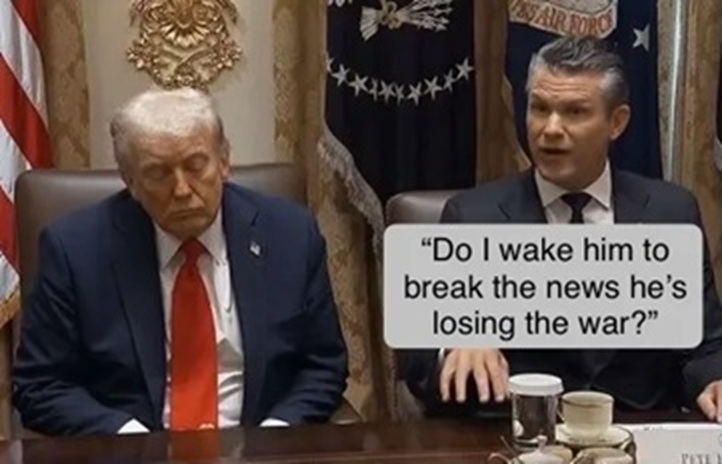
13 May 2026 Dr Binoy Kampmark, https://theaimn.net/epic-interruptus-the-iranian-snare-and-american-defeat/
On May 10, Robert Kagan, the high priest of neoconservative thought, the bell ringer for muscular interventionism and general American meddlesomeness, lamented in The Atlantic that the United States had suffered a unique defeat in its efforts to subjugate Iran. The article says much about Kagan’s own identification with the obvious, some feat given the military fancy and fantasy that continues to blot the current Trump administration.
Be that as it may, he finds the Iran War dishing out a defeat to the United States of unique quality, one that “can neither be repaired nor ignored.” No ultimate American triumph could emerge, and nothing would “undo or overcome the harm done” to “return to the status quo ante.” The Strait of Hormuz would not be “open” as it was prior to February 28. Iran’s regional position, far from being blunted, had improved. China and Russia had been strengthened; the US “substantially diminished.” “Far from demonstrating American prowess, as supporters of the war have claimed, the conflict has revealed an America that is unreliable and incapable of finishing what it started.”
This prompting was undoubtedly due to the claim made by US Secretary of State Marco Rubio on May 5 in the White House Press Briefing Room that Operation Epic Fury had concluded, though US President Donald Trump, ever keen to keep an iron in the fire, huffed that Iran had to “agree to give what has been agreed to.” (The “what” is always the problem in Trumpland.) Not doing so would result in bombing “at a much higher level and intensity than it was before.” The President had also “paused” Project Freedom, that massive prop of wishful thinking involving the use of the US military to escort commercial shipping through the Strait of Hormuz. The pause – effectively a breezy termination – had been induced, in no small part, by the grumpiness of Saudi Arabia’s Mohammed bin Salman, worried that adventurism in the Strait would incite yet another round of Iranian attacks on Gulf states. To show his disapproval, the Crown Prince had refused to permit the use of the Prince Sultan Airbase for US operations.
Iran’s airstrikes had also shown far more bite than was initially reported, at least in the Western media stable. Some of this can be put down to the restrictions on the release of satellite imagery supplied by commercial providers Vantor and Planet. Both have been compliant with the Pentagon’s request to either limit, delay or indefinitely withhold the publication of timely imagery covering the region. The Iranians, through state-affiliated news outlets, felt no such restraint.
On May 6, The Washington Post, after examining Iranian satellite imagery, reported that some 228 structures of pieces of equipment at US military sites across the Middle East since February 28 had been damaged and destroyed. Hangars, barracks, fuel depots, aircraft, vital radar, communications and air defence equipment had been struck by Iran’s forces. The dangers posed by Iranian strikes had been so formidable as to force some US bases in the region to relocate personnel out of missile range.
In its analysis, the paper claims to have verified some 109 images, aided by a comparison with lower-resolution imagery obtained from the European Union’s Copernicus satellite system, and any high-resolution images at hand from Planet. The Iranian images also confirmed previously reported damage or destruction inflicted on a number of US military assets: the radomes at Camp Arifjan and Ali al-Salem Air Base in Kuwait and at the 5th Fleet Headquarters; the Terminal High Altitude Area Defense (THAAD) missile defence radars and equipment located at Jordan’s Muwaffaq Salti Air Base and two sites in the United Arab Emirates; a second satellite communications site located at al-Udeid Air Base, and an E-3 Sentry command and control aircraft and a refuelling tanker at Prince Sultan Air Base in Saudi Arabia.
The analysts roped in to examine the images were impressed. Mark Cancian, a former Marine Corps colonel and senior advisor to the Center for Strategic and International Studies (CSIS), found the strikes to be “precise.” “There are no random craters indicating misses.” William Goodhind of the open-access research project Contested Ground, in addition to noting the destruction of equipment, fuel storage and air base infrastructure, found damage to “soft targets, such as gyms, food halls and accommodation.”
To add stinging insult to burgeoning injury, the defences used to cope with Iranian strikes proved staggeringly draining and disproportionately costly. The CSIS estimates the use of at least 190 THAAD interceptors and 1,060 Patriot interceptors between February 28 and April 8, running down inventories of both at 53% and 43% respectively. And just to improve the mood in Washington, Tehran, according to an analysis by the US intelligence community, retains roughly 75% of its prewar inventories of mobile launchers and roughly 70% of its pre-war missile stockpile. Vague as they are, that’s another objective of Operation Epic Fury dashed.
While the childish pantomime of non-diplomacy continues (Trump rages that the ceasefire with Tehran, given the latest “piece of garbage” of a counter proposal, is on “life support”), Washington is banking on a strangulation policy through yet another project of dubious merit: Economic Fury. “As Iran’s military desperately tries to regroup, Economic Fury will continue to deprive the regime of funding for its weapons programs, terrorist proxies, and nuclear ambitions,” tooted the Secretary of the Treasury Scott Bessent on May 11. “Treasury will continue to cut the Iranian regime off from the financial networks it uses to carry out terrorist acts and to destabilize the global economy.”
Economic Fury, still in its swaddled infancy, also risks early retirement. Iranian stubbornness and stout resilience continues to trouble analysts in the intelligence community. A CIA analysis circulated this month concluded that Tehran could withstand the US naval blockade for between 90 to 120 days before experiencing dramatic economic deterioration. Iran’s economy may be in a wretched state, but parochial determination has a certain staying power. Bureaucratic bickering, however, often finds its way, and a senior US intelligence official (that could be anyone) has surfaced to counter the claims of the assessment. Genuine, extensive and rapid economic damage is being inflicted. The US remains in the ascendant.
These varied intelligence assessments of decorative astrology cannot escape the dunderheaded reasoning that undergirded the war, along with the failure to appreciate the shocks caused, not merely by Iran’s closure of the Hormuz Strait but its systematic shredding of the US security guarantee for Gulf states. Unlike the fumbling, inventive antics shown prior to the invasion of Iraq in March 2003, the CIA and allied intelligence services were well aware that a campaign against Iran was freighted with terrible risk. Ensnared and trapped, Trump will find it hard to avoid using the good offices of China’s President Xi Jinping to lean on Beijing’s ally. If so, it is bound to come at an exacting price.
From “Mission Accomplished” to Missile Shortages: The Iran War Narrative Unravels.
May 12, 2026, Joshua Scheer, https://scheerpost.com/2026/05/12/from-mission-accomplished-to-missile-shortages-the-iran-war-narrative-unravels/
Ben Norton dismantles the triumphalist rhetoric surrounding the U.S. war on Iran in this blistering breakdown of a conflict that appears far more costly — and far less successful — than Washington admits. Drawing on reporting from CNN, The Washington Post, The New York Times, NBC News, and Fortune, Norton argues that despite Donald Trump’s repeated claims of “victory,” Iran has inflicted extensive damage on U.S. military infrastructure across West Asia while preserving much of its missile capability. The video traces the widening economic, military, and geopolitical fallout of a war that critics say is enriching defense contractors while pushing the region — and the global economy — toward catastrophe.
Rather than a show of overwhelming American dominance, Norton presents the war as a warning sign of imperial overreach: damaged U.S. bases, depleted missile stockpiles, fractured alliances, and mounting costs projected to surpass $1 trillion. He also examines how Gulf monarchies once marketed as “safe havens” are now facing infrastructure destruction, economic instability, and growing fears of becoming permanent targets in a spiraling regional conflict.
While Donald Trump continues declaring Iran “militarily defeated,” a growing body of mainstream reporting paints a very different picture — one Ben Norton argues reveals the limits of American military power in the region.
In a sweeping analysis for Geopolitical Economy Report, Norton dismantles what he calls the propaganda surrounding Washington’s war on Iran, citing investigations from CNN, NBC News, The Washington Post, and The New York Times showing that Iranian strikes have heavily damaged U.S. military installations throughout West Asia.
According to Norton, the contradiction is becoming impossible to ignore: while the White House insists the war is a success, leaked intelligence assessments and major media investigations describe destroyed radar systems, damaged aircraft, emptied bases, and U.S. troops relocated out of range of Iranian fire.
“The war is not going swimmingly,” Norton argues. “The evidence shows the exact opposite.”
“Many Bases Are All But Uninhabitable”
One of the video’s most explosive sections centers on reports that Iranian missile strikes have rendered major U.S. facilities across the Persian Gulf region severely damaged or unusable. Norton cites reports claiming at least 16 American military sites were hit, with more than 228 structures or pieces of equipment reportedly damaged.
He highlights descriptions from mainstream outlets detailing destroyed hangars, communications systems, barracks, fuel depots, and air-defense infrastructure — damage so extensive that some bases were allegedly evacuated or partially abandoned.
Norton also points to reports that thousands of U.S. personnel have been relocated to Europe or moved into temporary facilities as Iranian strikes continue targeting American positions throughout the region.
A Trillion-Dollar War
The economic cost, Norton warns, could become staggering.
Referencing reporting from Fortune and estimates from analysts at Harvard Kennedy School, he argues the war’s total cost could exceed $1 trillion once infrastructure losses, weapons depletion, reconstruction, and long-term veteran care are fully accounted for.
Meanwhile, he notes, the Pentagon is reportedly burning through advanced missile systems at alarming rates. Norton cites figures claiming the U.S. has already used roughly half its stockpiles of several key interceptor and precision-strike systems — a depletion that could take years to replace.
For Norton, the contradiction is politically devastating: endless funding for war while healthcare, housing, and social programs continue facing austerity at home.
He highlights a recent Fortune report, Harvard policy expert Linda Bilmes — who previously exposed how the Iraq and Afghanistan wars cost trillions more than official government estimates — warned she is “certain” the true price tag of the Iran war will exceed $1 trillion for U.S. taxpayers once long-term military care, destroyed infrastructure, weapons depletion, and regional fallout are fully accounted for. The warning lands as the Pentagon reportedly burns through advanced missile stockpiles while Americans continue hearing there is “no money” for healthcare, childcare, housing, or social programs at home.
That constant cry that “there’s no money” comes from the fool at the top — and it should be challenged in every discussion about war. War costs money. Endless war drains societies dry while those in power pretend basic human needs are somehow unaffordable. Look at America’s so-called adversaries: many invest in infrastructure, innovation, science, and long-term development, while the U.S. continues pouring trillions into destruction. We behave like a civilization trapped in permanent attack mode, reacting with brute force instead of evolving beyond it.
Pete Hegseth LIVE: Pentagon admits Iran war cost hits $25 billion after explosive hearing testimony – https://www.youtube.com/watch?v=gFGiQPlwQX4
At the same time, War God Pete Hegseth claims far less money has been spent than critics and economists say is actually being burned through in the conflict. As the war on Iran enters its third month, Hegseth is facing growing backlash on Capitol Hill over the true cost of the war — and how much the Pentagon may be hiding from the public. During a tense House Armed Services Committee hearing, Pentagon officials claimed the U.S. has spent roughly $25 billion so far, largely on missiles, munitions, and military maintenance. But lawmakers and economists warn the real cost could be vastly higher once rising fuel prices, damaged military infrastructure, supply chain disruptions, and long-term economic fallout are fully counted. Rather than seriously addressing those concerns, Hegseth lashed out at critics, accusing skeptical lawmakers of being “reckless,” “feckless,” and “defeatist” for questioning Donald Trump’s handling of the war — a response critics say reflects growing panic inside an administration struggling to defend an increasingly costly, destabilizing, and unpopular conflict.
“Iran Is Not Iraq”
A recurring theme is that Iran has proven far more resilient than U.S. planners anticipated.
Washington expected a rapid collapse through “decapitation strikes” and economic pressure. Instead, he says, Iran maintained much of its missile arsenal, reopened underground facilities, and strengthened internal political cohesion in the face of external attack.
With intelligence assessments reportedly concluding Iran still possesses roughly 70–75% of its missile stockpile and launcher capacity despite weeks of bombardment.
Despite repeated claims from Donald Trump and the Pentagon that Iran’s military capabilities have been “crippled,” recent U.S. intelligence assessments reportedly conclude that Iran still maintains a significant portion of its missile-launching infrastructure. According to CNN, roughly half of Iran’s missile launchers remain intact — including underground systems hidden in tunnels and caves — while thousands of drones and major coastal defense capabilities are still operational, raising fears that Tehran retains the ability to inflict major damage across the region.
With the result clearly being not regime change — but deterrence.
Gulf Monarchies Feeling the Blowback
The video explores the growing panic spreading through the Gulf monarchies that have long hosted U.S. military power in the region. Ben Norton argues that Saudi Arabia’s hesitation to fully back further escalation reflects a deepening fear that the war with Iran is no longer controllable. In a parallel conversation with Danny Haiphong, Mohammad Marandi says Gulf states like Saudi Arabia and the UAE are beginning to realize that Washington’s military presence is not shielding them from catastrophe — it is making them targets. As energy infrastructure comes under threat, tourism declines, deficits soar, and oil-dependent economies face mounting instability, the illusion that the Gulf could remain insulated from regional war is rapidly collapsing. Reports that some Gulf governments restricted U.S. military access during the failed “Project Freedom” operation in the Strait of Hormuz only fueled perceptions that cracks are forming within America’s regional alliance system. “The U.S. isn’t protecting these countries,” Norton argues. “It’s turning them into targets.”
The Larger Warning
The war as part of a larger crisis of American empire: a military superpower capable of unleashing enormous destruction, yet increasingly unable to achieve its political goals.
For critics of the war, it becomes less about whether Iran is “winning” and more about whether Washington’s model of endless militarized dominance is beginning to fracture under its own contradictions.
And as the costs rise — economically, politically, and morally — Norton argues the gap between official rhetoric and reality is becoming harder to conceal.
A nation that claims there is “no money” for healthcare, housing, education, or childcare somehow always finds trillions for bombs, bases, sanctions, and endless war. Yet despite the overwhelming firepower, the destruction, and the propaganda, Washington still appears unable to impose the political outcomes it demands. Instead, the war is exposing weakened alliances, destabilizing the global economy, draining military stockpiles, and turning America’s closest regional partners into potential targets. The question is no longer whether this conflict is sustainable — but how much damage will be done before the political class admits the project itself is collapsing.
Iran’s positions at the Non Proliferation Treaty Review Conference are rational – Ignoring them would weaken the treaty

By Syed Ali Zia Jaffery | Analysis | May 12, 2026, https://thebulletin.org/2026/05/irans-positions-at-the-npt-review-conference-are-rational-ignoring-them-would-weaken-the-treaty/?utm_source=ActiveCampaign&utm_medium=email&utm_content=Nuclear%20winter%3A%20Why%20study%20it%20now%3F&utm_campaign=20260514%20Thursday%20Newsletter
In a working paper submitted to the ongoing Review Conference of the Nuclear Non-Proliferation Treaty (NPT), Iran mentioned the US-Israeli attacks on its safeguarded nuclear facilities, calling for not only the unequivocal condemnation of such attacks but also legal accountability of the violators.
Iran submitted other working papers outlining its positions on the provision of negative security assurances, nuclear disarmament, establishment of a nuclear-weapon-free zone in the Middle East, and the inalienable right to use nuclear energy for peaceful purposes. These documents show that Tehran’s priorities within the NPT Review Process have, by and large, remained consistent. This consistency is justified, not least because each one of these issues is integral to the success of the treaty’s review process.
Attacks on safeguarded nuclear facilities. After bombing Iran’s safeguarded nuclear facilities in Natanz, Fordow, and Isfahan in June 2025, the United States and Israel again struck these and other sites in March and April of 2026, including near the Bushehr nuclear power plant. Although the plant itself was not damaged and the perpetrator of the attack has not been confirmed, it is widely interpreted as an escalatory and illegal action. The fact that Israel—a non-NPT nuclear-armed state, in concert with the United States, an NPT nuclear-weapon state—brazenly attacked nuclear facilities of an NPT non-nuclear-weapon state significantly undermines the credibility of the treaty. Tehran might conclude that its NPT membership could not protect its nuclear installations from attacks by both a non-NPT malign actor and a nuclear-weapon state.
In addition, Iran could rightly refer to the treaty’s preamble, which underscores the need to ease tensions and improve international security. Tehran could also remind the world that Israel’s military actions against its nuclear sites are an anathema to the final documents of the 2000 and 2010 review conferences. The 2010 final document, in particular, was clear: “Attacks or threats of attack on nuclear facilities devoted to peaceful purposes jeopardize nuclear safety, have dangerous political, economic and environmental implications and raise serious concerns regarding the application of international law on the use of force in such cases, which could warrant appropriate action in accordance with the provisions of the Charter of the United Nations.”
More importantly, the targeted nuclear facilities in Isfahan, Natanz, Fordow, and Bushehr are all under the safeguards of the International Atomic Energy Agency (IAEA), which are central to the success of the NPT. IAEA safeguards are the only mechanism through which the agency can verify that states parties comply with the NPT. Military strikes on such facilities, especially by non-NPT nuclear-armed states, severely erode the legitimacy of the treaty’s Article III on safeguards.
Iran concluded a comprehensive safeguards agreement with the IAEA in 1974, and it also implemented the Additional Protocol voluntarily between 2003 and 2006. Iran also applied and remained compliant with the 2015 Joint Comprehensive Plan of Action (JCPOA) until 2021, long after the first Trump administration unilaterally withdrew from the agreement in 2018 with no justification.
Negative security assurances and a nuclear-weapon-free zone. As an NPT state party being the target of nuclear-laden threats, Iran has rightly stressed the need for codifying and legalizing negative security assurances—the commitment that a nuclear-weapon state will not use or threaten to use nuclear weapons against a non-nuclear-weapon state. It has long been argued that, pending complete, universal disarmament, non-nuclear-weapon states should be given legally-binding negative security assurances.
The Non-Aligned Movement (NAM), the largest coalition of states within the NPT, also supports the provision of unconditional, irrevocable, and universal negative security assurances. However, the United States has balked at removing conditions and caveats while issuing such assurances. With nuclear risks increasing—including due to miscalculations—these incentives to remain nuclear-use-free must be unequivocal. To assuage concerns, the language must become firmer and stricter; words like “irrevocable” and “unconditional” must be made an integral part of all conversations on security assurances during the NPT review process.
Iran has also remained a leading advocate for a Nuclear-Weapon Free Zone in the Middle East. Through its working papers, statements, and other engagements, Tehran lamented the disregard for the 1995 resolution, which reaffirmed the need for establishing internationally recognized nuclear-weapon-free zones, and the 2010 final document. However, it is encouraging to note that NAM has supported calls for the establishment of these zones, including one in the Middle East. NAM has also expressed its wholehearted support for the first two sessions of the conference on the establishment of a Middle East zone free of nuclear weapons and other weapons of mass destruction. Although these are welcome developments, the inability to bring Israel into the fold of the NPT will continue to militate against the possibility of establishing such a zone in the Middle East. Consequently, the non-adherence to the 1995 resolution will deal a severe blow to the already bruised treaty.
Inalienable right to use nuclear technology. As an NPT state party, Iran is well within its rights to use nuclear energy and other nuclear technology for peaceful purposes. This “inalienable right,” as mentioned in the treaty’s Article IV, does not preclude uranium enrichment or the reprocessing of plutonium for non-military reasons.
Alluding to its rights under the treaty, Iran has not only refused to dismantle its nuclear program or halt uranium enrichment, as the United States has asked repeatedly. Iran has remained firm on its indisputable, inalienable right to enrich, but has expressed willingness to negotiate on the level of enrichment. In a working paper on the issue, Iran has stressed the need for refraining from pursuing any action that impedes the development of a full nuclear fuel cycle for peaceful purposes.
Although this has been Tehran’s stance for a long time, it will become a bigger sticking point as the United States doubles down on seeking to stop Iran’s uranium enrichment. The resulting deadlock will only exacerbate differences between nuclear-weapon and non-nuclear-weapon states, with the latter losing confidence in the treaty’s capacity to ensure uninterrupted, non-discriminatory access to nuclear technology.
Iran’s core positions are not repugnant to the NPT, a treaty Tehran has not withdrawn from and continues to abide by. Tehran should be engaged with on these issues, not bombed and threatened with annihilation.
Trump says 20-year nuclear programme suspension by Iran would be enough
Robert Greenall, 16 May 26. https://www.bbc.com/news/articles/cgkpnnen5dzo
US President Donald Trump has said he would accept a 20-year suspension by Iran of its nuclear programme, in what appears to be confirmation of a shift in position away from a demand for a total end to it.
Trump said it had to be a “real 20 years”. Previously he has called on Iran to permanently cease enriching uranium – a stage in making a weapon – and to be prevented from ever acquiring nuclear weapons.
But he also said his patience with Iran was running out, with no sign of a breakthrough in talks.
Israeli and US forces began massive air strikes on Iran on 28 February. A ceasefire in place since last month meant to facilitate talks has been largely observed, despite some exchanges of fire.
Pakistan has been playing the role of mediator.
However, both sides appear to be far apart, having rejected each other’s most recent proposals to end the war.
Iranian media said Tehran’s proposal had included an immediate end to the war on all fronts – an apparent reference to Israeli attacks against its Shia ally Hezbollah in Lebanon – a halt to the US naval blockade of Iranian ports and guarantees of no further attacks on Iran.
Speaking to reporters on Air Force One after talks in Beijing with Chinese President Xi Jinping, Trump said the two sides had agreed Tehran could not be allowed to have a nuclear weapon and must reopen the Strait of Hormuz, which it is currently blocking, prompting a rise in world oil prices.
When a reporter suggested that a 20-year suspension of Iran’s nuclear programme was not enough, he replied: “Twenty years is enough, but the level of guarantee from them, in other words it’s got to be a real 20 years.” He did no elaborate.
US media reported in April that during a session of talks in the Pakistani capital, Islamabad, Vice-President JD Vance had responded to an Iranian proposal to cease enrichment for five years by insisting on a minimum of 20 years.
However, this is thought to be the first time Trump himself has mentioned a 20-year timeframe.
In his first term as president, he withdrew from a 2015 nuclear agreement reached with Iran by the Obama administration. One of the reasons given was opposition to so-called “sunset clauses” that would have allowed some restrictions on Iran to expire over time.
Israel has so far not reacted to Trump’s remarks. Prime Minister Benjamin Netanyahu has said that Iran’s stockpile of enriched uranium must be “taken out” before the war against Iran can be considered over.
Netanyahu vehemently opposed the 2015 nuclear deal, partly on the grounds that the sunset clauses would leave open the possibility of Iran obtaining nuclear weapons and continuing to present a grave threat to Israel.
The Limits of Power -The War on Iran Will Likely End in American Retreat
Jeffrey Sachs and Sybil Fares, May 11, 2026, https://www.savageminds.co/p/the-limits-of-power
The war against Iran that the United States and Israel launched on 28 February 2026 will likely end in an American retreat. The United States cannot continue the war without producing disastrous consequences. A renewed escalation would likely lead to the destruction of the region’s oil, gas, and desalination infrastructure, causing a prolonged global catastrophe. Iran can credibly impose costs that the United States cannot bear and that the world should not suffer.
The US-Israel war plan was a decapitation strike, sold to President Donald Trump by Prime Minister Benjamin Netanyahu and David Barnea, the director of the Mossad. The premise was that an aggressive joint US-Israeli bombing campaign would so degrade the Iranian regime’s command structure, nuclear programme, and IRGC senior leadership that the regime would fracture. The United States and Israel would then impose a pliable government in Tehran.
Trump seems to have been convinced that Iran would follow the same course as had occurred in Venezuela. The US operation in Venezuela in January 2026 removed Venezuelan President Nicolas Maduro in what appears to have been a coordinated operation between the CIA and elements inside the Venezuelan state. The US won a more pliant regime, while most of the Venezuelan power structure remained in place. Trump seems to have believed naively that the same outcome would occur in Iran.
The Iran operation, however, failed to produce a pliant regime in Tehran. Iran is not Venezuela, historically, technologically, culturally, geographically, militarily, demographically, or geopolitically. Whatever happened in Caracas had little relation to what would take place in Tehran.
The Iranian government did not fracture. The Islamic Revolutionary Guard Corps (IRGC), far from being decapitated, emerged with a tightened internal command and an expanded role in the national-security architecture. The supreme leader’s office held; the religious establishment closed ranks behind it; and the population rallied against external attack.
Two months on, Trump and Netanyahu have no Iranian successor government under their control, no Iranian surrender to close the war, and no military pathway whatsoever to victory. The only path, and the one the US seems to be taking, is a retreat, with Iran in charge of the Strait of Hormuz and with none of the other issues between the US and Iran settled.
Several reasons explain America’s disastrous miscalculations and Iran’s successes.
First, American leaders fundamentally misjudged Iran. Iran is a great civilisation with 5,000 years of history, deep culture, national resilience, and pride. The Iranian government was not going to succumb to US bullying and bombing, especially reflecting on the fact that Iranians remember how the US destroyed Iranian democracy in 1953 by overthrowing a democratically elected government and installing a police state that lasted 27 years.
Second, American leaders dramatically underestimated Iran’s technological sophistication. Iran has world-class engineering and mathematics. It has built an indigenous defence industrial base, with advanced ballistic missiles, a homegrown drone industry, and indigenous orbital launch capability. Iran’s record of technological development, built up despite 40 years of escalating sanctions, is a stunning national achievement.
Third, military technology has shifted in a way that favours Iran. Iran’s ballistic missiles cost a small fraction of the US interceptors deployed against them. Iranian drones cost $20,000; US air-defence interceptor missiles cost $4m. Iran’s antiship missiles, with costs in the low six figures, threaten US destroyers that cost $2-3bn. Iran’s anti-access and area-denial network around the Gulf, layered air defence, drone and missile saturation capacity, and sea-denial capability in the strait have made the operational cost of imposing American will on Iran far higher than the United States can sustain, especially taking into account the retaliatory destruction that Iran can impose on the neighbouring countries.
Fourth, the US policy process has become irrational. The Iran war was decided by a small circle of presidential loyalists at Mar-a-Lago, with no formal interagency process and a National Security Council that had been hollowed out across the preceding year. Trump’s director of the National Counterterrorism Center, Joe Kent, resigned on 17 March with a public letter describing “an echo chamber” used to deceive the president. The war was the output of a decision-making system in which the deliberative apparatus had been turned off.
This was neither a war of necessity, nor a war of choice. It was a war of whim. The underlying premise was hegemony. The United States was attempting to preserve a global dominance that it no longer possesses, and Israel was trying to establish a regional dominance that it will never have.
The likely endgame, given all this, is that the war will end with a return to something close to the status quo ante, except for three new facts on the ground. First, Iran will have operational control over the Strait of Hormuz. Second, Iran’s deterrent posture will be significantly raised. Third, the US long-term military presence in the Gulf will be significantly reduced. The other issues that supposedly prompted the US to attack Iran—Iran’s nuclear programme, regional proxies, the missile arsenal—will most likely be left where they were at the start of the war.
Even as the US retreats, Iran will not press its advantage against its neighbours. Three reasons explain why. First, Iran has a long-term strategic interest in cooperation with its Gulf neighbours, not an ongoing war. Second, Iran will have no interest in restarting a war it has just successfully ended. Third, Iran will be restrained, if any restraint is needed, by its great-power patrons, Russia and China, who both desire a stable and prosperous region. The Iranian leadership understands this clearly, and will stop the fighting.
Trump will no doubt try to depict the coming retreat as some great military and strategic victory. No such claims will be true. The truth is that Iran is far more sophisticated than the United States understood; the decision to go to war was irrational; and the underlying technology of war has shifted against the US. The American empire cannot win the war against Iran at an acceptable financial, military, and political cost. What America can regain, however, is some measure of rationality. It’s time for the US to end its regime-change operations and return to international law and diplomacy.
Trump’s deadly trap: By rejecting Iran’s proposal, US enters a strategic nightmare with no escape
Monday, 11 May 2026 , By Press TV Strategic Analysis Desk, https://www.presstv.ir/Detail/2026/05/11/768410/trump-deadly-trap-rejecting-iran-proposal-us-enters-strategic-nightmare-no-escape
In a theatrical move that fooled no one, US President Donald Trump rejected Iran’s comprehensive plan to end the war he illegally imposed on the country 70 days ago.
The US president postured as a victor, dismissing Tehran’s proposal with the bluster of a leader who expects capitulation. But the reality on the ground tells a starkly different story.
By every measurable metric, America is the defeated party in the asymmetric war that was imposed on Iran amid the nuclear talks in Geneva on February 28. And his rejection of Iran’s terms in a social media post has not opened new options for Washington, but it has only trapped the US in a deadly three-way crossroads from which there is no easy escape.
Trump’s rejection of Iran’s plan, which was submitted early on Sunday through Pakistani mediators, is a grave strategic error as Americans hold no winning cards.
Iran’s proposal: Fundamental, natural, and uncompromising
Iran’s plan to permanently end the war was never meant to please Washington. It was designed to restore justice, recognize strategic realities, and secure Iran’s undeniable rights after the unprovoked military aggression against the country and maritime banditry.
The core elements of Iran’s proposal are not maximalist. They are rooted in natural and fundamental principles that any nation subjected to unprovoked aggression and holding the upper hand would rightfully insist upon:
- War reparations – Payment of damages and reparations by the aggressor for the destruction inflicted on Iran’s infrastructure, economy, and civilian population.
- Management of the Strait of Hormuz – Recognition of Iran’s sovereign control over this vital waterway, based on the mechanism already announced by Tehran.
- Lifting of sanctions – The complete removal of all oppressive and illegal sanctions that have targeted the Iranian people for decades.
- Release of frozen assets – The return of billions of dollars of Iranian assets illegally seized by the United States.
- Permanent end to the war – A cessation of hostilities not only against Iran but also against the entire resistance front, including Hezbollah in Lebanon and other allied forces across the region.
None of these demands is unreasonable or impractical. They are the basic entitlements of a nation that has been attacked, bombed, and subjected to economic warfare for nearly half a century. What Iran is asking for is not special treatment but justice.
The American non-offer: Irrelevant demands and nuclear obsession
In stark contrast to Iran’s focused, reasonable and practically sound proposal, the American counteroffer reads like a wish list written by someone who has lost sight of reality.
Washington’s plan has nothing to do with ending the war. Instead, it resurrects the long-dead nuclear file – demands that were irrelevant before the war and are absurd now.
The United States insists on:
Closure of Iran’s nuclear sites – A non-starter that Iran has rejected for decades.
- Long-term halt to enrichment – Effectively disabling Iran’s nuclear program for years to come, which is totally unacceptable to Iran.
- Transfer of enriched uranium to America – A humiliating demand that no sovereign nation would accept, least of all Iran.
What is striking about the American proposal is what it omits. There is no mention of the American responsibility for starting the war in the middle of nuclear diplomacy.
There is also no acknowledgment of the thousands of Iranian civilians killed in the 40-day aggression. There is no offer of reparations. There is no commitment to withdraw the occupation forces from the region. There is no guarantee against future aggression.
Washington simply pretends the war never happened and pivots back to its failed nuclear fixation to deflect attention from the real issue.
The posture of defeat: Trump’s fake victory pose
Trump rejected Iran’s plan while posing as the victor. But this is pure theater. International experts, military analysts, and even sober voices within Western capitals acknowledge what Trump refuses to admit – the United States lost the asymmetric war against Iran.
Consider the evidence. The US entered this war with ambitious objectives: “regime change,” destruction of Iran’s missile program, dismantling of nuclear facilities, and unrestricted access to the Strait of Hormuz.
None of these objectives has been achieved. Iran’s missile cities remain intact. Its nuclear program continues to make progress. Its control over the Strait of Hormuz has been consolidated. And the Iranian people, far from rising against their government, have poured into the streets by the millions to support the leadership and the armed forces.
Trump’s hallucinatory “victory” exists only in his own press releases. In the real world, the United States has been defeated on every front. And rejecting Iran’s proposal does not change that fact – it only prolongs Washington’s agony.
The three-way crossroads: All paths lead to disaster
By rejecting Iran’s plan, Trump has trapped the United States in a deadly strategic dilemma. He now faces three options and none of them are good:
- Resume full-scale war
This is the most dangerous path. Starting the war again would plunge the United States and its Israeli proxy into a “dark corridor” from which there may be no return.
Iran has not yet deployed all its strategic cards. Throughout the 40 days of war, Tehran fought with its eyes fixed on the possibility of an even larger confrontation. The weapons systems, tactics, and capabilities that Iran deliberately held back would be unleashed in a second round, if that actually happens.
The result would likely be far heavier defeats for the US-Israeli war machine, defeats that could become irreversible. Iran’s unrevealed cards, combined with the lessons learned from the first phase of the war, would make any renewed American military campaign a gamble with catastrophic odds.
- Accept Iran’s terms
This is the only path to ending the imposed war, but it requires Trump to swallow his pride and acknowledge defeat like someone who understands the ground realities.
The United States would have to pay reparations, accept Iran’s complete and sovereign control of the Strait of Hormuz, lift illegal sanctions, release frozen assets, and agree to a comprehensive end to the war on all fronts.
For a president who has built his political identity around “maximum pressure” and “America First,” this option is politically toxic. But rejecting it does not make it disappear. It remains the only sustainable exit from a war that Washington cannot win.
Continue the naval blockade
An ambiguous, indefinite naval blockade that neither ends the war nor escalates it decisively is the current situation. But this option is also unsustainable. Iran’s top military command has already made its position clear that for every vessel intercepted or attacked, American centers and American vessels will be struck.
The Khatam al-Anbiya Central Headquarters has announced this equation publicly. It is not a threat but a binding warning. The continuation of the naval blockade will trigger Iranian responses that escalate incrementally but inevitably. There is no “safe” stalemate.
The economic dimension: A losing battle for Washington
The closure of the strategic waterway due to the war imposed on war and US maritime banditry and piracy has already sent shockwaves through global energy markets.
Oil prices have surged past $110 per barrel. Inflationary pressures are mounting across Europe, Asia, and the Americas. The continued naval blockade of Iran, coupled with Iranian retaliatory strikes on regional energy infrastructure, will only worsen these trends.
And who bears the blame? Global public opinion increasingly points to Washington. The United States started this war, and the United States rejected a reasonable peace plan.
The United States continues to strangle Iran’s economy while Iranian civilians suffer. The further economic indicators deteriorate, the more pressure will mount on Trump from domestic constituencies and international allies alike.
Iran understands this dynamic perfectly. Continued economic disruption is not a bug in Tehran’s strategy but a feature. Every day the war continues, the United States bleeds economically and reputationally.
Iran’s trap: No escape for the United States
World media have accurately described the current situation as “Iran’s trap” for the United States. It is a trap with no exit and Trump is yet to wrap his head around this reality.
Trump can neither win the war nor end it on acceptable terms. Resuming full-scale war invites catastrophic defeat. Accepting Iran’s proposal requires humiliating capitulation. Maintaining the status quo triggers escalating Iranian retaliation that systematically degrades American interests in the region.
This is the strategic nightmare that Trump has created for himself and his country. He started a war he could not win. He rejected a peace that would have ended it. And now he stands at a deadly three-way crossroads, with every direction leading to danger.
Iran, meanwhile, holds the strategic advantage. Tehran’s proposal remains on the table — reasonable, principled, and rooted in natural rights. But if the US chooses not to accept it, Iran is prepared to continue the war, escalate it, and inflict far heavier costs than anything seen in the first 40 days.
The choice is Washington’s. The consequences will be for Iran to impose. And history will record who acted with wisdom – and who walked willingly into a trap of their own making.
Will Trump’s failed Iran war provoke his break from Netanyahu’s ironclad grip?
10 May 2026 AIMN Editorial – Walt Zlotow, West Suburban Peace Coalition Glen Ellyn IL, https://theaimn.net/will-trumps-failed-iran-war-provoke-his-break-from-netanyahus-ironclad-grip/
On Iran war day 71 it’s clear Trump has not only lost his war, he’s blundered the world into a looming economic catastrophe. As horrendous as that is, it wasn’t even Trump’s idea. Trump was simply following orders from his real boss, Israeli Prime Minister Benjamin Netanyahu. On February 11, Netanyahu arrived at the White House with Mossad Director David Barnea. They encouraged – if not demanded – invasion. The Netanyahu-Barnea tag team argued Iran would collapse within a couple of days from a combination of assassinating Iran’s leader Ali Khamenei, massive bombing, Mossad-fomented civil unrest and ground incursions by Kurdish fighters.
That couple of days has morphed into 71 days of arguably the greatest military disaster in US history. Instead of collapsing within a couple of days, Iran retaliated against the massive US, Israeli bombing onslaught with their own. Result? All 13 US bases in the neighboring Gulf States are damaged or destroyed. Gulf States infrastructure has suffered massive damage. So has Israel, suffering its worst bombing in its 78 years.
Worst of all, Iran shut down the Strait of Hormuz, choking off a fifth of world oil supply which may cause a worldwide recession, if not depression. The Netanyahu-Barnea presentation was a blizzard of lies Trump swallowed whole in spite of Intelligence assessments to the contrary.
As the world careens toward economic catastrophe, Trump is completely out of options to achieve any of his war goals. Check that. Friday he alluded to striking Iran with nuclear weapons. Trump told reporters on whether the ceasefire if off: “If there’s no ceasefire you’re just going to have to look at one big glow coming out of Iran.”
Assuming he either doesn’t order nuclear strikes, or his military commanders disobey this directive to do so, Trump is facing the worst military defeat in America’s 250 years, all brought on by his fealty to Benjamin Netanyahu. What motivated Trump’s caving to the Israeli Prime Minister? Was it the hundreds of millions in campaign cash showered upon Trump and his Republican Congress? Was it the ‘Epstein Button’, damaging evidence related to the Epstein pedophile enterprise that Trump dare not risk being exposed? Is Trump simply an ardent Zionist believing that any Israeli murder and mayhem to further Israeli expansion and Middle East dominance is worthy of Trump’s enabling?
While we’ll likely never know, Trump must be contemplating the enormity of the disaster he’s inflicted on the Middle East, and very soon the US and entire world. The one benefit that may result from Trump’s immoral, criminal war is he may be rethinking his special relationship with the man who brought on the greatest calamity of his life, Benjamin Netanyahu. Trump needs to truly become the peace president he campaigned to be in 2016. He can do that by quitting his senseless and lost Iran war. He needs to jettison his subservience to Netanyahu’s vision of Greater Israel. He needs to cut off all US military aid to Israel till Netanyahu or his successor end the genocide in Gaza, near genocide in Lebanon and quest to destroy its hegemonic rival, Iran.
If Trump refuses to do the right thing, events on the battlefield and the world economy may push Trump aside and hopefully implement that peace initiative without him.
1 This Month
10 June – Assessing Canada’s Investments in Small Modular Nuclear Reactors – https://zoom.us/meeting/register/IiqHA5feRhaEBycOLNTJlA#/registration


Cuba Is Not a Failed State – It Is a Besieged State
PETITION: “Global Appeal to Endorse Palestinian Right of Return of Refugees”
To see nuclear-related stories in greater depth and intensity – go to https://nuclearinformation.wordpress.com
-
Archives
- June 2026 (79)
- May 2026 (306)
- April 2026 (356)
- March 2026 (251)
- February 2026 (268)
- January 2026 (308)
- December 2025 (358)
- November 2025 (359)
- October 2025 (376)
- September 2025 (257)
- August 2025 (319)
- July 2025 (230)
-
Categories
- 1
- 1 NUCLEAR ISSUES
- business and costs
- climate change
- culture and arts
- ENERGY
- environment
- health
- history
- indigenous issues
- Legal
- marketing of nuclear
- media
- opposition to nuclear
- PERSONAL STORIES
- politics
- politics international
- Religion and ethics
- safety
- secrets,lies and civil liberties
- spinbuster
- technology
- Uranium
- wastes
- weapons and war
- Women
- 2 WORLD
- ACTION
- AFRICA
- Atrocities
- AUSTRALIA
- Christina's notes
- Christina's themes
- culture and arts
- Events
- Fuk 2022
- Fuk 2023
- Fukushima 2017
- Fukushima 2018
- fukushima 2019
- Fukushima 2020
- Fukushima 2021
- general
- global warming
- Humour (God we need it)
- Nuclear
- RARE EARTHS
- Reference
- resources – print
- Resources -audiovicual
- Weekly Newsletter
- World
- World Nuclear
- YouTube
-
RSS
Entries RSS
Comments RSS
 nuclear-news