Rolls-Royce is turning a quiet Welsh site into a nuclear bet, and the strange part is how many homes three small reactors could power

Public money is carrying the risk
SMRs are often promoted as cheaper and faster than conventional nuclear plants, but the first projects still need heavy financing, regulatory work, supply-chain confidence, and buyers willing to believe the model can scale.
By Indux, June 3, 2026, https://www.vozpopuli.com/indux/en/rolls-royce-is-turning-a-quiet-welsh-site-into-a-nuclear-bet-and-the-strange-part-is-how-many-homes-three-small-reactors-could-power/5488/
Rolls-Royce SMR and Great British Energy – Nuclear (GBE-N) have moved the United Kingdom’s first small modular reactor (SMR) project into a new phase, signing a contract that starts technology design work for three units planned at Wylfa in North Wales.
The project is expected to deliver at least 1.4 gigawatts of electric output, enough to power the equivalent of around 3 million homes for more than 60 years.
This is not a finished power plant, and it is not yet the final investment decision, but it is a big marker for a country trying to cut its exposure to volatile fossil fuel markets, rebuild industrial capacity, and keep the lights on without making the electric bill feel like a monthly shock. The material provided for this story described Wylfa as the centerpiece of a new British nuclear push.
Wylfa gets its second act
Wylfa is not new to nuclear power. The site on Anglesey once hosted a nuclear station that helped feed the British grid for decades before its last reactor shut down in 2015, leaving the area with the familiar question that follows many old industrial sites. What comes next?
The answer, at least for now, is a factory-built nuclear project led by Rolls-Royce SMR. The British government confirmed Wylfa in November 2025 as the home of the first small modular reactor plant in the program, with an initial three units and possible room for up to eight in the future.
That matters because Wylfa has had false starts before. Earlier replacement plans collapsed, and the local community was left waiting for a project big enough to bring jobs, training, and long-term investment back to the coast.
The Rolls-Royce design is called small, but the numbers are not tiny. Each unit is a 470 MWe pressurized water reactor, which means the first three units would add up to roughly 1.4 gigawatts of electric capacity.
The pitch is simple. Build much of the plant in factory conditions, move the pre-tested pieces to the site, and reduce the risk that has made traditional nuclear megaprojects expensive and slow.
World Nuclear News reported that about 90% of the SMR would be built away from the site, with the reactor unit measuring about 52 feet by 13 feet. That modular approach is supposed to make schedules more predictable and limit disruption around Wylfa, although nuclear projects rarely become easy just because the parts are smaller.
Jobs are part of the sell
The government says the first SMR project could support around 3,000 jobs at peak construction, along with thousands more across the national supply chain. Rolls-Royce SMR has put the wider employment impact even higher, saying its Wylfa program will support an average of almost 8,000 skilled jobs across the United Kingdom during the build program.
That difference matters. One figure is centered on peak construction at the project, while the other looks more broadly across the build program and the wider supply chain.
For Anglesey, the local promise is easy to understand. Big energy projects do not just bring engineers in hard hats. They bring apprenticeships, local contracts, traffic on access roads, new pressure on housing, and, ideally, years of steady work rather than a short construction rush.
Public money is carrying the risk
The program is also a test of how much public backing is needed to get new nuclear technology moving. The 2025 Spending Review allocated about $3.5 billion to enable the contract and wider SMR program, while the National Wealth Fund is committing up to about $805 million to support Rolls-Royce SMR’s reactor development.
That public support is not just a footnote. SMRs are often promoted as cheaper and faster than conventional nuclear plants, but the first projects still need heavy financing, regulatory work, supply-chain confidence, and buyers willing to believe the model can scale.
At the end of the day, the government is trying to turn Wylfa into more than one power station. It wants a repeatable British nuclear product that can be built at home and exported abroad.
At the end of the day, the government is trying to turn Wylfa into more than one power station. It wants a repeatable British nuclear product that can be built at home and exported abroad.
The timeline is still long
The contract allows Rolls-Royce SMR to begin site-specific design, regulatory engagement, and planning work ahead of a future final investment decision. That last phrase is important. It means the project has momentum, but it still has key approvals and financial steps ahead.
GBE-N has said work is set to start at the site in 2026, while the government has pointed to the mid-2030s for grid connection. So this is not a quick fix for today’s energy bills.
Still, nuclear power is being pitched as the steady partner for wind and solar. When the wind drops or demand spikes during a cold evening, the grid still needs reliable generation that can run day and night.
Why Rolls-Royce wants this win
For Rolls-Royce, Wylfa is more than a domestic contract. Chris Cholerton, chief executive of Rolls-Royce SMR, said the deal “unlocks the delivery” of the first three units and gives the U.K. program certainty, while also pointing to plans for up to six units in Czechia.
That is the bigger business angle. If Rolls-Royce can prove the model at Wylfa, it could strengthen its case in a global market where governments are looking for cleaner baseload power, industrial heat, and energy security.
Proof, however, is the key word. The SMR promise has been talked about for years. Wylfa is where Britain is trying to show whether the factory-built nuclear idea can move from slide decks into steel, concrete, regulation, and power lines.
Wylfa is now the test case
The United Kingdom is betting that small modular reactors can help solve several problems at once. Cleaner electricity, more energy independence, skilled jobs, and a stronger industrial base are all part of the same package.
That is a lot to ask from one coastal site. BHowever, Wylfa has become the place where those promises will start being measured against deadlines, budgets, and public confidence.
The official statement was published on GOV.UK.
Police at Hinkley Point C as thousands of workers locked out
Police attended Hinkley Point C on Wednesday (June 3) as part of an
ongoing industrial dispute that has seen thousands of workers locked-out of
the site. MEH Alliance workers staged a sit-in protest in the site canteen
on Tuesday (June 4).
The protest related to several issues alleged by
workers, including a change in shift patterns to include weekends. Workers
had previously held a vote to overwhelmingly reject the shift pattern
change. Following the protest, EDF has barred MEH Alliance workers from
attending site without pay this week – with no decision made on when they
can return.
Bridgwater Mercury 6th June 2026, https://www.bridgwatermercury.co.uk/news/26169782.police-hinkley-point-c-thousands-workers-locked/
Up to 2,000 workers temporarily kicked off Hinkley Point C site after protest
EDF has told around 2,000 mechanical and electrical (M&E) workers to stay
away from the Hinkley Point C construction site until next Monday (8 June)
after they downed tools in a dispute over shift patterns and other
grievances, Construction News understands.
The client for the £46bn
Somerset nuclear project suspended the passes of workers from the MEH
Alliance who took part in a sit-down protest on Tuesday (2 June). It is
understood that operatives refused to undertake scheduled tasks on site and
instead sat down for long periods in areas including the canteen and
changing rooms.
The workers are believed to be unhappy with a proposed
change to shift patterns being introduced in July that will see them on
duty for 10 days in a row every fortnight.
Construction News 4th June 2026, EDF has told around 2,000 mechanical and electrical (M&E) workers to stay
away from the Hinkley Point C construction site until next Monday (8 June)
after they downed tools in a dispute over shift patterns and other
grievances, Construction News understands. The client for the £46bn
Somerset nuclear project suspended the passes of workers from the MEH
Alliance who took part in a sit-down protest on Tuesday (2 June). It is
understood that operatives refused to undertake scheduled tasks on site and
instead sat down for long periods in areas including the canteen and
changing rooms. The workers are believed to be unhappy with a proposed
change to shift patterns being introduced in July that will see them on
duty for 10 days in a row every fortnight.
Construction News 4th June 2026 EDF has told around 2,000 mechanical and electrical (M&E) workers to stay
away from the Hinkley Point C construction site until next Monday (8 June)
after they downed tools in a dispute over shift patterns and other
grievances, Construction News understands. The client for the £46bn
Somerset nuclear project suspended the passes of workers from the MEH
Alliance who took part in a sit-down protest on Tuesday (2 June). It is
understood that operatives refused to undertake scheduled tasks on site and
instead sat down for long periods in areas including the canteen and
changing rooms. The workers are believed to be unhappy with a proposed
change to shift patterns being introduced in July that will see them on
duty for 10 days in a row every fortnight.
Construction News 4th June 2026, EDF has told around 2,000 mechanical and electrical (M&E) workers to stay
away from the Hinkley Point C construction site until next Monday (8 June)
after they downed tools in a dispute over shift patterns and other
grievances, Construction News understands. The client for the £46bn
Somerset nuclear project suspended the passes of workers from the MEH
Alliance who took part in a sit-down protest on Tuesday (2 June). It is
understood that operatives refused to undertake scheduled tasks on site and
instead sat down for long periods in areas including the canteen and
changing rooms. The workers are believed to be unhappy with a proposed
change to shift patterns being introduced in July that will see them on
duty for 10 days in a row every fortnight.
Construction News 4th June 2026, https://www.constructionnews.co.uk/supply-chain/up-to-2000-workers-temporarily-kicked-off-hinkley-point-c-site-after-protest-04-06-2026/
First Minister pressed over Welsh Government support for Wylfa small modular reactors
Wrexham.com 3rd June 2026
Wales’ new First Minister has been urged to provide clarity on the Welsh Government’s position on proposed small modular reactors at Wylfa.
During his inaugural First Minister’s Questions, Rhun ap Iorwerth, was asked by interim Welsh Labour Leader Ken Skates to confirm whether the new Plaid Cymru-led administration supports plans for up to eight small modular reactors at the Anglesey site……………………………………………………………………
Mr ap Iorwerth said he had “always taken the approach of fighting for the economic benefits” that could come from any development at Wylfa and stressed that the site remained a reserved matter for the UK Government.
The First Minister stopped short of explicitly backing the construction of eight SMRs, but said the government would “work positively” on proposals because of the potential economic benefits for Anglesey and the wider region…………………………………………………………………………………………… https://wrexham.com/news/first-minister-pressed-over-welsh-government-support-for-wylfa-small-modular-reactors-293228.html
The Guardian view on NHS records: patients are not raw material for Palantir big tech
Ministers should end Palantir’s contract before medical confidentiality is sacrificed to Silicon Valley’s appetite for public data
Editorial, 5 June 26 https://www.theguardian.com/commentisfree/2026/jun/04/the-guardian-view-on-nhs-records-patients-are-not-raw-material-for-big-tech
Ministers should end Palantir’s contract before medical confidentiality is sacrificed to Silicon Valley’s appetite for public dataFri 5 Jun 2026 03.54 AESTShare
Alarm bells ought to have rung when it emerged last month that Palantir engineers could gain “unlimited access” to identifiable NHS patient data. Such sensitive medical information was only supposed to be available either to someone involved in a patient’s care or with the patient’s informed consent. NHS England’s new position appears to have changed that, extending access to private companies because it may make data processing easier. Convenience is not a basis for undermining medical confidentiality.
Nicola Byrne, the government’s national data guardian, clearly thought the NHS had broken its promise that its £330m deal with Palantir would see “identifiable patient information … limited to NHS staff with a legitimate need”. Patients tell doctors things they may tell no one else. If they think that sensitive details can be disclosed to US tech corporations, trust will suffer – and patients will say less when the truth matters most.
This risk helps explain why MPs on parliament’s science, innovation and technology committee warned this week that Palantir had become an “unacceptable point of weakness”. The business model is simple. Britain supplies the raw material: NHS patient data. Silicon Valley monetises it. The problem is that the benefits – better models, new products – accrue not to the British public, but to US shareholders.
The MPs also argued that Palantir is not just another software firm. In the US it has worked with the military and immigration authorities on controversial programmes. Its co-founder, Peter Thiel, the committee noted, has disparaged the idea of a national health service. The report recommends that ministers should activate the February 2027 break clause in its £330m NHS Palantir contract – ending its relationship with the company and moving to either an in-house or UK-owned provider. The government should heed this advice.
The committee ought to be thanked for making it clear that this is no one-off scandal, but part of a wider pattern. Public bodies, it warns, have become dependent on a few powerful technology companies which the state lacks the capacity to challenge or replace. Officials often struggle to understand the systems they buy. Allowing critical public infrastructure to rest on foreign-owned platforms undermines state autonomy. Accountability is blurred when decisions on data access and procurement are buried in technical briefings and dense contracts.
This is especially concerning when assessing the government’s claim that a new £1.8bn digital ID system would make “public services quicker, easier and more secure to access”. Given the chequered history of big government IT projects, it is unsurprising that the committee is sceptical of its successful launch. Its report, correctly, views mandatory adoption as wrongheaded. The public sector holds citizens’ data on trust, MPs say, “and should therefore hold itself to a higher standard”. With patient data, that seems not to be the case.
Ministers have offered various reasons for digital ID: stopping illegal working, easing access to vehicle records and even checking bin collection days. None has stuck. The deeper problem is that digital transformation is treated as an exercise in efficiency, not one requiring public consent and parliamentary scrutiny. Infrastructure built around a person’s identity must not expand by bureaucratic drift. The committee’s call for separate parliamentary votes on each use of digital ID is the democratic lock missing from the NHS’s Palantir deal.
Rolls-Royce under fire for outsourcing parts of UK nuclear project to South Korea
Multibillion-pound contract to build three small modular
reactors was signed with government body in April. Rolls-Royce is facing
mounting criticism from politicians and industry figures for a decision to
outsource the core parts of a multibillion-pound UK government plan for
three small nuclear reactors to South Korea.
The announcement by the
British engineering giant, the lead investor in a consortium developing the
reactors, has raised questions about whether the government’s target of
70 per cent of the project being British-made will be met.
Rolls-Royce
SMR’s selection of South Korea’s Doosan Enerbility to finalise designs
for key components for the small nuclear reactors has triggered warnings
from industry representatives that the UK is squandering a chance to build
its own supply chain for the technology. Liam Byrne, Labour MP and chair of
parliament’s business and trade committee, said he would be writing to
ministers seeking clarification as to how Rolls-Royce’s announcement is
compatible with the 70 per cent target.
FT 5th June 2026, https://www.ft.com/content/dcc90c25-43e7-4456-84bb-35458dc6726c?syn-25a6b1a6=1
‘What’s happening is horrifying’: the rebel film-maker challenging AI’s march into Hollywood
While pro-Silicon Valley documentaries got major distribution deals, Valerie Veatch had to struggle to get her film, about Big Tech’s dark past and future, into the world. She talked to Charlotte O’Sullivan about what some attendees called ‘the scariest movie playing at Sundance’
Charlotte O’Sullivan, Jun 6, 2026, https://www.thenerve.news/p/valerie-veatch-interview-ghost-in-the-machine-documentary-ai-sundance-tech-bros?utm_source=www.thenerve.news&utm_medium=newsletter&utm_campaign=weekend-edition-gagged-facebook-s-whistleblower-james-mcavoy-q-a-nilufer-yanya&_bhlid=9a5a1970bb01aaa89602f0fb01add0f7ae856b22
Valerie Veatch doesn’t want to come across as “a crazy, bitter film-maker”. But she admits it’s “triggering” to talk about the challenges she faced when making Ghost in the Machine, her blisteringly enjoyable documentary about the dark past and present of AI, which hits UK cinemas today.
From the start, Ghost in the Machine was a hard sell. As Veatch says: “I couldn’t get funding from the usual places. People weren’t interested in a film that was tech-critical.” She wanted to talk about the “father of Silicon Valley”, Dr William Shockley, and his abiding interest in eugenics, to explore the sexism and racism that underpins “breathless, gushy” discussions about “superintelligence” and the “singularity” (the hypothetical moment when AI surpasses human intelligence). “I was so full of rage. This stuff is not inevitable.”
Veatch, who was born in Seattle but is now based in Kent, has made three critically acclaimed and zeitgeisty documentaries (including 2014’s Love Child and Me at the Zoo in 2012). For the new film, she talked to more than 30 US experts about the power dynamics behind the much-hyped, eye-wateringly lucrative AI revolution. She did the Zooms, and edited the Zooms, “compulsively, in the middle of the night, for a year; I did urgent listening and, somehow, I got a cut ready for Sundance”. Once Sundance 2026 accepted the film, Veatch got a grant, which paid for all the archival footage. And her dad and aunt came in as investors, she says proudly. “So this is an almost entirely homegrown film. I don’t think we could carry the message that we’re carrying if we were at all beholden to any large studio or distribution company.”
‘What is the difference between being in the pocket of Big Tech and being an independent voice? Well, a lot!’
Irreverence is Veatch’s thing and she cites the British director Adam Curtis as the biggest influence on her work (“I wanted to utilise the archive, the way he does … I wanted it to be surreal and sardonic”). Ghost in the Machine is crammed with jolting images: we see William Shockley, on TV, spewing his racist poison with the gentle patience of a man hawking encyclopaedias. Elsewhere, phrases chime in quietly chilling ways: the Victorian originator of eugenics, Francis Galton, wants to create a “galaxy of genius”.
Also shown at Sundance this year, and distributed by the mainstream giant Focus Features in the US (and Universal Studios elsewhere), was The AI Doc: Or How I Became an Apocaloptimist. Made by Daniel Roher and Charlie Tyrell, this documentary, as its title suggests, manifests a cautious lack of pessimism on the subject of AI. Framed as a personal journey (Roher, about to become a father, wants to know if he’s bringing his baby into a safe world), it suggests this technology will always be with us. This film, which premieres at Sheffield DocFest next Friday, 12 June, and then goes on general release in the UK on 19 June, had the cooperation of the tech bros and includes on-camera interviews with Google Deepmind’s CEO, Demis Hassabis, and OpenAI’s Sam Altman. In the words of Daniela Amodei, the co-founder and CEO of Anthropic, “this train isn’t going to stop”.
Veatch draws my attention to the fact that Sundance now receives funding from Google, adding: “Last year, so I’m told, audiences clapped when film-makers said their movies didn’t contain AI … this year was so different.” Even before the festival began, she sensed unease about her project. As it happened, Ghost in the Machine connected with audiences. In fact, it was a huge success, with word of mouth suggesting it was “the scariest movie playing at Sundance”.
Still, Veatch gets infuriated when her film is compared to Roher’s. She says: “What is the difference, ultimately, between being in the pocket of Big Tech and being an independent voice? Well, a lot!”
Author and linguist Emily Bender (who appears in both Ghost in the Machine and The AI Doc) is on record as saying Veatch’s film is the better of the two. Bender says Roher “lets himself get buffeted by the imaginations of some of the most unhinged people in this space”, whereas Bender feels Veatch has “woven together an informed and engrossing essay”. Similarly, Timnit Gebru, a computer scientist and cofounder of Black in AI, who also shows up in both films, recently praised Ghost in the Machine while distancing herself from Roher’s movie. “She went on LinkedIn and said: “I reject [The AI Doc]. They used us like chocolate chips.’” Veatch nods grimly. “And they did. They sprinkled in diversity.”
‘This industry is rotten. I hate it! But this is why we need women film-makers’
Veatch insists this isn’t about individual movies getting it wrong. It’s about a trend to sideline or erase voices with a different point of view. A new British production called AI: Probably Nothing to Worry About, is showing at Tribeca this weekend. Veatch says she only heard about the movie through Bender, who was interviewed for it but didn’t make the final cut. The film-maker said something like: “Sorry we didn’t use your footage. In the end, we were just focusing on people who were in the room when big discoveries happened.” Veatch pulls a face. “In other words, ‘we focused on men’. This industry is rotten. I hate it! But this is why we need women film-makers.”
Veatch says repeatedly that she feels the need to be “aggressive” when talking about her film. That she’s willing to seem “negative”, because “what’s happening with AI is so urgent – the building of all these hyper-scale data centres is horrifying.” In the US, she says, “they’re trying to criminalise dissent”. (Wired recently reported that federal intelligence agencies and domestic law enforcement are targeting “anti-technology extremists”). Veatch jiggles in her seat. “The film’s going to get a release on PBS and YouTube in September. And we’re about to get a huge grant, to make data centres the theme of our summer push, in the US. I’ve invited Erin Brockovich [the environmental activist, who has started a database to track data centres around America] to one of our events. I’m like: “I really hope she says yes. She’s an icon. You can’t criminalise Erin Brockovich!”
Veatch says she’d “love to do something in the UK about data centres”, then pauses and, for the first and only time in the whole interview, sounds lost. She murmurs, “There are networks in the US. I don’t know anyone here …” Human contact means everything to Veatch. Concerned citizens of the UK, if you want to join forces with this formidable woman, drop her a line.
Ghost in the Machine is released in UK cinemas today, or can be rented through Kinema
The Nerve is a fearless, independent media title launched by five former Guardian / Observer journalists: investigative journalist Carole Cadwalladr, editors Sarah Donaldson, Jane Ferguson and Imogen Carter and creative director Lynsey Irvine. We cover culture, politics and tech,
Step forward in £4.6 billion Sellafield nuclear decommissioning programme
Hundreds of delegates gathered for an event which saw SMEs meet with
industry leaders to discuss how a £4.6 billion programme of work will be
delivered over the next 15 years. The Decommissioning Nuclear Waste
Partnership Supply Chain Engagement event saw dozens of SMEs meet with DNWP
partners, Sellafield leaders, and the wider supply chain. The full-day
event at Energus, at Lillyhall, near Workington, gave suppliers early
visibility of upcoming opportunities in the decommissioning process. They
had direct access to buyers, project teams and decision-makers, and were
given a clear understanding of how work will flow. The event was organised
by Industrial Solutions Hub (iSH) in collaboration with the BECBC Nuclear
Sector Group.
Business Crack 3rd June 2026, https://businesscrack.co.uk/2026/06/03/step-forward-in-4-6-billion-sellafield-nuclear-decommissioning-programme/
The UK Is Getting Even Crazier In Defense Of Israel
Caitlin Johnstone, Jun 01, 2026
The UK is getting crazier and crazier in its defense of Israel. Now they’re canceling the visas of mainstream normie political pundits for criticizing the state of Israel, and investigating people for antisemitic hate crimes when they denounce Zionists who aren’t even Jewish.
American progressive commentator Cenk Uygur and his nephew Hasan Piker have both been denied visas by the British government, saying they were blocked from entering the country because of their criticism of Israel.
“I’ve been banned from the UK,” Uygur said in a tweet. “I tried to get on a flight to London to attend SXSW London and give a speech at Oxford. I’ve been banned for criticizing Israel. Are we free anymore? This is oppression of Western citizens by our own governments on behalf of a different country!”
“the uk has revoked my visa as well. all at the behest of israel,” said Piker in a repost of his uncle’s statement. “the west is betraying ‘liberal values’ for a genocidal fascist foreign government. soon we will all become israel.”
This is a significant escalation from London, because neither Uygur nor Piker could reasonably be described as politically extremist in any way. They’re essentially just Bernie Sanders progressives who sit well within the mainstream US political Overton window; I personally don’t follow either of them because they are both far too aligned with the Democratic Party for my liking.
This move is yet another win for the UK’s extremely powerful Israel lobby. Two weeks ago the Jewish Chronicle ran a story titled “Social media influencer Hasan Piker must be banned from Britain, say Jewish leaders,” subtitled “Online agitator who said Zionists were like ‘Nazis’ and refused to condemn Hamas poses a threat to British Jews.”
So the pressure campaign appears to have paid off.
This comes as the Metropolitan Police launch an investigation into an incident in which actress Helen Mirren was called an “evil Zionist bitch” by a man on the street last year, saying in a statement that “We are aware of a video circulating online, showing a man and a woman being subjected to antisemitic verbal abuse in Tower Hill.”
To be clear, Helen Mirren is not Jewish, so she can’t have been a victim of “antisemitic verbal abuse”. She is however an avowed supporter of the state of Israel, which makes her a Zionist.
In a 2023 interview with Israeli media, Mirren stirred up controversy with her remarks on her 1967 visit to the Zionist ethnostate, saying, “I saw Arabs being thrown out of their houses in Jerusalem. But it was just the extraordinary magical energy of a country just beginning to put its roots in the ground. It was an amazing time to be here.”
Labour’s plans to limit judicial reviews of nuclear projects would ‘harm democracy’

This is disturbingly similar to what Donald Trump did earlier this year when he gutted the US Nuclear Regulatory Commission and the US Environmental Protection Agency
This is disturbingly similar to what Donald Trump did earlier this year when he gutted the US Nuclear Regulatory Commission and the US Environmental Protection Agency
by Tom Pashby, 28 May 2026, https://www.thecanary.co/uk/analysis/2026/05/28/labour-judicial-review-limit-harm-democracy/
Plans by the Labour Government to make it harder for communities to oppose infrastructure projects near them, such as nuclear power plants, have been criticised by campaigners and a legal expert.
The Treasury announced on 20 May that the chancellor was expected to:
use Parliament to drive through power plants and infrastructure [by giving] Parliament the authority to approve critical energy schemes and better protect infrastructure projects from judicial review.
People with concerns about major infrastructure projects – sometimes called nationally significant infrastructure projects (NSIPs), which includes nuclear power plants – are able to request that judges review applications for building NSIPs.
Those judicial reviews have the potential to bring an end to projects if judges agree with arguments put forward by people pursuing the reviews.
Now, the government is proposing to give government proposals for some major projects “the same status as laws passed by elected decision makers,” according to one legal expert who spoke to the Canary, which appears to “have significant constitutional implications”.
Treasury announcement
The announcement by the Treasury said:
The headline proposal would allow Parliament to designate and approve the most important clean energy projects as being of ‘Critical National Importance’ (CNI), reducing the exposure from judicial review on all but human rights grounds.
This would help deliver the government’s commitment to accelerate new infrastructure development and drive growth, including much-needed projects like new power stations and offshore wind farms.
For all other nationally significant infrastructure – including transport and water projects – the government will introduce a fixed legal challenge window, at the end of which the planning consent could be updated to address any legitimate issues.
Plans to give government proposals same status as acts of parliament ‘concerning’ – lawyer
Leigh Day is a law firm “established to combat injustice,” its website says.
The firm has represented a variety of clients who have used judicial reviews to oppose major infrastructure projects.
Leigh Day partner Ricardo Gama told the Canary:
The government appears to be introducing further limits on communities’ ability to have large infrastructure decisions examined by the courts.
The suggestion that projects with political backing should enjoy the same status as acts of parliament, but be spared parliamentary scrutiny, is concerning.
It appears to have significant constitutional implications because it would alter the relationship between government, parliament and judges, giving government proposals the same status as laws passed by elected decision makers.
Limiting legal challenges ‘harms democracy’ and reduces ‘oversight of the nuclear industry’
Campaign for Nuclear Disarmament general secretary Sophie Bolt told the Canary:
The government is cynically using the crisis in the Middle East to justify limiting transparency and the ability of local communities and campaign groups to appeal the railroading of costly and dirty nuclear power projects.
Limiting the appeals process harms democracy and much needed oversight of the nuclear industry – but will not change the fact that nuclear power relies on the dirty process of extracting and processing uranium for fuel and leaves a legacy of toxic waste that lasts for generations.
The government’s plan to cut regulations and limit the scope for judicial reviews essentially means this industry will be more dangerous.
This is disturbingly similar to what Donald Trump did earlier this year when he gutted the US Nuclear Regulatory Commission and the US Environmental Protection Agency.
Anti-Sizewell C campaigners rail against notion that Sizewell C was delayed by judicial reviews
A Stop Sizewell C spokesperson told the Canary:
If Sizewell C was genuinely delayed by judicial reviews, why did the National Audit Office (NAO), who would have spoken at length to the Department for Energy Security and Net Zero (DESNZ) and Sizewell C during their enquiries, not say so?
In October 2025, the Treasury put out a statement saying:
Backing the builders not the blockers, the government will work with the judiciary to cut the amount of time it takes for a judicial review to move through the court system for nationally critical infrastructure projects by around half a year, like Sizewell C.
Then, in May 2026, a National Audit Office (NAO) report about Sizewell C poured cold water on the idea that judicial reviews had delayed the project. It explained reasons for delays and judicial reviews were notably absent from the list.
The NAO report said:
DESNZ started formal negotiations with EDF for SZC in 2021 and initially expected to reach ’financial close’, when contracts take effect, by the end of March 2023. DESNZ and HM Treasury made a final investment decision (FID) in July 2025, having agreed terms with EDF and other private investors.
This was 4.5 years after negotiations started and at least 28 months later than originally planned. The project was delayed several times, including by the 2024 General Election; responding to feedback from potential investors and the government’s internal assurance processes; and longer than expected negotiations with EDF and the other investors. Financial close was reached in November 2025.
The Stop Sizewell C spokesperson continued:
If the Chancellor is going to persist in using such offensive language, she really ought to get her facts right.
A Together Against Sizewell C spokesperson echoed Stop Sizewell C’s perspective, telling the Canary:
Labour still doesn’t get it – we cannot build a sustainable future by weakening our environmental safeguards and legal rights.
Reeves’ draconian policy change is built on the false premise promoted by the nuclear industry and right wing lobbyists that Sizewell C was excessively delayed by judicial review challenges – this does not stand up to scrutiny.
Reeves’ plans will need to be scrutinised by MPs and peers, and the challenge to the Prime Minister’s leadership means it is unclear whether the government will be able to command the confidence of the House of Commons to enable the Chancellor’s plans to make it harder to judicially review some major projects.
Anti-nuclear group take on Sellafield for the second time in legal row

The group is concerned over the safety of toads thought to frequent local lakes.
Floyd March, Energy Voice 27th May 2026
An anti-nuclear group has successfully raised £20,000 for legal fees to take on Sellafield and the Environment Agency (EA) for a second time.
The Lakes Against Nuclear Dump (LAND) group previously failed a High Court attempt for a judicial review into the EA decision to award Sellafield a licence to extract water from the decommissioning site in Lancashire.
After the failed attempt in 2025, the new funds will look to overturn the development of a new radioactive waste storage facility.
Its leader, Marriane Birkby, fears the construction of a tunnel underground as part of the work will lead to the discharge of contaminated water into the River Ehen and River Calder, respectively.
Sellafield plans to pump water taken from the construction site to on-site storage tanks for testing prior to being discharged directly into the sea.
It has no plans to discharge into either River Ehen or Calder.
Toads, Salmon and water leaks
Birkby had previously taken issue with the length of time taken for a judge to dismiss the group’s previous attempt for a review.
If an appeal is approved, the group will argue the EA failed to conduct due diligence in assessing wildlife concerns, mainly Atlantic salmon and natterjack toads.
Natterjack toads are a protected species and reportedly inhabit a location less than a km south west of the site. Atlantic salmon, also protected, have a migration route along the River Ehen.
The group will use law firm Leigh Day to set out the grounds of appeal to overturn the original quashing of the judicial review.
High Court Judge Karen Ridge previously ruled that an assessment of the River Ehen special area of conservation wasn’t necessary “because it was considered unnecessary” as the extraction of water “was not likely to have a significant effect.”…………………..
Sellafield labelled ‘most hazardous’ UK building
Sellafield has previously been under fire from the Nuclear Decommissioning Authority (NDA). The agency had told the public accounts committee (PAC) in the House of Commons that Sellafield’s Magnox swarf storage silo (MSSS) was “the most hazardous building in the UK”.
The committee had noted there were “signs of improvement”. However, PAC chairman Sir Geoffrey Clifton-Brown said Sellafield continued to present “intolerable risks”………………………………. https://www.energyvoice.com/renewables-energy-transition/nuclear/598287/anti-nuclear-group-take-on-sellafield-for-the-second-time-in-legal-row/
The False Promise of Nuclear Power: Why Scotland Doesn’t Need New Nuclear.
Just before the 40th anniversary of the Chornobyl nuclear disaster,
Scottish CND host 3 excellent guests to discuss the risks, false promises
and opportunity costs of nuclear power.
Linda Pentz-Gunter is an
environmental campaigner who founded the advocacy organisation “Beyond
Nuclear” in 2007. In her advocacy, she is primarily concerned with the
environmental costs of nuclear power and its false promise as a climate
change solution. She also campaigns for nuclear weapons abolition. As the
international specialist at Beyond Nuclear, she edits and curates the
Beyond Nuclear International website, an essential resource for information
and updates on world nuclear news.
Pete Roche is also an environmental
campaigner who has recently revived the civic campaign SCRAM (Scottish
Campaign to Resist the Atomic Menace), which organised extensive
demonstrations against the construction of Torness nuclear plant in the
1980s. Pete is also a professional energy consultant and proprietor of the
website No2NuclearPower, another key resource for information and updates
on nuclear power in the UK.
Dylan Morgan is spokesperson for the People
Against Wylfa B campaign, and is strongly involved in the
recently-relaunched Welsh Anti-Nuclear Alliance, also originally launched
in the 1980s and is composed of several important civic organisations in
Wales including CND Cymru.
Scottish CND 28th May 2026 –
https://www.youtube.com/watch?v=lfLQs9LRo50
Huge injection of public money to build nuclear submarines at Barrow-in-Furness
“In 2014, Barrow-in-Furness was named the unhappiest place in the UK.
“Since then, the much-maligned former industrial powerhouse has received a
potentially transformative boost in the form of a huge injection of public
money to build nuclear subs there. “
To discuss the prospects of this
crucial part of Britain’s defence and industrial capability, and the 56,000
people who call it home, Lord Simon Case, the former cabinet secretary
deputed by Sir Keir Starmer to lead the town’s revival, heads a panel
moderated by Christopher de Bellaigue.”
The talk will also include Sam
Plum, the former Chief Executive of Westmorland and Furness Council. They
will be joined by Jean McSorley, a policy analyst for the government on
public health and nuclear safety and a key figure for Greenpeace.
NW Evening Mail 27th May 2026, https://www.nwemail.co.uk/news/26139450.barrow-revival-heart-upcoming-lake-district-festival/
A troubled nuclear future

May 23, 2026, https://renewextraweekly.blogspot.com/2026/05/a-troubled-nuclear-future.html
The National Energy System Operator estimates that up to 4.1GW of nuclear will be needed to deliver a clean power system in the UK by 2030, with scope for further capacity to be delivered if new small modular reactor (SMR) technology can be developed. Overall, the government’s aim seems to be to ramp up nuclear capacity to 24GW by 2050 – though that is still to be confirmed, with new ‘roadmap’ review underway.
It certainly would be hard. And expensive. But the money seems to be there for things like this. For example, Rolls Royce’s Small Modular Reactor design has been backed by up to £599m from the National Wealth Fund in a partnership deal with Great British Energy – Nuclear (GBE-N). This, it is said, will enable work to begin on the delivery of the UK’s first SMR on Anglesey in North Wales, with £2.5bn having been allocated to SMR development. And over £14bn has been provided for the next large reactor at Sizewell. With, presumably, more to come
However, major projects like this do tax the UKs technology development capacity and there are moves to integrate civil & military nuclear expertise infrastructure to share the load and get more value by joint funding. In a new report, the right of centre Policy Exchange notes that ‘civil and defence nuclear are two distinct yet related aspects of the UK state and draw on many of the same national assets’. So it calls for ‘a more disciplined nuclear state,’ presumably with both aspects strengthened. But not everyone wants both or either to be strengthened. Most greens especially. Though, in these troubled times globally, it may be hard to be ‘anti deterrent.’ CND however has no problem with opposing both.
It is undeniable that there are links between civil and military nuclear. So, arguably it’s hard to back/or oppose one but not the other, with, for example, some nuclear technologies being suited to dual use. That can open up some big political issues, although some see it a bit differently: ‘Civil & military nuclear can enmesh’ says Paul Dorfman, but ‘one must ask whether one inevitably leads to the other…It’s not that nuclear military interests are the sole drivers of support for civil nuclear power, but for some states dual-use technology may comprise a significant complementary factor.’
Be that as it may, the UK state does keep going with both, and is now also pushing fusion, with another £2.5bn allocation. And, despite the long history of false hopes, dating back to ZETA at Harwell in the late 1950s, there is even talk of a prototype in the mid 2030s. Although more likely the 2040s, in the case of the STEP project planned for Nottinghamshire.
Some see all of this nuclear pushing as vital or at least unstoppable. But not all. For example, in a powerful new book Linda Pentz Gunter says that amongst its many problems, nuclear power is too slow, too expensive, too dangerous and too integrally connected to the nuclear weapons complex, to serve as a rational energy choice. And US energy guru Amory Lovins agrees: ‘A kilowatt of nuclear power capacity produces several times the annual output of a kilowatt of solar or wind capacity, but at many times higher cost per kilowatt-hour. Capital markets therefore shun nuclear investments but invest one or two orders of magnitude more in solar & wind power. Those renewables therefore add two orders of magnitude more net capacity per year than nuclear, which remains a less-than-one-percent contributor to global electricity growth.’
It is sometimes argued that nuclear is needed to balance variable renewables, but large costly inflexible nuclear plants are not able to vary their output quickly and safely to meet rapid supply and demand variations. Some new SMR technology may make them more flexible. But do you like the sound of molten-flouride salt heat reservoirs? Apart from the risks, adding capacity like that is likely to make the system more expensive and, since they would only need to work part time, overall less economically efficient. Why bother when renewables are accelerating ahead, with load factors rising and costs mostly falling? They will need balancing, but newly emerging low-cost storage and smart grid systems can help balance supply and demand, so we can meet our energy needs reliably: see my last post on IRENA’s new study.
While some countries do still see civil as well as military nuclear technology as vital, they are in a minority. Out of the 195 countries in the world, only 9 have nuclear weapons and only 31 have nuclear power plants. Some middle-eastern countries may see it differently, with weapons possibilities always being an option. But interestingly, in non-nuclear (bomb and power) Norway, a Government advisory committee looking at its energy options, recently said nuclear power would not be economic, and in any case it would ‘not come in time to help achieve the Paris Agreement’s 2050 goals’, unlike ‘upgrading hydropower plants and expanding wind and solar power’. Crucially, ‘the prospect of realising a Norwegian nuclear power programme with production starting in the mid 2040’s may crowd out other power plant investments that can be realised more quickly’. So, although nuclear might be looked at again as an option in the future, ‘offshore wind offers the greatest potential for new power generation in the long term’.
That does seem to be sensible. As other independent studies have also argued, the economic case for nuclear is poor – there are better options for decarbonisation, with no radioactive wastes left to deal with, or melt-down or local leakage risks and offering no terrorist or enemy targets for attack. Sadly, for now, in the UK, we will have to make do with the government’s view that all is well with its nuclear plans, policies and procedures. For example, on safety, it has adopted all the reforms to the nuclear regulation system proposed by the independent Nuclear Regulatory Taskforce led by John Fingleton. He had found it an ‘overly complex’ and ‘bureaucratic’ system that had held back the industry. So the aim is to speed up nuclear regulation and cut costs, with ‘safe, cost effective & rapid delivery’ across the entire civil and defence nuclear enterprise. The new streamlined system should be in place by 2027. What could possibly go wrong?
Next? The National Audit Office has just come out with an assessment of the funding arrangements for Sizewell C, the next big new UK project. It says maintaining ‘investor financial returns will cost consumers over £4 billion, but will be justified if they help the project to cut construction costs and speed up delivery times’. Phew!
Nuclear test veterans hope for justice as secret files are released
Servicemen exposed to radioactive fallout in cold war weapons testing are using newly declassified documents to fight for a fair compensation scheme
In November 1957, thousands of servicemen on Christmas Island in the South
Pacific watched the testing of Britain’s first megaton thermonuclear bomb.
Witnesses compared it to seeing the end of the world.
Many viewed the
explosion on the island while wearing shorts and short-sleeved shirts, with
sunglasses handed out to protect their eyes. Veterans claim they were
exposed to needless risk and were the victims of gross negligence. Large
numbers later suffered blood disorders and cancers, which they believed
were caused by exposure to radioactive fallout. Most were denied war
pensions because of ill-health.
By contrast, those involved in the US
nuclear testing programme, including the Manhattan Project led by J Robert
Oppenheimer, benefited from a $2.6bn no-fault compensation fund. France
agreed in 2008 that it would pay compensation to nuclear test veterans who
suffered illness linked to radiation exposure.
British veterans now hope
the release of thousands of previously classified documents from the Merlin
files into the National Archives will help support their near-70-year
battle for justice. Some of these newly released documents analysed by The
Observer detail risks of radioactive fallout, health monitoring of military
personnel and orders for blood samples to be taken from servicemen that
could be used for evidence in any subsequent claims for damages.
Observer 24th May 2026, https://observer.co.uk/news/national/article/nuclear-test-veterans-hope-for-justice-as-secret-files-are-released
1 This Month
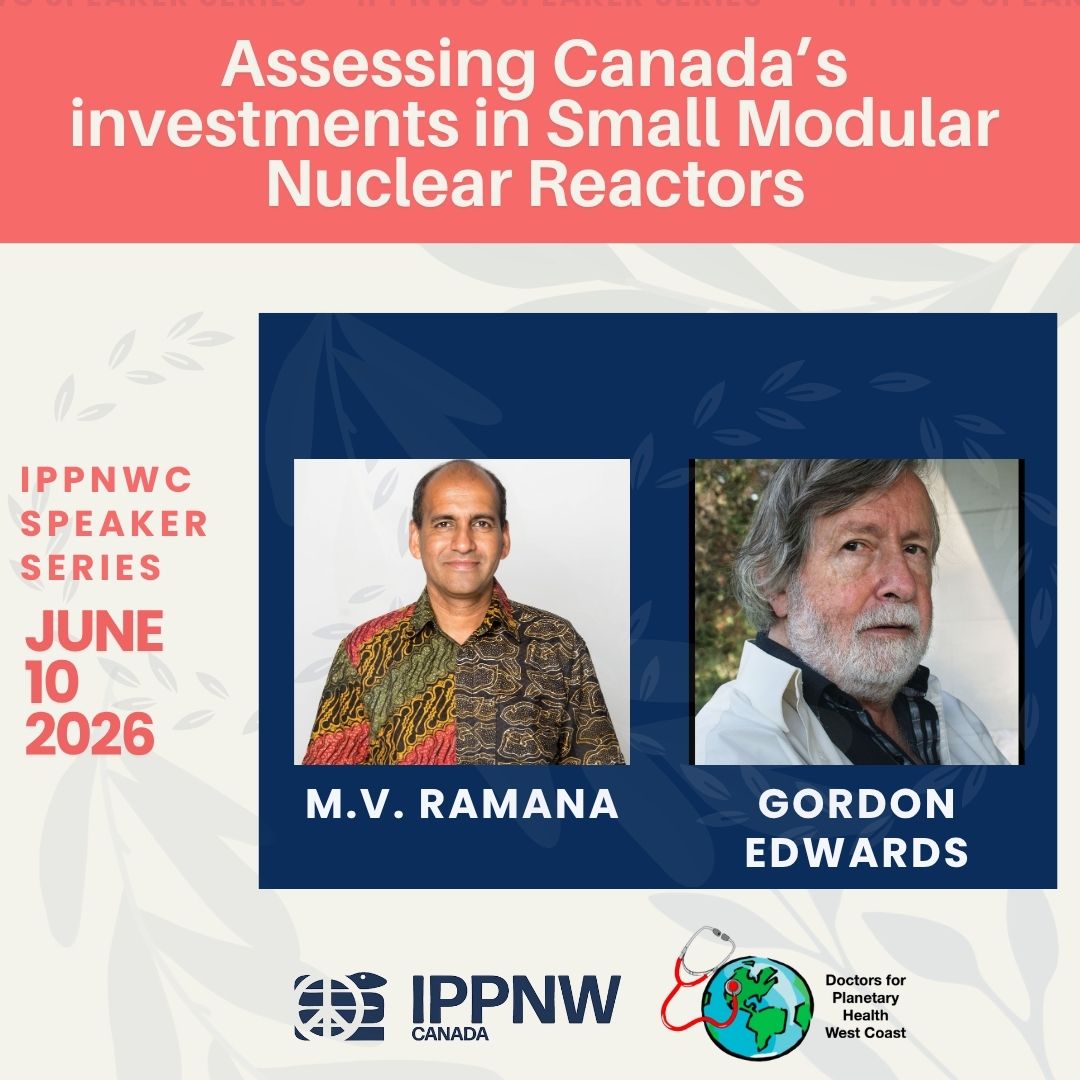
10 June – Assessing Canada’s Investments in Small Modular Nuclear Reactors – https://zoom.us/meeting/register/IiqHA5feRhaEBycOLNTJlA#/registration


Cuba Is Not a Failed State – It Is a Besieged State
PETITION: “Global Appeal to Endorse Palestinian Right of Return of Refugees”
To see nuclear-related stories in greater depth and intensity – go to https://nuclearinformation.wordpress.com
-
Archives
- June 2026 (79)
- May 2026 (306)
- April 2026 (356)
- March 2026 (251)
- February 2026 (268)
- January 2026 (308)
- December 2025 (358)
- November 2025 (359)
- October 2025 (376)
- September 2025 (257)
- August 2025 (319)
- July 2025 (230)
-
Categories
- 1
- 1 NUCLEAR ISSUES
- business and costs
- climate change
- culture and arts
- ENERGY
- environment
- health
- history
- indigenous issues
- Legal
- marketing of nuclear
- media
- opposition to nuclear
- PERSONAL STORIES
- politics
- politics international
- Religion and ethics
- safety
- secrets,lies and civil liberties
- spinbuster
- technology
- Uranium
- wastes
- weapons and war
- Women
- 2 WORLD
- ACTION
- AFRICA
- Atrocities
- AUSTRALIA
- Christina's notes
- Christina's themes
- culture and arts
- Events
- Fuk 2022
- Fuk 2023
- Fukushima 2017
- Fukushima 2018
- fukushima 2019
- Fukushima 2020
- Fukushima 2021
- general
- global warming
- Humour (God we need it)
- Nuclear
- RARE EARTHS
- Reference
- resources – print
- Resources -audiovicual
- Weekly Newsletter
- World
- World Nuclear
- YouTube
-
RSS
Entries RSS
Comments RSS
 nuclear-news