An Open Letter to Chancellor Friedrich Merz – for peace in Ukraine – Jeffrey Sachs.
Economist and diplomat Jeffrey Sachs is calling on German Chancellor Merz to begin immediate talks with Russian President Vladimir Putin about peace in Europe.
Jeffrey D. Sachs | May 27, 2026 | Berliner Zeitung
When I wrote an open letter to you a half year ago, I urged Germany to pursue diplomacy with Russia rather than the normalization of war. Six months later, the situation in Europe is dramatically worse. Europe and Russia are slipping into open war. And in that drift, Chancellor, your responsibility is singular. No European leader — not in Paris, not in Warsaw, not in Rome — holds the position that Germany holds, or has the power that you personally hold, to interrupt this catastrophe. Will you try for peace?
You yourself, with Prime Minister Meloni and President Macron, called in January 2026 for Europe to restart relations with Russia and described Russia as „a European country.“ Yet you did not pursue diplomacy. With the future of Europe at stake, this is an extraordinary abdication of leadership. Have you, in your months as Chancellor, attempted one substantive dialogue with President Putin? Has your foreign minister attempted one substantive dialogue with Foreign Minister Lavrov? Real conversations, the kind that ended the Cold War. The answer, as far as the public record reveals, is no. Not once. And not for want of recognizing the urgency.
The past days have brought a dangerous acceleration that should focus every European mind. Both capitals are now under sustained attack: Ukrainian long-range drones have struck deep into Moscow, including civilian sites; Russian missile and drone strikes against Kyiv have greatly intensified. Ukrainian drones have crossed into the airspace of the Baltic states, raising the immediate prospect of an incident that could pull Europe directly into the war. A horrific Ukrainian strike on a boys’ school in Lugansk has further eroded what little remains of restraint. And on May 25, Foreign Minister Sergey Lavrov, acting on instructions from President Putin, formally notified the United States Secretary of State that the Russian Armed Forces are now launching „systematic and sustained strikes“ on facilities and decision-making centers in Kyiv, and the Russian Foreign Ministry has advised that the United States and other countries „ensure the evacuation of their diplomatic personnel and other citizens from the capital of Ukraine.“ That message is the prologue to a major escalation. Diplomacy is more urgent than ever.
The way to defend Ukraine is not continued slaughter, but peace on terms that are agreeable to all parties. Instead, we face escalation, with more deaths, more destruction, and the real prospect of a war that expands beyond Ukraine. By calling for ever more weapons, ever greater war-fighting capacity, and ever louder demonstrations of „resolve,“ and by signaling that Germany is preparing for war rather than working to end it, you have allowed Berlin to become an accelerant rather than a brake to a European-wide war.
Germany’s Responsibility: Six Particulars
Germany bears profound responsibility for the situation it now confronts. Before German policy can be reset toward peace, Germany’s record must be confronted honestly. I set out below six serious failures of German foreign policy vis-à-vis Russia since German reunification in 1990.
First — the 2+4 Treaty and NATO’s eastward expansion. On 12 September 1990, in Moscow, Germany signed the Treaty on the Final Settlement with Respect to Germany — the „2+4 Treaty“ — that completed German reunification. That treaty was secured because Mikhail Gorbachev was given solemn assurances, by Hans-Dietrich Genscher, by Helmut Kohl, by James Baker, and by other Western leaders, that NATO would not move eastward. The declassified record — including the now-public memoranda assembled by the National Security Archive of George Washington University — is unambiguous: those assurances were given and were clearly meant at the time to apply beyond the territory of the former GDR to Eastern Europe. These assurances were reaffirmed through 1990 and 1991.
The 2+4 Treaty restricts the placement of NATO troops in the former GDR, and recalls the principles of the Helsinki Final Act, which emphasizes that no nation’s security should come at the expense of another’s. Does any serious person believe that the Soviet Union cared about Western troops on the territory of the former GDR but was indifferent to NATO armies in Warsaw, Vilnius, or Kyiv? Of course not.
The matter of NATO enlargement was discussed in detail and explicit assurances of non-enlargement to the East were given by Germany to the Soviet leaders — and then were broken. Germany was the principal beneficiary of those assurances, which were the quid pro quo for Germany’s reunification. Yet as early as 1993, German leaders began to promote the violation of those assurances.
Second — Chancellor Merkel’s own testimony. In her memoirs, Angela Merkel writes with striking candor that she understood at the time of the 2008 Bucharest Summit that inviting Ukraine and Georgia into NATO would be tantamount to a declaration of war on Russia. She knew Russia’s red line. And yet she gave in to American pressure, accepting the compromise communiqué that Ukraine and Georgia „will become“ NATO members. That single sentence set in motion the catastrophes of 2014 and 2022. Merkel’s later candor is a gift to her successors: she has told you, plainly and in her own words, what was understood at the time. Germany should not now pretend otherwise.
Third — the betrayal of the February 21, 2014 agreement. On 21 February 2014, in Kyiv, Germany’s then–Foreign Minister Frank-Walter Steinmeier, together with his Polish and French counterparts, brokered an agreement between President Yanukovych and the opposition. The agreement provided for a return to the 2004 constitution, the formation of a national-unity government, and early presidential elections. President Putin was consulted; the agreement was confirmed. It was a serious diplomatic achievement under conditions of intense violence. Yet within twenty-four hours Yanukovych was forcibly overthrown by a violent coup. Germany did not insist on the agreement it had just guaranteed. Instead, following the U.S. lead, Germany backed the new government, as if there had been no agreement in place. That decision persuaded Moscow that Western signatures could not be trusted.
Fourth — Minsk II. In February 2015, Chancellor Merkel personally negotiated Minsk II in the Normandy Format and pledged Germany’s political backing through the Declaration of Support adopted in Minsk on 12 February 2015. For seven years, the key political provision — autonomy for the Donbas regions within a sovereign Ukraine — was never implemented by Kyiv. Germany did not press Kyiv to implement the autonomy provision it had championed — and Merkel later acknowledged that the agreement had been used as a holding action to allow Ukraine to rearm. President Hollande said the same. The guarantee, in other words, was not a guarantee at all. It was a stratagem — once again at Washington’s behest. Once again, the message to Moscow was that Western signatures cannot be trusted
Fifth — Nord Stream. On 7 February 2022, in the East Room of the White House, President Biden announced — with then-Chancellor Olaf Scholz standing beside him — that „if Russia invades… then there will be no longer a Nord Stream 2. We will bring an end to it.“ Asked how, he replied, „I promise you, we will be able to do that.“ The pipelines were destroyed seven months later in an act of sabotage in the Baltic Sea. The available evidence — investigative reporting in the United States and Germany, the trail followed by the German federal prosecutor, and the public statements of former officials — points overwhelmingly to a joint Ukrainian-American operation. The German government has long known this. And yet Germany has permitted the public blame to fall on Russia, against the direct evidence, while an act of industrial sabotage against the German economy has gone unprosecuted and unanswered.
Sixth — the April 2022 Istanbul agreement that was within reach. Just weeks after Russia’s invasion in February 2022, Russian and Ukrainian negotiators converged in Istanbul on the terms of a peace agreement: Ukrainian neutrality outside NATO, multilateral security guarantees, agreed troop limits, and the political resolution of the Donbas and Crimea questions over time. The agreement was within days of signature. Former Israeli Prime Minister Naftali Bennett, one of the mediators, has confirmed publicly that the deal was close and that the West — the United States and the United Kingdom in particular — moved to block it. Prime Minister Boris Johnson’s mission to Kyiv in April 2022 to instruct Ukraine not to sign is a matter of public record. Hundreds of thousands of Ukrainian and Russian lives, and the wider European order, have paid the price for that US–UK intervention. Germany has not raised its voice on this — even though Germany, more than any other European state has borne the economic consequences.
The Second Catastrophe: Germany’s Economic Self-Destruction
Your first concern must be peace. Yesterday’s message from Moscow tells us how late the hour is. But there is a second catastrophe unfolding alongside the first: the willful destruction of the German economy, with Berlin as both author and victim.
Germany’s industrial economy was built on trade with Russia. The destruction of Nord Stream and the subsequent severance of Germany’s trade relations with Russia have left Germany buying natural gas from the United States at prices several times higher than the Russian pipeline gas it replaced. This is industrial suicide. Germany’s chemical sector, its steel sector, its glass industry, its energy-intensive manufacturers — the very foundations of the Mittelstand — are losing international competitiveness day by day. Skilled jobs are draining out of the German economy. And the German taxpayer and the German consumer are making a transfer of national wealth from Germany to American gas producers at a scale unprecedented in postwar Europe.
On top of this, the German government is now pledging an enormous defence build-up — hundreds of billions of euros over the coming decade — to arm for a war that diplomacy can easily prevent. This is a profound misallocation of national resources. The fundamental challenge facing Germany in this decade is competitiveness in the digital age. Every euro spent on tanks, missiles, and artillery shells is a euro not spent on Germany’s AI capacity, its chip-design and chip-fabrication capability, its energy infrastructure, and the high-speed digital networks that Germany needs to remain a top global economy.
The hard reality, Mr. Chancellor, is that there is no security to be bought with these arms that diplomacy cannot buy at a tiny fraction of the cost, and there is no prosperity to be had without the digital and energy investments that this arms buildup will crowd out.
My Appeal
Chancellor Merz, more than any other European leader, the question of whether Europe descends into general war, or returns to negotiation, and to economic sanity, rests with you. The hour is very late. Yesterday’s formal message from Moscow to Washington says so explicitly. Please open a dialogue with President Putin. Please send your foreign minister to Moscow or invite Russia’s Foreign Minister to Berlin. Please reopen the OSCE channels that Germany has allowed to atrophy. Please tell Kyiv to cease its strikes on civilian targets.
Most importantly, please tell the German public the truth: that a negotiated peace based on Ukrainian neutrality is the realistic path out of catastrophe, and that restoring a normal economic relationship with Russia is the realistic path out of Germany’s industrial decline.
The terms of an acceptable agreement that Germany could propose are clear. The fighting would stop on an armistice line. All sides would renounce any future resort to violence on the question of borders. Ukraine would restore its neutrality, and NATO would permanently renounce further eastward enlargement.
Europe and Russia would restore economic relations and would stop the warmongering. The OSCE would once again become the central forum for European security, with the fundamental precept that European security is indivisible, not based on military blocs dividing Europe. Alongside this peace, Germany would redirect its national resources toward the digital, AI, semiconductor, and energy investments that Germany’s economic future demands.
History will record what you do in the weeks ahead, and what you fail to do. So will the German public. So will the peoples of Russia, Ukraine, and Europe generally. It’s time for diplomacy, Mr. Chancellor. The choice is yours to make.
Respectfully,Jeffrey D. SachsUniversity Professor of Columbia University
https://www.berliner-zeitung.de/article/jeffrey-sachs-an-open-letter-to-chancellor-friedrich-merz-10038768
Scenario Analysis for Partitioning and Transmutation(P&T) in a Phase-out Scenario
In February 2025, the German Federal Agency for Disruptive Innovation
(SPRIN-D) published the “Implementation Study on an Accelerator-Driven
Neutron Source at the Site of a Former Nuclear Power Plant” (Houben et
al. 2025), proposing an alternative waste management option. This type of
radioactive waste management is often summarized under the broader term of
Partitioning and Transmutation (P&T).
The SPRIN-D study has been critically
assessed with respect to its assumptions, feasibility, and expected
benefits for Germany e.g. by the German Federal Ministry for the Safety of
Nuclear Waste Management (Bundesamt für die Sicherheit der nuklearen
Entsorgung (BASE) 2025).
The P&T scenarios in the SPRIN-D study address
only a narrow and highly constrained case. They do not provide a
transparent, reproducible nationwide system description for the treatment
of the full German high-level waste inventory (HLW). Additionally key
modelling parameters and interim results are only partly documented. Under
the explicit assumption of hypothetical technical feasibility, based on
documented parameters and literature values, this INRAG study estimates
what a national implementation of a P&T scenario in Germany based on
Transmutex’ START concept could entail.
After briefly outlining the
background, we define a consistent set of scenario parameters and
justifying the chosen values. We then present the modelling results, such
as the number of facilities and time periods required under the stated
boundary conditions, followed by a discussion of selected potential safety
implications of operating a full-scale system over multiple decades.
The analysis is limited to technical and system-dimension aspects. Overall, the
results indicate that the optimistic assumptions in Houben et al. (2025) do
not provide a transparent, reproducible nationwide mass-balance model and
results change drastically if parameter ranges are applied as reported in
the scientific literature.
Even under optimistic modelling assumptions, P&T
does not remove the need for a geological repository. Rather, the burden of
nuclear waste is shifted into a long-lived multi-site nuclear industrial
system with additional facilities, operational waste streams, and prolonged
institutional requirements.
INRAG 11th March 2026,
https://www.inrag.org/wp-content/uploads/2026/03/inrag_put_publication_V2.pdf
Third and final shipment of vitrified waste from the UK to Germany
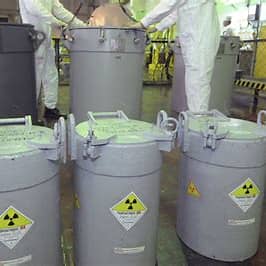
As previously announced, the UK will be returning high level waste (HLW) in the form of vitrified residues to Germany.
Sellafield Ltd, 24 March 2026,
https://www.gov.uk/government/news/third-and-final-shipment-of-vitrified-waste-from-the-uk-to-germany
Sellafield Ltd and Nuclear Transport Solutions (NTS) are making preparations for the third and final return of high level waste (HLW), in the form of vitrified residue, to Germany.
Seven flasks will be transported from Sellafield to the Brokdorf interim storage facility later in 2026.
This will be the final shipment from the UK to Germany. The first shipment of 6 flasks, to Biblis, was successfully completed in 2020 and the second shipment of 7 flasks to Isar was completed in 2025.
The waste results from the reprocessing and recycling of spent nuclear fuel at the Sellafield site in West Cumbria, which had previously been used to produce electricity by utilities in Germany.
Vitrified residue returns are a key component of the UK’s Nuclear Decommissioning Authority (NDA) strategy to repatriate high level waste from the UK, fulfil overseas contracts and deliver UK Government policy.
These returns involve Sellafield Ltd working in partnership with Nuclear Transport Solutions (NTS) to return the waste to German customers.
The shipments will be carried out in full compliance with all applicable national and international regulations, and subject to issue of all relevant permits and licenses.
Sellafield Ltd and NTS will provide further information on the shipments in due course.
Germany to scrap deadline for finding a nuclear waste storage site

04 Mar 2026, https://www.cleanenergywire.org/news/germany-scrap-deadline-finding-nuclear-waste-storage-site
Germany has given up on naming a deadline for finding a suitable location for the safe and long-term storage of highly radioactive waste, reports public broadcaster Deutschlandfunk. A draft bill by the environment ministry, which is in charge of the process, says the existing 2031 target date is not realistic. A statutory deadline does not fit the complex requirements of the site selection process, the draft said, according to the broadcaster.
Germany shut down its last nuclear power plants in 2023, but must still safely dispose of decades of accumulated radioactive waste. A report commissioned by the country’s Federal Office for the Safety of Nuclear Waste Management (BASE) said in 2024 that the search for a suitable site was likely to last until the 2070s. The environment ministry has also said the 2031 target was unrealistic, but argued that progress in the search process should still be considered when assessing possible timelines.
Only weeks ago, environment minister Carsten Schneider said the goal was to decide on a location by the middle of the century. However, the draft bill no longer mentions this target date.
The 2031 deadline was set in the country’s 2013 law on finding and choosing a nuclear waste repository.
Germany must find a place to safely store 1,900 large containers, or around 28,100 cubic metres, of high-level radioactive waste in a location that can be considered secure for hundreds of thousands of years. The material must remain retrievable for the first 500 years to allow for implementing alternative solutions.
Heat-generating nuclear waste accounts for only five percent of Germany’s radioactive refuse, but causes 99 percent of the radiation. It is currently held at temporary storage facilities near the nuclear power stations and in central interim repositories. Once a decision on a location is made, building the final repository is scheduled to take about 20 years. Transporting and storing the refuse will then take several decades more, meaning the entire process will last well into the next century.
German Chancellor urging France to beef up ‘Europe’s nuclear deterrent”
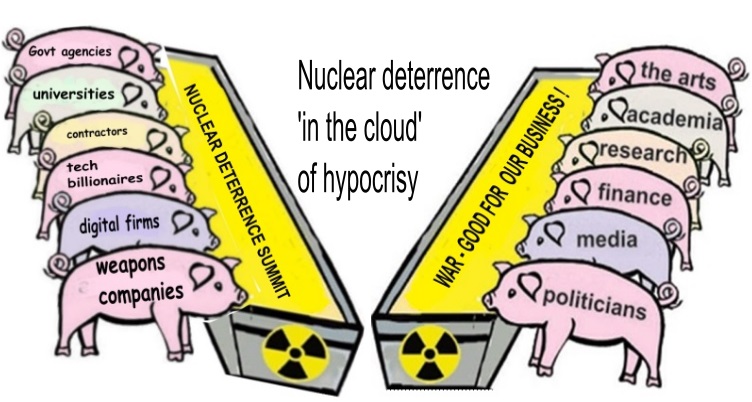
German Chancellor Friedrich Merz has initiated talks with France on
strengthening Europe’s nuclear deterrent as he urged the continent to
bolster its defences and “repair” strained relations with the US. The
discussions, centred on the possibility of Germany joining France’s
nuclear umbrella, underline mounting anxiety in Europe over an expected
reduction in the US military presence on the continent, as Russia’s
full-scale war on Ukraine enters its fifth year.
FT 13th Feb 2026,
https://www.ft.com/content/6ea334ce-9c6e-4415-8710-acc6ac939799
Germany: Ministry of the Environment: Mini‑reactors [SMNRs] not an option

Berlin (energate) – The gap between the hype and industrial reality surrounding nuclear energy is widening. This applies in particular to the smaller nuclear reactors, Small Modular Reactors (SMR). This is the conclusion of the World Nuclear Industry Status Report, which was commissioned by the Heinrich Böll Foundation, the Federal Office for the Safety of Nuclear Waste Management (BASE) and the Friedrich Ebert Foundation, among others.
by Leonie Wolf, energate, 22 January 2026
According to the study, nuclear energy remains “irrelevant” on the global market, as the 5.4
GW increase in nuclear capacity is offset by 100 times the combined new capacity of over 565
GW of wind and solar energy. Wind and solar plants
worldwide currently generate 70 per cent more electricity than nuclear reactors.
According to the report, there is still no market-ready product for Small Module Reactors (SMR), only a design certification and an approved standard design. Both come from the US company NuScale. The US Nuclear Regulatory Commission has already approved a total of three of the company’s models, but previous contracts with potential customers have been cancelled due to increased costs.
A first mini-reactor was cancelled in 2023.
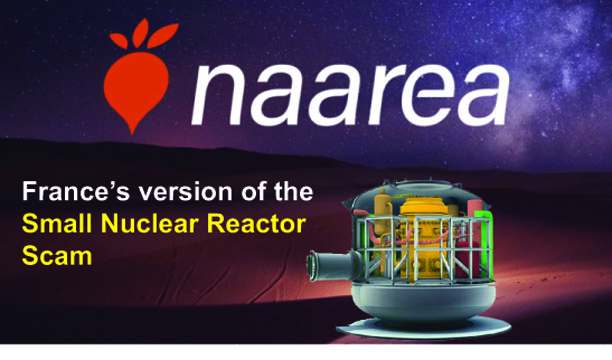
According to the study, the two largest European start-ups Newcleo and Naarea are in financial difficulties; the French start-up Naarea has already filed for insolvency. The start-up is now to be taken over by the Polish-Luxembourgish group Eneris.
The Netherlands and France continue to rely on nuclear power
Despite these failures, other countries are sticking with nuclear energy. In the Netherlands, a debate on the use of SMR, which is seen as a measure to achieve the 2030 climate targets, has been ongoing for several years. In addition, the Dutch company Mammoet signed a memorandum of understanding with Electricité de France (EDF) at the end of 2025, which provides for the construction of nuclear plants in the Netherlands. Two nuclear power plants were already planned for 2022 and two more are still in operation.
Debate continues in Germany
Although Germany has withdrawn from nuclear energy, the debate about its benefits continues. Parliamentary State Secretary Rita Schwarzelühr-Sutter also spoke at the presentation of the World Nuclear Industry Status Report. When asked by energate, a spokesperson for the Federal Ministry for the Environment explained that Germany had “good reasons” for withdrawing from the use of nuclear power. The risks of nuclear energy and also of the use of SMRs remain “ultimately unmanageable”. In addition, the development and construction of smaller reactors raises many other unresolved issues.
There is also no reliable evidence to date for the safety promises. As a result, the disadvantages of nuclear energy would be transferred from a few large plants to many small ones. Ultimately, “the individual plants may become smaller, but the problems as a whole tend to become bigger”.
The spokesperson also referred to a study by the Federal Office for the Safety of Nuclear Waste Management, which energate has already reported on. According to the report, the advantages of mass production of SMRs would only outweigh their fundamental cost disadvantages compared to large reactors with a production volume of around 3,000 units.
The CDU/CSU (Christian Democrats) parliamentary group takes a different view. At the end of 2024, the CDU and CSU published a position paper in which they advocated research and development of nuclear power plants, including SMRs. CSUChairman Markus Söder also spoke out in favour of the use of SMRs in an interview with Die Welt at the end of 2025.
A total of 127 different designs worldwide
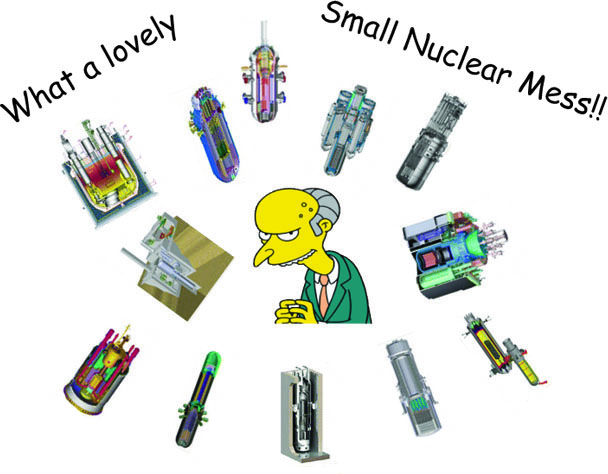
The report states that it is above all the continuous financial and political support for SMRs that keeps faith in them alive. In particular, private capital injections are playing an increasingly important role in driving research and development forward. There are 127 different SMR designs, so the funding amounts are widely spread. This means that most designs do not have sufficient financial resources to drive development forward
. According to the report, even the US start-up NuScale is still years away from building the first Small Module Reactor, although several designs have already been approved.
The New German Warfare State
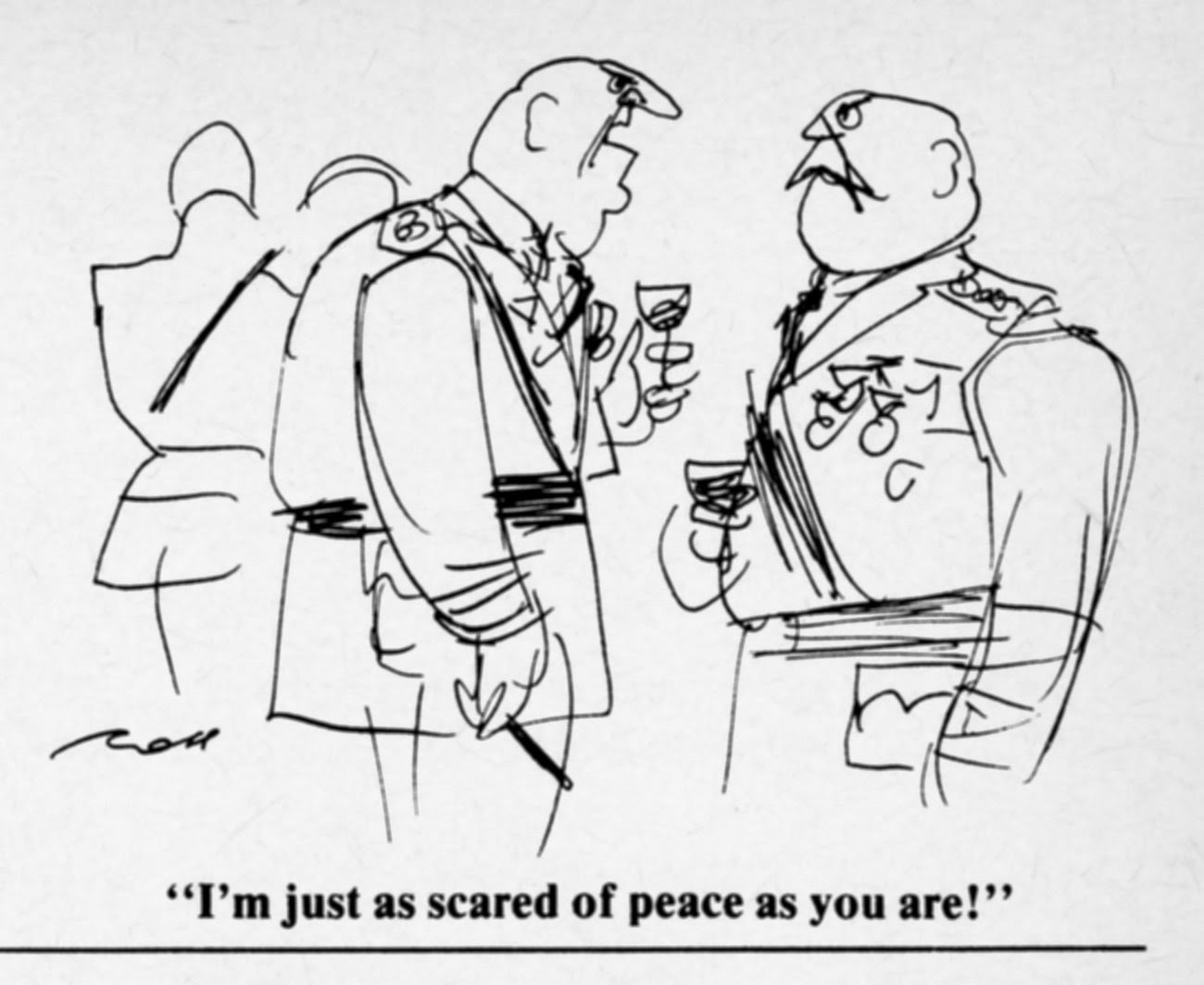
a leading sector of the political and economic elites in Germany and the EU view the project of rampant militarization as a means to counter the massive upheavals that are threatening their power on a geopolitical, domestic, and economic level. And for this purpose, the maintenance of a major threat, of a terrifying enemy that will not go away quickly, is indispensable. If the Russian threat, in contrast, turned out to be not as serious as it is portrayed, and if Russia could be accommodated with a peace deal that includes Ukrainian neutrality, the complete system of justification for the military build-up would crumble.
Fabian Scheidler, Substack, Jan 06, 2026
How boundless militarization has become the key project of Germany and the European Union in the unfolding polycrisis.
The European Union, Britain and other European NATO members have embarked on a path of massive militarization, which in its speed and ambition is unprecedented since World War II. While most NATO members had previously been unwilling or unable to meet the goal of spending two percent of their GDP for the military, a target set in 2014, they suddenly jumped to a commitment of five per cent per year at the 2025 NATO summit, bowing to Donald Trump’s pressure. Only the Spanish government refused to comply.
What NATO, its member states and major media are not communicating is the fact that five per cent of GDP corresponds to around 50 per cent of national budgets. If states were indeed to implement their commitments, they would have to drastically reduce spending on welfare, including education and healthcare, while simultaneously swelling their national deficits. The Financial Times summed up the agenda in a March 2025 headline: ‘Europe Must Trim its Welfare State to Build a Warfare State’. In other words, the planned militarization is class war from above. Although governments have somewhat watered down their commitments, stating that only 3.5 per cent will go directly to the military while 1.5 per cent is meant to revamp infrastructures for military use, even 35 per cent of national budgets would still be a major blow for what is left of the European welfare model.
Massive cuts to public spending in order to channel the funds into the military-industrial complex are on the agenda in most European countries. The German government is among the most zealous in this respect. Finance Minister Lars Klingbeil from the Social Democratic Party (SPD) pledged to triple the military budget from 52 billion € in 2024 to an unprecedented 153 billion in 2029, while chancellor Friedrich Merz (CDU) has already announced drastic cuts in unemployment benefits to fill some of the gap. Resistance within the Bundestag is eerily feeble. The Greens have long been among the most ardent advocates of rearmament and in March 2025 they voted in favour of a constitutional amendment that has removed all budget constraints for the military and intelligence services while maintaining austerity for all other types of spending. The right-wing Alternative für Deutschland (AfD), which has been leading in some recent polls, is equally devoted to the military build-up and a cutback of the welfare state. While Die LINKE officially opposes this agenda, their representatives in the second federal chamber, the Bundesrat, have voted for the constitutional amendment, causing unrest within the party. For some observers, the lack of parliamentary opposition has brought back sinister memories of the war credits in 1914, which were unanimously approved in the Reichstag – with the votes of the SPD.
In other European countries, however, more resistance has emerged. In the UK, Keir Starmer met fierce opposition to his plans to cut welfare benefits, even within his own Labour Party, and was forced to backtrack. In France, prime minister François Bayrou was toppled by a motion of no confidence over a € 44 billion budget cut plan. In Spain, mass demonstrations against rearmament have put significant pressure on prime minister Sanchez to limit military spending.
While it remains unclear to what extent European governments will be able to push through their ‘all guns, no butter’ agenda, the onslaught on public services and the working class is ongoing and pervasive. Unbound militarization has become the key project of the European Union, which is trying to mend its fractured foundations by forging a military union.
The militarization of German society
In Germany, a wave of militarization that would have been unthinkable a few years ago is sweeping through the country, affecting schools, universities, the media, and public spaces. Tramways are painted in military camouflage. Huge advertisements for the army depict war as a great adventure that strengthens team spirit. The Bundeswehr is aggressively recruiting young people in the streets, at school, and at universities. Even minors under 18 are being recruited, in violation of the principles of the UN Convention on the Rights of the Child, as organizations such as Terre des Hommes point out. Youth officers are sent into classrooms where they are advertising the army in front of students who are sometimes barely 13 years old. Rather than encouraging debates about the military at school, the army is being given free rein. The administration is also planning to introduce regular civil defense drills in schools, with the explicit intention of preparing the students mentally for war.
In the media, the German public broadcaster ARD has started to promote the army and its preparations for war in its children’s program ‘9 ½’, with recommendations on how to get involved. The program does not ask any critical questions about the army, nor does it mention the fact that deployment to war zones can result in death and trauma. The same is true of the second public broadcaster, which advertises the army as a cute and charitable force of peace in its children’s program ZDFtivi.
Universities are increasingly being forced to cooperate with the military. While a few federal states still prohibit military research in public universities and around 70 universities have voluntarily committed to engage exclusively in civil research, Robert Habeck (The Greens) declared in early 2025, when he was vice chancellor, that we ‘need to rethink the strict separation of military and civilian use and development’ in academia. In Bavaria, the administration has already banned any ‘civil clauses’ in universities, eliminating the option of declining military research. Furthermore, the German Army has developed a comprehensive classified ‘Operation Plan Germany’ to subordinate civil institutions to military objectives.
These concerted efforts to create a Warfare State are not least intended to transform the attitudes of the German population, which in its majority has been skeptical of the military, and of foreign involvements in particular, for decades……………………………………………………………………………………………
The ‘rules-based international order’ and the Gaza genocide
The project of the Warfare State, and the sacrifices that the population is supposed to make for its creation, is portrayed by political leaders both in Germany and the EU as being without alternative. The argument justifying this position is based on two pillars. The first one is the claim that massive rearmament is required to defend democracy, ‘Western values’, and international law against a despotic rogue state that is willing to dismantle the ‘rules-based international order’. ……………………………………………………………………………………………….
Within Europe, German governments have particularly excelled in trampling on international law when it comes to Palestine. After the Israeli onslaught began, the German government increased its arms exports to Israel tenfold, to a total 326 million euros in 2023 alone, making it the world’s second-largest supplier of arms to Israel, behind only the US. In November 2023, when overwhelming evidence of systematic Israeli war crimes had long been available, German Chancellor Olaf Scholz (SPD) declared that Israel ‘is committed to human rights and international law and acts accordingly’. Even after the International Court of Justice deemed South Africa’s genocide lawsuit against Israel to be ‘plausible’ in January 2024, the German government did not alter its stance. …………………………………
…………………. Germany has been the main force in the EU blocking all initiatives to sanction Israel for its behavior, for example by suspending the EU-Israel Association Agreement. German authorities and institutions have also engaged in suppressing freedom of speech on a scale unprecedented in recent German history, including attempts to prevent the UN Special Rapporteur on the Occupied Territories, Francesca Albanese, from speaking in Berlin……………………………………………………………………
The Russian threat
While the argument that the new arms race is about defending a rules-based international order and the inviolability of borders (which Israel violates on a daily basis) has lost credibility, and with Ukraine’s chances of winning back their territories dwindling, another narrative has emerged to justify the military build-up: the threat of a Russian invasion of NATO countries. In June 2024, German Defense Minister Boris Pistorius stated that Germany must become ‘fit for war’ because Russia will be able to invade NATO by 2029.
However, there is no indication that Russia has any intention of attacking NATO countries, let alone Germany. Even the annual US intelligence report clearly states that the Kremlin ‘is almost certainly not interested in a direct military conflict with US and NATO forces’.[10] Admiral Sir Tony Radakin, Commander-in-Chief of the British Armed Forces and anything but a Russian stooge, confirmed: ‘Vladimir Putin does not want a direct war with NATO.’ In fact, there are no plausible motives for an attack on NATO, which would plunge Russia into a devastating conflict with the most powerful military alliance in human history. Even if the Russian leadership were utterly insane and suicidal (for which there is no evidence), they would lack the means to undertake such an endeavor. For years, Russia has made only slow advances against an exhausted Ukrainian army. NATO’s military budget is still ten times larger than Russia’s, and European NATO states alone spend more than three times as much and are overwhelmingly superior to Russia militarily.
Given that the Russian threat to NATO is clearly greatly exaggerated, even in the eyes of Western intelligence, the question arises as to why the German government, along with other European leaders, continues to circulate the narrative of an impending invasion. The question becomes even more pertinent given that the EU and its most powerful member states are actively undermining serious peace negotiations, thus increasing the risk of a major confrontation with Russia. The proposal to send NATO troops to Ukraine in the wake of a possible ceasefire, for example, increases the incentives for Russia to continue fighting, since preventing NATO troops from being deployed to Ukraine was a key motive for starting the war in the first place. While the EU should have a clear interest in extinguishing the fire on its doorstep, it continues to pour more oil on it, compromising its own security interests as well as Ukraine’s. What is driving this seemingly irrational behavior?
The geopolitical upheaval and the ‘international division of humanity’
A possible answer to this puzzle is that a leading sector of the political and economic elites in Germany and the EU view the project of rampant militarization as a means to counter the massive upheavals that are threatening their power on a geopolitical, domestic, and economic level. And for this purpose, the maintenance of a major threat, of a terrifying enemy that will not go away quickly, is indispensable. If the Russian threat, in contrast, turned out to be not as serious as it is portrayed, and if Russia could be accommodated with a peace deal that includes Ukrainian neutrality, the complete system of justification for the military build-up would crumble.
To consider this argument more carefully, we need to take a closer look at the historical context. Geopolitically, the West is losing its dominant position in the world-system that it has occupied for centuries, a process that has triggered severe turbulence and fractures within the Western bloc. The US is deploying all possible strategies to regain its once hegemonic position, not hesitating to throw the EU under the bus if necessary. . After the Biden administration’s strategy of weakening Russia through the Ukraine war failed, driving Russia in the arms of Beijing, the Trump administration has been desperately trying to pull out of Ukraine in order to pivot to Asia and contain its main rival China. For this reason, the US is attempting to shift the financial burden of the war to Europe.
For European governments, and the German administration in particular, which have been following US instructions to the letter while subordinating their own interests, this U-turn has provoked considerable chaos and confusion. First of all, they had bowed to US pressure to cut all ties with Russia. While this did nothing to end the Ukraine war, it caused severe economic pain, especially to Germany. …………………………………………………………………………………………………
Despite the rivalry and in-fighting among Western nations, the new wave of militarization has at least one common geopolitical denominator: the maintenance of what Vijay Prashad has called the ‘international division of humanity’. The capitalist world-system has been based for centuries on the dominance of white Western nations over the peoples of the Global South through colonization and neocolonial rule. This order is threatened by the rise of the Global South and the BRICS, and Germany, much like other European powers, is not willing to let the ‘darker nations’ have an equal say in world affairs and give up its own privileged position among the top predators of the food chain. Given that the economic leverage and the soft power of Germany are in decline, its leaders seem to believe that they can reverse trends by increased militarization.
Economic decay and remilitarization
On the economic and domestic level, Germany has become, like many other Western countries, a society in decline. …………………………………………………………………………………………………………………………………….
If the program was indeed about restarting the national economy by creating domestic demand the question arises as to why German governments, as in other Western countries, have been and still are so unwilling to spend more money on education, healthcare, and other public services, which would create domestic demand much more effectively. The March 2025 constitutional amendment gets to the heart of this paradox: While maintaining austerity for society at large, it has enabled limitless spending and borrowing for the military and the deep state.
……………………………………………………………………………………………………………………………………………….. With ideological coherence in the West crumbling, the War State can provide a sense of direction and unity among the governing elites. Moreover, the threat of an overwhelming enemy, whether real or fictitious, allows the imposition of a state of exception on society as a whole.
……………………………………. the latent or manifest state of war is a perfect means of distracting an increasingly skeptical population from considering the systemic root causes of the deepening polycrisis. Whether it is inequality or climate chaos, the logic of war calls on us to put these issues aside in order to defend Western civilization against the Saurons and Voldemorts of the barbaric East.
………………………. war seems to be the only remaining option for a body politic that has no answers for anything, whether it is mass poverty, climate chaos, popular anger, or geopolitical challenges. While it is often said that politics is about the solution of problems, the War State project is about distracting from all real problems by hypnotizing the public and focusing its attention on an external threat.
………………………………………………………………………………………………… Welfare, not warfare
The convergence of movements around the issue of peace will play a key role in determining whether the race to the abyss can be stopped. The attacks on welfare in order to finance the arms build-up have already incited mass popular resistance in countries like Britain, Spain, France, and Italy. While the German peace movements are still historically weak due to internal splits, a series of major demonstrations this autumn, both on the issues of Gaza and Ukraine, might indicate a turning point. Stopping the military build-up and the new bloc confrontation is a key issue for the left in Europe, as all possible progressive achievements in terms of workers’ rights, democracy, and environmental justice would be wiped out if EU leaders get their way with the War State agenda. After all, it’s about welfare, not warfare, today more than ever. https://fabianscheidler.substack.com/p/the-new-german-warfare-state
Renewables deliver nearly two thirds of power fed to grid in Germany, not including self-consumption
Nearly two thirds of all electricity fed into Germany’s public grid
between July and September 2025 came from renewable power sources, the
country’s statistical office Destatis said, based on preliminary data.
With 98.3 billion kilowatt-hours (kWh), wind turbines, solar panels and
other renewables contributed 64.1 percent to the electricity mix, up from
63.5 percent in the same period last year. Total renewable power production
rose three percent compared to the third quarter of 2024, while total
electricity production increased by two percent. A robust expansion of
renewable power sources led to record output levels for a third quarter:
Wind power production increased by more than ten percent compared to the
third quarter of 2024, reaching a share of over one quarter (26.8%) of the
power mix, while solar PV output rose 3.2 percent to a share of 24.1
percent.
Renew Economy 9th Dec 2025,
https://reneweconomy.com.au/renewables-deliver-nearly-two-thirds-of-power-fed-to-grid-in-germany-not-including-self-consumption/
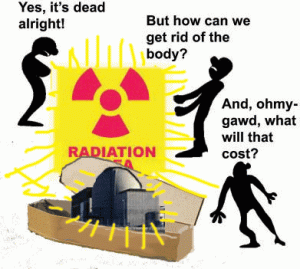
Germany destroys two nuclear plant cooling towers as part of nuclear phaseout plan.
Euronews, 25/10/2025,https://www.euronews.com/2025/10/25/germany-destroys-two-nuclear-plant-cooling-towers-as-part-of-nuclear-phaseout-plan
The two towers, equivalent to roughly 56,000 tonnes of concrete, collapsed in a controlled demolition on Saturday. It comes as part of Germany’s nuclear phaseout.
Two cooling towers of the former nuclear power plant in Germay’s Bavarian town of Gundremmingen were brought down in a controlled demolition at noon on Saturday.
The plant had served as an important landmark in the town for nearly six decades, bringing numerous new jobs and boosting the local economy.
As part of the country’s nuclear phaseout and under Germany’s energy transition policy, the Gundremmingen, as well as the Brokdorf, and Grohnde nuclear power plants, had already been decommissioned in December 2021.
The municipality, who had prepared for a large crowd of onlookers, set up a restricted zone around the power plant.
According to energy company RWE, the demolition could be observed from various watch points in the region. Some pubs also offered public “demolition viewing parties”
How the towers will be blown up
There were three explosions in total. The first was carried out to chase away nearby animals and wildlife. The second brought down the first tower, and the third caused the second tower to collapse.
Roughly 56,000 tonnes of concrete collapsed in a matter of seconds. Following Saturday’s demolition, the dismantling of the plant will further continue, local media report, with completion expected by 2040.
Assessment of Asse storage chamber conditions begins
Tuesday, 19 August 2025, https://www.world-nuclear-news.org/articles/assessment-of-asse-storage-chamber-conditions-begins
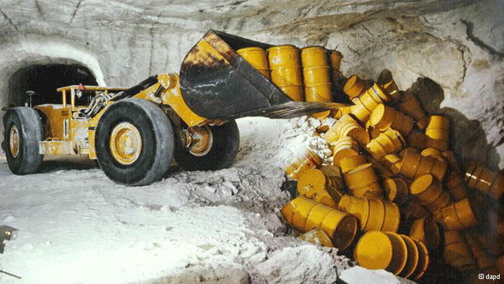
An exploratory borehole is providing the first indications of the condition of the stored drums containing radioactive waste within Storage Chamber 12 at the former Asse II salt mine in the district of Wolfenbüttel, Lower Saxony, Germany.
Between 1967 and 1978, thousands of barrels of mostly low-level radioactive waste were emplaced in a total of 13 former mining chambers at the Asse II mine on behalf of the federal government. However, the facility has proven unstable and retrieval of the waste has been legally mandated since 2013.
Germany’s Federal Company for Radioactive Waste Disposal (BGE) has announced it “made significant progress” in its preparations for the retrieval of radioactive waste from the Asse II mine at the beginning of August.
“Through a tennis ball-sized hole, we were able to take a look into Storage Chamber 12 for the first time in decades,” said Iris Graffunder, Chair of the Management Board of BGE. “Our first impression is that at least the visible barrels are in good condition. Now we will find out the exact composition of the chamber atmosphere and measure the activity levels in the chamber. For this, we need more space and will have to expand the borehole.”
Storage Chamber 12 contains 7,464 containers, including 6,747 drums and 717 so-called ‘lost concrete shields’ (drums encased in concrete). The containers were stacked horizontally. Storage took place in 1973 and 1974. The eventual formation of a sump containing contaminated solution in the access area to this storage chamber led, among other things, to the Asse II mine being placed under nuclear law in 2009.
Storage Chamber 12 is one of the highest radon emitters in the Asse II mine. At the end of May 2024, miners began the targeted drilling into the chamber under the highest radiation protection standards. At a depth of 750 metres, a borehole about 117 metres long was drilled to access the chamber. On 6 August, radiation protection measurements during drilling showed elevated radon levels, indicating that the chamber had been reached.
A planned gas measurement will reveal the composition of the chamber atmosphere and the factors that influence it. Further geological exploration is also underway. Preliminary investigations revealed that the chamber ceiling was deeper than expected. The first images from the chamber confirm these radar and magnetic measurements. A planned 3D scan is intended to provide a more complete picture of the emplacement chamber.
All of the measured values obtained will be utilised in the further planning of retrieval and in future licensing procedures. Among other things, they will allow BGE to determine which recovery technologies can be used in Storage Chamber 12.
BGE – a federally owned company within the remit of the Federal Environment Ministry – took over responsibility as operator of the Asse II mine and the Konrad and Morsleben repositories from the Federal Office for Radiation Protection in April 2017. It is also tasked with searching for a repository site to dispose of the high-level radioactive waste generated in Germany on the basis of the Site Selection Act that came into force in May 2017.
According to current planning, retrieval of the radioactive waste stored in Asse II is scheduled to begin in 2033. Currently, costs of about EUR4.7 billion (USD5.5 billion) are expected until retrieval begins, including the costs of keeping the mine open and implementing the emergency planning precautions. The costs for retrieval, interim storage, and final disposal after 2033 have not been taken into account.
German experience shows transition to renewables possible for Taiwan and the world.
https://tcan2050.org.tw/en/nonuke-2/ 2025-08-19, Dr. Ortwin Renn |Professor emeritus of Environmental Sociology and Technology Assessment, Stuttgart University; Scientific Director emeritus, Research Institute for Sustainability at GFZ, Potsdam , Germany (RIFS)
I am writing to express my full support for your initiative to keep Taiwan’s nuclear power reactors permanently shut down and to accelerate the transition toward renewable energy. This position is not only grounded in scientific evidence but also in practical experience from countries such as my home country Germany that have successfully advanced toward a sustainable energy future.
In 2011, I served as a member of the German Federal Government’s Ethics Committee on a Safe Energy Supply, established after the Fukushima disaster. Our task was to assess the future role of nuclear energy in Germany. After extensive consultations with leading scientists, economic stakeholders, and civil society organizations, the Committee reached a consensual recommendation: to phase out nuclear energy within ten years while investing heavily in renewable energy sources. This decision was not only an ethical imperative but also based on sound economic and technological reasoning.
The results speak for themselves. Between 2011 and 2025, Germany’s share of renewable energy in electricity generation rose from 23% to over 54%—an increase of 230%. Nuclear power, which contributed less than 18% in 2011, was more than compensated for by renewables. In addition, the expansion of renewables significantly reduced reliance on fossil fuels, thereby contributing to climate protection and energy sovereignty.
Today, renewable energy is not only clean but also cost-competitive. The production of electricity from wind and solar power is now cheaper than generating electricity from coal or gas and even cheaper than nuclear power when comparing the costs of building new facilities. It is true that the transition requires substantial upfront investment in grid upgrades, storage systems, and backup solutions. However, once this infrastructure is in place, the long-term costs of renewable energy generation are lower than those of fossil or nuclear alternatives.
Germany’s relatively high electricity prices are not a consequence of renewables, but largely due to global gas price spikes and the cost of imported electricity. The long-term trend is clear: renewable energy is becoming the most economical, environmentally sound, and politically stable source of power.
The lessons for Taiwan are evident. A transition to renewable energy is possible, economically viable, and ultimately beneficial for society. It contributes to climate protection, environmental quality, and public health. It reduces dependence on imported fuels and avoids the long-term risks and costs associated with nuclear energy, including waste management and potential catastrophic accidents. Most importantly, it enables a decentralized and resilient energy system that benefits local communities.
Achieving this transformation requires significant investment and strong political will, but the German experience demonstrates that it is both feasible and advantageous. I strongly encourage Taiwan to seize this opportunity and prioritize a renewable-based energy future over a return to nuclear power.
https://tcan2050.org.tw/en/nonuke-2/
Nuclear legacy costs far outweigh Germany’s environmental protection investments.

Clean Energy Wire, 23 Jul 2025, Benjamin Wehrmann, Germany https://www.cleanenergywire.org/news/nuclear-legacy-costs-far-outweigh-germanys-environmental-protection-investments
Over half of the German environment ministry’s (BMUKN) budget for 2025 will be spent on managing the country’s nuclear waste and preparing a decision for a final nuclear repository. According to a government budget draft, the ministry led by Social Democrat (SPD) Carsten Schneider will receive 2.7 billion euros this year, about 300 million euros more than in 2024. Out of this sum, 1.4 billion euros are reserved for the “temporary and final storage of radioactive waste,” a parliament report on the draft said.
In 2024, Germany spent about 1.1 billion euros on nuclear waste management, after the country shuttered its last commercial nuclear power plants in mid-2023. Some 860 million euros from the 2025 ministry budget will be spent on the search for a final repository and about 535 million euros on temporary storage.
By contrast, about 460 million euros were marked for nature and environment protection measures by the ministry, while the subordinate Federal Environment Agency (UBA) will receive another 205 million euros. Climate action costs were not yet reflected in the budget, as the environment ministry was handed responsibility for this policy field from the economy ministry only in spring this year, the parliament report said. It did not specify which measures are covered under this field. Energy policy remains with the economy ministry.
“Nuclear waste is eating up environmental protection,” Wolfgang Ehmke from the citizen initiative for environmental protection of Lüchow-Dannenberg, told newspaper Tageszeitung (taz). The rural district in northern Germany is known for its temporary nuclear repository in the municipality of Gorleben, which has been the site of many anti-nuclear protests over the past decades. Management and construction works at the Gorleben repository alone climbed from 20 million euros in 2024 to 33 million one year later, the newspaper said.
Another repository, Asse near the town of Wolfenbüttel, would even require maintenance investments of 206 million euros this year. Costs for managing the country’s nuclear waste are even higher, as part of the legacy costs are carried by other ministries. For example, the research ministry is responsible for research reactors, while the finance ministry handles nuclear infrastructure in the former eastern German states, as agreed in the country’s reunification treaties, taz added.
Part of the costs of Germany’s nuclear waste management are financed through a fund filled by the former nuclear plant operators. These made a one-off payment of 24 billion euros in 2017 and were subsequently freed of further financial liabilities. Following Germany’s 2011 renewed commitment to phase out nuclear power, the country started looking for a location to safely store its roughly 28,100 cubic metres of radioactive material for hundreds of thousands of years. Initially, the aim was to select a location for the final repository by 2031 but, in 2022, the responsible agency pushed the deadline to until at least 2046.
In major shift, Germany ends arms exports to Israel amid Netanyahu’s Gaza takeover plan
Chancellor Friedrich Merz bans shipments of military equipment that could be used in Gaza
The Week, By Ajish P Joy August 09, 2025
Germany has announced it will halt approval of weapons exports to Israel for use in the Gaza Strip “until further notice,” marking a sharp policy shift for one of Israel’s staunchest allies. Chancellor Friedrich Merz made the declaration yesterday after weeks of publicly criticising Israel’s “unclear” goals in Gaza and expressing concern over the worsening humanitarian crisis, though until now he had avoided altering policy.
The decision followed intense domestic debate over how to respond to credible reports of widespread malnutrition and even starvation in Gaza. The immediate trigger was Israel’s decision yesterday to step up military operations in the territory and take over Gaza City.
Merz said the new offensive, approved by the Israeli cabinet, made it “increasingly difficult” to see how Israel could achieve its stated aims of disarming Hamas and freeing the remaining 50 hostages. He affirmed Germany’s commitment to those objectives but stressed that a ceasefire and relief for civilians were top priorities. He also urged Israel to halt any moves towards annexing parts of the West Bank.
Under the new policy, Berlin will not approve the export of any military equipment that could be used in Gaza. Merz said the government was “deeply worried about the continued suffering of the civilian population” and that the planned offensive placed “even stronger responsibility” on Israel to ensure humanitarian provisions……………………………………………………………………………………………………………… https://www.theweek.in/news/middle-east/2025/08/09/in-major-shift-germany-ends-arms-exports-to-israel-after-netanyahu-s-gaza-takeover-plan.html
Germany’s Merz to Israel’s Netanyahu: ‘No more genocide weapons for you.’

Walt Zlotow, West Suburban Peace Coalition, Glen Ellyn IL , 12 Aug 25
Germany, conductor of the worst genocide in the 20th century, is pushing back against Israel, conductor of the worst genocide this century.
German Chancellor Merz halted all offensive weapons sales to Israel in a vailed understatement, “The even harsher military action by the Israeli army in the Gaza Strip, approved by the Israeli Cabinet last night, makes it increasingly difficult for the German government to see how these goals will be achieved. Under these circumstances, the German government will not authorize any exports of military equipment that could be used in the Gaza Strip until further notice.”
Given that Israel, with near total US complicity, is determined to eliminate all 2,300,000 Palestinians from Gaza’s 139 square miles to expand Greater Israel, its unlikely German weapons exports will ever resume.
Germany’s principled action is not insignificant in the effort to cripple Israel’s destruction of the Palestinian people. That’s because Germany accounts for 30% of Israel’s grisly genocide arsenal. Sadly, the US accounts for 69% of the remaining 70%. The Trump administration is so ecstatic about Israel clearing out the remaining 2 million or so Palestinians not yet murdered, that it may simply increase its grotesque weaponizing of the genocide to make up the slack.
Americans should contemplate that would equate with America supplying Nazi Germany with the Zyklon B gas to eliminate European Jewry and other Nazi undesirables in WWII.
Trump can fuel Israel’s genocide because not a single member of the Trump administration dare call US policy genocide. Nor does a single member mainstream media. Congress is a teensy better with just 10 of 535 congresspersons having the moral clarity to charge Israel with the G word.
Until Trump channels Germany’s Merz and tells Netanyahu, ‘No more genocide weapons for you’, the genocide will continue till all 2,300,000 Palestinians in Gaza are dead and gone.
Germany: One exit and back? The role of nuclear power in the Merz coalition.
April 14, 2025, by Joachim Wille Note, abbreviation, background, and translation – Dieter Kaufmann, Working Group Against Nuclear Facilities, Frankfurt am Main, Germany
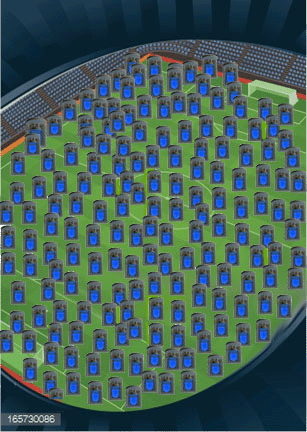
“SMRs will hardly be able to produce electricity more cheaply than conventional new nuclear power plants, unless thousands of them are mass-produced, which is not at all foreseeable.”
Although desired by some members of the Merz coalition, there will be no comeback for nuclear power plants. Joachim Wille philosophizes about the reasons.
Berlin – For a while, it looked as if the future Merz coalition would reverse the shutdown of the most recently shut-down nuclear power plants. The CDU/CSU, by far the largest partner, pushed for reversing the phase-out. The paper from the grand coalition’s “Energy and Climate” exploratory group stated – colored in the CDU/CSU blue – the CDU/CSU’s wish: “Nuclear energy can play a significant role, particularly with regard to climate goals and security of supply.”
Union backtracks on nuclear power: Coalition agreement seals Germany’s nuclear phase-out
But the coalition agreement recently presented by Merz and his colleagues no longer mentions any of this. This is an unmistakable signal: Germany is sticking to its nuclear phase-out, which was initiated in 2011 by CDU Chancellor Angela Merkel after the Fukushima disaster.
And this despite the fact that the public image of nuclear power has turned positive. The last three nuclear power plants in Germany were shut down two years ago. Today, however, according to a survey, a narrow majority of Germans (55 percent) support a return to nuclear energy, while 36 percent oppose it.
In politics, the CDU/CSU could have seen its pro-nuclear stance vindicated. It wanted to investigate whether the recently shut-down reactors could still be reactivated, and possibly even build new mini-reactors, as well as invest more money in the promising future of nuclear fusion. In the current representative Verivox survey, almost a third of respondents (32 percent) favor building new nuclear power plants, while another 22 percent would like to see only the most recently decommissioned plants brought back online.
After the Fukushima disaster: The Bundestag in Berlin voted in 2011 to shut down nuclear power plants
The phase-out of nuclear power, which at its peak provided around a third of the electricity consumed in Germany, was finally sealed by the Fukushima nuclear power plant disaster. In 2011, the Bundestag passed a cross-party resolution to gradually shut down the 17 nuclear power plants still in operation at the time.
After the reactor meltdowns in Japan, which rendered an entire region uninhabitable, there was a consensus: the “residual risk” of even Western nuclear technology is too great, and a phase-out is necessary. Ultimately, safety calculations showed that even with nuclear power plants made in Germany, serious accidents with radioactive contamination of large areas in the surrounding area, including entire cities, could not be ruled out.
Polls at the time showed high levels of support for the decision pushed forward by Merkel. The physicist’s legendary utterance when she saw the explosions at the Fukushima nuclear power plants on TV was legendary: “That’s it.”
Note: In 2011 polls, over 80 percent of the German population wanted to shut down all nuclear power plants after Fukushima
After the end of the Merkel era: The Union included plans for a return to nuclear power in coalition negotiations
After the end of the Merkel era, the remaining nuclear fans in the Union felt they had the upper hand again. It also looked as if they had a good chance of prevailing in the negotiations with the SPD. In particular, their demand for an “assessment of whether … a resumption of operation of the most recently shut-down nuclear power plants is still possible at a reasonable technical and financial cost,” as stated in the energy policymakers’ paper, seemed to have a good chance of success.
But there is no mention of this in the coalition agreement. Only fusion research plays a role here. “Our goal is: The world’s first fusion reactor should be located in Germany,” it states. However, the time perspective here is two or more decades. So, have Klingbeil’s Social Democrats, who have been pushing for a phase-out since the Chernobyl disaster in 1986, prevailed with their course against the CDU/CSU’s nuclear fans?
The energy industry doubts the CDU/CSU’s plan to reactivate nuclear power plants.
The most recent election platform clearly stated: “Nuclear power has been shut down in Germany, and that’s a good thing.” The anti-nuclear NGO “ausgestrahlt” sees it this way, accusing the SPD of having “burst the Union’s nuclear soap bubbles.” In fact, it’s at least as likely that the Union leaders realistically assessed the problems of the nuclear power renaissance. The dismantling of the nuclear power plants is already well advanced, and restarting them would be extremely expensive and very time-consuming due to the need for new permits.
A return to nuclear power is hardly possible: Nuclear power plant operators have closed their chapter.
In addition, the three current nuclear power plant operators, EnBW, PreussenElektra, and RWE, have practically closed the chapter on nuclear power. None of them would voluntarily take the entrepreneurial risk of reversing the decommissioning process. Before the start of the grand coalition negotiations, the line was clear. EnBW’s nuclear power chief Jörg Michels said: “The decommissioning status of our five nuclear power plants is, in practical terms, irreversible.”
PreussenElektra stated that it was not “engaged in such thought experiments.” RWE CEO Markus Krebber stated: “We are past the point in this country where we should bring decommissioned nuclear power plants back online.”
Estimates by the nuclear power plant service provider Nukem show how expensive the restart would have been. He estimates the cost of repairing the six reactors shut down between 2021 and 2023 at one to three billion euros per nuclear power plant, depending on how far the decommissioning has progressed. This would therefore involve a sum of ten billion euros or more, which would likely have had to come from the federal budget in Berlin.
Nukem CEO Thomas Seipolt told bild.de that he sees “a realistic possibility of a comeback for nuclear power” by 2030 and is therefore making a corresponding offer to the future German government. For his company, which specializes in the decommissioning of nuclear power plants and the management of nuclear waste, such a renaissance of nuclear power would have been extremely lucrative. But the fact remains: Despite the federal government’s €500 billion special fund for infrastructure and climate protection, such a massive cash injection for the nuclear power plant operators would have been virtually impossible to implement.
Further arguments against nuclear power: Green electricity now dominates the electricity market
But other arguments may have slowed the nuclear renaissance. “A return to nuclear power doesn’t fit in a market increasingly dominated by green electricity,” said Christoph Pistner, nuclear power expert at the Öko-Institut, to the Frankfurter Rundschau newspaper. The share of renewables in the grid is growing rapidly; currently, it’s already 60 percent, and according to current plans, it’s expected to reach around 80 percent by 2030 and even 100 percent by 2035.
The same applies, by the way, to the mini-nuclear power plants (Small Nuclear Reactors) proposed by the CDU/CSU, which, according to Pistner’s estimates, could not be ready for series production and built until the mid-2030s at the earliest. And: “As things stand today, SMRs will hardly be able to produce electricity more cheaply than conventional new nuclear power plants, unless thousands of them are mass-produced, which is not at all foreseeable.”
And then Pistner recalled a politically critical aspect: “A return to nuclear energy has the potential to jeopardize the search for a final storage site in Germany.” The search for a final storage site was restarted after the Fukushima nuclear phase-out, which eliminated the previously hotly contested Gorleben site, which proved to be geologically unsuitable. A Gorleben 2.0 would probably be the last thing the Merz grand coalition needs – https://www.fr.de/politik/warum-sich-die-neue-koalition-gegen-eine-atom-rueckkehr-entschied-93684231.html Groko (Grand Coalition) is an abbreviation for grand coalition.
Background: Nuclear phase-out in Germany
The first phase-out of nuclear energy in Germany took place in 2000. As early as 2006, it was clear that the conservative parties (CDU/CSU), also known as the Union, wanted to return to nuclear energy with a new government change in 2009. This happened in 2010. But then Fukushima happened in 2011, and Chancellor Merkel withdrew from nuclear energy after just a few months. The resolution was supported by all parties in the federal parliament in Berlin that the last nuclear power plants would be shut down on December 31, 2022. We would have preferred to phase out nuclear power sooner.
All social groups have prepared for the nuclear phase-out. Then Russia, Putin’s country, invaded Ukraine in February 2022 for the second time since 2014. Natural gas and oil became very expensive. Electricity prices also rose. In addition, half of all nuclear power plants in France were shut down in the winter of 2022/2023 for various reasons. The Union then wanted to re-enter nuclear energy. But it was too late. Nuclear power plant operators in Germany were annoyed. Planning security looks different. Nuclear power plants are not kettles that can be switched on and off.
An agreement was reached with the nuclear power plant operators, and the remaining three nuclear power plants were extended until April 15, 2023, as long as the nuclear fuel still allowed. Certain fuel elements were converted once again in the core area of the three nuclear power plants. Then it was over.
1 This Month
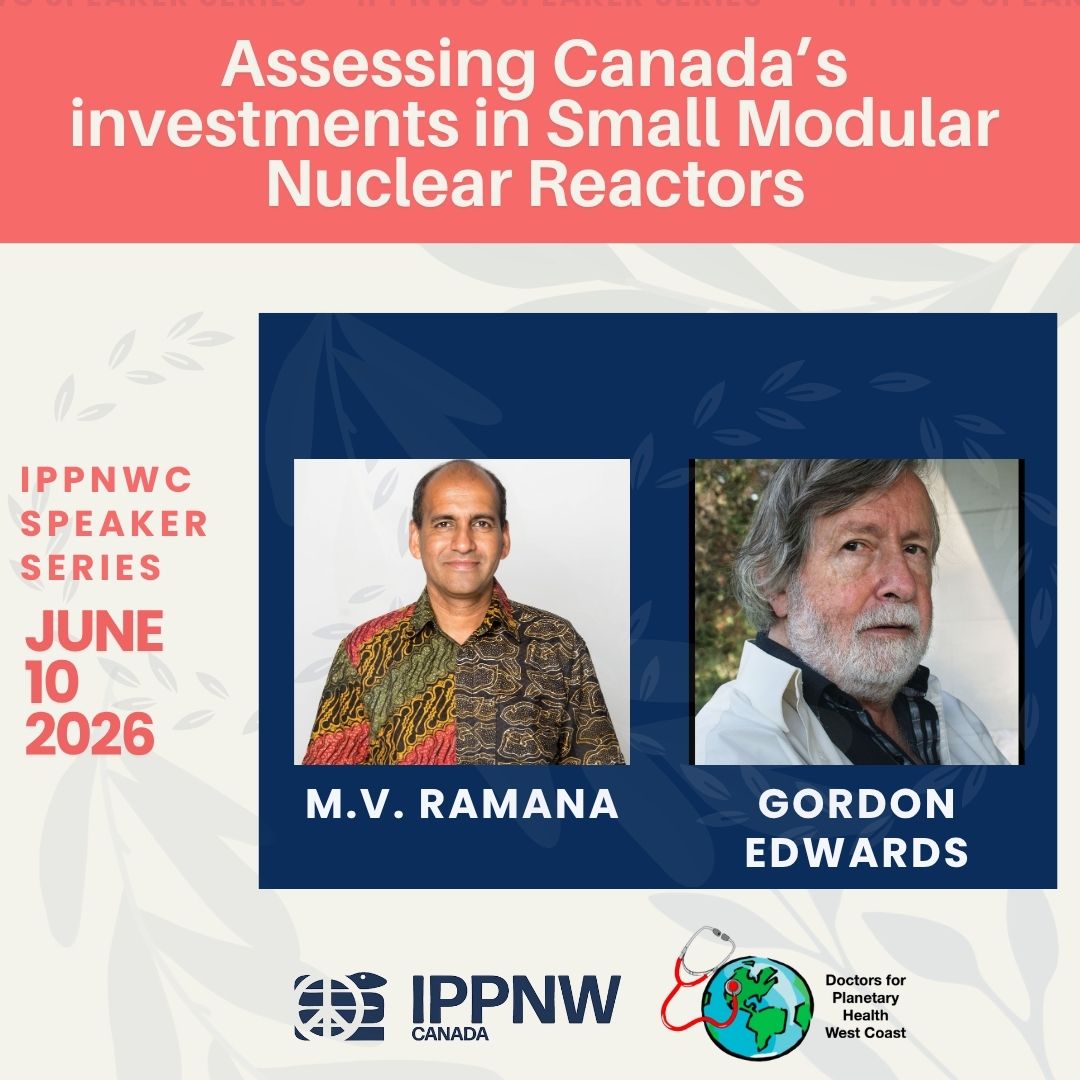
10 June – Assessing Canada’s Investments in Small Modular Nuclear Reactors – https://zoom.us/meeting/register/IiqHA5feRhaEBycOLNTJlA#/registration


Cuba Is Not a Failed State – It Is a Besieged State
PETITION: “Global Appeal to Endorse Palestinian Right of Return of Refugees”
To see nuclear-related stories in greater depth and intensity – go to https://nuclearinformation.wordpress.com
-
Archives
- June 2026 (79)
- May 2026 (306)
- April 2026 (356)
- March 2026 (251)
- February 2026 (268)
- January 2026 (308)
- December 2025 (358)
- November 2025 (359)
- October 2025 (376)
- September 2025 (257)
- August 2025 (319)
- July 2025 (230)
-
Categories
- 1
- 1 NUCLEAR ISSUES
- business and costs
- climate change
- culture and arts
- ENERGY
- environment
- health
- history
- indigenous issues
- Legal
- marketing of nuclear
- media
- opposition to nuclear
- PERSONAL STORIES
- politics
- politics international
- Religion and ethics
- safety
- secrets,lies and civil liberties
- spinbuster
- technology
- Uranium
- wastes
- weapons and war
- Women
- 2 WORLD
- ACTION
- AFRICA
- Atrocities
- AUSTRALIA
- Christina's notes
- Christina's themes
- culture and arts
- Events
- Fuk 2022
- Fuk 2023
- Fukushima 2017
- Fukushima 2018
- fukushima 2019
- Fukushima 2020
- Fukushima 2021
- general
- global warming
- Humour (God we need it)
- Nuclear
- RARE EARTHS
- Reference
- resources – print
- Resources -audiovicual
- Weekly Newsletter
- World
- World Nuclear
- YouTube
-
RSS
Entries RSS
Comments RSS
 nuclear-news