Death will kill with its poisonous wings.
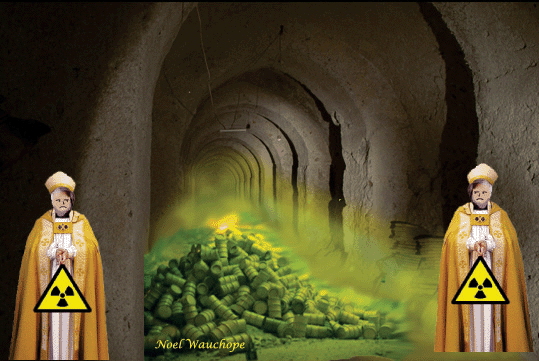
“This place is not a place of honor … no highly esteemed dead is commemorated here … nothing valued is here. What is here was dangerous and repulsive to us. This message is a warning about danger
by Martin McKenzie-Murray, https://www.themonthly.com.au/martin-mckenzie-murray/2026-05-08/death-will-kill-its-poisonous-wings
Very soon, likely within a few weeks, one of the world’s most interesting pieces of infrastructure will open after 22 years of construction and almost half a century of contemplation. Called Onkalo – Finnish for “cavity” – the site will be the world’s first permanent repository for nuclear waste.
By law, Finland obliges that nuclear waste produced domestically must be stored domestically. That will now occur on the island of Olkiluoto at a depth of more than 400 metres within bedrock that’s almost two billion years old. Currently, the repository area is about two square kilometres and comprised of 10 kilometres of tunnels – this number will likely quadruple before the site’s decommissioning in around 2100, when this cavern will be backfilled and sealed, creating a self-maintained nuclear sarcophagus for the approximately 100,000 years it will take for the waste’s radioactivity to have decayed to safe levels.
Perhaps by now you’re beginning to intuit a little about a) the complexity of its design, b) the richness of its semiotic implications, and c) the sobering absence of anything approaching a precedent for this. Consider: after its decommissioning, Onkalo must remain perfectly passive, requiring no active management or monitoring for 100,000 years. Second, its profound danger must be communicated so far into the future that current languages, customs – even genetic dispositions – can no longer be assumed to exist. It’s a strange and disquieting fact that the radioactivity of our nuclear waste might outlive our languages for communicating its danger. Third, no man-made structure has ever lasted anything close to the length of time that Onkalo is hoped to be preserved for.
Let’s start with the simpler facts of the site. Olkiluoto Island was chosen for its geological stability – the low-permeability of its bedrock and its low-risk of seismic tremors. In Michael Madsen’s fascinating 2010 documentary about the site’s design, Into Eternity, one project adviser explains how time down there goes slowly, while up here, on the surface, it passes very, very quickly.
In other words, the crystalline rock 450 metres below ground here looks much the same as it did 500,000 years ago. The surface of our planet, however, would look unrecognisable if we travelled back just 200 years. Our natural, political and material world changes often and quickly – the latter to the whims and passions of its human inhabitants, our creative and destructive ingenuities, and the gravity of civilisational entropy. The natural world, meanwhile, forever remains subject to the whims and passions of storms and droughts and a climate that’s being altered by us.
Currently, the world’s approximately half-a-million tonnes of nuclear waste is kept in temporary storage on the surface of our planet, and is thus subject to war, sabotage or natural calamity. Much safer to secure it deep down where time moves slowly.
There is something lusciously strange and dreamlike about the projections and assumptions Onkalo’s designers were asked to make. They did nothing less than imaginatively commune with a form of humanity far into the future.
The weirdness of this can be emphasised by offering some modest timescale. The birth of Jesus Christ was 2000 years ago. The pyramids of Giza were completed about 4500 years ago. The previous Ice Age ended almost 12,000 years ago and found the peak of its severity about 10,000 years before that. That is still nowhere near 100,000 years, the length of time into the future for which Onkalo must remain independently stable and for which the warnings we write today must travel and remain intelligible.
And so, the niche field of nuclear semiotics: how do we communicate today’s intentions to a civilisation so distant that we presume it to be almost alien and to not share our language? Preceding this question though, is another: should we even try? Can we assume that humanity will, in 80,000 years, say, possess the same curiosity we do today? That is, will they perform the same enthusiastic archaeological excavations as we do now? And, if so, will they treat the nuclear tomb as we might an Incan crypt?
Might it be that by signposting the danger, we simply encourage their curiosity? Would warnings, even if we could guarantee their future intelligibility, serve to appropriately quell curiosity or dangerously arouse it?
The questions only birth more questions. Given that Onkalo is so deeply buried, and its decommissioning would involve erasing all surface infrastructure, can it not be assumed that it would never be accidentally found? Or might some evidence of its existence survive? Physical evidence, or digital? Is it preposterous to think that any digital evidence of our civilisation today could survive so far into the future – when, between now and the safe decay of the waste, there is assumed to fall several new ice ages?
The designers answered at least one big question: they would, via ceramic tablets, leave warnings to our future selves about the site. Detailed warnings, in several languages unlikely to survive several epochs, have been suggested: “This place is not a place of honor … no highly esteemed dead is commemorated here … nothing valued is here. What is here was dangerous and repulsive to us. This message is a warning about danger.”
Also proposed are simple pictographs that are assumed to have a universally intelligible quality: a triangle that includes the radioactive symbol, a skull and crossbones, an arrow pointing away from the danger, and a human stick-figure running in the direction it suggests.
Given the spookiness of radioactivity – and the oddity of communicating its dangers across a chasm of time to unknowable descendants – the project invited some strange proposals. One was rendering the surface above the tomb conspicuously forbidding: lightning bolt sculptures amongst forests of barbed wire. (But optimistically assuming their material survival, how can we assume that their symbolic charge would survive, and not simply invite curiosity as cryptic anachronisms?) Another proposal was made for genetically engineering cats who change colour in the proximity of radiation – a kind of bizarre Geiger counter.
In 2020, the American electronic music producer (and roboticist) Skytree, aka Evan Snyder, released a track called “Atomic Priest” written with rapper Jackson Whalan. Its lyrics were about precisely the problem of communicating danger forward through “deep time”:
This is for the humans living ten thousand years from now
With radioactive capsules, thousands of feet underground
Grabbin’ the mic to warn you of these hazardous sites
For those who lack in the sight in the black of the night
The least good that we could do is form an Atomic Priesthood
To keep the future species from going where no one should
We’ve buried the mistakes of past nuclear waste
Hidden underground for future races to face
It’s our task to leave signs for civilization to trace
But who’s to say what language these generations will embrace?
The American-Hungarian linguist Thomas Sebeok minted the term “atomic priesthood” in the early 1980s. Sebeok thought that, given that radioactivity of our waste would outlive current languages (and God knows what else), the trick to communicating our warnings about it lay in folklore. Sebeok had been commissioned by the US Department of Energy to this end. In 1980, the department had established the “Human Interference Task Force”, which was asked to “investigate the problems connected with the post-closure, final marking of a filled nuclear waste repository. The task of the HITF is to devise a method of warning future generations not to mine or drill at that site unless they are aware of the consequences of their actions.”
In 1984, Sebeok submitted his report. It was called “Communication Measures to Bridge Ten Millenia”. Semiotics were everything here, Sebeok wrote, given its relevance to “the problems of human interference and message exchanges involving long periods of time, over which spoken and written languages are sure to decay to the point of incomprehensibility, making it necessary to utilize a perspective that goes well beyond linguistics”.
Here, then, is the luscious strangeness of nuclear semiotics – a field that overlaps with our formal considerations of communicating with extraterrestrial intelligence, but which seems even stranger to me given that the aliens in this case are our future selves.
Sebeok suggested that the best way to ensure the survival of our warnings deep into the future was through mythology – the enactment of annual rituals and the ratification of legends that were upheld by an “atomic priesthood”. The stories would alter over time, but perhaps the core desire of the transmission – to effectively warn off future excavators – would survive. It wouldn’t matter if the sense of hazard had degraded into superstition, long untethered to science or the danger at hand. Only that a sense of fear and repulsion was maintained.
“A ritual annually renewed can be foreseen, with the legend retold year-by-year (with, presumably, slight variations),” Sebeok wrote in his government report. “The actual ‘truth’ would be entrusted exclusively to what we might call for dramatic emphasis an ‘atomic priesthood’, that is, a commission of knowledgeable physicists, experts in radiation sickness, anthropologists, linguists, psychologists, semioticians, and whatever additional expertise may be called for now and in the future. Membership in this ‘priesthood’ would be self-selective over time.
“The best mechanism for embarking upon a novel tradition … is at present unclear. Folklore specialists consulted have advised that they know of no precedent, nor could they think of a parallel situation, except the well-known, but ineffectual, curses associated with the burial sites (viz., pyramids) of some Egyptian Pharaohs … which did not deter greedy grave-robbers from digging for ‘hidden treasure’.”
Here, then, is the weird world of considering future ones. In a few weeks, Onkalo will become operational, accepting the copper-encased tubes of nuclear waste into its deep tombs of crystalline rock, where things remain more stable than the conditions half a kilometre above.
Finland Is About to Open the World’s First Permanent Nuclear Waste Site
By Haley Zaremba, Oil Price, – Apr 13, 2026
- Finland’s Posiva is on the verge of receiving an operating license for the world’s first permanent nuclear waste disposal facility, built 400 meters underground in 1.9-billion-year-old bedrock at a cost of 1 billion euros.
- Global spent nuclear fuel stocks are set to surge alongside the nuclear energy renaissance, but as of 2024, the U.S. alone faces a $44.5 billion liability with no permanent storage solution in place.
- The U.S. is inching forward: ARPA-E’s SCALEUP Ready program has directed $40 million to two deep borehole disposal projects, including one from Deep Isolation, which calls it the biggest milestone in the company’s history.
Nuclear energy is experiencing a resurgence in popularity on a global scale, thanks to a resurgence in energy security anxieties worldwide. The AI boom has majorly ramped up energy demand projections around the world at the same time that climate pledges are inching dangerously close with perilously little progress to show. Add to this a near-endless cycle of energy crisis and geopolitical conflict, and you’re presented with a majorly heightened energy trilemma: how to source energy that is sufficient, affordable, and sustainable. To solve this puzzle, nuclear energy — a reliable round-the-clock source of carbon-free energy production — can no longer be ignored.
But a nuclear renaissance, while a no-brainer for energy security and climate goals, will also come with a major uptick in nuclear waste, posing a big problem for public health and safety, as well as for the taxpayers that fund its maintenance. Between the 1950s and 2022, it is estimated that nearly 400,000 tons of spent nuclear fuel were generated on a global scale. Of those 400,000 tons, one-third has been ‘recycled’ in a complex and costly process, and two-thirds remain in temporary storage, either in nuclear fuel pools on-site at individual nuclear energy plants or in dry cask storage sites.
However, neither of these storage options are considered to be permanent solutions, and the global quantity of radioactive nuclear waste is about to explode. In fact, the policy and science behind the storage and disposal of spent nuclear fuel remains a critical liability at a global scale, and especially in the United States. As of 2024, it was estimated that the United States’ spent fuel liability clocked in at a jaw-dropping $44.5 billion.
A report from the National Center for Energy Analytics published earlier this month blasts the United States, the world’s biggest nuclear energy producer, for its kick-the-can-down-the-road approach to this critical issue, decrying that “Federal [nuclear waste] management has been a major black eye and policy failing for nuclear energy generation and technology.”
However, the world is, at long last, currently making great progress toward establishing the world’s first-ever permanent nuclear waste disposal site. In fact, a site on the West Coast of Finland is expecting to receive its license to begin operations in just a few months, an incredibly short stretch of time compared to the more-than two decades that the facility has been under construction. The facility will house canisters of spent fuel 400 meters underground in a remote region, housed in earthquake-resistant 1.9 billion-year-old bedrock……………………………………………………………………………………………………………………………. https://oilprice.com/Alternative-Energy/Nuclear-Power/Finland-Is-About-to-Open-the-Worlds-First-Permanent-Nuclear-Waste-Site.html
Finland’s plan to bury spent nuclear waste carries risk to future generations.
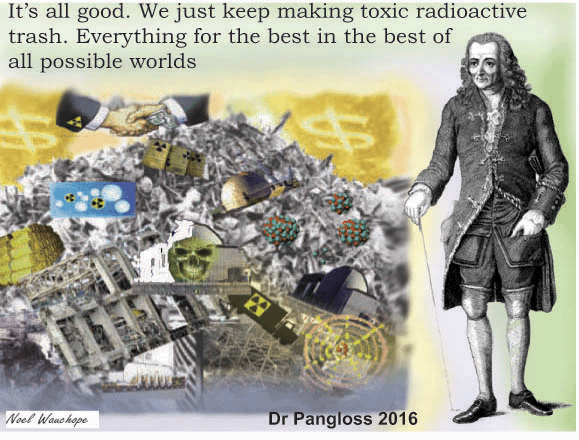
Overall, the risks associated with nuclear waste repositories will mainly affect “future generations,”
“…………………After decades of construction, the world’s first facility for permanently disposing spent nuclear fuel is set to begin operations in Finland, becoming a final resting place for tons of dangerous radioactive waste.
Construction of Onkalo – which means “cave” in Finnish – began on the west coast in 2004. It sits on the secluded island of Olkiluoto, in a dense wooded area. The closest town is Eurajoki, about 15 kilometers (9.3 miles) inland, which is home to about 9,000 people. Many work at the nuclear power plant or storage facility.
The 1 billion euro ($1.2 billion) project could soon become operational, with authorities expected to grant a license within months.
The Associated Press took a tour of the facilities where humans soon will not be allowed to tread.
Pere said the site – near three of Finland´s five nuclear reactors – was chosen for its migmatite-gneiss bedrock, which is known for its high stability and low risk of earthquakes.
“It´s the isolation from civilization and mankind on the surface that´s important,” he said, standing in a darkened disposal tunnel, soon to be sealed from humanity. “We can dispose of the waste more safely than by storing it in facilities located on the ground.”
Using unmanned machinery at a nearby encapsulation plant, radioactive rods will be sealed in copper canisters and then buried deep in tunnels over 400 meters underground, then packed in with “buffer” layers of water-absorbing bentonite clay.
Posiva, the company responsible for the long-term management of Finland’s spent nuclear fuels, says Onkalo can store 6,500 tons of spent nuclear fuel.
The final disposal canisters are designed to remain sealed “long enough for the radioactivity of spent fuel to decrease to a level not harmful to the environment,” it said………………………………….
Posiva estimate it will take hundreds of thousands of years before the radioactivity falls to normal, background levels.
According to a 2022 report by the International Atomic Energy Agency, almost 400,000 tons of spent fuel have been produced globally since the 1950s, with two-thirds remaining in temporary storage and one third being recycled in a complex process.
The world´s spent nuclear fuel is currently temporarily stored inside spent nuclear fuel pools at individual reactors and at dry cask storage sites above ground.
There is currently no permanent underground disposal facility for commercial nuclear waste operational anywhere in the world. Sweden began building a repository in Forsmark – about 150 kilometers north of Stockholm – last year, but it´s not expected to open until the late 2030s. France´s Cigéo project is yet to begin construction and has seen opposition.
The Onkalo facility is expected to operate until the 2120s, when it will be permanently sealed.
But Edwin Lyman, director of nuclear power safety at the Union of Concerned Scientists, an American nonprofit organization, warned that geologic disposal of nuclear waste is still fraught with “uncertainties.”
“My view of nuclear waste disposal is that there´s no good option, but it´s important to find the least bad option, and geologic disposal in general is going to be the least bad option among a range of, you know, bad options,” he said.
Lyman said that the copper canisters that contain the spent nuclear fuel will eventually corrode, adding that there are different scientific opinions about how fast that could happen.
“The hope is that is such a slow process that most of the radioactive material will have decayed away by then. But again, there are uncertainties,” he said.
Still, Lyman said that permanently storing spent nuclear fuel deep underground is better than “leaving it on the surface of the Earth forever,” because nuclear material kept above ground “is vulnerable to sabotage.”
“For many decades after spent fuel is discharged from a reactor, it´s so radioactive that it makes transporting and reprocessing very difficult,” Lyman said. But eventually the main radioactive component will decay, he added, making it less risky to handle.
“So over time the plutonium becomes more accessible either to terrorists or to a country that may want to use it,” he said, adding that the only way a terrorist — or a state — could theoretically use the material for a nuclear bomb would be if they had “an off-site reprocessing capability.”
During reprocessing, spent nuclear fuel is separated to recover uranium and plutonium to recycle it for use in new fuel. The process also carries proliferation risks because the separated plutonium could potentially be diverted to build a nuclear weapon.
Overall, the risks associated with nuclear waste repositories will mainly affect “future generations,” Lyman concluded.
To deal with this challenge, an interdisciplinary field of study called nuclear semiotics has been established that looks into developing warning signs about nuclear waste repositories that can be understood by humans 10,000 years from now – or much longer given that it takes hundreds of thousands of years before nuclear waste is no longer dangerous.

For reference: the first humans lived around 300,000 years ago. The earliest writing system was developed in Mesopotamia roughly 5,200 to 5,400 years ago. Stonehenge in Britain is around 5,000 years old, while the Giza pyramids in Egypt are approximately 4,500 years old……………………………………………………….. https://www.dailymail.co.uk/wires/ap/article-15717853/Finlands-plan-bury-spent-nuclear-waste-carries-risk-future-generations.html
Finland detects small amount of radioactivity, sees no health impact

Armen Press 30th Jan 2026, original at https://armenpress.am/en/article/1240847
Small amounts of radioactive substances have been detected in air samples in Finland though there was no risk to public health, Reuters reported citing the country’s nuclear safety watchdog.
“The concentrations were very low and posed no risk to people or the environment,” the Radiation and Nuclear Safety Authority (STUK) said in a statement, according to Reuters.
According to the report, STUK said that the radioactive substances did not originate from Finnish nuclear power plants, though it did not offer an explanation for their detection.
“In many cases, the source of the radioactive substances cannot be identified,” the agency said.
Finland, Sweden, Russia and the wider region have a number of nuclear power reactors.
Further delay in Finnish repository licence review

WNN, 5 December 2025
Finland’s Ministry of Employment and the Economy has granted the country’s nuclear regulator a third extension to the deadline to complete its assessment of Posiva Oy’s operating licence application for the world’s first used nuclear fuel repository. The regulator’s statement is now expected by mid-2026.
Radioactive waste management company Posiva submitted its application, together with related information, to the Ministry of Economic Affairs and Employment on 30 December 2021 for an operating licence for the used fuel encapsulation plant and final disposal facility currently under construction at Olkiluoto. The repository is expected to begin operations in the mid-2020s. Posiva is applying for an operating licence for a period from March 2024 to the end of 2070.
The government will make the final decision on Posiva’s application, but a positive opinion by the Radiation and Nuclear Safety Authority (STUK) is required beforehand. The regulator began its review in May 2022 after concluding Posiva had provided sufficient material. The ministry had requested STUK’s opinion on the application by the end of 2023. However, in January last year, STUK requested the deadline for its opinion be extended until the end of 2024. In December, the ministry extended the deadline for the regulator’s opinion to 31 December 2025.
The ministry has now extended the deadline until the end of June 2026, “if it is possible to do so by then”. According to STUK, the new timetable is possible, but tight, for both the authority and the licence applicant.
Although STUK’s assessment of the application is in the final stages, the statement and safety assessment cannot be completed until it has assessed and approved all of Posiva’s operating licence application materials……………
At the repository, used fuel will be placed in the bedrock, at a depth of about 430 metres. The disposal system consists of a tightly sealed iron-copper canister, a bentonite buffer enclosing the canister, a tunnel backfilling material made of swellable clay, the seal structures of the tunnels and premises, and the enclosing rock
…………… The operation will last for about 100 years before the repository is closed.
….STUK said. “In particular, the demonstration of the performance of the clay material, which acts as one of the barriers to the spread of radioactive substances, is still under way. Posiva replaced the clay material in the original plans with another, and the effects of the new material on the long-term safety of the final disposal still need to be assessed.” https://www.world-nuclear-news.org/articles/further-delay-in-finnish-repository-licence-review#:~:text=Finland’s%20Ministry%20of%20Employment%20and,now%20expected%20by%20mid%2D2026
A multi-million dollar dispute rages over Olkiluoto 3 – Only lawyers will win
The Olkiluoto multi-million dollar dispute between TVO and Fingrid is
alive and well. However, an agreement in this matter would be in the
interest of electricity users. The dispute between Teollisuuden Voima (TVO)
and the transmission grid company Fingrid over the costs of the backup
system – system protection – built in case of a failure of the third
reactor at the Olkiluoto nuclear power plant and who will pay for it shows
no signs of abating – quite the opposite.
MSN 20th Nov 2025,
https://www.msn.com/fi-fi/talous/uutiset/olkiluoto-3-sta-riehuu-miljoonariita-vain-juristit-voittavat/ar-AA1QMSzq
Secrets of the deep, deep tunnels where nuclear waste is buried.
Almost half a kilometre underground, engineers in Finland are about to seal
radioactive material safely for ever. Britain wants to do the same. If all
goes to plan, spent nuclear fuel will be transported early next year down
dedicated lift shafts before robotic machines bury the 24-tonne copper and
iron canisters in the rock where they will remain for the rest of time.
This is the world’s first deep geological disposal facility for nuclear
fuel, a concept that has been discussed by engineers and politicians for
half a century. More than 20 other countries including the UK, US, France
and Sweden have plans to follow suit. But the Finns have got there first.
Fiona McEvoy, 50, the head of site characterisation and research and
development at the British government agency Nuclear Waste Services, is
here as part of a fact-finding mission to see how a similar feat could be
achieved in the UK. She says: “It’s a watershed moment for the nuclear
sector. Long-lived, dangerous waste will be locked away, safe for eternity.
That is amazing.”
Martin Walsh, 51, head of engineering at Nuclear Waste
Services, also on the visit, says: “Nobody disagrees that for the legacy
for nuclear waste in the UK, geological disposal is necessary.” The most
radioactive nuclear waste produced by Britain’s nuclear power stations will
remain hazardous, Walsh says, “beyond our lifetime, and beyond the
lifetime of our children and our children’s children”.
Burying it deep in
the earth is considered a “final disposal”, a solution that has been
calculated to enable the radioactive waste to remain undisturbed for a
nominal 500,000 years, surviving ice ages, tectonic shifts, earthquakes and
sea level rise.
The two private companies that run these facilities, TVO
and Fortum, jointly founded Posiva in 1995, developing this repository to
dispose of their waste. Every week, for the next 100 years, one canister of
spent nuclear fuel will be transported 433m down into the earth.
In the UK,
plans for a similar geological disposal scheme have experienced false
starts because no council has yet agreed to host a site. In June, the newly
elected Reform leadership of Lincolnshire county council pulled the plug on
long-running discussions to site a geological disposal site near the
coastal village of Theddlethorpe.
The most likely location for a site is
now off the Cumbrian coast, close to Sellafield. Nuclear Waste Services is
in discussions with Mid Copeland and South Copeland community partnerships
for a proposal for an access tunnel to be sunk onshore, and then run ten
miles out below the seabed, where 250 miles of disposal tunnels would be
dug, nearly ten times the size of the Finnish scheme.
Subject to local
approval and the go-ahead of whichever government is then in power,
construction is expected to start in the 2040s and start being filled in
the 2050s. It will be filled with waste for 150 years before it is sealed
in 2200.
The lifetime cost of the UK project is estimated at up to £53
billion, compared with about £5 billion for the Finnish scheme, which at
roughly a tenth of the size, serving a nation with a tenth of the
population, is roughly comparable. The speed at which progress has been
made, however, is not comparable. But Walsh defends the cautious pace the
British experts have taken. “The thought process, particularly around
nuclear, has to be robust. You have to make sure your relationship with
safety and security and the environment is sound.”
Times 28th Sept 2025,
https://www.thetimes.com/uk/environment/article/nuclear-power-waste-finland-bkq8sq0lj
Finland backs green hydrogen as Fortum pauses nuclear expansion
28 March 2025, Helsinki Times
Finnish utility Fortum has ruled out new investments in nuclear power in the near term, citing low electricity prices in the Nordic market and high construction costs. The announcement came as Finland inaugurated its first industrial-scale green hydrogen plant, marking a shift in focus toward alternative energy technologies.
Fortum concluded a two-year study into the feasibility of building new nuclear reactors and determined that such investments are not commercially viable under current market conditions.
New nuclear could provide new supply to the Nordics earliest in the second half of the 2030s, if market and regulatory conditions are right,” said Markus Rauramo, CEO of Fortum.
The company will instead focus on expanding renewable power generation, increasing storage capacity, and extending the life of existing nuclear facilities, including the Loviisa nuclear plant.
The company’s Vice President for New Nuclear, Laurent Leveugle, said a risk-sharing model would be required to make future nuclear investments possible.
“We are not saying that the state has to pay for it, but that the risk must be shared with the different parties: technology providers, investors, utilities, and also the state,” Leveugle told Reuters…………………….
While Fortum has paused new nuclear plans, Finland is pressing ahead with new green energy initiatives. On 26 March 2025, P2X Solutions inaugurated the country’s first industrial-scale green hydrogen production plant in Harjavalta. The event was attended by Alexander Stubb, President of the Republic of Finland.
“Finland has everything it takes to become a clean energy superpower,” Stubb said during his speech at the inauguration……………………………………………………………………………
As Fortum turns to renewables and lifetime extensions for existing nuclear facilities, and P2X accelerates hydrogen development, Finland’s energy policy is shifting toward flexible and decentralised solutions.
The Nordic power market has experienced prolonged periods of low electricity prices, driven by increased renewable capacity and lower demand growth. Fortum has warned that these conditions are not sufficient to support capital-intensive projects like nuclear reactors without regulatory reforms or direct financial support……………………………………………..
Finland’s approach to energy diversification comes amid broader European efforts to reduce reliance on fossil fuels and improve energy security. Green hydrogen and advanced storage systems are seen as essential components of this transition.
Fortum’s position reflects growing caution among European utilities over the costs and risks associated with new nuclear builds. The company has yet to release any cost estimates for new reactors, but industry analysts say capital requirements often exceed €10 billion per unit and construction timelines stretch over a decade.
By contrast, modular hydrogen projects like those developed by P2X Solutions involve lower upfront costs and shorter lead times. They also benefit from growing political and financial support across the EU…………………….https://www.helsinkitimes.fi/business/26416-finland-backs-green-hydrogen-as-fortum-pauses-nuclear-expansion.html
Finland’s Fortum says building new nuclear power is too expensive, for now

New nuclear power production capacity is not commercially viable to
build for now, based on the current Nordic power market outlook of low
prices. The company on Monday concluded a two-year study into the
feasibility of new nuclear power but said it would focus on renewable
energy and nuclear lifetime extensions to cover growing electricity demand
in the Nordics for now.
“New nuclear could provide new supply to the
Nordics earliest in the second half of the 2030s, if market and regulatory
conditions are right,” Fortum CEO Markus Rauramo told reporters. He said
Fortum would continue to explore new nuclear generation and pumped
hydropower as long-term options in Sweden and Finland. Fortum said building
new nuclear reactors would require a solid risk sharing framework similar
to the one being prepared by the Swedish government.
Reuters 24th March 2025,
https://www.reuters.com/business/energy/finlands-fortum-explores-long-term-options-new-nuclear-power-2025-03-24/
Militarize Ukraine ‘to the teeth’ – Finnish president
Comment: Is the Finnish President among those that do not really want a settlement in Ukraine any time soon?
Thu, 20 Mar 2025 https://www.sott.net/article/498616-Militarize-Ukraine-to-the-teeth-Finnish-president
Alexander Stubb has also called for stronger sanctions against Russia and the seizure of its frozen assets
Finnish President Alexander Stubb has called on Kiev’s Western backers to pump Ukraine with military resources and financial aid, claiming that this will deter Russia. He made the call shortly after meeting Vladimir Zelensky in Helsinki and as EU lawmakers negotiate doubling the bloc’s weapons budget.
EU foreign policy chief Kaja Kallas had pitched a plan to increase the bloc’s cashflow for Ukraine from €20 billion ($20.9 billion) in 2024 to €40 billion ($43.7 billion) this year. However she admitted to La Stampa that she was opposed by Italy, France, Spain, and Portugal. The Italian newspaper has reported that a €5 billion cap has been placed on the donation.
Stubb told Politico on Wednesday that “Deterrence – which is based on militarizing Ukraine to its teeth,” would be the best way to end the Ukraine conflict.
The Finnish president lamented the fact that Kallas failed to gather support for her plan, expressing hope that that heads of state and government would be able to salvage the package.
“It’s very important now to send a message from Europe that the military, political and economic support continues,” he said, emphasizing that sanctions against Russia should be bolstered, while its frozen assets should be seized to ramp up pressure.
Hungary has refused to sign a joint EU summit statement on Ukraine, according to TASS, which reported that both lethal and non-lethal aid had been rejected by Budapest.
The Finnish president also supported potential Ukrainian membership in the EU and in NATO. Finland, which only joined the US-led military bloc in 2023, has been a strong backer of Kiev since the escalation of the conflict with Russia in February 2022.
Moscow has consistently condemned NATO expansion towards its borders, describing the bloc as a threat to Russia’s national security. President Vladimir Putin and other officials have repeatedly stressed that efforts to include Ukraine in the military bloc had been one of the root causes of the escalation of the conflict in 2022.
Stubb’s comments come amid negotiations for a 30-day ceasefire aimed at halting long-range strikes on energy infrastructure by both sides advocated by US President Donald Trump. Another round of talks between Russian and US delegations is scheduled for March 24 in the Saudi city of Jeddah.
HS: Olkiluoto 3 has been a financial catastrophe for Areva, Siemens

Helsinki Times 19th Dec 2024 Finland , https://www.helsinkitimes.fi/finland/finland-news/domestic/25890-hs-olkiluoto-3-has-been-a-financial-catastrophe-for-areva-siemens.html
THE THIRD REACTOR of Olkiluoto Nuclear Power Plant has been a financial disaster for the two plant suppliers, France’s Areva and Germany’s Siemens, writes Helsingin Sanomat.
Helsinki guide
Teollisuuden Voima (TVO), the company operating the plant, communicated last week that the suppliers have pledged to inject an additional 80 million euros in capital into a fund set up to guarantee the completion of activities during the warranty period.
“The funds reserved for their completion in the fund mechanism were depleted in the autumn of 2024” the company wrote in a press release issued on 12 December.
The third plant unit has experienced numerous faults and disruptions since it was officially inaugurated in 2022. TVO ordered the plant from the suppliers under a turnkey agreement for a fixed price of roughly three billion euros more than 20 years ago. The groundbreaking ceremony was held in 2005, with the completion date set for 2009.
Ultimately, the unit was completed 14 years behind schedule, with the original budget comfortably exceeded. The unit began commercial electricity production in mid-2023.
Helsingin Sanomat on 12 December reminded that Areva estimated already in 2012 that the plant would ultimately cost around 8.5 billion euros. The endeavour eventually bankrupt the company, resulting in intense talks in 2016 as the French government decided to incorporate healthy parts of the company into the state-owned Électricité de France (EDF). The concern was that the plant supplier would not be left with the funds and expertise to complete the project.
Licensing of Finnish repository further delayed

WNN, Thursday, 5 December 2024
Finland’s Radiation and Nuclear Safety Authority has been given another one-year extension to complete its review of Posiva Oy’s operating licence application for the world’s first used nuclear fuel repository.
Radioactive waste management company Posiva submitted its application, together with related information, to the Ministry of Economic Affairs and Employment on 30 December 2021 for an operating licence for the used fuel encapsulation plant and final disposal facility currently under construction at Olkiluoto. The repository is expected to begin operations in the mid-2020s. Posiva is applying for an operating licence for a period from March 2024 to the end of 2070.
The government will make the final decision on Posiva’s application, but a positive opinion by the Radiation and Nuclear Safety Authority (STUK) is required beforehand. The regulator began its review in May 2022 after concluding Posiva had provided sufficient material. The ministry had requested STUK’s opinion on the application by the end of 2023. However, in January this year, STUK requested the deadline for its opinion be extended until the end of 2024.
STUK has now said Posiva “has not completed the materials necessary” for it to conduct a safety assessment concerning the plant’s operating licence. At STUK’s request, the ministry has agreed to extend the deadline for the regulator’s opinion to 31 December 2025.
……………………………………………………………… The government granted Posiva a construction licence for the project in November 2015 and construction work on the repository started in December 2016. Once it receives the operating licence, Posiva can start the final disposal of the used fuel generated from the operation of TVO’s Olkiluoto and Fortum’s Loviisa nuclear power plants. The operation will last for about 100 years before the repository is closed. Posiva announced in late August the start of a trial run – expected to take sev more https://www.world-nuclear-news.org/articles/licensing-of-finnish-repository-further-delayederal months – of the operation of the final disposal facility, albeit still without the used fuel.
Big batteries and EVs to the rescue again as faults with new nuclear plant cause chaos on Nordic grids
Giles Parkinson, Nov 19, 2024 https://reneweconomy.com.au/big-batteries-and-evs-to-the-rescue-again-as-faults-with-new-nuclear-plant-cause-chaos-on-nordic-grids/?fbclid=IwY2xjawGqC8xleHRuA2FlbQIxMQABHadLKvCjeIJudeDt86k27LkV53Q1FcfYmtcRSA_HGcWU1b1TmW7voTgIOA_aem_wwFpyxMordh4V_FbOJ3lfw
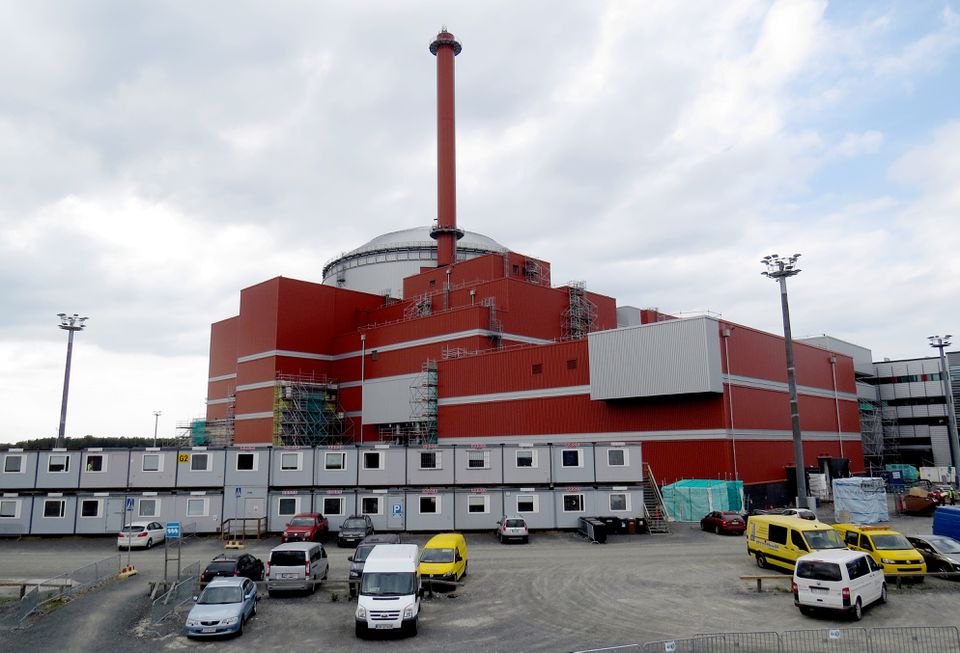
The newest and most powerful nuclear reactor in Europe that was delivered more than a decade late and nearly four times over budget is also proving to be a headache for grid operators now that it is finally up and running.
On Sunday, the 1,600 megawatt Olkiluoto 3 nuclear reactor tripped again, the latest in a series of faults and outages that have plagued the new facility and caused the market to reach out for back-up power to fill the gap.
Olkiluoto owner TVO says the reactor tripped on Sunday due to a turbine malfunction in the generator’s seal oil system. “The repair is taking longer than expected, and based on the current information, the plant is estimated to return to electricity production in approximately two days,” it said in a statement.
It’s not the first time the unit has failed. In October, it was forced to reduce power suddenly when one of the reactor’s control rods unexpectedly dropped into the reactor.
Its sister reactor, Olkiluoto 2, was off line for three weeks due to a faulty water-cooled rotor that had to be replaced and will run for months at reduced output because of the fear of failure.
But on Sunday, when the entire 1,600 MW capacity of Olkiluoto 3 was taken out of the system with no notice, it had a big impact on the grid, sending frequency plunging to 49.55 Hz, well outside the normal band.
“Olkiluoto is starting to compete with the Swedish nuclear power plant, Forsmark, for being the leading cause of major (loss of generation) disturbances in the Nordic power system,” writes Andreas Barnekov Thingvad, a Denmark-based trading systems director at battery company Hybrid Greentech.
He says his company contributed to the market response to stabilise frequency (see graph on original ) and the grid with its portfolio of batteries and virtual power plants, including electric vehicles.
Olkiluoto was finally connected to the grid last year, at an estimated cost of €11 billion ($18 billion) compared to the original budget of €3 billion. That cost blowout forced its developer, the French company Areva, to be bailed out by the French government.
When it did come online, nuclear boosters in Australia hailed it as being responsible for a steep fall in electricity prices. They failed to mention the fact that the reactor was more than a decade late, and Finland was forced to turn to highly expensive Russian gas in the interim to make up the shortfall.
Indeed, TVO, the reactor owner, says now that the new reactor has been commissioned, there is often too much production on the Finnish grid, and the reactor has to be dialled down, or curtailed, in much the same way that renewables often are. It is still not allowed to run at full capacity.
“The electricity system in Finland faces on an increasingly frequent basis a situation where more down-regulating production capacity is needed because there is too much production,” TVO notes.
The new reactor has also spent large periods off line (see the graph above from TVO’s most recent interim report). Its annual outage was supposed to last 37 days, but stretched to double that, to 74 days. TVO blamed “defect repairs and technical problems with inspection equipment took more time than had been planned.”
The point of this story is to highlight another bit of nonsense from the nuclear lobby, who like to claim that renewable sources such as wind and solar require back up, while nuclear does not.
That is simply not true, and the world’s big investment in pumped hydro in the 1970s and 1980s was principally designed to provide back up to nuclear reactors then in vogue. Ontario has ordered some of the world’s biggest batteries to support its nuclear fleet, most of which will be offline for several years for upgrades and maintenance.
Thingvad noted the multiple recent outages that had occurred in both the Finnish and Swedish nuclear reactors over the last few months:
- – On November 17th, at 15:25:51, Olkiluoto 3 had another turbine failure, tripping all 1600 MW of generation and causing the Nordic system frequency to drop to 49.59 Hz. The failure is expected to last several days.
- – On September 3rd, Olkiluoto 3 experienced a fault that caused it to drop 640 MW, leading the Nordic frequency to fall to 49.77 Hz.
- – On June 10th, Forsmark Block 3 experienced a reactor trip of 1172 MW, causing the Nordic system frequency to drop to 49.61 Hz.
- – On June 3rd, 2024, Olkiluoto 3, with 1600 MW, suddenly tripped due to a turbine malfunction. The Nordic system frequency dropped to 49.58 Hz.
- – On May 13, 2024, the Forsmark Block 1 nuclear power plant in Sweden, which has a capacity of 1 GW, tripped due to a grid failure. Forsmark experienced multiple outages – each of at least a gigawatt – in 2023.
- The scale of such outages would be significant in a grid like Australia, where the biggest single unit – at the Kogan Creek coal fired generator in Queensland – is 750 MW.
If, as the federal Coalition proposes, it wants to put in units sized at a gigawatt or more, then the market operator will have to invest in more standby capacity in case of the inevitable trips and outages.
The bigger the unit, the more back up power that is required. Wind and solar may be variable, but those variations are easily and reliably predicted. The sudden loss of a 1,600 MW facility is not.
The Australian Energy Market Operator has already made clear that its biggest headache is managing the unexpected outages of big generators, such as the ageing and increasingly unreliable coal fired power stations that the federal Coalition wants to keep open while it waits for nuclear to be rolled out and commercial SMRs to be invented.
“The repeated outages at Olkiluoto and Forsmark nuclear plants are a stark reminder of the critical need for grid resilience and diversification in our energy systems,” noted Eric Scheithauer-Hartmann, a German-based energy executive.
“It’s encouraging to see companies like Hybrid Greentech stepping up to support the Nordic power grid with advanced battery storage and intelligent energy solutions.
“As we continue to face challenges with traditional power generation, investing in smart grid technologies and renewable integration isn’t just beneficial—it’s essential for maintaining stability and meeting future energy demands.”
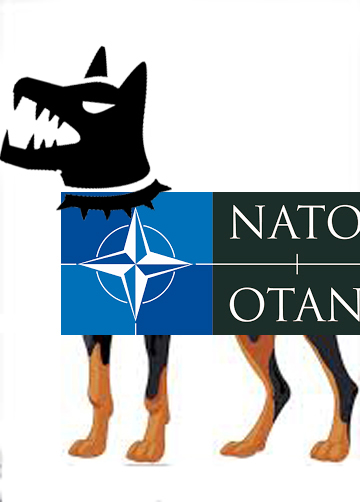
New NATO member Finland to place command center near Russian border
https://www.rt.com/news/604782-finland-new-nato-command/ 30 Sept 24
Finland will host the bloc’s HQ for Northern Europe in Mikkeli, less than 200km from the frontier.
Finland will host a new NATO command base responsible for operations in Northern Europe in the city of Mikkeli, less than 200km from the Russian border, Helsinki announced on Friday.
Finland formally joined the US-led military bloc along with Sweden following the escalation of the Ukraine conflict in 2022. Moscow has argued that the two nations compromised their own security by becoming part of what it perceives as a hostile organization that serves US geopolitical interests, while sacrificing their credibility as possible neutral mediators.
The new Multi Corps Land Component Command (MCLCC) will be under the authority of NATO’s Joint Force Command (JFC) in Norfolk, Virginia. Initially, it will comprise only a few dozen service members, Defense Minister Antti Hakkanen told journalists.
“NATO recognizes Finland’s expertise and trusts our ability to contribute to the defense of the northern region,” he said.
The bloc approved the creation of the new command center during its leaders’ summit in July. Helsinki allocated some €8.5 million ($9.5 million) in 2024 for the creation of the MCLCC.
The commander of the Finnish Defense Forces, General Janne Jaakkola, has said that placing the new NATO structure in close proximity to the headquarters of the Finnish Army “fosters cooperation between the national and the Allies’ forces, creating obvious synergy benefits.”
Hakkanen, also said he would soon announce where a new multinational force that Finland intends to host will be based. According to the state broadcaster Yle, Helsinki will choose between Rovaniemi and Sodankyla. The former is the capital of the northern region of Finnish Lapland, while the latter is a municipality located in the same province but closer to the Russian border.
NATO intensified its military buildup in Europe in 2014, following the US-backed armed coup in Kiev, claiming that it was preparing to respond to possible Russian aggression. The military bloc has significantly expanded its presence in Europe, breaking assurances given to Moscow to secure Russia’s support for the reunification of Germany in 1990.
Problems delay OL3 reactor restart by 6 days
Olkiluoto 3 was taken offline at the beginning of last month for annual maintenance.
The outage of Olkiluoto 3, Finland’s newest nuclear reactor which is
currently offline for maintenance, is being extended by six days due to
technical problems, operator Teollisuuden Voima (TVO) announced on Sunday.
The facility was shut down for its first round of annual maintenance on 2
March, according to the firm, which added that around 1,100 professionals
were involved in the effort. The firm’s other two reactors, Olkiluoto 1 and
2, were generating electricity at normal levels of approximately 1,780MW,
the company said. Maintenance on OL3 is now scheduled to be completed on 4
May.
The reactor was put into service just over a year ago, following
construction delays of 14 years. The scheduled break was originally due to
end on 8 April.
YLE News 21st April 2024
1 This Month
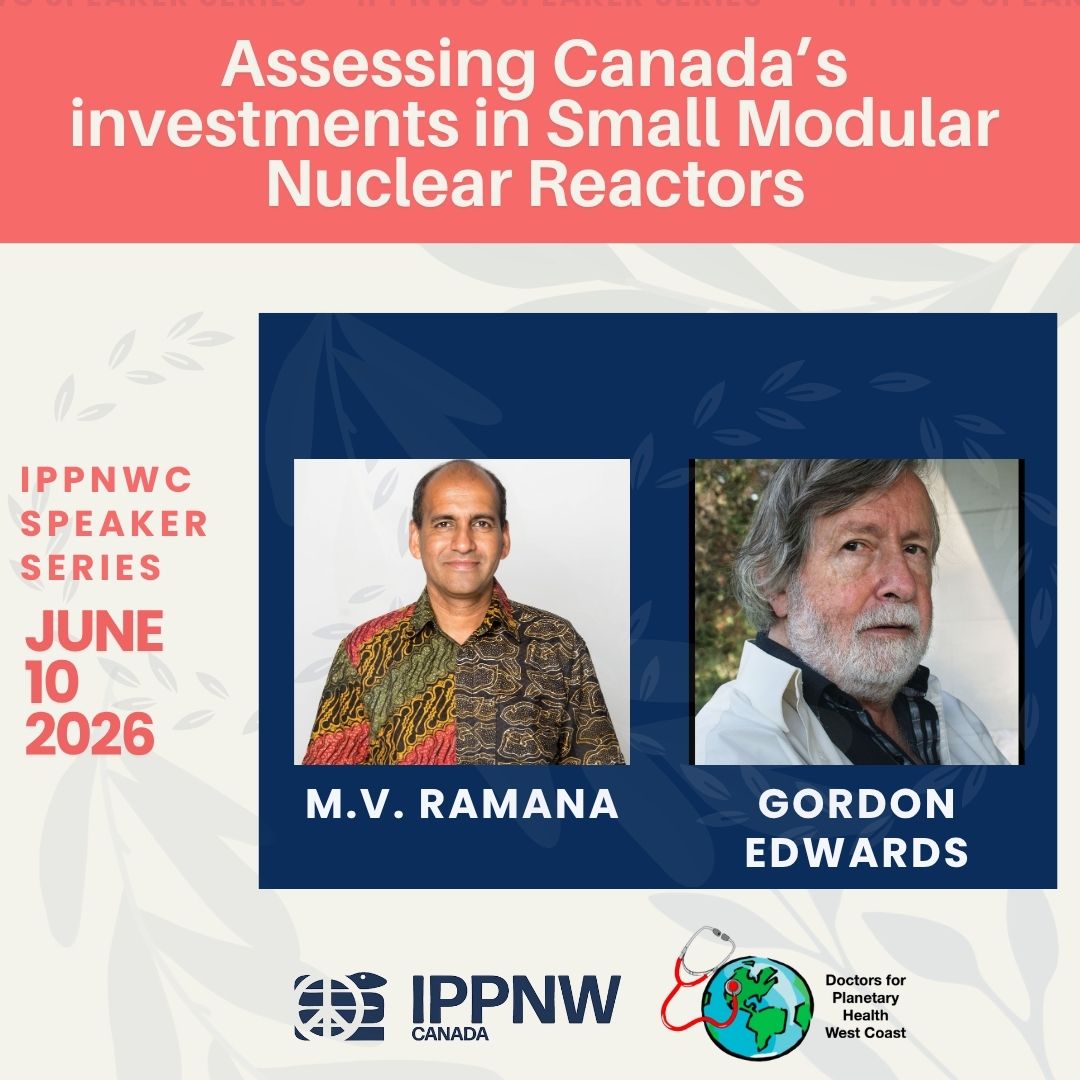
10 June – Assessing Canada’s Investments in Small Modular Nuclear Reactors – https://zoom.us/meeting/register/IiqHA5feRhaEBycOLNTJlA#/registration


Cuba Is Not a Failed State – It Is a Besieged State
PETITION: “Global Appeal to Endorse Palestinian Right of Return of Refugees”
To see nuclear-related stories in greater depth and intensity – go to https://nuclearinformation.wordpress.com
-
Archives
- June 2026 (79)
- May 2026 (306)
- April 2026 (356)
- March 2026 (251)
- February 2026 (268)
- January 2026 (308)
- December 2025 (358)
- November 2025 (359)
- October 2025 (376)
- September 2025 (257)
- August 2025 (319)
- July 2025 (230)
-
Categories
- 1
- 1 NUCLEAR ISSUES
- business and costs
- climate change
- culture and arts
- ENERGY
- environment
- health
- history
- indigenous issues
- Legal
- marketing of nuclear
- media
- opposition to nuclear
- PERSONAL STORIES
- politics
- politics international
- Religion and ethics
- safety
- secrets,lies and civil liberties
- spinbuster
- technology
- Uranium
- wastes
- weapons and war
- Women
- 2 WORLD
- ACTION
- AFRICA
- Atrocities
- AUSTRALIA
- Christina's notes
- Christina's themes
- culture and arts
- Events
- Fuk 2022
- Fuk 2023
- Fukushima 2017
- Fukushima 2018
- fukushima 2019
- Fukushima 2020
- Fukushima 2021
- general
- global warming
- Humour (God we need it)
- Nuclear
- RARE EARTHS
- Reference
- resources – print
- Resources -audiovicual
- Weekly Newsletter
- World
- World Nuclear
- YouTube
-
RSS
Entries RSS
Comments RSS
 nuclear-news