Norway becomes ninth country to come under French nuclear deterrence scheme
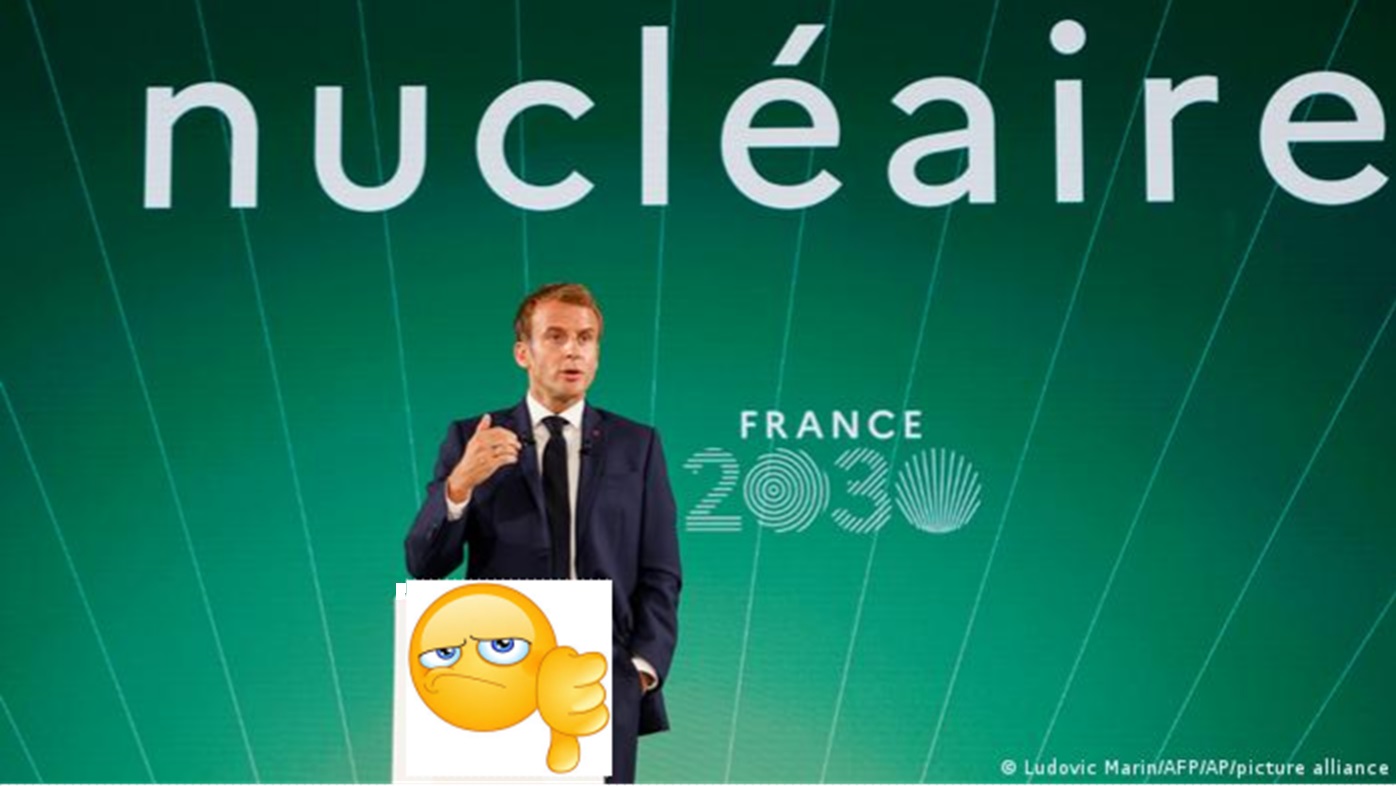
Norway on Wednesday became the ninth country to join the France-led nuclear deterrence scheme, the leaders of both countries said. President Emmanuel Macron announced in March that France – the only nuclear-armed country in the EU – would extend its nuclear deterrence scheme to willing European partners.
By: FRANCE 24, 27/05/2026
The leaders of France and Norway said on Wednesday that Oslo will join a Paris-led nuclear deterrence scheme to bolster security on the continent……………..
“In the past six months, we have entered into defence agreements with both Germany and the UK, and I am pleased that we have signed a comprehensive defence agreement with France today,” Macron said.
In March, Macron unveiled a programme under which France, the European Union‘s only nuclear-armed country, would use its atomic stockpile to boost security on the continent.
Under the so-called “forward” nuclear deterrence scheme, those who join will be able to temporarily host French “strategic air forces”, which will be able to “spread out across the European continent” to “complicate the calculations of our adversaries”, Macron said at the time…..
Prior to Norway, eight countries had joined the programme – Belgium, Denmark, Germany, Greece, the Netherlands, Poland, Sweden and fellow nuclear power the United Kingdom.
“The agreement also provides a framework for closer cooperation on hybrid warfare, maritime security, space cooperation, cybersecurity, support to Ukraine and defence industrial cooperation.”
France has an estimated 290 nuclear warheads, according to the latest figures released by the Stockholm International Peace Research Institute (SIPRI) and the Federation of American Scientists (FAS). More than 80 percent of France’s warheads are submarine-launched, according to the Bulletin of the Atomic Scientists.
That makes France the world’s fourth-largest nuclear power after Russia in the top spot (with more than 4,300 warheads) followed by the United States (with 3,700) and China (600). The United Kingdom – which is no longer an EU member but still a NATO ally – is estimated to have about 225 warheads, according to SIPRI and FAS. https://www.france24.com/en/europe/20260527-norway-becomes-ninth-country-to-come-under-french-nuclear-umbrella
Huge injection of public money to build nuclear submarines at Barrow-in-Furness
“In 2014, Barrow-in-Furness was named the unhappiest place in the UK.
“Since then, the much-maligned former industrial powerhouse has received a
potentially transformative boost in the form of a huge injection of public
money to build nuclear subs there. “
To discuss the prospects of this
crucial part of Britain’s defence and industrial capability, and the 56,000
people who call it home, Lord Simon Case, the former cabinet secretary
deputed by Sir Keir Starmer to lead the town’s revival, heads a panel
moderated by Christopher de Bellaigue.”
The talk will also include Sam
Plum, the former Chief Executive of Westmorland and Furness Council. They
will be joined by Jean McSorley, a policy analyst for the government on
public health and nuclear safety and a key figure for Greenpeace.
NW Evening Mail 27th May 2026, https://www.nwemail.co.uk/news/26139450.barrow-revival-heart-upcoming-lake-district-festival/
Deadly drone dangers
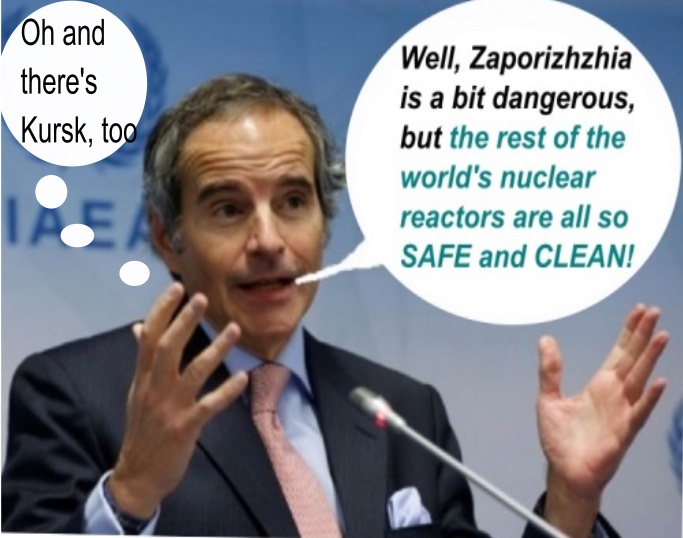
The assaults at or near Zaporizhzhia caused the notoriously hypocritical wringing of hands from the International Atomic Energy Agency, stuck in between recognizing the dire risks of reactors in a war zone and its mandate to promote nuclear power all around the world.
Nuclear power plants are already a liability in war zones. They also represent an open invitation for attack by armed drones, writes Linda Pentz Gunter
Drones are everywhere these days but not as ubiquitous as we once feared. Didn’t Amazon once threaten that all of its at-home deliveries would one day be made by drone? They are delivering some packages using drones — apparently dropping them from a height of 10 feet so the drones don’t collide with passersby — which is great if you ordered bed sheets, not so great for that new set of champagne flutes.
But where the drone industry has really taken off is in the business of warfare. On battlefields and beyond, drones are now routine. They are used to fire precision-guided munitions but also for targeted assassinations, and, whether deliberately or not, to hit nuclear power plants.
This, in particular, raises some extremely serious alarms, because today we have countries that have nuclear power programs that have also found themselves either directly or indirectly embroiled in wars.
The most headline-grabbing incident so far was when, on 14 February 2025, a Russian drone hit what is known as the New Safe Confinement structure at the Chernobyl Nuclear Power Plant in Ukraine. The Confinement is the $2.7 billion dollar dome that was erected over the old sarcophagus originally built to contain the radiation still leaking from the destroyed Unit 4 that exploded and melted down in 1986.
The 2025 attack resulted in damage likely to cost around $582 million to repair.
At first, fears that radiation might be escaping as a result of the hole the drone blew in the dome’s roof were dismissed. But that situation could change dramatically given concerns that the old sarcophagus could collapse at any moment.
”That would be catastrophic because there’s four tonnes of dust, highly radioactive dust, fuel pellets, enormous amounts of radioactivity inside the sarcophagus,” Shaun Burnie of Greenpeace Ukraine told Agence France Presse in an interview.
Since Russia’s invasion of Ukraine began more than four years ago, there have been ongoing concerns about the 15 reactors there caught up in the war. Six in particular, at the Zaporizhzhia nuclear power plant in the country’s worst hit southeast, have been the subject of the greatest alarm, with drone attacks and missiles landing on and damaging site buildings. Fortunately, there has been no direct hit on any of the reactors so far. But how long can such luck hold out?
The assaults at or near Zaporizhzhia caused the notoriously hypocritical wringing of hands from the International Atomic Energy Agency, stuck in between recognizing the dire risks of reactors in a war zone and its mandate to promote nuclear power all around the world. “Playing with fire”, IAEA general secretary, Rafael Grossi, has called the conflict around Zaporizhzhia, while claiming, incredibly, that nuclear power is not the problem, war is the problem.
In August 2025 a Ukrainian drone attack on the Kursk nuclear power plant inside Russia caused a massive fire and damaged an auxiliary transformer.
And then, just last week, a drone strike sparked a fire at an electrical generator just beyond the inner perimeter of the Barakah Nuclear Energy Plant in the United Arab Emirates. Again, mercifully, none of the four reactors at the site received a direct hit, although one unit was obliged to go to backup power from diesel generators.
So far, no one has claimed responsibility but the UAE is naturally pointing fingers at Iran, backed by evidence that the attack emanated from inside Iraq and therefore was likely the work of Iran-backed Shiite militias there.
Grossi called the Barakah hit in the UAE of “grave concern” and once again, like a helpless school teacher in front of an unruly class, warned that military activity around nuclear facilities is “unacceptable”.
The involvement of Tehran, officially or not, comes after powerful attacks by the US and Israel last June and again in February against all of Iran’s nuclear fuel manufacturing installations but sparing, so far, its Bushehr commercial nuclear reactor.
We have also just seen Russia and Belarus carrying out a practice deployment run with their tactical nuclear weapons, just one day after Ukraine successfully fired drones into the heart of Moscow. Belarusian authorities insist this was pure coincidence and that the drills were pre-scheduled and routine. But why practice deploying nuclear weapons if deterrence theory insists such weapons are too dangerous ever to use?
Ukraine’s defense minister, Mykhailo Federov, who has no military background, is now proclaiming the exciting future that is autonomous drones, a grim prospect given the propensity for loss of control when it comes to drones already on the battlefield. Federov and his enthusiastic backers are all too thrilled to describe autonomous weapons as “the new nuclear weapons”. He insists that “Countries that posses them will be protected.”
And so the myth continues. The more lethal — and now potentially rogue — weapons we have, the safer we will all be.
The message all of this sends is that civil nuclear power plants can become unexpectedly caught up in war zones, and can also represent inviting targets for attack, leading to potentially catastrophic results. Let’s remember, the UAE isn’t officially at war with anyone. Both Ukraine and Iran are on the receiving end of uninvited invasions.
We need drones out of our skies. We need wars not to be fought near nuclear power plants. We also need wars not to be fought at all, nuclear power plants to be shut down, and nuclear weapons, AI driven or otherwise, to be abolished.
Linda Pentz Gunter is the Executive Director of Beyond Nuclear and writes for and edits Beyond Nuclear International. She is the author of the book, No To Nuclear. Why Nuclear Power Destroys Lives, Derails Climate Progress And Provokes War, published by Pluto Press.
Even American war hawks now admit Iran is defeating the US – and it will change the world
It is so widely accepted that the USA is losing the war that now even neoconservative hawks admit it. They lament that Iran’s victory reflects the decline of US hegemony and rise of multipolarity.
By Ben Norton, Geopolitical economy, May 25, 2026
It is now widely acknowledged that the United States is losing the war against Iran, which Washington itself started.
Even some neoconservative hawks — who were architects of the wars on Iraq, Libya, and Syria, and who for years advocated for an attack on Iran — have now reluctantly acknowledged that Tehran is winning this war, and that Washington’s loss will have massive geopolitical repercussions.
“There will be no return to the status quo ante, no ultimate American triumph that will undo or overcome the harm done”, wrote the prominent neocon Robert Kagan in The Atlantic. “With control of the strait [of Hormuz], Iran emerges as the key player in the region and one of the key players in the world. The roles of China and Russia, as Iran’s allies, are strengthened; the role of the United States, substantially diminished”.
Western media outlets report that the US is losing the war with Iran
Just a few weeks after the United States and Israel launched this war of aggression on 28 February, British newspaper The Independent acknowledged that “Iran is the clear winner, as Trump’s desperate bid for peace shows he wants out of the war”.
Soon after, the US corporate media began to concede the same.
In mid-April, the Wall Street Journal published an op-ed observing that “the Iran War seems to be failing”. This was written by Gerard Baker, the conservative former editor-in-chief of the newspaper, and an erstwhile Trump supporter.
Meanwhile, US intelligence agencies have been feeding information to US media outlets, disclosing that the war has been going very badly.
The New York Times reported in May, citing US intelligence sources, that Iran still has access to the vast majority of its missile capabilities.
Tehran can still use 30 of its 33 missile sites on the Strait of Hormuz, the world’s most important oil transit chokepoint, through which roughly 20% of globally traded crude passed on a daily basis before the war.
Trump declared a US naval blockade of the Strait of Hormuz, to try to choke off Iran’s oil exports.
However, US intelligence officials acknowledged in an article in the Washington Post that Iran is able to withstand this US military blockade for many months.
Moreover, US intelligence officials told numerous media outlets — including CNN, NBC News, the New York Times, and the Washington Post — that Iran has succeeded in destroying or at least heavily damaging the majority of the US military’s bases and other assets in West Asia.
At the same time, Fortune magazine reported that the US military has been quickly using up its stockpile of missiles.
Fortune cited Harvard Kennedy School lecturer Linda Bilmes, who estimated that the US war on Iran will likely cost more than $1 trillion.
Trump has denied all of this publicly, instead adamantly claiming victory.
“They’re militarily defeated. In their own minds, maybe they don’t know that”, Trump said of Iran.
Nevertheless, these constant leaks by US intelligence officials, to a multitude of media outlets, tell a very different story. They show that this war is going very badl
Neoconservative hawks admit Iran is winning the war
In fact, the war is going so badly that some of the most prominent neoconservative ideologues in the United States have publicly conceded that Iran is winning.
This was the conclusion of an article published in the pro-war mouthpiece of Atlanticism, The Atlantic. The piece was titled “Checkmate in Iran”, and it bore the subtitle “Washington can’t reverse or control the consequences of losing this war”……………………………………………………………………………………………………………………………………………………..
US war against Iran is extremely unpopular among Americans
What explains the sudden opposition of these notorious neoconservative hawks, who spent decades pushing for war on Iran?
They can apparently see the writing on the wall. The war has gone horribly, and it is extremely unpopular at home.
60% of Americans oppose Trump’s handling of the war on Iran, while just 33% support it, according to a May survey published by NPR, PBS News, and Marist Poll.
Prominent neocons are simply jumping off the sinking ship. They recognize that Trump and the Republican Party are extremely unpopular, and that this war is blowing back, hard. Even American war hawks now admit Iran is defeating the US – and it will change the world – Geopolitical Economy Report
World War Trump (everywhere, Somalia too)

In the Trumpian Age, Every Accusation Is Also a Confession
SCHEEROST, Nick Turse Tom Dispatch, May 22, 2026
“It’s got no anything,” President Donald Trump said of Somalia in a recent xenophobic rant. “All they do is run around shooting each other.”
As is true of so much with this administration, every accusation is also a confession.
U.S. troops have been shooting Somalis since the early 1990s, after lame duck President George H. W. Bush launched an ostensibly humanitarian intervention there that would be embraced by his successor, Bill Clinton. By June 1993, U.S. and U.N. troops had begun attacking various targets in Somalia’s capital, Mogadishu, linked to warlord Mohamed Farrah Aidid, who had helped overthrow dictator Mohamed Siad Barre.
The next month, in a major escalation, U.S. helicopter gunships attacked a house in that city where a group of Somali clan leaders was meeting. The International Committee of the Red Cross said 54 people were killed and 161 wounded. Aidid claimed that 73 Somalis had died, including women and children, and more than 200 had been wounded. U.S. forces suffered no casualties whatsoever.
And it wasn’t long before — in the early 2000s, under Bush’s son, George W., as part of what became known as the Global War on Terror — American troops began slaughtering Somalis again. In addition to major conflicts in Afghanistan and Iraq, Bush, the younger, launched early drone wars from Pakistan to Yemen, including in Somalia. His successor, President Barack Obama, upped the Forever War ante, becoming an assassin-in-chief in Somalia and beyond. Obama’s vice president, Joe Biden, continued the drone war there, too, when he entered the White House.
However, for all those years of slaughter in Somalia, no American president has ever attacked Somalis with the persistence and at the rate of President Donald J. Trump, especially in his second term in office.
The second Bush administration conducted 11 airstrikes in Somalia, killing as many as 144 people — including possibly 55 civilians, according to the think tank New America. Obama presided over 48 strikes during his eight years in office that killed as many as 553 people. Trump’s first term saw a massive escalation in such drone strikes. Over his first four years, Trump carried out 219 attacks, a 271% increase over the 16 years of the George W. Bush and Obama presidencies. But even that spike has paled in comparison to the relentless rate of attacks during Trump’s second term in office. While Biden exceeded Obama’s total in half the time — 51 strikes in four years — Trump is already set to eclipse his own infamous first-term record in less than a year and a half. He has presided over at least 190, if not more, air strikes in Somalia.
Trump’s killing spree in Somalia is just a small part of his wider war on the world. It’s no exaggeration to say that he has the U.S. military “run[ning] around shooting” people on an epic scale. During his two terms in office, Trump has overseen armed interventions and military operations — including air strikes, commando raids, proxy conflicts, so-called 127e programs, and full-scale wars — in Afghanistan, the Central African Republic, Cameroon, Ecuador, Egypt, Iran, Iraq, Kenya, Lebanon, Libya, Mali, Niger, Nigeria, North Korea, Pakistan, the Philippines, Somalia, Syria, Tunisia, Venezuela, Yemen, and an unspecified country in the Indo-Pacific region, as well as attacks on civilians in boats in the Caribbean Sea and the eastern Pacific Ocean. His second term has, in fact been a furious blitz of global war-making, only half-noticed by the American news media. In March, for example, the United States made war on three continents during just three days, conducting attacks in Africa, Asia, and South America. During that span, the U.S. also struck a civilian boat in the eastern Pacific Ocean.
Less than a year and a half into Trump’s second term, the U.S. has already killed more than 2,000 civilians from Latin America to the Middle East and Africa. “This is unprecedented in terms of the sheer number of theaters where harm to civilians has been reported within such a short space of time,” said Megan Karlshoej-Pedersen, a policy specialist with Airwars, a British-based organization that tracks civilian harm globally. She also pointed to attacks in the Caribbean Sea, the eastern Pacific Ocean, Iran, Nigeria, Somalia, Syria, Venezuela, and Yemen.
A War on Children
Since the U.S. began conducting air strikes in Somalia back in 2007, as many as 170 civilians have been killed, according to Airwars. The U.S. military has, however, only admitted to six of those deaths and 11 other injuries — and has never publicly apologized to any families of the victims or those who survived its attacks.
In one April 2018 attack in Somalia during Trump’s first term, a U.S. drone strike killed at least three (and possibly five) civilians. A woman and child were among the dead, according to formerly secret U.S. military investigation documents, but the same report concluded that their identities might never be known. A 2023 investigation I undertook for The Intercept, however, exposed the details of that disastrous attack. The woman and child — 22-year-old Luul Dahir Mohamed and her 4-year-old daughter, Mariam Shilow Muse — survived the initial strike but were killed by a double-tap attack as they fled for their lives. Abdi Dahir Mohamed, one of Luul’s brothers, said of the Americans who killed his sister and niece: “They know innocent people were killed, but they’ve never told us a reason or apologized. No one has been held accountable.”……………………………………………………………………………………………………………………………………………………………………………………………………………………………………………………………………………………………………………. Some of those attacks could well have been categorized as crimes of war. Others are certainly extrajudicial killings — or, simply put, outright murders. Those deaths and so many others can be traced back to Donald Trump and his contempt for the lives of people across this planet.
“It’s filthy dirty, disgusting dirty,” Trump said of Somalia, but in truth, that’s a more apt description for the soul of the country that exports slaughter, year after year, and is led by a man who revels in it. “It’s a horrible place,” he continued about Somalia.
And once again, every accusation of his should be considered a confession, too. https://scheerpost.com/2026/05/22/world-war-trump/
Nobody Sincerely Believes Cuba Threatens The United States
Caitlin Johnstone, May 22, 2026, https://www.caitlinjohnst.one/p/nobody-sincerely-believes-cuba-threatens?utm_source=post-email-title&publication_id=82124&post_id=198793245&utm_campaign=email-post-title&isFreemail=true&r=1ise1&triedRedirect=true&utm_medium=email
In a sign that the US is preparing for yet another evil war, Marco Rubio is now claiming that Cuba poses a “national security threat” to the United States, saying the likelihood of a peaceful agreement is “not high”.
“Cuba not only has weapons that they’ve acquired from Russia and China over the years, but they also host Russian and Chinese intelligence presence in their country — not far from where we’re standing right now,” Rubio told the press on Thursday. “So Cuba has always posed a national security threat to the United States. They, by the way, have been one of the leading sponsors of terrorism in the entire region.”
Rubio’s comments come as a US intelligence report laundered through Axios claims that Cuba may be preparing to launch a drone strike against US military forces. Havana said the Axios report misrepresents Cuba’s defensive measures as a preparation to attack, accusing the US of “fabricating pretexts, creating and spreading falsehoods, and distorting as extraordinary the logical preparation required to face a potential aggression.”
The US has also unsealed an indictment for Raul Castro, the 94 year-old brother of Fidel Castro, in a move that resembles the playbook used for the kidnapping of Venezuela’s President Nicolas Maduro.
The excuses for military action are already being rolled out. This happens as US war machinery relocates to the Caribbean, and as Cuba flounders under a crushing US oil blockade that is already inflicting a severe humanitarian toll.
And everyone knows it’s all based on lies. You know it. I know it. Marco Rubio knows it. The war propagandists know it. The gusanos brigading social media begging for war know it. We all know it’s a sham.
Not one person sincerely believes Cuba poses a threat to the United States.
No one sincerely believes Cuba just coincidentally became an urgent menace to US national security all of a sudden right when the US began scrambling to consolidate geostrategic control in the middle east and the western hemisphere.
Nobody actually thinks that a tiny, impoverished island nation is preparing to launch a war of aggression against the United States.
This is a performance put on by warmongers and bootlickers. It insults our intelligence and robs us of dignity.
If things cool down with Iran, then it’s a safe bet they’re going in for the kill shot on Cuba. The US empire never makes peace, it just moves the crosshairs of its war machinery from nation to nation.
We see this over and over again.
Yay! The troops are leaving Afghanistan — oh, now they’re waging a proxy war in Ukraine.
Excellent, they’re deescalating against Yemen — whoa, now they’re kidnapping the president of Venezuela.
Oh hey, it looks like the mass slaughter in Gaza has slowed down — oh, now they’re going to war with Iran.
Look, they’re pulling thousands of troops out of Germany — oh, it’s so they can move them to Poland.
Hey these Iran negotiations are finally getting somewhere — ah man, now they’re invading Cuba.
Over and over and over and over again. As soon as the human butchery slows down in one place, it picks up somewhere else.
The US empire exists in a constant state of war. War is the glue that holds the empire together. If the wars stop, the empire stops.
That’s why the denizens of the empire are never allowed to vote for an end to wars. You can vote for candidates who will end abortions or trans rights or corporate regulations, but you can’t vote for a candidate who will actually end the wars. Peace is never on the ballot, because war is too critical for the functioning of the empire.
Which is why it’s so important for us all to stand against the war machine. If we can end the wars, we can end the empire. Not until then will we have a shot at building a healthy world.
Strike near UAE reactor revives concerns over nuclear plant safety in wartime
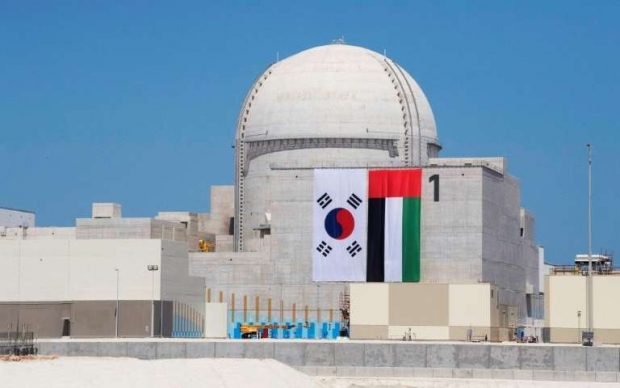
Attack marks first time military action has forced a fully operating nuclear power plant to rely on backup generators
Dan Sabbagh Defence and security editor, Guardian 20 May 26
A drone strike that cut off external power to a nuclear reactor in the United Arab Emirates this week has revived concerns over the safety of nuclear plants during wartime.
Reactor no 3 at the Barakah nuclear plant lost vital off-site power for about 24 hours after the attack on Sunday, forcing it to rely on emergency diesel generators.
The UAE’s defence ministry said on Tuesday that three drones targeting the plant had originated from Iraqi territory, suggesting a pro-Iranian proxy group was most likely to have been behind the strike.
Two were intercepted, but one got through, causing a fire near a four-reactor plant that supplies the UAE with a quarter of its electricity.
The UAE said the strike hit an electrical generator “outside the inner perimeter”, raising fears it could have hit the switch yard which lies just beyond a wall around the site’s reactors.
It is the first time a fully operating nuclear power plant has had to rely on backup generators as a result of a military attack, at a time when reactors in Ukraine and Iran are also threatened by war.
The UAE’s nuclear safety regulator said the attack did not cause any radioactive material to be released, though it was notable that it had not proved possible to completely defend a critical site from drones.
Experts told the Guardian there should have been sufficient power available from the other three reactors on-site, but this does not seem to have immediately been the case, possibly because of damage to the switch yard, which routes electricity in and out.
On Monday, the International Atomic Energy Agency said it had been told by the UAE that off-site power to unit No 3 had been restored “earlier today”, meaning that “the reactor no longer needs emergency diesel generators for power”.
Rafael Grossi, the head of the IAEA nuclear watchdog, said nuclear sites and other installations important for nuclear safety must never be targeted by military activity……………………………………..
Though the Geneva conventions, which set out laws of warfare, insist that civilian objects, including nuclear plants, “are protected against attack”, they accept they can be attacked “for such time as they are military objectives” – a loophole that aggressor states have interpreted widely……………………………
There remains concern, however, that Iran’s Bushehr nuclear plant, which has one working reactor, could either be struck directly or lose external power if US and Israel do renew their bombing……………….. https://www.theguardian.com/world/2026/may/19/strike-near-uae-reactor-concerns-nuclear-plant-safety-iran-war-middle-east
…
Golden Dome or Golden Scam?

19 May 2026 – A report by the International Physicians for the Prevention of Nuclear War,
Back from the Brink, and Physicians for Social Responsibility
On May 19, PSR along with International Physicians for the Prevention of Nuclear War and Back From The Brink, released a new report on the proposed Golden Dome defense system. Organizations hosted a press conference in DC with the Up In Arms campaign, Senator Ed Markey, and Congressman Jim McGovern.
The false promise of strategic missile defense…………………………………….
Will the Golden Dome Protect us?
This brief report looks at what the United States would get from a $3.6 trillion
system that falls short of 100 percent effectiveness. Specifically, it considers what
would happen in a war with Russia if the U.S. had an 80% effective missile
defense system in place. The technology required to shoot down an
intercontinental ballistic missile is much more complex than that used to take out
the relatively primitive short-range rockets used in the current wars in the Middle
East. [3] Given the track record of the last 40 years, an 80% success rate is almost
certainly an unrealistically optimistic goal. But examining this “best case
scenario” sheds important light on the real value, or lack of value, of the Golden
Dome.
If the U.S. were to build a missile defense system that could shoot down 80% of
the current Russian nuclear arsenal, Russia could simply build many more
warheads and decoys to overwhelm this system, or redeploy some of the nearly
three thousand warheads it has put into storage. But for the purposes of this
scenario, we use the more conservative assumption that Russia is financially
unable to do so and simply retargets all its currently deployed warheads at U.S.
cities to exact an unacceptable price in any war with the U.S.
The current Russian nuclear arsenal contains an estimated 1718 deployed
warheads: 430 warheads with the destructive power of 800 kilotons (Kt)—50
times the explosive yield of the Hiroshima bomb, 200 warheads with the power
of 250 kilotons (Kt) , and 1088 100 kiloton (Kt) warheads. [4] There are many
different targeting scenarios Russia could choose to maximize damage with
this arsenal despite the existence ………………………….of the Golden Dome.
Let’s consider one of them.
If the US had the ability to shoot down 80% of all incoming Russian warheads,
then, in order to achieve a 95% probability of hitting a given population center,
Russia would have to target that city with 13 warheads. [5]…………………………………………………………………..
CONCLUSION
The Golden Dome will not protect
the American people. Even if the
system achieved an extremely
optimistic 80% success rate, it
would leave the 132 largest
population centers open to attack
with 75 million Americans in the
zones of total destruction. Such an
attack would also cause global
climate disruption and lead to
famine that would kill 1.4 billion
people worldwide
What the Golden Dome will do is to
squander $3.6 trillion creating a
dangerous, false sense of security.
This is money that could be spent on
education, housing, health care, and
food security– social services that
are currently being cut because we
are told we can’t afford them.
Developing and deploying the
Golden Dome will also exacerbate
the danger of nuclear war by
blocking progress towards nuclear
disarmament and further fueling the
new and destabilizing arms race as
Russia and China build more
weapons to overcome any ability the
Golden Dome has to intercept some
of their current warheads. This is not
a hypothetical concern. U.S.
determination to pursue Star Wars
during the 1980’s derailed the
attempt by Presidents Reagan and
Gorbachev to reach an agreement to
eliminate all nuclear weapons at the
Reykjavik Summit in 1986. [9]
There is no technical fix to the threat
posed by nuclear weapons
We have survived this far into the nuclear era
because, according to former
Defense Secretary Robert
McNamara, “We lucked out….It
was luck that prevented nuclear
war.” The United States cannot rely
on our luck lasting forever, and it
cannot rely on a mythical Golden
Dome to protect us. The only way to
confront the growing danger of
nuclear war and to guarantee that
our world is not destroyed by these
weapons is to eliminate them
The United States should enter
negotiations now with the other 8
nuclear armed states for a
verifiable, enforceable agreement
to eliminate all of their nuclear
arsenals according to an agreed
upon timetable. We cannot know
in advance if this effort will
succeed, but we do know what
will happen if we don’t eliminate
these weapons. So there is every reason to try
…………………………………………………….. https://psr.org/wp-content/uploads/2026/05/golden-dome.pdf
From Asia to the Middle East, US Bombs Are a Failed Foreign Policy Choice
The only reliable products of US airpower are devastated civilian populations and suppression of internal movements.
By Christine Ahn , Truthout, May 19, 2026
The U.S.-Israeli war on Iran opened not with a declaration, not with diplomacy exhausted, but with airstrikes.
Among the first confirmed casualties were more than a hundred schoolchildren killed in a strike on their elementary school in southern Iran. Within a month, 850 U.S.-made Tomahawk missiles were used to strike Iran. President Donald Trump has delivered on his promise to bomb Iran “back to the Stone Ages,” with U.S. and Israeli missiles targeting bridges, pharmaceutical and steel plants, and civilian infrastructure like schools and hospitals. The bombing campaign has struck civilian oil infrastructure in Tehran, engulfing a city of 10 million people in toxic black rain. Thousands of Iranians and Lebanese have been killed, and hundreds of thousands of workers have lost their jobs as factories and basic infrastructure have been destroyed.
Washington calls this national security. The historical record calls it something else entirely.
For more than 75 years, the United States has reached for airpower as its preferred instrument of foreign policy — a tool that promises decisive results without the political costs of ground occupation; the illusion that enough bombs, dropped with enough precision, can produce the outcomes that diplomacy did not. Korea, Vietnam, Laos, Cambodia, Afghanistan, Iraq, and now Iran: the targets have changed, the doctrine has not.
The Failure of U.S. Doctrine
As a Korean American, Cathi Choi of Women Cross DMZ knows this history personally. From 1950 to 1953, during the Korean War, U.S. forces dropped 635,000 tons of bombs and 32,000 tons of napalm, burning 80 percent of North Korean cities to the ground. One year into the war, U.S. Maj. Gen. Emmett O’Donnell testified in the Senate, “There are no more targets in Korea.” More than 4 million people were killed, the overwhelming majority of them Korean civilians. Choi, whose grandfather fled the north during the war, is among millions of Koreans from separated families. The division of the peninsula left an estimated 10 million Koreans cut off from relatives on the other side, unable to exchange phone calls or letters or reunite, with the exception of a few state-sponsored family reunions during periods of détente. Seventy-three years later, the war has only ended in a ceasefire, not a treaty, and the peninsula has remained in a stalemate ever since.
“The Korean War didn’t just leave its mark on the peninsula,” Choi explained. “It left deep scars among divided families, inaugurated the U.S. military-industrial complex, quadrupled the Pentagon budget in three years, and set a course from which Washington has never turned back.” Today, the Trump administration is proposing a $1.5 trillion Pentagon budget while slashing investments in diplomacy, development, and domestic programs like Medicaid and food stamps. Meanwhile, 1.2 million land mines are still buried across the world’s most militarized border, keeping Korean families — like Choi’s — separated, and both sides heavily militarized while on the precipice of nuclear war.
Danae Hendrickson, chief of mission advancement and communications at the advocacy group Legacies of War, has spent years documenting what the United States left behind in Laos, Cambodia, and Vietnam — not as history, but as present danger. …………………………………………………………………………………………………………………………………………………………………………………………………………………………………. https://truthout.org/articles/from-southeast-asia-to-middle-east-us-bombs-are-a-failed-foreign-policy-choice/?utm_source=Truthout&utm_campaign=0f6b169c87-EMAIL_CAMPAIGN_2026_05_19_09_10&utm_medium=email&utm_term=0_bbb541a1db-0f6b169c87-650192793
Russian nuclear weapons, 2026

Bulletin, By Hans M. Kristensen, Matt Korda, Eliana Johns, Mackenzie Knight-Boyle | May 14, 2026
Russia is in the late stages of a multi-decade-long modernization program to replace all of its Soviet-era nuclear-capable systems with newer versions. However, this program is facing significant challenges that will further delay the entry into force of these newer systems. In this issue of the Nuclear Notebook, we estimate that Russia now possesses approximately 4,400 nuclear warheads for its strategic and non-strategic nuclear forces—a slight increase from the previous year. The significant increase in non-strategic nuclear weapons that the Pentagon predicted five years ago has so far not materialized. A nuclear weapons storage site in Belarus appears to be nearing completion. The Nuclear Notebook is researched and written by the staff of the Federation of American Scientists’ Nuclear Information Project: director Hans M. Kristensen, associate director Matt Korda, and senior research associates Eliana Johns and Mackenzie Knight-Boyle
This article is freely available in PDF format in the Bulletin of the Atomic Scientists’ digital magazine (published by Taylor & Francis) at this link.
Russia is nearing the completion of a decades-long effort to replace most of its strategic and non-strategic nuclear-capable systems with newer versions. But despite Moscow’s continued rhetorical emphasis on its nuclear forces, commercial satellite imagery and other open sources indicate that elements of Russia’s nuclear modernization are proceeding much more slowly than planned: Upgrades to intercontinental ballistic missiles (ICBMs) and bombers face significant delays, and the “significant” increase of Russian non-strategic nuclear weapons that US Strategic Command (STRATCOM) predicted five years ago has so far not materialized (Richard 2020, 5).
As of March 2026, we estimate that Russia has a stockpile of approximately 4,400 nuclear warheads assigned for use by long-range strategic launchers and shorter-range tactical nuclear forces. This number is greater than last year, largely due to a change in our estimate of warheads assigned to non-strategic nuclear forces following STRATCOM’s publication of its estimate for the number of warheads in the Russian arsenal. The estimate, which is the first time in more than three decades that the US government has disclosed how many warheads it believes Russia possesses, stated that “Russia’s nuclear warhead arsenal consists of approximately 4,600 nuclear warheads; 2,600 are intended for its strategic triad and up to 2,000 are warheads intended for theater nuclear weapons” (Correll 2026). Given that the US Intelligence Community for several years has estimated Russia has 1,000–2,000 nonstrategic warheads (US Department of State 2025a), the “approximately” in the STRATCOM statement indicates the stockpile is less than 4,600 and the number of nonstrategic warheads is less than 2,000. We were able to match the estimate for strategic warheads, but the total stockpile number
necessitated a revision of our estimate for nonstrategic warheads closer to the estimate we published in 2023 (Kristensen, Korda, and Reynolds 2023).
Of the estimated 4,400 stockpiled warheads, approximately 1,796 strategic warheads are deployed: about 892 on land-based ballistic missiles, about 704 on submarine-launched ballistic missiles, and about 200 at heavy bomber bases. Another approximately 810 strategic warheads are in storage, along with about 1,794 nonstrategic warheads. In addition to the military stockpile for operational forces, a large number—approximately 1,020—of retired but still largely intact warheads await dismantlement, for a total inventory of approximately 5,420 warheads[1] (see Table 1 on original).
Russia’s nuclear modernization program appears motivated in part by the Kremlin’s strong desire to maintain quantitative and qualitative parity with the United States and to maintain national prestige. ………………………………………………………………………………………………………………………………………………………………………………………………………………………………………………………………………………………………………. https://thebulletin.org/premium/2026-05/russian-nuclear-weapons-2026/?utm_source=ActiveCampaign&utm_medium=email&utm_content=The%20Russian%20nuclear%20arsenal%20today&utm_campaign=20260518%20Monday%20Newsletter
Pentagon quietly shut legally required program to prevent civilian deaths by military, watchdog finds
Trump administration accused of cutting military’s civilian harm program in light of US strike on girls’ school in Iran
Guardian, Joseph Gedeon and Cate Brown in Washington, 16 May 26
The Pentagon has quietly dismantled a program it is legally required to operate to prevent and respond to civilian deaths in US military operations, according to its internal watchdog.
A report released by the department’s inspector general concluded the US military no longer has the people, tools or infrastructure needed to comply with two federal statutes requiring it to maintain a functioning civilian casualty policy, and operate a Civilian Protection Center of Excellence (CP CoE).
Donald Trump’s administration has been accused of making deep cuts to the Pentagon’s civilian harm mitigation and response (CHMR) program, designed to handle training and procedures critical in limiting civilian harm in theaters of war.
While the program has not been officially canceled, the inspector general’s report said that funding had ended for a data management platform; committee meetings had halted; and many dedicated personnel had been lost or reassigned.
“As a result, the DoW [Department of War] may not comply with its civilian casualties and harm policy,” the report read. “A policy required by federal law.”………………………………………………………………….
Pete Hegseth, the Pentagon chief, has recently come under fire over deadly attacks on Iran, including a US strike in Minab that killed at least 175 people, a majority of them children, at an all-girls school.
Limiting casualties has not been a top priority during Hegseth’s tenure at the Department of War, rebranded last September from the Department of Defense. When pressed on civilian casualties in Iran, Hegseth has pivoted to blame the Iranian regime for placing rocket launchers in civilian areas, and also claimed no nation in history had taken more precautions than the US to avoid civilian deaths.
The inspector general’s report, and people familiar with the office, tell a different story.
“My assessment is that they’ve left a semblance of the department because Hegseth was taking heat for illegal operations,” said Wes J Bryant, an air force combat veteran who was the chief of civilian harm assessments on the CP CoE program.
He described a stream of forced resignations and halted investigations since Hegseth assumed his post, saying there were only seven people left reporting to the program, and that they are “locked out of all operations” and have been relegated to “a closet office” in Virginia.
Bryant was forced out of his job last spring, as the Trump administration removed safeguards that once restrained US forces from authorizing the use of lethal force, according to a ProPublica report.
The inspector general’s report, published on 13 May, points to an inflection point in February, when two senior officials – the acting under-secretary of war for policy, Elbridge Colby, and the secretary of the army, Dan Driscoll – separately proposed to Hegseth the program be cut or eliminated.
One proposal went further, according to the report, and recommended scrapping its action plan and its underpinning departmental instruction entirely. Then, without waiting for a response, the military began acting as if the cuts had already been approved……………………………………………………………………………………………………………………………. https://www.theguardian.com/us-news/2026/may/15/pentagon-civilian-death-program
The United Arab Emirates said a drone strike caused a fire at the perimeter of its Barakah nuclear power plant
There were no
injuries and radiation levels remained safe. The emirate’s state news
agency said on Sunday that authorities were “handling a fire that broke
out in an electric generator outside the inner perimeter” of the Barakah
power plant “caused by a drone strike”. The UAE did not apportion blame
for the attack and there was no claim of responsibility.
But the emirate
has borne the brunt of Tehran’s retaliatory attacks since the US and
Israel launched the war on Iran on February 28.
FT 17th May 2026,
https://www.ft.com/content/c4b786a6-55d4-4689-b19e-48a48f7946e6
UAE blames Iran or proxies for strike near nuclear plant, as Trump tells Tehran ‘clock is ticking’
Abu Dhabi denounces ‘dangerous escalation’ as Iran war ceasefire grows more precarious, and US president voices impatience at stalemate
Julian Borger in Jerusalem, 18 May 26, https://www.theguardian.com/world/2026/may/17/uae-blames-iran-or-its-proxies-for-drone-strike-fire-near-nuclear-plant
The United Arab Emirates has blamed a fire near its nuclear power plant on a drone launched by Iran or one of its proxies in what the UAE called a “dangerous escalation”.
The fire was just outside the Barakah nuclear plant and caused no injuries or radiation alerts, with the emirate’s nuclear regulator saying there was no radioactive leak or risk to the public.
But it came at an extremely tense moment in the sixth week of a ceasefire in the Iran war, with peace talks stalled and Donald Trump voicing impatience at the deadlock.
“For Iran, the Clock is Ticking, and they better get moving, FAST, or there won’t be anything left of them. TIME IS OF THE ESSENCE!” the US president wrote on his Truth Social site.
According to Axios, Trump met national security advisers on Saturday at his golf course in Virginia and is due to meet his national security team on Tuesday to discuss options.
Trump also spoke to Benjamin Netanyahu before an Israeli security cabinet meeting to discuss Iran, Lebanon and Gaza, amid widespread speculation in Israel that the Iran war will restart in the absence of signs of compromise.
According to state media, the UAE foreign minister, Sheikh Abdullah bin Zayed Al Nahyan, held talks with other states in the region, including Saudi Arabia with which it has had a strained relationship recently. Riyadh condemned the attack.
The minister also informed the director general of the International Atomic Energy Agency (IAEA), Rafael Grossi, of the details of the drone strike. He told Grossi that his country had the full right to respond to such “terrorist attacks”.
The IAEA said in a social media post that Grossi expressed “grave concern about the incident and says military activity that threatens nuclear safety is unacceptable”.
The UAE is reported to have retaliated for earlier Iranian attacks on its oil infrastructure with airstrikes on Iranian facilities. It has tightened its partnership with Israel over the course of the war and has been the most hawkish of the Gulf states over military action against Iran.
The UAE’s defence ministry said the drone that targeted the Barakah plant was one of three that “entered the country from the western border direction”.
It said the unmanned aircraft had hit “an electrical generator outside the inner perimeter of the Barakah nuclear power plant in the Al Dhafra area”.
“Investigations are ongoing to determine the source of the attacks, and updates will be disclosed upon completion of the investigations,” the ministry added.
Anwar Gargash, an Emirati presidential adviser, made clear that he believed Iran or a regional proxy were the perpetrators.
“The terrorist targeting of the Barakah clean nuclear power plant, whether carried out by the principal perpetrator or through one of its agents, represents a dangerous escalation,” Gargash wrote on X.
Gargash called the incident “a dark scene that violates all international laws and norms”, and accused those responsible of having a disregard for civilian lives.
Epic Interruptus: The Iranian Snare and American Defeat
13 May 2026 Dr Binoy Kampmark, https://theaimn.net/epic-interruptus-the-iranian-snare-and-american-defeat/
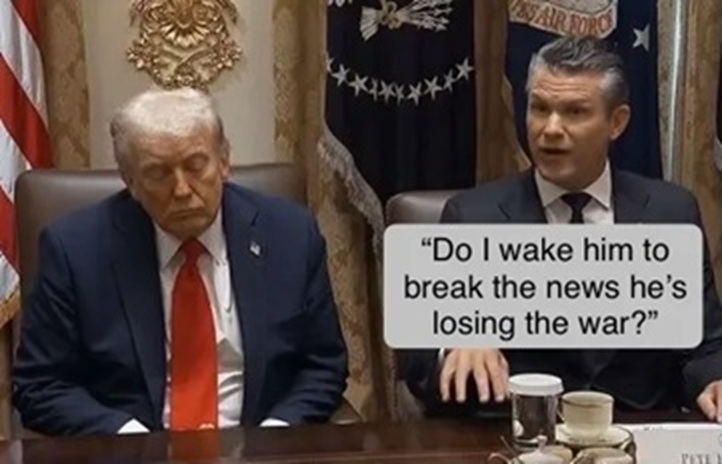
On May 10, Robert Kagan, the high priest of neoconservative thought, the bell ringer for muscular interventionism and general American meddlesomeness, lamented in The Atlantic that the United States had suffered a unique defeat in its efforts to subjugate Iran. The article says much about Kagan’s own identification with the obvious, some feat given the military fancy and fantasy that continues to blot the current Trump administration.
Be that as it may, he finds the Iran War dishing out a defeat to the United States of unique quality, one that “can neither be repaired nor ignored.” No ultimate American triumph could emerge, and nothing would “undo or overcome the harm done” to “return to the status quo ante.” The Strait of Hormuz would not be “open” as it was prior to February 28. Iran’s regional position, far from being blunted, had improved. China and Russia had been strengthened; the US “substantially diminished.” “Far from demonstrating American prowess, as supporters of the war have claimed, the conflict has revealed an America that is unreliable and incapable of finishing what it started.”
This prompting was undoubtedly due to the claim made by US Secretary of State Marco Rubio on May 5 in the White House Press Briefing Room that Operation Epic Fury had concluded, though US President Donald Trump, ever keen to keep an iron in the fire, huffed that Iran had to “agree to give what has been agreed to.” (The “what” is always the problem in Trumpland.) Not doing so would result in bombing “at a much higher level and intensity than it was before.” The President had also “paused” Project Freedom, that massive prop of wishful thinking involving the use of the US military to escort commercial shipping through the Strait of Hormuz. The pause – effectively a breezy termination – had been induced, in no small part, by the grumpiness of Saudi Arabia’s Mohammed bin Salman, worried that adventurism in the Strait would incite yet another round of Iranian attacks on Gulf states. To show his disapproval, the Crown Prince had refused to permit the use of the Prince Sultan Airbase for US operations.
Iran’s airstrikes had also shown far more bite than was initially reported, at least in the Western media stable. Some of this can be put down to the restrictions on the release of satellite imagery supplied by commercial providers Vantor and Planet. Both have been compliant with the Pentagon’s request to either limit, delay or indefinitely withhold the publication of timely imagery covering the region. The Iranians, through state-affiliated news outlets, felt no such restraint.
On May 6, The Washington Post, after examining Iranian satellite imagery, reported that some 228 structures of pieces of equipment at US military sites across the Middle East since February 28 had been damaged and destroyed. Hangars, barracks, fuel depots, aircraft, vital radar, communications and air defence equipment had been struck by Iran’s forces. The dangers posed by Iranian strikes had been so formidable as to force some US bases in the region to relocate personnel out of missile range.
In its analysis, the paper claims to have verified some 109 images, aided by a comparison with lower-resolution imagery obtained from the European Union’s Copernicus satellite system, and any high-resolution images at hand from Planet. The Iranian images also confirmed previously reported damage or destruction inflicted on a number of US military assets: the radomes at Camp Arifjan and Ali al-Salem Air Base in Kuwait and at the 5th Fleet Headquarters; the Terminal High Altitude Area Defense (THAAD) missile defence radars and equipment located at Jordan’s Muwaffaq Salti Air Base and two sites in the United Arab Emirates; a second satellite communications site located at al-Udeid Air Base, and an E-3 Sentry command and control aircraft and a refuelling tanker at Prince Sultan Air Base in Saudi Arabia.
The analysts roped in to examine the images were impressed. Mark Cancian, a former Marine Corps colonel and senior advisor to the Center for Strategic and International Studies (CSIS), found the strikes to be “precise.” “There are no random craters indicating misses.” William Goodhind of the open-access research project Contested Ground, in addition to noting the destruction of equipment, fuel storage and air base infrastructure, found damage to “soft targets, such as gyms, food halls and accommodation.”
To add stinging insult to burgeoning injury, the defences used to cope with Iranian strikes proved staggeringly draining and disproportionately costly. The CSIS estimates the use of at least 190 THAAD interceptors and 1,060 Patriot interceptors between February 28 and April 8, running down inventories of both at 53% and 43% respectively. And just to improve the mood in Washington, Tehran, according to an analysis by the US intelligence community, retains roughly 75% of its prewar inventories of mobile launchers and roughly 70% of its pre-war missile stockpile. Vague as they are, that’s another objective of Operation Epic Fury dashed.
While the childish pantomime of non-diplomacy continues (Trump rages that the ceasefire with Tehran, given the latest “piece of garbage” of a counter proposal, is on “life support”), Washington is banking on a strangulation policy through yet another project of dubious merit: Economic Fury. “As Iran’s military desperately tries to regroup, Economic Fury will continue to deprive the regime of funding for its weapons programs, terrorist proxies, and nuclear ambitions,” tooted the Secretary of the Treasury Scott Bessent on May 11. “Treasury will continue to cut the Iranian regime off from the financial networks it uses to carry out terrorist acts and to destabilize the global economy.”
Economic Fury, still in its swaddled infancy, also risks early retirement. Iranian stubbornness and stout resilience continues to trouble analysts in the intelligence community. A CIA analysis circulated this month concluded that Tehran could withstand the US naval blockade for between 90 to 120 days before experiencing dramatic economic deterioration. Iran’s economy may be in a wretched state, but parochial determination has a certain staying power. Bureaucratic bickering, however, often finds its way, and a senior US intelligence official (that could be anyone) has surfaced to counter the claims of the assessment. Genuine, extensive and rapid economic damage is being inflicted. The US remains in the ascendant.
These varied intelligence assessments of decorative astrology cannot escape the dunderheaded reasoning that undergirded the war, along with the failure to appreciate the shocks caused, not merely by Iran’s closure of the Hormuz Strait but its systematic shredding of the US security guarantee for Gulf states. Unlike the fumbling, inventive antics shown prior to the invasion of Iraq in March 2003, the CIA and allied intelligence services were well aware that a campaign against Iran was freighted with terrible risk. Ensnared and trapped, Trump will find it hard to avoid using the good offices of China’s President Xi Jinping to lean on Beijing’s ally. If so, it is bound to come at an exacting price.
How Russia signals nuclear resolve with civilian nuclear energy infrastructure.
Iran today: a different geopolitical climate for nuclear energy. In the most recent war in Iran, Russia has so far refrained from making explicit nuclear threats, but the United States and Israel may have adopted a similar ad hoc approach that substitutes threats on civilian nuclear energy infrastructure for traditional nuclear threats.
Trump’s threats suggest that the United States has begun blurring the lines between conventional energy infrastructure, nuclear energy infrastructure, and nuclear weapons.
Bulletin, By Elena Tiedens | Voices of Tomorrow | May 14, 2026
The Russian state-run nuclear energy company Rosatom evacuated hundreds of workers from the Bushehr nuclear power plant in Iran in late March. The Rosatom employees who remain are responsible for ensuring the safe operation of a nuclear power plant in a war zone—but may also serve the dual purpose of re-affirming Russia’s interests in the region. Long treated as the peaceful counterpart of nuclear weapons, civil nuclear power plants now play a role as a nuclear signaling option in wartime. (Nuclear signaling can be thought of as a non-explicit reminder, at a step below a direct threat, that is meant to call an adversary’s attention to the risk posed by one’s possession of nuclear weapons—though experts disagree on terminology and definitions.)
Russia began its pattern of power plant-based nuclear signaling at Ukraine’s Zaporizhzhia nuclear power plant. There, Russia has deterred Ukrainian forces from retaking the plant by threatening nuclear destruction, potentially leading to nuclear weapons use, should Ukraine and its allies attack Zaporizhzhia. In recent months, Russia has made similar statements about the potential for nuclear catastrophe at the Bushehr plant, as a deterrent to further US strikes.
Although this type of nuclear signaling is likely not a fully developed aspect of state nuclear strategy, Russia has increasingly relied on nuclear power plants as an ad hoc line of defense during wartime. Given Rosatom’s global footprint—Rosatom’s civil nuclear energy projects are expanding across the world, with at least 41 civil nuclear energy projects planned in 11 countries ranging from Bangladesh to Hungary—states must reconsider their nuclear energy contracts with the nationalized energy company. And because there are indications that the United States and Israel may be following Russia’s lead in their recent
strikes on Bushehr, the global community must redefine and condemn signaling with nuclear power plants as a new nuclear threat.
Nuclear signaling at Zaporizhzhia. The Russian occupation of Ukraine’s Zaporizhzhia plant—the largest nuclear power plant in Europe—was a watershed moment in nuclear history: the first military occupation of a civilian nuclear power plant. Russia first invaded the Zaporizhzhia power plant in March 2022, and after Rosatom’s efforts to redirect the plant’s electricity from the Ukrainian to Russian energy grids failed, the Russian military repurposed the plant as a military base from which to launch further operations in Eastern Ukraine.
Russia warned that attempts to retake the plant could trigger a nuclear disaster, followed by potential Russian nuclear weapons use. In September 2022, Russian President Vladimir Putin said he was not afraid to use nuclear weapons to protect Russian territory, including the Russian-occupied Zaporizhzhia plant. These statements served as a nuclear deterrent without the deployment of a single warhead—and consequently were less risky for Russia. Although Russia’s occupation of the plant constitutes a serious nuclear, environmental, and humanitarian risk, Russia has attempted to reverse the narrative to signal that a Ukrainian effort to retake the nuclear power plant would be an unjustifiable nuclear risk.
In Ukraine, Russia’s occupation of Zaporizhzhia has become an essential aspect of its nuclear posture, which treats a potential Ukrainian defense of the plant as a nuclear redline. Although Russia has faced international condemnation for its activities in Zaporizhzhia, Russia may view statements about the reactor as less risky and escalatory than those involving weapons capabilities.
Nuclear signaling in the Twelve-Day War. During the Twelve-Day War between Iran and Israel in June 2025, Russia proved itself willing to use similar rhetoric about the potential for civil nuclear disaster. After the United States got involved toward the end of the war and bombed Iranian nuclear enrichment facilities in Isfahan, Natanz, and Fordow, Russia sought to deter further attacks—but without providing political support or military hardware that would detract from its objectives in Ukraine. Russian Foreign Minister Maria Zakharova warned that any US strike on the Bushehr plant “would be an extremely dangerous step with truly unpredictable negative consequences.”
Putin went a step further. When asked how Russia was supporting Iran, Putin implied that continued operation of the Bushehr reactor during the June 2025 war was Russia’s primary means of support for Iran. “Isn’t that support? Iran has not asked us for any other support,” Putin said.
Russia’s approaches in Ukraine and in the Twelve-Day War are not identical, but they both demonstrate a willingness to weaponize civilian nuclear infrastructure through deterring attacks and in service of its strategic objectives.
Iran today: a different geopolitical climate for nuclear energy. In the most recent war in Iran, Russia has so far refrained from making explicit nuclear threats, but the United States and Israel may have adopted a similar ad hoc approach that substitutes threats on civilian nuclear energy infrastructure for traditional nuclear threats. Since mid-March, the United States and Israel have launched four separate strikes that have reportedly hit within the perimeter of the Bushehr nuclear complex. Although the United States and Israel have not claimed responsibility for the strikes—and the projectiles have not hit the reactor or resulted in radiation leaks—the possible targeting of a nuclear power plant is an alarming escalation.
This risk is particularly acute in light of US President Donald Trump’s March 21, 2026, threat to “obliterate their [Iran’s] power plants, starting with the biggest one first.” Some experts have speculated that Trump intended to threaten a strike on Bushehr, which is not Iran’s largest power plant but is the country’s largest nuclear plant. While attacks on civilian energy infrastructure are generally illegal under the Geneva Conventions, a strike on Bushehr would also constitute a risky weaponization with serious nuclear escalation risks beyond those associated with non-nuclear civilian energy infrastructure. Although less thoroughly articulated than Russian threats involving Zaporizhzhia, Trump’s threats suggest that the United States has begun blurring the lines between conventional energy infrastructure, nuclear energy infrastructure, and nuclear weapons.
Rosatom’s reactors worldwide and implications for the global nuclear order. Scholars have begun to identify the new role of nuclear energy infrastructure in war, but what is missing is a serious reckoning with not only the environmental and human effects of attacks on nuclear energy infrastructure but also the ways in which such threats intersect with traditional nuclear signaling. Nuclear energy is not a new wartime technology akin to drones or cyber warfare. Instead, it should be understood as an object of evolving strategic thought. This is not to say that signaling with nuclear power plants isn’t dangerous; to the contrary, it is extraordinarily dangerous. But experts should resist the urge to view nuclear energy and nuclear weapons as distinct threats. The risks of nuclear weapons—physical radiation and uninhibited escalation—can also occur in a world in which nuclear powers see nuclear energy as a platform on which to project their strategic objectives.
This moment not only requires a clear articulation of the risks but also a willingness of all states to reject the use of nuclear energy for wartime signaling. This refusal crucially includes nuclear weapons states but also countries across the world who have increasingly become recipients of Rosatom power plants in what has sometimes been dubbed “the new nuclear age.” As Rosatom’s civil nuclear reactor enterprise expands, Russia’s allies and partners, neutral states, and the global nuclear community must take steps to lessen these risks.
Even for Russian allies and partners like Iran, Rosatom’s nuclear power plants do not serve as a meaningful form of defense but rather as a way for Russia to provide rhetorical—but not tangible—support. For example, Iran has not benefited from Russian signaling as it continues to face devastating losses. Meanwhile Russia has received much-needed financial relief from oil sanctions lifted by the Trump administration. Russia’s allies considering contracts with Rosatom might take the Iranian case as a cautionary tale………………………………………………………………………………………………………………………
Nuclear energy at the 2026 NPT Review Conference. At the ongoing NPT Review Conference, states have already raised the alarm about threats to nuclear energy infrastructure during wartime. The European Union, for instance, urged Russia “to refrain from carrying [out] attacks on such infrastructure, which constitute a serious threat to nuclear safety and security.” The Non-Aligned Movement broadly condemned strikes on nuclear infrastructure. Both statements treated risks at nuclear energy installations as the unfortunate byproduct of careless actions and armed conflict in the vicinity of power plants. But the connection between nuclear energy and nuclear escalation is not accidental; it is the result of an increasingly prevalent nuclear signaling strategy.
During the Cold War, US and international diplomats saw nuclear energy and other civil nuclear technologies as the peaceful partner to nuclear weapons, an assumption embedded in the NPT and other global nuclear treaties. But recent developments raise the possibility that nuclear energy installations will increasingly become flashpoints in war.
Preventing this outcome requires states to hold each other accountable and to forcefully denounce the use of nuclear energy infrastructure in nuclear signaling. At the NPT Review Conference, state parties should, at a minimum, resolve to follow and implement the International Atomic Energy Agency’s Seven Indispensable Pillars for nuclear safety and security in Ukraine, which include resolutions to maintain the physical integrity and backup power supply of nuclear plants……………….. https://thebulletin.org/2026/05/how-russia-signals-nuclear-resolve-with-civilian-nuclear-energy-infrastructure/
1 This Month
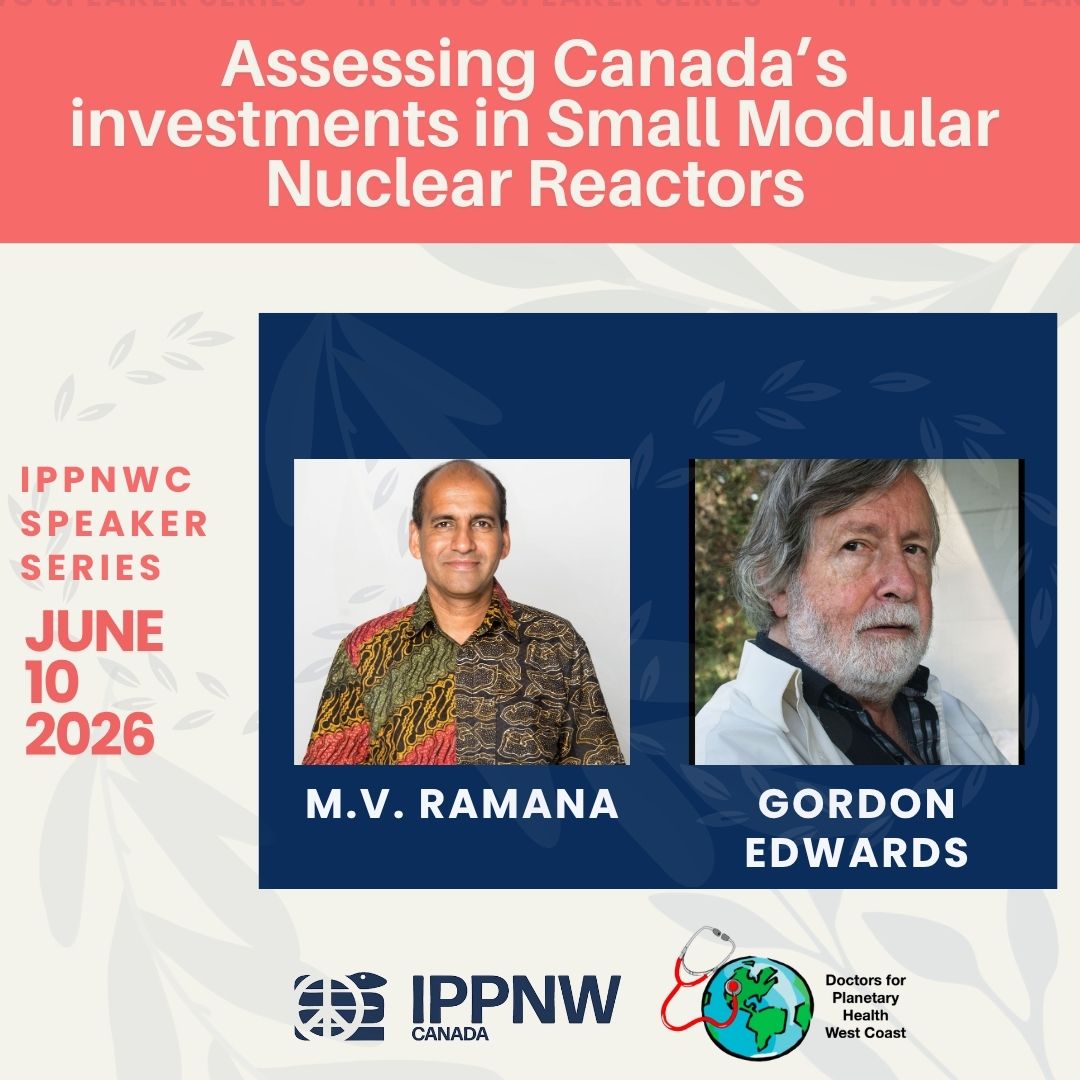
10 June – Assessing Canada’s Investments in Small Modular Nuclear Reactors – https://zoom.us/meeting/register/IiqHA5feRhaEBycOLNTJlA#/registration


Cuba Is Not a Failed State – It Is a Besieged State
PETITION: “Global Appeal to Endorse Palestinian Right of Return of Refugees”
To see nuclear-related stories in greater depth and intensity – go to https://nuclearinformation.wordpress.com
-
Archives
- June 2026 (89)
- May 2026 (306)
- April 2026 (356)
- March 2026 (251)
- February 2026 (268)
- January 2026 (308)
- December 2025 (358)
- November 2025 (359)
- October 2025 (376)
- September 2025 (257)
- August 2025 (319)
- July 2025 (230)
-
Categories
- 1
- 1 NUCLEAR ISSUES
- business and costs
- climate change
- culture and arts
- ENERGY
- environment
- health
- history
- indigenous issues
- Legal
- marketing of nuclear
- media
- opposition to nuclear
- PERSONAL STORIES
- politics
- politics international
- Religion and ethics
- safety
- secrets,lies and civil liberties
- spinbuster
- technology
- Uranium
- wastes
- weapons and war
- Women
- 2 WORLD
- ACTION
- AFRICA
- Atrocities
- AUSTRALIA
- Christina's notes
- Christina's themes
- culture and arts
- Events
- Fuk 2022
- Fuk 2023
- Fukushima 2017
- Fukushima 2018
- fukushima 2019
- Fukushima 2020
- Fukushima 2021
- general
- global warming
- Humour (God we need it)
- Nuclear
- RARE EARTHS
- Reference
- resources – print
- Resources -audiovicual
- Weekly Newsletter
- World
- World Nuclear
- YouTube
-
RSS
Entries RSS
Comments RSS
 nuclear-news