Britain is creating a mountain of nuclear waste it doesn’t know what to do with.
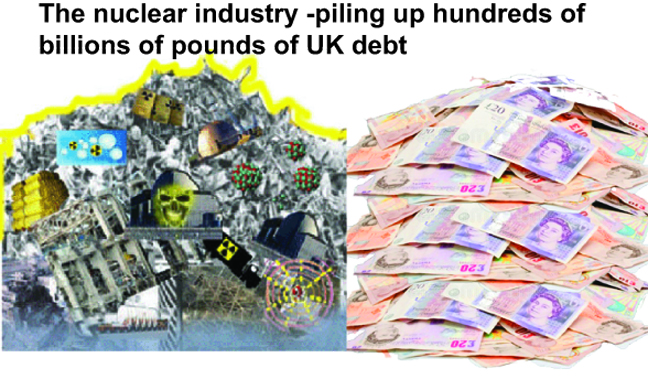
The UK is expected to accrue enough waste to fill four Wembley Stadiums
Jonathan Leake, Energy Editor. 03 May 2026
For Ed Miliband, these were the announcements he’d been wanting
to make for years. Britain was entering a new “golden age of nuclear”,
he said earlier this year. The Energy Secretary pledged to strip away
planning delays, committing to building a generation of small modular
reactors (SMRs).
The industry was delighted. Rolls-Royce was signed up by
Miliband to build the first mini nuclear reactor on Anglesey in Wales.
Rivals began planning their own SMRs across Britain.
But amid the “golden
age” branding and political hype, one major issue remains embarrassingly
unresolved. If all the planned new reactors get built, as well as the giant
ones under construction at Hinkley in Somerset and Sizewell in Suffolk, the
UK will have to work out what to do with a mountain of radioactive waste.
Some 137,000 cubic metres of waste across dozens of UK sites – including at
Sellafield, Britain’s main nuclear waste facility on the Cumbrian coast –
awaits a ministerial decision on how best to dispose of it. A significant
portion of that waste – enough to fill the Royal Albert Hall 1.5 times over
– has been sitting around since the 1960s.In the next few decades, the
level of waste is expected to swell to 4.5 million cubic metres, a 30-fold
increase, as current and past nuclear stations are decommissioned. That’s
enough to fill four Wembley Stadiums.
For the hottest waste – about 750,000
cubic metres worth – the plan is to bury it in a geological repository.
This will probably be tunnelled into the seabed off Cumbria. The Nuclear
Decommissioning Authority admits it is a job that will take until at least
2130 and cost a fortune.
SMRs and the planned advanced modular reactors may
generate more waste for a given power output, experts claim. The physics is
simple. Smaller reactors have a proportionately larger surface area – so
more of the internal radiation escapes. As it strikes surrounding equipment
and buildings, they too will become highly radioactive. A recent research
paper co-authored by Prof Alison Macfarlane, the former chairman of the US
Nuclear Regulatory Commission, included a warning that SMRs “will
increase the volume of nuclear waste in need of management and disposal by
factors of two to 30”.
Paul Dorfman, a Sussex University radiation expert
who advises the Ministry of Defence on dismantling nuclear submarines, says
this is not happening. He points out that the Department for Energy
Security and Net Zero (DESNZ)’s waste inventory omits waste that will arise
from the new Hinkley and Sizewell nuclear stations and from any SMRs that
are built.
Nuclear Waste Services, the government body charged with
building the repository, expects to start construction of a geological
disposal facility around 2040, beginning operations in the late 2050s and
operating through to 2200. Industry experts are sceptical of that
timetable. Insiders warn that this relies on Treasury approval for the
massive cost – which will always be a struggle. It is a cost that is only
likely to rise. In 2024, the Nuclear Decommissioning Authority estimated
Britain’s nuclear waste clean-up operation would cost £199bn. Last year, it
increased that to £216bn. However, the real cost – once a century of
inflation is added, along with waste from a new generation of reactors –
will be far beyond that.
Telegraph 3rd May 2026, https://www.telegraph.co.uk/business/2026/05/03/britain-creating-mountain-nuclear-waste-doesnt-know/
“We are waiting for Nuclear Waste Services to Come Up with Recommendations on Siting….”

Marianne Birkby, May 02, 2026, https://radiationfreelakeland.substack.com/p/we-are-waiting-for-nuclear-waste
“We are waiting for Nuclear Waste Services to Come Up with Recommendations on Siting….”
But meanwhile ‘we are already building new nuclear reactors which would produce even hotter nuclear wastes. Hot nuclear wastes are in the pipeline for which there is no “away” in blatant disregard of the Flowers Report: “There should be no commitment to a large programme of nuclear fission power until it has been demonstrated beyond reasonable doubt that a method exists to ensure the safe containment of long-lived highly radioactive waste for the indefinite future.”
Well it is safe to say that not only is there reasonable doubt that a method exists as no country has demonstrated beyond reasonable doubt that they can contain high level wastes indefinitely without repackaging – but there is also no where NO WHERE willing to be the ultimate nuclear guinea pig in the UK. Unless that is you count the four members of Copeland now Cumberland Council that said on behalf of the region, ‘hey yes let’s sacrifice the safety of Cumbria and her neighbours for nuclear £bungs’.
Good on Wera Hobhouse LibDem MP for Bath for asking the questions.. Click for video on facebook
Inside the bizarre race to secure Earth’s nuclear tombs
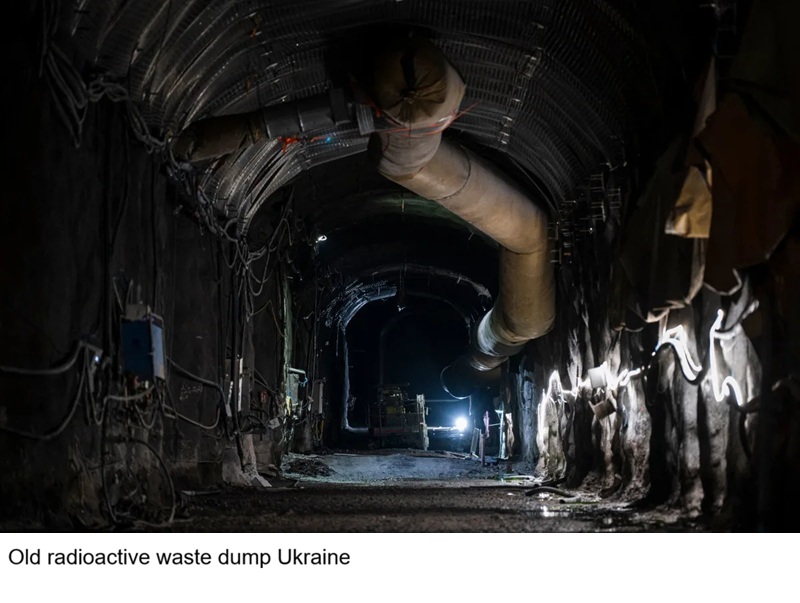
Our generation must find a way to bury the waste very deep to avoid radioactive pollution or exposure to people and animals up to one million years into the future.”
With nuclear energy production increasing globally, the problem of what to do with the waste demands a solution. But where do you store something that stays dangerous for thousands of years?
Jheni Osman, Science Focus, May 1, 2026
Uniformed guards with holstered guns stand at the entrance and watch you lumber past. Ahead lies a wasteland of barren metal gantries, dormant chimney stacks and abandoned equipment.
You trudge towards the ruins of a large, derelict red-brick building. Your white hazmat suit and heavy steel-toe-capped boots make it difficult to walk. Your hands are encased in a double layer of gloves, your face protected by a particulate-filtering breathing mask. Not an inch of flesh is left exposed.
Peering into the building’s gloomy interior, the beam from your head torch picks out machinery and vats turned orange with rust. On a wall nearby, a yellow warning sign featuring a black circle flanked by three black blades reminds you of the danger lurking inside.
Apart from the sound of your own breathing behind your mask, the only thing you can hear is the crackling popcorn of your Geiger counter.
This is what entering the Prydniprovsky Chemical Plant is like for nuclear researchers, including Tom Scott, professor of materials at the University of Bristol and head of the UK Government’s Nuclear Threat Reduction Network.
Prydniprovsky was once a large Soviet materials and chemicals processing site on the outskirts of Kamianske in central Ukraine. Between 1948 and 1991, it processed uranium and thorium ore into concentrate, generating tens of millions of tonnes of low-level radioactive waste.
When the Soviet Union dissolved, Prydniprovsky was abandoned and fell into disrepair.
“The buildings are impressively awful and not for the faint-hearted,” says Scott. “As well as physical hazards, such as gaping holes in the floor, there’s no light or power. And obviously there are radiological hazards. Until very recently, the Ukrainian Government didn’t have a clue what had gone on at the site, so there were concerns about the high radiation levels and ground contamination.”…………………………………”
Scott and his team are known as industrial nuclear archaeologists, and they’re working to find, characterise and quantify the ‘legacy’ radioactive waste at sites around the world.
“High-level radioactive waste gives off a significant amount of radioactivity, sufficient to make humans sick if they get too close,” he says. “Some of this waste will be dangerously radioactive for very long periods of time, meaning that it needs to be physically kept away from people and the environment to ensure that no harm is caused.”
But finding legacy waste like this, which has been amassing since the 1940s, is only part of the challenge. Once it’s been found, it has to be isolated and stored long enough for it to no longer pose a threat. And that’s not easy.
“Currently we’re storing our high-level wastes above ground in secure, shielded facilities,” Scott says. “Such facilities need to be replaced every so often because buildings and concrete structures can’t last indefinitely.”
Safely storing the nuclear waste that already exists is only the start of the problem, however. With the world moving away from fossil fuels towards low-carbon alternatives, nuclear energy production is set to increase, which means more waste is going to be produced – a lot more……………………………………………………
Safe spaces
In the UK, most nuclear waste is currently sent to Sellafield, a sprawling site in Cumbria, in the north-west of England, with about 11,000 employees, its own road and railway network, a special laundry service for contaminated clothes and a dedicated, armed police force (the Civil Nuclear Constabulary).
Sellafield processes and stores more radioactive waste than anywhere in the world.
But more hazardous material is on the way, much of which will come from the new nuclear power station being built at Hinckley Point in Somerset. To keep pace, experts have been hunting for other, much stranger, disposal solutions.
t’s a challenge for nuclear agencies all around the world. All sorts of proposals have been put forward, including some bizarre ideas like firing nuclear waste into space. (The potential risk of a launch failure showering the planet with nuclear debris has silenced that proposal’s supporters.)
So far, the most plausible solution is putting the waste in special containers and storing them 200–1,000m (660–3,280ft) underground in geological disposal facilities (GDFs). Eventually, these GDFs would be closed and sealed shut to avoid any human intrusion.
These ‘nuclear tombs’ are the safest, most secure option for the long-term and minimise the burden on future generations.
“In the UK, around 90 per cent of the volume of our legacy waste can be disposed of at surface facilities, but there’s about 10 per cent that we don’t currently have a disposal facility for. The solution is internationally accepted as being GDFs,” says Dr Robert Winsley, design authority lead at the UK’s Nuclear Waste Services.
“We estimate that about 90 per cent of the radioactive material in our inventory will decay in the first 1,000 years or so. But a portion of that inventory will remain hazardous for much longer – tens of thousands, even hundreds of thousands of years.
“GDFs use engineered barriers to work alongside the natural barrier of stable rock. This multi-barrier approach isolates and contains waste, ensuring no radioactivity ever comes back to the surface in levels that could do harm.”
But how do you keep that radioactivity in the ground? Radioactive waste is typically classified as either low-, intermediate- or high-level waste………………………………………………………………………………..
Rock solid
The hunt is also on to find facilities with bedrock that can withstand events such as wars and natural disasters (‘short-term challenges’, geologically speaking). Sites that won’t change dramatically over the millennia needed for nuclear waste to no longer pose a risk.
“A misconception is that we’re looking for an environment that doesn’t change, but the reality is the planet does change, very slowly,” says Stuart Haszeldine, professor of carbon capture and storage at the University of Edinburgh.
“Our generation must find a way to bury the waste very deep to avoid radioactive pollution or exposure to people and animals up to one million years into the future.”
To achieve this, the site ideally needs to be below sea level. If it’s above sea level, rainwater seeping down through fractures in the rock around the site might become radioactive and eventually find its way to the sea.
When this radioactive freshwater meets the denser saltwater, it’ll float upwards, posing a risk to anything in the water above.
Another challenge is predicting future glaciations, which happen roughly once every 100,000 years. During such a period, the sort of glaciers that cut the valleys in today’s landscape could form again, gouging new troughs in the bedrock that might breach an underground disposal facility.
“Accurate and reliable future predictions depend on how well you understand the past,” says Haszeldine.
“Typically, repository safety assessments cover a one-million-year timeframe, and regulations require a GDF site to cause fewer than one human death in a million for the next million years. Exploration doesn’t search for a single best site to retain radioactive waste, but one that’s good enough to fulfil these regulations.”
Hiding places……………………………………………………………………………………………………….
Hide and seek
But even after you’ve found a suitable site and buried the radioactive material safely inside it, you still need to warn future generations about what’s hidden inside.
The trouble is, even if humans are still around in a million years’ time, there’s no guarantee the languages our ancestors speak, or the symbols they use, will be anything like those of today…………………………………………………………………………………………………………………………………………………. https://www.sciencefocus.com/planet-earth/inside-the-bizarre-race-to-secure-earths-nuclear-tombs
Where are the AUKUS nuclear waste costings (let alone the dump sites)?

Australian Submarine Agency ASA is looking after a $368B project. And the Agency is in a mess.
by Rex Patrick | Apr 20, 2026 , https://michaelwest.com.au/where-are-the-aukus-nuclear-waste-costings-let-alone-the-dump-sites/
Defence is supposed to provide ‘cradle to grave’ costings for proposed capability before a procurement is approved. That doesn’t seem to have happened for AUKUS nuclear waste storage and disposal. Transparency Warrior Rex Patrick is pursuing answers.
A simple request
Imagine for a moment that you were the defence minister, and knowing that all defence capabilities must be costed from cradle to grave, you asked the Australian Submarine Agency for the latest cost estimates for a solution for the treatment and storage of high-level radioactive waste from AUKUS.
You’d expect that it might take a day or two to get the message to Defence and to get a response back to the ministerial wing of Parliament House.
In July 2025 MWM requested access under Freedom of Information laws to the latest cost estimates for a solution for the treatment and storage of high-level radioactive waste from AUKUS. The Agency did not answer the FOI request and its lack of response was referred to the Information Commissioner.
The Information Commissioner is trying to encourage the ASA to engage in a little bit of transparency. But … the Agency just can’t find a latest costing.
We’re disorganised
In a response to an engagement with MWM, the Agency has recently advised:
Preliminary searches have been carried out within one branch of one division of the ASA to identify documents falling within the scope of your request. That branch has advised that approximately 3,000 documents are potentially in scope. They would require manual examination to determine whether they contain information relating to the scope of your request. The documents within this set vary significantly in length and format and may comprise multiple pages requiring individual review.
Further, any cost information in relation to the scope of your request is likely to be dispersed across multiple documents and along timeframes, may appear in differing levels of detail, and may not be directly comparable. As a result, identifying which documents contain relevant cost information would require extensive searching, detailed examination, contextual analysis, and judgment.
Quite unbelievable!
Or is it unbelievable?
ASA is looking after a $368B project. And the Agency is in a mess.
In November 2024 the Government asked Boston Consulting Group to take a look at the organisational structure of the Australian Submarine Agency (ASA). A contract was signed for 2.7. million. In April 2025 it was amended to $7.4 million. Three months later it was amended again to a whopping $12.1 million.
In parallel the defence minister asked former Defence Secretary Dennis Richardson to undertake an urgent top-to-bottom review of the ASA amid serious concerns about how it was managing AUKUS.
None of that seems to have helped.
Budget up just to keep up
The Government’s National Defence Strategy and Integrated Investment Program was released on the same day that ASA advised MWM that it had no idea where to find its AUKUS high level radioactive waste costs.
The Integrated Investment Proposal laid out the Government’s estimates of, amongst other programs, the AUKUS and Collins Class submarine costs for the coming decade.
The 53-to-63 billion dollar AUKUS budget published in 2024 has grown to 71-to-96 billion (a change of 52% for the upper band). The 4-to-5 billion dollar Collins Submarine upgrade costs has grown to 8-to-11 billion dollar (change of 120% for the upper band).
Any thought that the Government is increasing the Defence budget to expand the Defence Force’s capabilities is illusory. The increase will struggle just to deal with cost blow outs.
Or implausible?
The numbers associated with the very long term disposal of AUKUS nuclear waste will be big. If the Minister asked for the latest cost estimates for a solution for the treatment and storage of high-level radioactive waste from AUKUS he’d get it almost instantly.
“The estimate must exist. “
The approach taken by the ASA in responding to MWM’s request reminds me of a teenager trying hid a bad school report from their parents. The kid simply doesn’t realise that mum and dad will find out eventually.
MWM is not about to give up.
Of course, there is a small possibility that we are wrong and there is no estimate. Maybe the Minister has told the ASA he won’t ask for one and they shouldn’t generate one.
I guess we’ll find out.
Finland Is About to Open the World’s First Permanent Nuclear Waste Site
By Haley Zaremba, Oil Price, – Apr 13, 2026
- Finland’s Posiva is on the verge of receiving an operating license for the world’s first permanent nuclear waste disposal facility, built 400 meters underground in 1.9-billion-year-old bedrock at a cost of 1 billion euros.
- Global spent nuclear fuel stocks are set to surge alongside the nuclear energy renaissance, but as of 2024, the U.S. alone faces a $44.5 billion liability with no permanent storage solution in place.
- The U.S. is inching forward: ARPA-E’s SCALEUP Ready program has directed $40 million to two deep borehole disposal projects, including one from Deep Isolation, which calls it the biggest milestone in the company’s history.
Nuclear energy is experiencing a resurgence in popularity on a global scale, thanks to a resurgence in energy security anxieties worldwide. The AI boom has majorly ramped up energy demand projections around the world at the same time that climate pledges are inching dangerously close with perilously little progress to show. Add to this a near-endless cycle of energy crisis and geopolitical conflict, and you’re presented with a majorly heightened energy trilemma: how to source energy that is sufficient, affordable, and sustainable. To solve this puzzle, nuclear energy — a reliable round-the-clock source of carbon-free energy production — can no longer be ignored.
But a nuclear renaissance, while a no-brainer for energy security and climate goals, will also come with a major uptick in nuclear waste, posing a big problem for public health and safety, as well as for the taxpayers that fund its maintenance. Between the 1950s and 2022, it is estimated that nearly 400,000 tons of spent nuclear fuel were generated on a global scale. Of those 400,000 tons, one-third has been ‘recycled’ in a complex and costly process, and two-thirds remain in temporary storage, either in nuclear fuel pools on-site at individual nuclear energy plants or in dry cask storage sites.
However, neither of these storage options are considered to be permanent solutions, and the global quantity of radioactive nuclear waste is about to explode. In fact, the policy and science behind the storage and disposal of spent nuclear fuel remains a critical liability at a global scale, and especially in the United States. As of 2024, it was estimated that the United States’ spent fuel liability clocked in at a jaw-dropping $44.5 billion.
A report from the National Center for Energy Analytics published earlier this month blasts the United States, the world’s biggest nuclear energy producer, for its kick-the-can-down-the-road approach to this critical issue, decrying that “Federal [nuclear waste] management has been a major black eye and policy failing for nuclear energy generation and technology.”
However, the world is, at long last, currently making great progress toward establishing the world’s first-ever permanent nuclear waste disposal site. In fact, a site on the West Coast of Finland is expecting to receive its license to begin operations in just a few months, an incredibly short stretch of time compared to the more-than two decades that the facility has been under construction. The facility will house canisters of spent fuel 400 meters underground in a remote region, housed in earthquake-resistant 1.9 billion-year-old bedrock……………………………………………………………………………………………………………………………. https://oilprice.com/Alternative-Energy/Nuclear-Power/Finland-Is-About-to-Open-the-Worlds-First-Permanent-Nuclear-Waste-Site.html
Finland’s plan to bury spent nuclear waste carries risk to future generations.
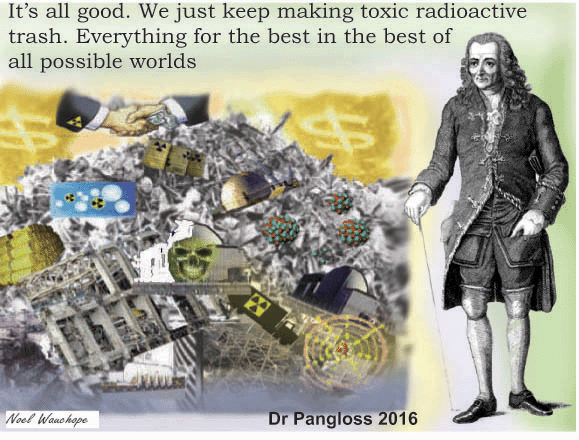
Overall, the risks associated with nuclear waste repositories will mainly affect “future generations,”
“…………………After decades of construction, the world’s first facility for permanently disposing spent nuclear fuel is set to begin operations in Finland, becoming a final resting place for tons of dangerous radioactive waste.
Construction of Onkalo – which means “cave” in Finnish – began on the west coast in 2004. It sits on the secluded island of Olkiluoto, in a dense wooded area. The closest town is Eurajoki, about 15 kilometers (9.3 miles) inland, which is home to about 9,000 people. Many work at the nuclear power plant or storage facility.
The 1 billion euro ($1.2 billion) project could soon become operational, with authorities expected to grant a license within months.
The Associated Press took a tour of the facilities where humans soon will not be allowed to tread.
Pere said the site – near three of Finland´s five nuclear reactors – was chosen for its migmatite-gneiss bedrock, which is known for its high stability and low risk of earthquakes.
“It´s the isolation from civilization and mankind on the surface that´s important,” he said, standing in a darkened disposal tunnel, soon to be sealed from humanity. “We can dispose of the waste more safely than by storing it in facilities located on the ground.”
Using unmanned machinery at a nearby encapsulation plant, radioactive rods will be sealed in copper canisters and then buried deep in tunnels over 400 meters underground, then packed in with “buffer” layers of water-absorbing bentonite clay.
Posiva, the company responsible for the long-term management of Finland’s spent nuclear fuels, says Onkalo can store 6,500 tons of spent nuclear fuel.
The final disposal canisters are designed to remain sealed “long enough for the radioactivity of spent fuel to decrease to a level not harmful to the environment,” it said………………………………….
Posiva estimate it will take hundreds of thousands of years before the radioactivity falls to normal, background levels.
According to a 2022 report by the International Atomic Energy Agency, almost 400,000 tons of spent fuel have been produced globally since the 1950s, with two-thirds remaining in temporary storage and one third being recycled in a complex process.
The world´s spent nuclear fuel is currently temporarily stored inside spent nuclear fuel pools at individual reactors and at dry cask storage sites above ground.
There is currently no permanent underground disposal facility for commercial nuclear waste operational anywhere in the world. Sweden began building a repository in Forsmark – about 150 kilometers north of Stockholm – last year, but it´s not expected to open until the late 2030s. France´s Cigéo project is yet to begin construction and has seen opposition.
The Onkalo facility is expected to operate until the 2120s, when it will be permanently sealed.
But Edwin Lyman, director of nuclear power safety at the Union of Concerned Scientists, an American nonprofit organization, warned that geologic disposal of nuclear waste is still fraught with “uncertainties.”
“My view of nuclear waste disposal is that there´s no good option, but it´s important to find the least bad option, and geologic disposal in general is going to be the least bad option among a range of, you know, bad options,” he said.
Lyman said that the copper canisters that contain the spent nuclear fuel will eventually corrode, adding that there are different scientific opinions about how fast that could happen.
“The hope is that is such a slow process that most of the radioactive material will have decayed away by then. But again, there are uncertainties,” he said.
Still, Lyman said that permanently storing spent nuclear fuel deep underground is better than “leaving it on the surface of the Earth forever,” because nuclear material kept above ground “is vulnerable to sabotage.”
“For many decades after spent fuel is discharged from a reactor, it´s so radioactive that it makes transporting and reprocessing very difficult,” Lyman said. But eventually the main radioactive component will decay, he added, making it less risky to handle.
“So over time the plutonium becomes more accessible either to terrorists or to a country that may want to use it,” he said, adding that the only way a terrorist — or a state — could theoretically use the material for a nuclear bomb would be if they had “an off-site reprocessing capability.”
During reprocessing, spent nuclear fuel is separated to recover uranium and plutonium to recycle it for use in new fuel. The process also carries proliferation risks because the separated plutonium could potentially be diverted to build a nuclear weapon.
Overall, the risks associated with nuclear waste repositories will mainly affect “future generations,” Lyman concluded.
To deal with this challenge, an interdisciplinary field of study called nuclear semiotics has been established that looks into developing warning signs about nuclear waste repositories that can be understood by humans 10,000 years from now – or much longer given that it takes hundreds of thousands of years before nuclear waste is no longer dangerous.

For reference: the first humans lived around 300,000 years ago. The earliest writing system was developed in Mesopotamia roughly 5,200 to 5,400 years ago. Stonehenge in Britain is around 5,000 years old, while the Giza pyramids in Egypt are approximately 4,500 years old……………………………………………………….. https://www.dailymail.co.uk/wires/ap/article-15717853/Finlands-plan-bury-spent-nuclear-waste-carries-risk-future-generations.html
Trump accelerates new nuclear warhead production, nearly doubles funding for plutonium “pit” bomb core production.
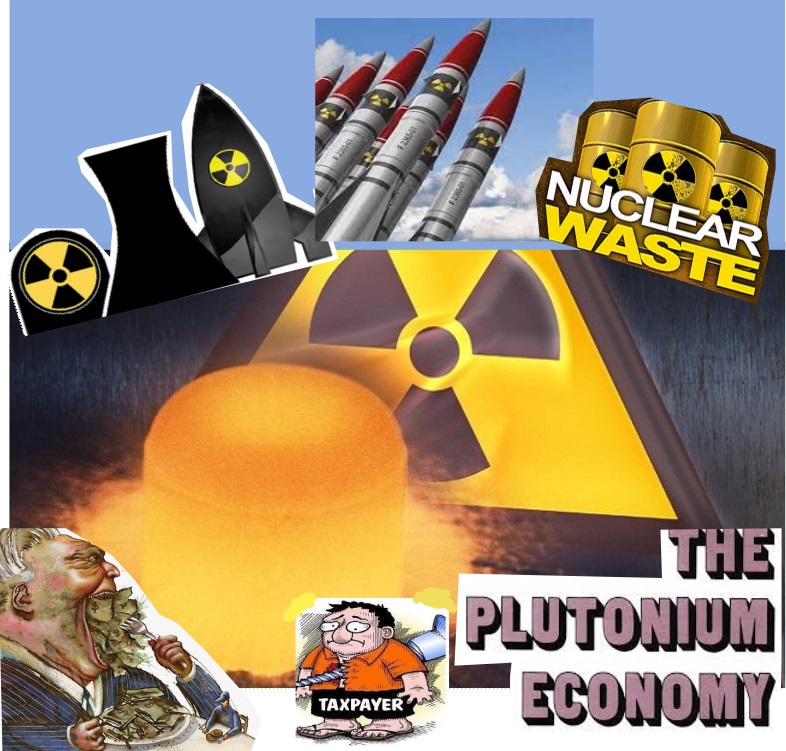
The Pentagon has always explicitly rejected “minimum-deterrence” in favor of keeping “counterforce” capabilities to wage nuclear war. This is why the U.S. has thousands of nuclear weapons and a $2 trillion “modernization” program to keep them forever. Indefinitely maintaining and expanding nuclear capabilities is contrary to the 1970 NonProliferation Treaty
None of this future pit production is to maintain the safety and reliability of the existing stockpile, but instead is entirely for new-design nuclear weapons
The Trump 2027 budget speeds up this backwards trend. For nuclear warhead production:
April 6, 2026, Jay Coghlan, Nuclear Watch, New Mexico, https://nukewatch.org/wp-content/uploads/2026/04/Trump-Accelerates-Nuclear-Warhead-Production-PR.pdf
Santa Fe, NM – The Trump Administration has released military budget numbers for the federal fiscal year 2027 (which begins October 1, 2026). This still current fiscal year 2026 is already a record breaker for military spending at one trillion dollars. Trump now proposes nearly $1.5 trillion in military spending in FY 2027, of which $1.1 trillion is base funding for the Department of War and an additional $350 million is through so-called budget reconciliation.
On top of all this, Trump will likely seek $200 billion in supplementary appropriations for the war in Iran, for a potential total of $1.7 trillion in military spending in FY 2027 (a 70% increase above FY 2026). At the same time, there is a 10% across-the-board cut to non-military spending. Much of the remaining discretionary funding for education, wildfire protection, environmental regulations, health care, etc., will be constrained by a focus on border control and immigration enforcement.
Trump proposes $53.9 billion for the Department of Energy (DOE) in FY 2027. Sixty-one per cent ($32.8 billion) is for its semi-autonomous nuclear weapons agency, the National Nuclear Security Administration (NNSA). DOE’s Office of Science is gutted by $1.1 billion which “eliminates funding for climate change and Green New Scam research.” DOE’s Office of Energy Efficiency and Renewable Energy is eliminated. Nationwide cleanup of legacy Cold War radioactive and toxic wastes at DOE sites is cut by $386 million to $8.2 billion ($3 billion of which is reserved for the Hanford Site; other site-specific cleanup budget numbers are still not yet available).
With respect to the Department of Energy’s nuclear weapons agency, the Trump FY 2027 budget:
“… focuses NNSA on its most important mission—producing a robust, credible, and modern nuclear deterrent that protects the American people. The United States must maintain and expand its set of nuclear capabilities that allow the President flexibility to protect the homeland and deter adversaries. Specifically, the Budget makes strong investments to develop new warheads that would bolster deterrence, modernize NNSA’s supporting infrastructure, and extend the life of existing warheads.”
The Pentagon has always explicitly rejected “minimum-deterrence” in favor of keeping “counterforce” capabilities to wage nuclear war. This is why the U.S. has thousands of nuclear weapons and a $2 trillion “modernization” program to keep them forever. Indefinitely maintaining and expanding nuclear capabilities is contrary to the 1970 NonProliferation Treaty, which required the nuclear weapons powers to “to pursue negotiations in good faith on effective measures relating to cessation of the nuclear arms race at an early date and to nuclear disarmament…” After more than a half-century that has never even begun. An NPT Review Conference, held every five years, is scheduled to begin April 27 at the United Nations. It is widely expected to fail for the third time over fifteen years to make any progress whatsoever toward nuclear disarmament.
The Trump 2027 budget speeds up this backwards trend. For nuclear warhead production:
• A feasibility study for a new B61-13 limited earth-penetrating bomb is funded at $46.4 million in FY 2027. A full budget request of $1 billion is expected for FY 2028 followed by an average of $870 million for each fiscal year 2029 – 2031.
• The W80-4 warhead for the Long-Range Stand-Off weapon (i.e., air-launched cruise missile) is funded at $1 billion in FY 2027. There is an average of $970 million in projected costs for each fiscal year 2028-2031.
• No funding is requested in FY 2027 for the W80-5 warhead for the Sea-Launched Cruise Missile. However, there is an average of $1.4 billion in projected costs for each fiscal year 2028-2031.
• The W87-1 nuclear warhead program is for the new Sentinel intercontinental ballistic missile, with likely multiple warheads for each missile (which is particularly dangerous and destabilizing). The Sentinel ICBM itself is already massively over budget. The W87-1 warhead program is increased 41% from $650 million in FY 2026 to $913 million in FY 2027, with an astounding average of $3.5 billion in projected costs for each fiscal year 2028-2031.
• The submarine-launched W93 nuclear warhead program, which the United Kingdom has actively lobbied for, is increased 37% from $807 million in FY 2026 to $1.1 billion in FY 2027. There is an average of $1.95 billion in projected costs for each fiscal year 2028-2031.
• There is a new “Future Programs” budget line item of $99.8 million in FY 2027 for feasibility studies for other new-design nuclear weapons, followed by an average of $92 million for each fiscal year 2028-2031.
Plutonium “pit” bomb core production: Plutonium pits are the essential “triggers” for modern nuclear weapons. Pit production has been the chokepoint for resumed industrial-scale nuclear weapons production by the U.S. ever since an FBI raid investigating environmental crimes stopped operations at the Rocky Flats Plant in 1989.
Trump’s FY 2027 budget proposes:
An 83% increase in funding for pit production at the Los Alamos National Laboratory from $1.3 billion in FY 2026 to $2.4 billion in FY 2027. There is an average of $2.3 billion in projected costs for each year FY 2028-2031. NNSA has directed LANL to double pit production to at least 60 pits per year because of increasing delays at the Savannah River Site (SRS).

• An 87% increase in funding for pit production at SRS from $1.2 billion in FY 2026 to $2.25 billion in FY 2027. There is an average of $2.5 billion in projected costs for each year FY 2028-2031. The Savannah River Plutonium Processing Facility’s upper range in estimated costs is now $25 billion, which would make it by far the most expensive building in U.S. history. Gloveboxes at SRS for canceled “dilute and dispose” of surplus plutonium are being diverted to “purification instead of disposition” to create feedstock for manufacturing new plutonium pits. There is only one glovebox left at SRS to process and remove excess plutonium, which could lead to resumed legal conflict with the State of South Carolina.
Total “Plutonium Modernization” for expanded plutonium pit production at both sites is increased 87% from $2.6 billion in FY 2026 to $4.9 billion in 2027. There is an average of $5.1 billion in projected costs for each year FY 2028-2031.
None of this future pit production is to maintain the safety and reliability of the existing stockpile, but instead is entirely for new-design nuclear weapons. This is despite the fact that in 2006 independent experts found that pits have serviceable lifetimes of at least 100 years. The average age of pits is now around 43 years. NNSA has avoided any full pit lifetime studies since 2006 (however, a new one is reportedly pending).
At least 15,000 pits are already stored at NNSA’s Pantex Plant. The independent Government Accountability Office has repeatedly reported that NNSA has no credible cost estimates for pit production, its most expensive and complex program ever. New pits cannot be tested because of the existing international testing moratorium, which could erode confidence in the stockpile. Or, conversely, new pits could prompt the U.S. to resume testing (which Trump has already threatened), after which other nuclear weapons powers would surely follow, thereby rapidly accelerating the new nuclear arms race.
Other nuclear weapons production programs:
• The “Tritium and Defense Fuels” program is increased by 79% from $520 million in FY 2026 to $881 million in 2027. There is an average of $1.8 billion in projected costs for each fiscal year 2028-2031.
“Non-Nuclear Capability Modernization” for non-nuclear components manufacturing, primarily at the Sandia National Laboratories, is increased 130% from $195.5 million in FY 2026 to $449 million in FY 2027. There is an average of $370 million in projected costs for each fiscal year 2028-2031.
• “Weapons Dismantlement and Disposition” is increased 10% from $82.3 million in FY 2026 to $90.7 million in FY 2027 (a mere 1.3% of total warhead funding). Rather than being a worthy step toward nuclear disarmament, the stated objective of weapons dismantlements is to “recover critical components and materials to support existing weapon programs, Naval Reactors, and other national priority missions.” There is an estimated backlog of up to 1,500 retired warheads to dismantle and dispose. However, NNSA’s Pantex Plant is so busy rebuilding existing nuclear warheads with new military capabilities that dismantlements have been at a historic low since the end of the Cold War.
In all, NNSA’s budget category of “Total Weapons Activities” is increased 35% from $20.4 billion in FY 2026 to $27.4 billion in FY 2027. There is an average of $29 billion in projected costs for each fiscal year 2028-2031.
Jay Coghlan, Director of Nuclear Watch, commented, “New nuclear weapons won’t give us more security as our nation is being hollowed out by tax cuts for the ultrarich, cuts to domestic programs, and the gutting of programs to address adverse climate change. It is way past time for the nuclear weapons powers to honor their obligations under the 1970 NonProliferation Treaty to negotiate verifiable nuclear disarmament instead of keeping nuclear weapons forever. We should be cleaning up, not building up new nuclear weapons.”
Sources:……………………………………………………………..
Blocking Iran’s Other Option: A Plutonium Bomb

By Henry Sokolski, April 03, 2026, https://www.realcleardefense.com/articles/2026/04/03/blocking_irans_other_option_a_plutonium_bomb_1174454.html
America and Israel want to prevent Tehran from getting a bomb. That’s why the Pentagon and Israel Defense Forces continue to target Tehran’s ability to make weapons uranium. Washington and Jerusalem claim they have obliterated Tehran’s uranium enrichment capability. Perhaps. But, Iran has another pathway to a bomb.
U.S. and Israeli leaders have yet to fully consider Iran’s option to make nuclear weapons from plutonium, a material Iran can extract from spent fuel at its largest reactor at Bushehr. Washington should make sure that Iran doesn’t remove Bushehr’s spent fuel and strip out the plutonium. This can and should be done without bombing the plant.
ROSATOM, the Russian firm that built and has operated Bushehr since 2011, says there are 210 tons of spent reactor fuel at the plant. If you check the ROSATOM figure against International Atomic Energy Agency (IAEA) reactor performance logs, the 210 tons of waste contain enough plutonium to make more than 200 nuclear weapons – as many or more than SIPRI estimates Israel has.
It would not take Iran long to remove Bushehr’s spent fuel and chemically strip the plutonium out. In 1977, the U.S. General Accounting Office evaluated leading U.S. nuclear chemist Floyd Culler’s proposed quick and dirty method of plutonium chemical separation. The facility Culler described was 130 feet by 60 feet by 30 feet (approximately the size of a standard basketball court). It employed technology little more advanced than that required for the production of dairy and the pouring of concrete. Such a plant could fit within a large warehouse and would take no more than six months to build. Until the plant was operational, it would send off no signal and could separate a bomb’s worth of plutonium after only ten days of operation. After that, the plant could separate a bomb’s worth of plutonium in a day.
Two more steps are needed to convert separated plutonium into an insertable metallic core for a nuclear implosion device First, turn the plutonium solution into an oxide and another to convert this oxide into metal. Second, cast and machine this material into a hemisphere. Assuming Iran already had an (implosion) device on the ready, the completion of a bomb could take one to two weeks. This plutonium weapon production timeline is similar to what it would take to extract the uranium hexafluoride in the rubble at Isfahan and then to chemically convert that gas into insertable metal uranium bomb cores. For that reason, the Trump administration should pay as much attention to this back end of the fuel cycle as it is to the front-end, which features uranium enrichment.
What’s odd is that there’s been next to no public discussion of Iran exploiting the Bushehr plutonium option. This may be due to the popular myth that “reactor-grade plutonium” can’t be used to make workable bombs. Robert Selden and Bruce Goodwin, two of America’s top plutonium weapons designers, put this fable to rest, most recently in 2025. As the U.S. Department of Energy has explained, with Iran’s level of weapons sophistication it could use reactor-grade and produce Hiroshima or Nagasaki yields.
The U.S. government used to worry about this possibility. In 2004, the State Department spotlighted Bushehr as a worrisome nuclear weapons plutonium producer. Late in 2012, after Iran shut Bushehr down and withdrew all of the fuel – roughly 20 bombs-worth of near-weapons-grade plutonium – the Pentagon swung into action, launching surveillance drones over the reactor to make sure the plutonium-laden spent fuel didn’t leave the plant to be reprocessed elsewhere. The Iranians put the fuel back, but the concern that Iran was trying to pull a fast one remained.
Now, the Trump Administration is threatening to bomb the largest of Iran’s electrical generating plants, of which Bushehr is in the top ten. Bombing it, much less its spent fuel pond, however, would be a big mistake. The last thing the United States should risk is prompting a radiological release. NPEC-commissioned simulations indicate radiological releases from Bushehr’s reactor core could force the mandatory evacuation of tens of thousands to millions of Iranians. Attacking the spent fuel pond could result in even larger numbers. Of course, Bushehr would be a legitimate military target if it supported Iranian military operations. However, it doesn’t. Even before U.S. Israeli forces hit the site with two projectiles, the plant was on cold shutdown.
What, then, should our government do? First, the Pentagon should watch to make sure Iran does not remove any of the spent fuel at Bushehr. It could do this with space surveillance assets or, as it did in 2012, with drones. Second, any “peace” deal President Trump cuts with Tehran should include a requirement that there be near-real-time monitoring of the Bushehr reactor and spent fuel pond, much as the IAEA had in place with Iran’s fuel enrichment activities. The IAEA actually asked for this back in 2015. Iran refused. Unfortunately, President Obama didn’t push back. That was a mistake, one the Trump Administration should not continue to make.
Henry Sokolski is executive director of the Nonproliferation Policy Education Center. He was deputy for nonproliferation policy in the Department of Defense (1989–1993), and is the author of China, Russia, and the Coming Cool War (2024).
France plans inquiry as cost of nuclear waste project hits €33bn

After France raised the cost of its Cigéo nuclear waste storage project to €33.3 billion, an increase of more than €8 billion, authorities are preparing to open a public inquiry into the plan – which has long faced opposition from anti-nuclear groups.
01/04/2026 , By:RFI,
https://www.rfi.fr/en/france/20260401-france-plans-inquiry-as-cost-of-nuclear-waste-project-hits-%E2%82%AC33bn-cig%C3%A9o
The new estimated cost replaces a €25 billion figure set in 2016. It reflects updated costs and sits within a €26.1 to €37.5bn range set in May 2025 by the National Agency for Radioactive Waste Management, which is leading the project.
The government order, signed by Economy Minister Roland Lescure and Energy Minister Maud Brégeon, covers the entire lifespan of the site – from design and construction to operation and closure – over 151 years.
It puts the initial construction cost at €9.74 billion. Taxes linked to the project are estimated at €3.66 billion.
The revised estimate will be used as a reference by EDF, Orano and the Atomic Energy Commission, the three nuclear operators that fund the project under the “polluter pays” principle.
Deep underground
Cigéo is designed to store France’s most radioactive nuclear waste 500 metres underground at a site in Bure in eastern France. The site would hold 10,000 cubic metres of high-activity waste and 73,000 cubic metres of long-lived medium-activity waste produced by nuclear power plants.
When the cost was first set at €25 billion in 2016, based on earlier economic conditions, campaigners said it was “largely underestimated”.
The National Agency for Radioactive Waste Management filed a formal request for authorisation in January 2023. A final government decision is not expected before late 2027 or early 2028.
French media reports said the public inquiry had initially been planned for autumn and was still expected in early December when the ASNR, France’s nuclear safety and radiation watchdog, issued its final opinion on the construction authorisation request.
Race against the calendar
Speaking at a meeting of public inquiry commissioners in Euville on Thursday, Meuse prefect Xavier Delarue said the public inquiry would begin on 18 May.
He said around 50 elected officials had been consulted before the schedule was brought forward, with a strong response rate and 75 percent of the opinions returned favourable.
“There was every reason to launch the public inquiry,” he said.
Three commissioners, along with three alternates, have been appointed to examine the roughly 10,000-page file.
They will produce a report, which the agency must respond to by the end of the summer. “In September, I will write an overall report and send it to the ministry,” Delarue said.
Opposition pushback
Nine environmental organisations have criticised the decision and called for the consultation to be delayed.
In a joint statement, groups including Greenpeace France, France Nature Environnement and the Nuclear Phase-Out Network denounced “an unacceptable new attempt to push the project through” and said the file does not show that the project would be feasible and safe.
They also said the timetable reflects an electoral aim, with the goal of approving Cigéo before next year’s presidential election.
Scenario Analysis for Partitioning and Transmutation(P&T) in a Phase-out Scenario
In February 2025, the German Federal Agency for Disruptive Innovation
(SPRIN-D) published the “Implementation Study on an Accelerator-Driven
Neutron Source at the Site of a Former Nuclear Power Plant” (Houben et
al. 2025), proposing an alternative waste management option. This type of
radioactive waste management is often summarized under the broader term of
Partitioning and Transmutation (P&T).
The SPRIN-D study has been critically
assessed with respect to its assumptions, feasibility, and expected
benefits for Germany e.g. by the German Federal Ministry for the Safety of
Nuclear Waste Management (Bundesamt für die Sicherheit der nuklearen
Entsorgung (BASE) 2025).
The P&T scenarios in the SPRIN-D study address
only a narrow and highly constrained case. They do not provide a
transparent, reproducible nationwide system description for the treatment
of the full German high-level waste inventory (HLW). Additionally key
modelling parameters and interim results are only partly documented. Under
the explicit assumption of hypothetical technical feasibility, based on
documented parameters and literature values, this INRAG study estimates
what a national implementation of a P&T scenario in Germany based on
Transmutex’ START concept could entail.
After briefly outlining the
background, we define a consistent set of scenario parameters and
justifying the chosen values. We then present the modelling results, such
as the number of facilities and time periods required under the stated
boundary conditions, followed by a discussion of selected potential safety
implications of operating a full-scale system over multiple decades.
The analysis is limited to technical and system-dimension aspects. Overall, the
results indicate that the optimistic assumptions in Houben et al. (2025) do
not provide a transparent, reproducible nationwide mass-balance model and
results change drastically if parameter ranges are applied as reported in
the scientific literature.
Even under optimistic modelling assumptions, P&T
does not remove the need for a geological repository. Rather, the burden of
nuclear waste is shifted into a long-lived multi-site nuclear industrial
system with additional facilities, operational waste streams, and prolonged
institutional requirements.
INRAG 11th March 2026,
https://www.inrag.org/wp-content/uploads/2026/03/inrag_put_publication_V2.pdf
Nuclear decommissioning in the UK
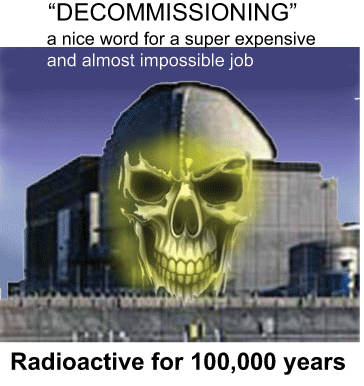
Corporate report: The NDA group Technical Baseline Review
This report provides a high-level overview of the processes and associated technologies used or planned to be used to deliver our mission.
NDA 26th March 2026 Nuclear Decommissioning Authority NDA group Technology Baseline Review 2026
PDF, 4.76 MB, 67 pages
The UK’s nuclear energy programme, dating from the post-war years, has left a challenging decommissioning legacy to the country: numerous prototype reactors, fuel-manufacturing plants, research centres, reprocessing plants and 11 power stations. The Sellafield site in west Cumbria houses more than 200 nuclear facilities and 1,000 buildings, making it one of the world’s most complex environmental decommissioning challenges. Across the UK many ‘never-done-before’ decommissioning projects will need to be completed. The Nuclear Decommissioning Authority (NDA) was established under the Energy Act (2004) to ensure that the UK’s nuclear legacy sites are decommissioned and cleaned up safely, securely, cost-effectively and in ways that protect people and the environment.
This document provides a high-level overview of the current technology landscape across the NDA group. It outlines the NDA group technology baseline, current technologies being deployed, and the technology opportunities requiring development or adoption to underpin the delivery of our decommissioning mission……………
https://www.gov.uk/government/publications/nuclear-decommissioning-authority-rd-technical-baseline
Third and final shipment of vitrified waste from the UK to Germany
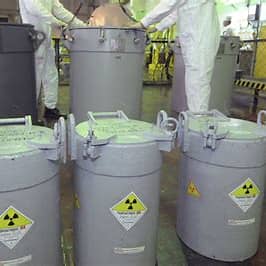
As previously announced, the UK will be returning high level waste (HLW) in the form of vitrified residues to Germany.
Sellafield Ltd, 24 March 2026,
https://www.gov.uk/government/news/third-and-final-shipment-of-vitrified-waste-from-the-uk-to-germany
Sellafield Ltd and Nuclear Transport Solutions (NTS) are making preparations for the third and final return of high level waste (HLW), in the form of vitrified residue, to Germany.
Seven flasks will be transported from Sellafield to the Brokdorf interim storage facility later in 2026.
This will be the final shipment from the UK to Germany. The first shipment of 6 flasks, to Biblis, was successfully completed in 2020 and the second shipment of 7 flasks to Isar was completed in 2025.
The waste results from the reprocessing and recycling of spent nuclear fuel at the Sellafield site in West Cumbria, which had previously been used to produce electricity by utilities in Germany.
Vitrified residue returns are a key component of the UK’s Nuclear Decommissioning Authority (NDA) strategy to repatriate high level waste from the UK, fulfil overseas contracts and deliver UK Government policy.
These returns involve Sellafield Ltd working in partnership with Nuclear Transport Solutions (NTS) to return the waste to German customers.
The shipments will be carried out in full compliance with all applicable national and international regulations, and subject to issue of all relevant permits and licenses.
Sellafield Ltd and NTS will provide further information on the shipments in due course.
A Sunken Nuclear Submarine Is Leaking Radiation Into the Ocean. How Worried Should We Be?

Repairs or just outright cleanup would be expensive, extremely difficult, slow, and, of course, quite dangerous.
By Luis Prada, March 25, 2026, https://www.vice.com/en/article/a-sunken-nuclear-submarine-is-leaking-radiation-into-the-ocean-how-worried-should-we-be/
According to new research published in PNAS, a Cold War-era nuclear submarine sitting at the bottom of the Norwegian Sea is still leaking radioactive material. It’s happening slowly, if unevenly, and it’s contained just enough to avoid becoming a full-scale environmental disaster… for now.
The K-278 Komsomolets sank in 1989 after an onboard fire, taking with it a nuclear reactor and two nuclear torpedoes. It now sits more than 1,600 meters below the surface, in a part of the ocean that is freezing and almost entirely out of reach.
A research team led by Justin Gwynn at Norway’s radiation safety authority analyzed years of data, including a 2019 survey using a remotely operated vehicle. The team found that the wreck is leaking radioactive isotopes, including cesium and strontium, through cracks in its deteriorating hull.
The leaks aren’t constant. They come in waves, with visible plumes drifting out from various spots, like the reactor compartment or a ventilation pipe. Radiation levels take a big jump closer to the submarine, with levels reaching hundreds of thousands of times above normal background radiation levels.
At Least the Nuclear Submarine’s Nuclear Torpedoes Are Still Intact
Terrifying, and here’s where it gets strange: measurements taken from just a few feet away dramatically drop off. Researchers believe this is caused by the ocean diluting the problem. That may be why the surrounding ecosystem isn’t showing any obvious signs of collapse, given all of the toxic radiation. There’s still plenty of marine life clinging to the wreck, including sponges, corals, and anemones. They have slightly elevated radiation levels but no visible signs of deformation or damage, though genetic damage wouldn’t be surprising.
Sediment samples collected nearby show minimal contamination. Things wouldn’t be looking so rosy if the nuclear torpedoes inside it weren’t intact, which they very much are and have been since the 1990s.
So far, there are no signs of imminent disaster. Everything is stable and holding steady… for now.
This won’t always be the case, and it is really more a matter not of if but of when. The reactor is still corroding, and the structure is still weakening. Repairs or just outright cleanup will be expensive, extremely difficult, slow, and, of course, quite dangerous. The risk is contained, but that doesn’t mean it’s going away anytime soon.
Fife Council approve Babcock plan for nuclear waste storage building

24th March, By Ally McRoberts, https://www.dunfermlinepress.com/news/25961651.fife-council-approve-babcock-plan-waste-storage-building/
A TEMPORARY storage facility will be built for waste that’s taken out of old nuclear submarines at Rosyth Dockyard.
Fife Council have given the green light to Babcock for a new warehouse between docks two and three for “decommissioning operations”.
The large industrial building – an ‘intermediate waste storage facility’ – will be 27 metres long and up to 20 metres in height with roller doors and security fencing.
Work is currently taking place at the dockyard to cut up and dismantle HMS Swiftsure, one of seven old nuclear subs that have been laid up in Rosyth for decades.
The demonstrator project is attempting a world first by removing the most radioactive parts left in the vessel, the reactor and steam generators.
The new building “will be utilised for cutting processes to aid submarine dismantling” and will go next to a larger steel shed that was approved in 2024 for the project.
A council report said: “The applicant has indicated that the waste to be temporarily stored would not be considered hazardous under the Town and Country Planning (Hazardous Substances) (Scotland) Regulations 2015 and that the site is currently subject to a permit issued by SEPA covering the related decommissioning activity.
“The site is also subject to regular inspections by the Office of Nuclear Regulation (ONR) and is one of their registered sites.
“Ultimately, the decommissioning activities are controlled by SEPA, the Health and Safety Executive and ONR and fall under their own consenting and control regimes, with mechanisms for changes to existing permits to be reviewed and approved by these bodies.”
There were no objections and the report said SEPA had confirmed that “no reprocessing of radioactive waste or materials takes place at Rosyth”.
The seven decommissioned nuclear subs at the yard are Swiftsure, Revenge, Renown, Repulse, Resolution, Dreadnought and Churchill.
Dismantling takes place in three stages with low level radioactive waste taken out first.
Next is the removal of the reactor pressure vessel, which is classed as intermediate level radioactive waste.
The final stage, once all radioactive material has gone, is [?] recycling.
So far the programme has invested more than £200 million in Rosyth Dockyard.
This Infamous Radioactive ‘Tomb’ Is Leaking, And Experts Are Worried
20 March 2026, ByJess Cockerill, https://www.sciencealert.com/this-infamous-radioactive-tomb-is-leaking-and-experts-are-worried
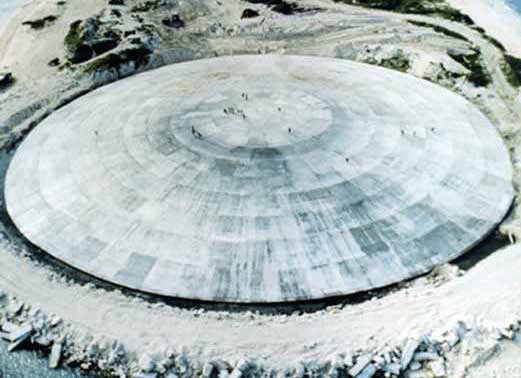
A gaping hole was left on a small island in the Pacific Ocean when the United States military released an 18-kiloton nuclear blast in 1958, known as the ‘Cactus‘ test.
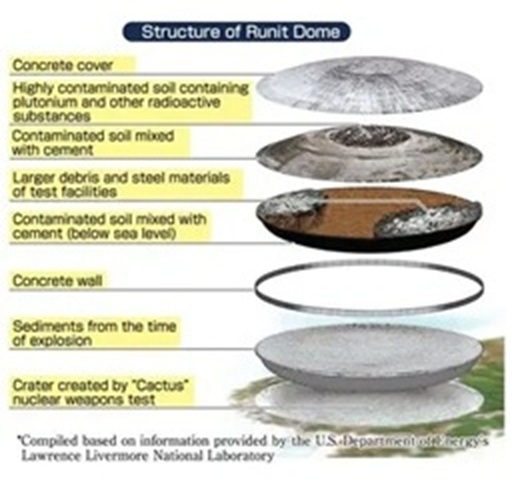
After the blast took place on the Marshall Island’s Runit Island, the military filled it in with contaminated soil and debris, creating a ‘tomb’ of nuclear waste known now as the Runit Dome.
Almost 50 years after the dome’s construction, experts are concerned that cracks in the concrete-capped radioactive landfill indicate just how vulnerable the site is to rising seas encroaching upon the narrow island’s shores.
The 115-meter (377 feet)-wide dome, built between 1977 and 1980 as part of military cleanup efforts, rests above more than 120,000 tons of material that were contaminated by US nuclear testing across Enewetak Atoll, including lethal quantities of plutonium.
The dome was intended as a temporary solution to contain material left behind by the nuclear tests, some of which exceeded the magnitude of Hiroshima and Nagasaki 1,000 times over.
But since its construction, groundwater has penetrated the otherwise-unlined crater, beneath which there lies a bed of porous coral sediment. So far, this is the main source of leaks, but there are concerns that layers of the dome intended to sit above sea level are not going to stay above water much longer.
In 2020, following a major report by the Los Angeles Times, Woods Hole Oceanographic Institute marine radioactivity expert Ken Buesseler pointed out that radioactive leaks from the Runit Dome are, so far, “relatively small,” in an interview for the institute’s journal
“As long as the plutonium stays put under the dome, it won’t be a large new source of radiation to the Pacific Ocean,” Buesseler told journalist Evan Lubofsky at the Los Angeles Times.
“But a lot depends on future sea-level rise and how things like storms and seasonal high tides affect the flow of water in and out of the dome. It’s a small source right now, but we need to monitor it more regularly to understand what’s happening, and get the data directly to the affected communities in the region.”
Columbia University chemist Ivana Nikolic-Hughes has been involved in ongoing research into the persistent contamination of the Marshall Islands following nuclear testing, and recently told journalist Kyle Evans at the Australian Broadcasting Corporation that she saw the dome’s cracks first-hand while taking soil samples on the island back in 2018.
In her research, Nikolic-Hughes has found elevated radiation levels and significant quantities of five radionuclides in soil samples from the island, outside the dome.
This could be evidence of the nuclear tomb leaking – though it may also be the result of the haphazard nature of the cleanup efforts, which also resulted in much waste being dumped into the lagoon.
Either way, the presence of plutonium-239, a component of nuclear weapons that remains dangerous for more than 24,000 years, warrants grave concerns about its vulnerability to rising sea levels and climate change.
“Given that sea levels are rising and there’s indications storms are intensifying, we worry the integrity of the dome could be in jeopardy,” Nikolic-Hughes told Evans.
“Runit is about 20 miles from where people live and they use the lagoon, so the implications are potentially devastating.”
In 2024, the US Department of Energy’s Pacific Northwest National Laboratory conducted an investigation into the potential impacts of climate change on the Runit Dome site, finding that storm surges and gradual sea level rise would indeed be the biggest factor in spreading radionuclides through the atoll.
Most of Runit Island sits just 2 meters (6.5 feet) above sea level.
Viewed from above, it is easy to imagine what an impact just 1 meter of extra water could do to the atoll and Runit Island’s crumbling nuclear tomb. That is the amount of sea level rise climate scientists predict for the Marshall Islands by 2100.
Related: Parts of The Marshall Islands Are Now More Radioactive Than Chernobyl, Study Finds
Nikolic-Hughes and her fellow researcher Hart Rapaport have previously urged the United States to take responsibility for proper cleanup of nuclear waste on the islands, as one part of ensuring a safe future for Marshallese residents.
As United Nations special rapporteur Paula Gaviria Betancur said back in 2024: “Legacies of nuclear testing and military land requisitions by a foreign power have displaced hundreds of Marshallese for generations, while the adverse effects of climate change threaten to displace thousands more.”
1 This Month
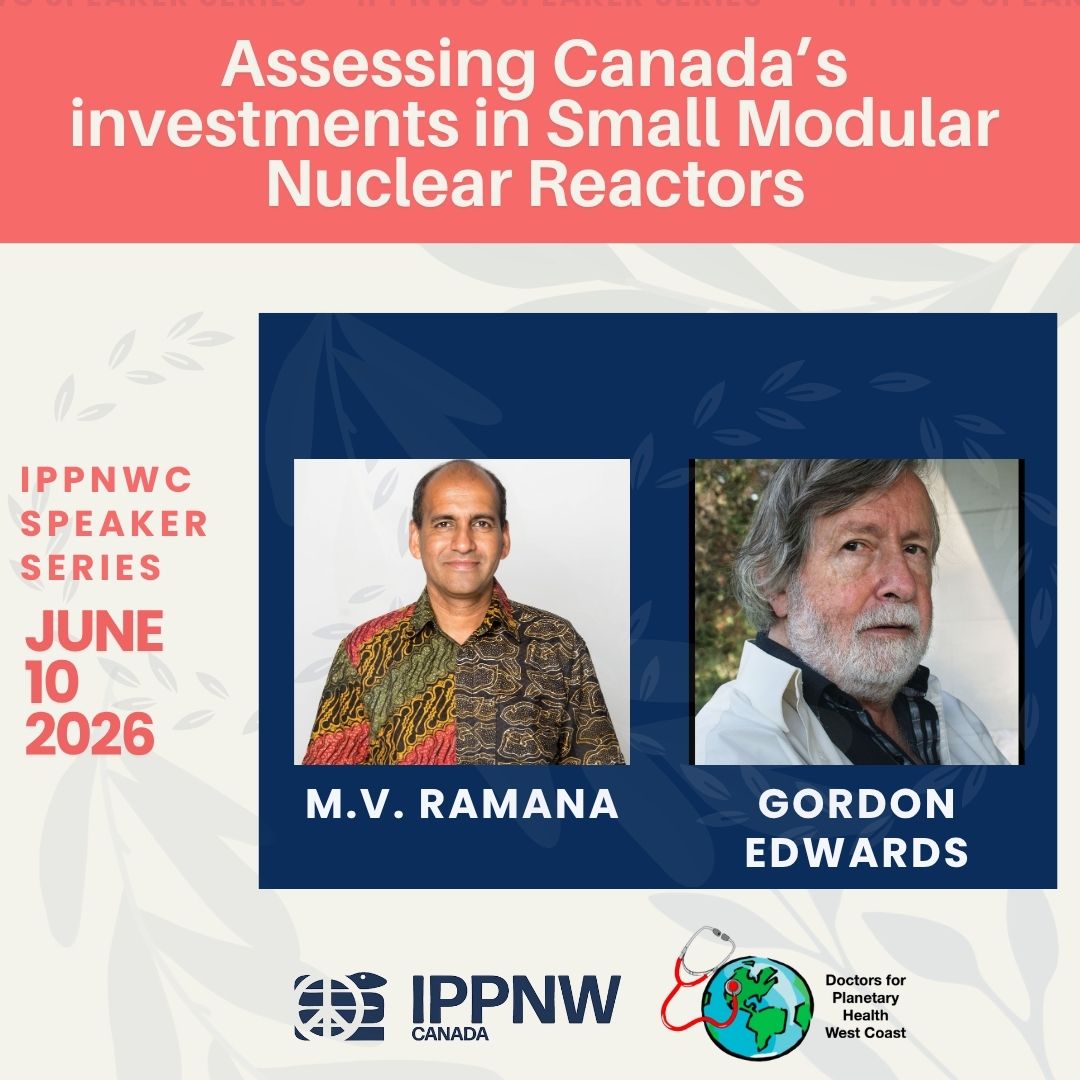
10 June – Assessing Canada’s Investments in Small Modular Nuclear Reactors – https://zoom.us/meeting/register/IiqHA5feRhaEBycOLNTJlA#/registration


Cuba Is Not a Failed State – It Is a Besieged State
PETITION: “Global Appeal to Endorse Palestinian Right of Return of Refugees”
To see nuclear-related stories in greater depth and intensity – go to https://nuclearinformation.wordpress.com
-
Archives
- June 2026 (89)
- May 2026 (306)
- April 2026 (356)
- March 2026 (251)
- February 2026 (268)
- January 2026 (308)
- December 2025 (358)
- November 2025 (359)
- October 2025 (376)
- September 2025 (257)
- August 2025 (319)
- July 2025 (230)
-
Categories
- 1
- 1 NUCLEAR ISSUES
- business and costs
- climate change
- culture and arts
- ENERGY
- environment
- health
- history
- indigenous issues
- Legal
- marketing of nuclear
- media
- opposition to nuclear
- PERSONAL STORIES
- politics
- politics international
- Religion and ethics
- safety
- secrets,lies and civil liberties
- spinbuster
- technology
- Uranium
- wastes
- weapons and war
- Women
- 2 WORLD
- ACTION
- AFRICA
- Atrocities
- AUSTRALIA
- Christina's notes
- Christina's themes
- culture and arts
- Events
- Fuk 2022
- Fuk 2023
- Fukushima 2017
- Fukushima 2018
- fukushima 2019
- Fukushima 2020
- Fukushima 2021
- general
- global warming
- Humour (God we need it)
- Nuclear
- RARE EARTHS
- Reference
- resources – print
- Resources -audiovicual
- Weekly Newsletter
- World
- World Nuclear
- YouTube
-
RSS
Entries RSS
Comments RSS
 nuclear-news