The expensive 30 year process of decommissioning Fukushima’s nuclear plant

 Experts split on how to decommission Fukushima nuclear plant, Mainichi Daily News, Japan) August 28, 2011 What is actually going to take place at the Fukushima No. 1 Nuclear Power Plant, where word is that the four reactors that were crippled in the Great East Japan Earthquake and tsunami will eventually be decommissioned?…
Why it would be best to just let the nuclear industry die
 Nuclear power can’t compete when it comes to both economics and the economics of environmental reform….It would be much better for all of us if the industry was allowed to die – hopefully with no disasters along the way. We don’t need it to tackle climate change and we can’t afford it.
Why I am against nuclear power, WA Today, Geoff Gallop, 30 Aug 11, About 65 nuclear plants will be under construction by the end of 2010, all including cost overruns and delays. Importantly though, none of these are being built as a result of market-based decision-making……Indeed the market hasn’t been all that keen on nuclear power – and no wonder with the high costs, technical complexities and local politics. It’s not exactly a stock-market friendly business – just ask the owners of the Tokyo Electric and Power Company!
The general public have never been all that keen on nuclear power. They have weighed up the risks and have almost always concluded that it is not for them – when asked that is….I think we can see some rational self-interest at work. Continue reading
Aging, deteriorating nuclear reactors in Japan to seek extensions

 Extensions for aging reactors loom, Japan Times, By YURIY HUMBER and MASATSUGU HORIE. Bloomberg 30 Aug 11, More than a third of Japan’s nuclear reactors will have to apply for license extensions within five years or face decommissioning at a time when the industry’s safety record is in tatters.
The country’s 54 reactors were originally licensed for 30 years and operators can apply for 10-year extensions up to a maximum of six times. Twenty-one reactors will soon require license extensions, according to data from power companies and the World Nuclear Association. Of those, seven will enter their fifth decade if extensions are granted — which should be avoided, according to a metallurgy professor.
“Nuclear reactors shouldn’t be in operation for more than 40 years,” said Hiromitsu Ino at the University of Tokyo. “You can renew electrical wiring and other parts but you can’t do anything with their pressure vessels. They just get old and deteriorate, increasing the risk of accidents….http://search.japantimes.co.jp/cgi-bin/nn20110830n1.html
Radiation or education – dilemma for Fukushima City parents
Fukushima City kids should not have to choose between radiation and education Greenpeace (includes video) by Justin McKeating – August 29, 2011 The children of Fukushima City are due to return to their schools this week despite the continued contamination of school buildings by radiation from the Fukushima Daiichi nuclear power plant. Continue reading
China’s former nuclear chief a spy, as well as corrupt?
CHINA’S NUCLEAR-POWER CHIEF: A SPY?, New Yorker, by Evan Osnos August 11 When Kang Rixin, the head of China’s nuclear-power program, was sentenced to life in prison last November for taking bribes, it was a troubling enough piece of news. Given the speed, scale, and ambition of China’s nuclear program—it has more plants in the planning stage than the rest of the world combined—it did not project reassuring evidence that China has shielded this crucial program from the kind of construction-corruption that has dogged the high-speed rail system.
Today brought startling news. Midway through a video leaked on the Chinese Web, a senior military official explains previously unknown details about major spying cases uncovered in recent years, including the fact that bribery was hardly the most serious accusation against Kang. He is accused of selling secrets about China’s nuclear power industry to foreign countries. “Kang’s case can’t be made public because the damage he has done by selling secrets was a lot more devastating than economic losses,” Major General Jin Yinan said in the video. If true, it would make Kang one of China’s highest-ranking figures to be accused of spying… http://www.newyorker.com/online/blogs/evanosnos/2011/08/chinas-nuclear-power-chief-a-spy.html#ixzz1WZ6kGrJ1
Theft of nuclear materials in Namibia
Namibia arrests four in suspected nuclear theft, Aug 29, 2011 11. WINDHOEK (Reuters) – Namibian authorities have arrested four people they suspect of stealing drums of radioactive material from a mine in the country that is a major exporter of uranium, officials said on Monday.
The four were arrested on Friday in the coastal town of Swakopmund, the drums have been recovered and the material is thought to have come from Areva’s Trekkopje mine, they said.Axel Tibinyane, regulator of the Atomic Energy Board of Namibia, said the contents of the drums are radioactive….
Areva’s Trekkopje is one of the few mines in Namibia that has processing facilities for yellow cake — a form of uranium ore that can be enriched for nuclear fuel or, if enriched to a much higher level, for use in weapons.The four suspects were expected to appear in court later on Monday.http://af.reuters.com/article/topNews/idAFJOE77S0F520110829?feedType=RSS&feedName=topNews
China ramping up its renewable energy goals
China revises up 2015 renewable energy goals: report, by Jim Bai and Chen Aizhu; Editing by Ken Wills, BEIJING Aug 29, 2011 (Reuters) – China will raise development targets for renewable energy such as wind power for the five-year period through 2015, state media reported on Tuesday, as the world’s top energy user and carbon emitter aims to reduce its reliance on fossil fuels.
The country aims to have 100 gigawatts (GW) of on-grid wind power generating capacity by the end of 2015 and to generate 190 billion kilowatt hours (kWh) of wind power annually, the China Securities Journal reported, citing a government plan.
The goal was higher than a target of 90 GW proposed earlier by the National Energy Administration…..http://www.reuters.com/article/2011/08/30/us-china-energy-renewable-idUSTRE77T0CM20110830
Cancer and birth deformities in city near to 456 nuclear bomb tests
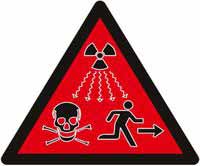 City that suffered most calls for an end to nuclear testing, Telegraph, By Louise Gray, Environment Correspondent, Semipalatinsk, 29 Aug 2011, The people of Semey will gather for a strange celebration today. Under a huge statue of a mushroom cloud they will commemorate the end of a chilling experiment on their own people and call for a complete ban on nuclear testing.
Between 1949 and 1989 this area of eastern Kazakhstan was used by the former Soviet Union to test 456 nuclear bombs. The local population was not told about the risks to their lives – or indeed the health of their grandchildren.
It is estimated some 1.5 million people were affected by the fallout and decades on doctors blame high rates of cancer and birth deformity on the continuing effects of radiation. Continue reading
Japan’s crisis of ionising radiation is only just beginning
 Slowly, steadily, and often well behind the curve, the government has worsened its prognosis of the disaster. …. sceptics note a consistent pattern of official lying, foot-dragging and concealment. …
 areas northwest of the plant have become atomic ghost towns after being ordered to evacuate – too late, say many residents, who believe they absorbed dangerous quantities of radiation in the weeks after the accident…….
many experts warn that the crisis is just beginning
Why the Fukushima disaster is worse than Chernobyl, Japan has been slow to admit the scale of the meltdown. But now the truth is coming out. David McNeill reports from Soma City, The Independent Asia, 29 August 2011
“…….it is the triple meltdown and its aftermath at the Fukushima nuclear power plant 40km down the coast from Soma that has elevated Japan into unknown, and unknowable, terrain. Across the northeast, millions of people are living with its consequences and searching for a consensus on a safe radiation level that does not exist…. Continue reading
New York’s electricity power down, nuclear reactors’ reaction to Hurricane Irene
Power Disruptions Rise as a Weakening Irene Rakes New York, Bloomberg, By Julie Johnsson – Aug 28, 2011 More than 3 million homes and businesses along the U.S. East Coast were without power today as a weakening Hurricane Irene lashed New York with winds and rain…. Exelon Corp. (EXC)’s Oyster Creek nuclear plant in New Jersey shut down its reactor as a precaution ahead of the storm, and other reactors reduced power.
One of the nuclear reactors at Constellation Energy Group Inc. (CEG)’s Calvert Cliffs nuclear station in Lusby, Maryland, shut down automatically after the plant’s main transformer was hit by wind-driven debris, the company said in a statement. The plant remains safe, the company said…..
Nuclear reactors near the coast in New Jersey and Connecticut began powering down as a precaution, said David McIntyre, a spokesman for the U.S. Nuclear Regulatory Commission. Reducing power will allow the plants to shut down faster and more efficiently if it becomes necessary…..http://www.bloomberg.com/news/2011-08-27/irene-knocks-out-power-to-420-000-in-north-carolina-virginia.html
Illinois hospitals using smart ways to limit patients’ radiation exposure
 One way area hospitals are working together to help reduce overall radiation exposure is by transferring their patients’ diagnostic images electronically to Carle when patients are transferred there — so doctors can view the images that have already been done when the patients arrive,
Hospitals working to limit radiation exposure, Central Illinois News gazette, 08/28/2011 – Debra Pressey URBANA — Annual dental check-ups, mammograms, CT scans … the radiation Americans are exposed to while trying to stay healthy can gradually add up. Continue reading
Varying opinions on nuclear power, as Japan’s political candidates line up
 Top contenders for Japan premier post face nuclear issues, Gulf News, 29 Aug 11 Japan’s next premier set to be burdened with low public confidence and party problems Tokyo: Japan’s former Foreign Minister Seiji Maehara who is vying to become Japan’s next prime minister says the country should stop building nuclear power plants.
Maehara appeared to take the clearest stand against nuclear power at a news conference on Saturday where five ruling party members aiming to replace Prime Minister Naoto Kan outlined their policy goals.Another top contender for the job is Economy Minister Banri Kaieda. He says he plans to decommission aging nuclear plants found to have problems during stress tests.
Atomic energy is a key topic in Japan following the tsunami which caused a nuclear accident in March…… http://gulfnews.com/news/world/other-world/top-contenders-for-japan-premier-post-face-nuclear-issues-1.857990
USA taxpayer’s money going to set up nuclear power plants on the moon
 Fission power technology can be applied on Earth’s Moon, on Mars, or wherever NASA sees the need for continuous power,
Nuclear power plants for settlements on the Moon and Mars, ZDNet By Chris Jablonski | August 28, 2011 The first nuclear power plant being considered for production of electricity for manned or unmanned bases on the Moon, Mars and other planets “may really look like it came from outer space.” Continue reading
Envoy says that Iran showed U.N. all its nuclear sites
Iran shows U.N. official all nuclear sites: envoy, By Fredrik Dahl, VIENNA Aug 23, 2011 (Reuters) – Iran allowed a senior U.N. nuclear inspector rare access to a facility for developing advanced uranium enrichment machines during a tour of all of the country’s main atomic sites, an Iranian envoy said on Tuesday. Continue reading
UK local councils oppose nuclear waste transport to Sellafield

 “Nuclear-Free Local Authorities” a local government group, which describes itself as the “local government voice on nuclear issues” has condemned the plan for breaching important environmental principles. There are seven member councils, all in Scotland, through which the nuclear material could travel by rail, depending on the route it takes. They are Perth & Kinross, Fife, Edinburgh, Glasgow, Renfrewshire, West Dumbartonshire and Dundee.
The group says the plan fails to ensure that radioactive waste is managed as close as possible to the site where it was produced. It would also lead to increased radioactive discharges into the environment from Sellafield during reprocessing, the councils argue.
Nuclear train route to Sellafield runs into opposition from local councils, Trains transporting radioactive uranium and plutonium could become target for terrorists, authorities warn, Rob Edwards, guardian.co.uk, 26 August 2011 20 A plan to transport 44 tonnes of radioactive uranium and plutonium by train has run into opposition from councils worried about accidents and terrorist attacks. Continue reading
1 This Month
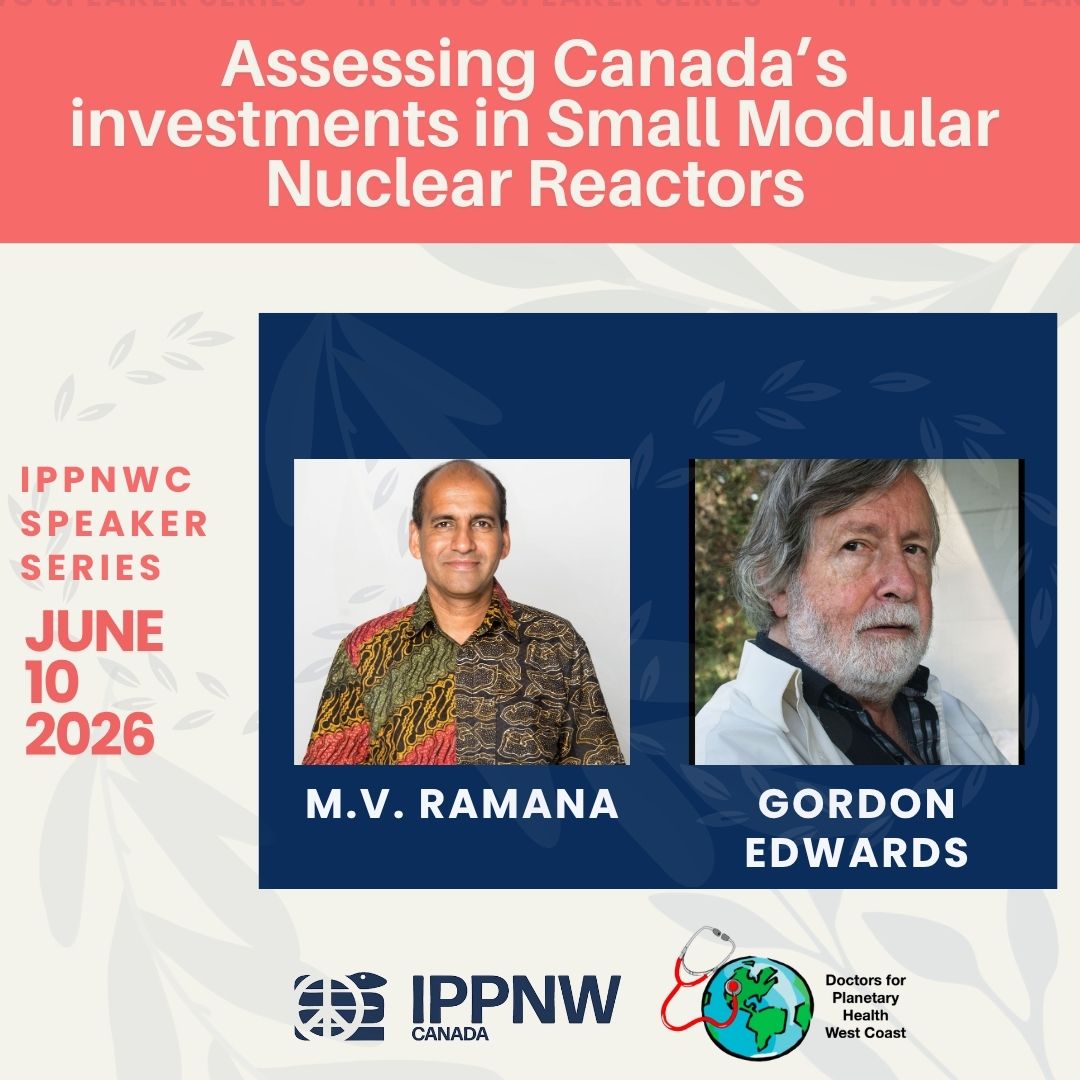
10 June – Assessing Canada’s Investments in Small Modular Nuclear Reactors – https://zoom.us/meeting/register/IiqHA5feRhaEBycOLNTJlA#/registration


Cuba Is Not a Failed State – It Is a Besieged State
PETITION: “Global Appeal to Endorse Palestinian Right of Return of Refugees”
To see nuclear-related stories in greater depth and intensity – go to https://nuclearinformation.wordpress.com
-
Archives
- June 2026 (79)
- May 2026 (306)
- April 2026 (356)
- March 2026 (251)
- February 2026 (268)
- January 2026 (308)
- December 2025 (358)
- November 2025 (359)
- October 2025 (376)
- September 2025 (257)
- August 2025 (319)
- July 2025 (230)
-
Categories
- 1
- 1 NUCLEAR ISSUES
- business and costs
- climate change
- culture and arts
- ENERGY
- environment
- health
- history
- indigenous issues
- Legal
- marketing of nuclear
- media
- opposition to nuclear
- PERSONAL STORIES
- politics
- politics international
- Religion and ethics
- safety
- secrets,lies and civil liberties
- spinbuster
- technology
- Uranium
- wastes
- weapons and war
- Women
- 2 WORLD
- ACTION
- AFRICA
- Atrocities
- AUSTRALIA
- Christina's notes
- Christina's themes
- culture and arts
- Events
- Fuk 2022
- Fuk 2023
- Fukushima 2017
- Fukushima 2018
- fukushima 2019
- Fukushima 2020
- Fukushima 2021
- general
- global warming
- Humour (God we need it)
- Nuclear
- RARE EARTHS
- Reference
- resources – print
- Resources -audiovicual
- Weekly Newsletter
- World
- World Nuclear
- YouTube
-
RSS
Entries RSS
Comments RSS
 nuclear-news