Nuclear plans hurting power companies’ credit ratings
FACING SOUTH 31 July 09
Power companies pursuing construction of new nuclear plants may find it harder to get credit — meaning ratepayers could end up shouldering a greater financial burden for the costly and environmentally harmful projects.Moody’s Investors Service, a leading independent credit rating firm, recently released a report that says it’s considering taking a “more negative view” of debt obligations issued by companies seeking to build new nuclear plants.
Titled “New Nuclear Generation: Ratings Pressure Increasing,” the report raises concerns that investing in new nuclear plants involves significant risks and huge capital costs at a time when national energy policy is uncertain. Yet companies investing in new nuclear projects — cost estimates for which are hovering in the $6 billion range — haven’t adjusted their finances accordingly, according to Moody’s:
‘Few, if any, of the issuers aspiring to build new nuclear power have meaningfully strengthened their balance sheets, and for several companies, key financial credit ratios have actually declined. Moreover, recent broad market turmoil calls into question whether new liquidity is even available to support such capital-intensive projects.’…………………………
The financing problems have already caused some companies to back away from nuclear projects. Earlier this month, AmerenUE announced that it was suspending plans to build a new reactor at its Callaway plant in Missouri. A factor was that state’s ban of “Construction Work in Progress,” a financing scheme that allows a nuclear utility to recover the construction costs of a reactor from ratepayers before the reactor is up and running.
Nuclear startup costs high, safety low
TENNESSEAN.com 31 July 09 By John McFadden, Ph.D.
”….does nuclear power offer a safe, affordable domestic solution?
Unfortunately, the facts suggest otherwise. The industry is dependent on subsidies and is not economically viable. Nuclear waste is problematic at best.The technology is not safe despite billions of tax dollars spent on research to try to make it safe.The claims from nuclear energy’s proponents have always been too good to be true. “Too cheap to meter” was the first. Inaccurate power projections led to TVA’s first nuclear plant construction program in the 1970s and ’80s, leaving more than $25 billion in debt, which Tennessee Valley residents are still paying.
Current estimated cost for one new 1,200-megawatt reactor is $7.5 billion. From 1950 to 1999, federal subsidies totaled around $145 billion. Cleanups of radioactive federal Superfund’ sites are expensive, difficult and proceeding slowly. The fact is that they may never be cleaned up.
Many of those who believe in and trust free-market economics are pushing for increased nuclear power, citing France as a model of nuclear power success, but the French utility is government-owned.
The market is unwilling to fund construction or provide insurance without federal subsidies — too much risk! Nuclear power is not economically viable, and has no plan for long-term storage for waste.On-site storage of the radioactive waste is currently the default plan, and it is more of a problem than most recognize.
Startup costs high, safety low | tennessean.com | The Tennessean
California’s nuclear reactor “reliable”?
San Onofre Nuclear Generating Station (SONGS)…………… Reliability Questioned
Examiner.com by Shirley Vaine July 30, 2009
“…………the latest completed performance review by The US Nuclear Regulatory Commission (NRC) on March 4, 2009, for San Onofre Nuclear Generating Station (SONGS)……………the NRC was concerned that “the continuing performance problems are not being effectively addressed,…………..“
……………No one knows how long the reactor will be down even if the replacement goes perfect. Southern California could have an “unknown timetable” of a dismantled reactor …………….
The good news is that California has control over reliability and economics of our power generation, and these issues are not pre-empted by the Nuclear Regulatory Commission. We already endured an “energy crisis” in 2000. Let’s plan not to have another one.An earthquake shut down Japan’s new nuclear reactors in 2007 and they are still down today, costing the company to buy power elsewhere to meet demand and costing the country billions of yen.
Not only is nuclear power financially unpredictable, the safety risk is an intrical part of that harmful fuel. Additional losses would also come from tourist avoiding visiting this potential health hazard area……”
Nuclear Disarmament More Urgent Than Ever
Nuclear Disarmament More Urgent Than Ever
IPS by By Mikhail Gorbachev 31 July 09 “………………. Nothing fundamentally new has been achieved in the area of nuclear disarmament in the past decade and a half. Twenty years after the end of the Cold War, the arsenals of the nuclear powers still contain thousands of weapons, and the world is facing the very real possibility of a new arms race………………..The Comprehensive Test Ban Treaty (CTBT) has not entered into force. The quantities of nuclear weapons held by Russia and the United States still far exceed the arsenals of all other nuclear powers combined, thus making it more difficult to bring them into the process of nuclear disarmament.
The nuclear non-proliferation regime is in jeopardy. While the two major nuclear powers bear the greatest responsibility for this state of affairs, it was the U.S. that abrogated the Anti-Ballistic Missile Treaty (ABM Treaty), has failed to ratify the CTBT, and refused to conclude with Russia a legally binding, verifiable treaty on strategic offensive arms.
Only recently have we seen indications that the major nuclear powers understand the current state of affairs is untenable…………………………….
The use and the threat of force, which, of course, are illegal under the UN Charter, were reasserted as a “normal” mode of solving problems. Official documents rationalized doctrines of pre-emptive strike and the need for U.S. military superiority.Humanity must be wary of a new arms race. Priority is still being given to financing of military programmes, and “defence” budgets far exceeding reasonable security requirements keep growing, as does the weapons trade. U.S. military expenditures are almost as high as those of the rest of the world combined.
Disregard for international law and for peaceful ways of settling disputes, for the United Nations and its Security Council, is being proclaimed as a kind of policy………………….
……. If the holders of the largest stocks of nuclear weapons embark upon real reductions, others will no longer be able to sit it out and conceal their arsenals from international control. This is an issue that we must raise now if we are to have the kind of trust without which common security cannot be achieved.
GLOBAL PERSPECTIVES: OPINION: Nuclear Disarmament More Urgent Than Ever
Uranium weapons – Does anyone care?
Peter Eyre Middle East Consultant USA, July 29, 2009 (Pal Telegraph)- Our planet is truly a wonderful place but under the umbrella, that we call our atmosphere, lies a cocktail of uranium aerosols waiting to claim its next victim. Many countries donate to this contamination such as the US, UK, Israel, NATO member states, China and Russia etc
Why would the UN, WHO, US, UK, NATO and IDF allow this to happen and why do they continue manufacturing and using weapons containing uranium?…………………
A conference took place in Sweden: INTERNATIONAL CONFERENCE ON ENVIRONMENTAL EFFECTS OF WAR – The examples of Agent Orange and Depleted Uranium – Stockholm • 23-24 April 2004 in which various experts gave speeches, two of those being Doug Rokke and Tedd Weyman.
Dr Douglas L. Rokke, Ph.D. Former Head of U.S. Army Radiological Laboratory and Former Director U.S. Army Depleted Uranium Project, U.S. Army major (retired), and former Assistant Professor of Environmental Science at Jacksonville State University, Florida, USA. During an interview with John Pilger, Doug gave a summary of his work experience: “Prior to the Gulf War, I was responsibility for the training and educating of all the medical professionals and combat soldiers on the effects of nuclear, biological, and chemical warfare. More importantly what type of medical care and treatment was required and what decontamination is needed for those that may be injured or wounded during the war”.
After the ground war he was tasked as a health physicist responsible for cleaning up the depleted uranium or uranium 238 contamination…………………………..- what we’re seeing now are respiratory problems, breathing problems, kidney problems, and cancers. We have individuals of our team that were actually known exposed and they have died of cancer. We have other individuals right now that have cancer. We have rashes, neurological problems. A lot of people – and again this is out of the whole complex toxic battlefield where DU contributes – lost fine motor function, individuals have neural psychology problems, short term memory losses. The uranium is a heavy metal poison and also a radiological poison, so we have to look at a conglomeration of potential health effects that then mix with other causes to create serious problems”…………….
The recent Iraqi field samples collected by UMRC were analysed by plasma mass spectrometer by Dr Axel Gerdes, Institute of Petrology and Geochemistry, JW Goethe University, Frankfurt. The human and environmental samples have been found to contain Depleted Uranium and abnormally high levels of the artificial transuranic isotope, 236U. The isotope composition of Depleted Uranium found in civilians as well as in surface soils and water courses shows the weapons used in Iraq were manufactured from two and perhaps three different metallurgical sources (stockpiles of uranium metals). The soil and water samples indicate DU was deployed in both mechanized battlefields and urban neighbourhoods where aerial bombing took place………………………
For almost 40 years we have all been let down a path of total deception by the US Government, US Department of Defense, US Military and the Nuclear Industry. This deception later extended to the US Institute of Medicine, UN (especially the UNEP), WHO, NATO and their respective Governments and many other institutions that all failed in their duty of care for our planet and its inhabitants…
..http://www.paltelegraph.com/world/world-news/1620-uranium-weapons-does-anyone-care-about-our-planet
Germany’s nuclear waste problem shows long term danger for waste storage
Salting it Away (and Other Problems with Nuclear Waste)
Miller McCune By: Michael Scott Moore | July 29, 2009
Germany’s vaunted salt mine solution for low-level nuclear waste has proven to be full of holes……………………….
Around 12,000 liters of groundwater leak into the mine every day. Some of it mixes with the radioactive waste. A few weeks ago, the Federal Office for Radiation Protection (BfS) finally admitted that some brine collected in Asse II had traces of tritium and caesium 137.
But last year the German public learned that the group in charge of maintaining Asse II at the time had known about the accumulation of suspect water since 2005…………………….The public outrage led German politicians to take the mine out of the Helmholtz Institute’s hands and place it under the BfS. But Asse II has also leaked groundwater since at least 1988 — meaning, at the very least, that decades of Cold War research conducted there failed to solve some of the most basic problems of nuclear storage……………….Along with 120,000-odd barrels of radioactive slop, according to a report last year, highly radioactive plutonium waste and even a few spent fuel rods were dumped in the mine………….
It’s hubris for a government to think it can safely store nuclear waste beyond the lifetime of the government itself. The trouble with Asse II has been a chastening example. Political promises, stern-sounding policies, and even scientific assessments from 1989 (which said the mine had no leaks) all proved to be as full of holes as the mine itself.
Environmentalists show no confidence in nuclear waste site’s safety
Environmentalists show no confidence in nuclear waste site’s safety THE HANKYOREH, 30 July 09
Lawmaker Cho and environmental researchers disclose prior site assessment reports on Gyeongju waste facility site that reveal base rock instability
Environmental organizations asked for further investigation into the safety of the nuclear waste disposal site currently under construction in the Gyeongju area on Tuesday. The organizations are basing its demands for a complete stop to construction on a review of previously released reports. The completion of the facility’s construction originally set for the end of 2009, has already been delayed by some two and a half years due to problems in the site’s base rock.
Cho Seung-soo, a lawmaker with the New Progressive Party, and members the Korean Federation for Environmental Movement (KFEM) and other environmental organizations, held a press conference at the National Assembly and said, “We cannot confirm the safety of the site because a site assessment (in 2005) confirms the condition of the base rock is unstable and weak.”
USEC scraps uranium plant
USEC scraps uranium plant, mulls options
Jul 28, 2009By Matt Daily and Michael Erman (Editing by Lisa Von Ahn, Maureen Bavdek, Phil Berlowitz)
NEW YORK (Reuters) – USEC Inc said on Tuesday it would scrap plans to build a new uranium enrichment plant and may now seek a partner or buyer after the U.S. Department of Energy denied its request for a loan guarantee, sending its stock plummeting.
USEC’s planned American Centrifuge Plant in Piketon, Ohio, was one of four new facilities proposed that would be built to supply enriched uranium to the nuclear power sector, which industry experts believe is poised for a renaissance in the United States……………..The company had so far sunk $1.5 billion into the ACP project, using funds from the equity and debt markets, but still needed another $2 billion………………………..USEC’s shares plunged 36 percent to $3.97 on the New York Stock Exchange.
USEC scraps uranium plant, mulls options | Green Business | Reuters
America’s Secret Chernobyl – Uranium Mining & Pollution in the Upper Midwest
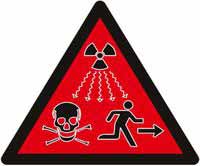 RUDSSELL MEANS FREEDOM July 27, 2009
“………………In northwestern South Dakota, the Cave Hills area is managed by the US Forest Service. The area currently contains 89 abandoned open-pit uranium mines. Studies by the USFS show that one mine alone has 1,400 millirems per hour (mR/hr) of exposed radiation, a level of radiation that is 120,000 times higher than normal background of 100 millirems per year (mR/yr)! In the southwestern Black Hills, the US Forest Service reported on 29 abandoned open-pit uranium mines, one of which is about 1 square mile in size.
It is estimated that more than 1,000 open-pit uranium mines and prospects can be found in the four state region from a map developed by the US Forest Service. The water runoff from the creeks and rivers near these abandoned uranium mines eventually empties into the Missouri River which empties into the Mississippi River…………………
This Fact Sheet regarding past and planned uranium and coal mining in the Upper Midwest region should give cause for alarm to all thinking people in the United States. This is the area that has been called “the Bread Basket of the World.” For more than forty years, the people of South Dakota and beyond have been subjected to radioactive polluted dust and water runoff from the hundreds of abandoned open pit uranium mines, processing sites, underground nuclear power stations, and waste dumps.
There needs to be a concerted effort to determine the extent of the radioactive pollution in the environment, and the health damage that has been and is currently being inflicted upon the people of the United States.
America’s Secret Chernobyl – Uranium Mining & Pollution in the Upper Midwest : Russell Means Freedom
Nuclear power? – financially a failure
Following the Money
THE ENERGY GRID July 27, 2009 by James Hrynyshyn
“………………….Just about every time I give a presentation on climate change, someone in the audience will ask why I haven’t devoted much attention to the potential contribution of nuclear power. After all, it’s (almost) carbon neutral and it’s one of the only existing technologies that can produce baseload electricity (unlike PV solar and wind).My response is always the same: Assuming we are willing to find a way to deal with the relatively modest waste and weapons proliferation issues, we still have to acknowledge that nuclear power generation is hideously expensive.Joe Romm’s posts are among the best at laying out just how expensive. The cost of a gigawatt of generating capacity for a new plant just keeps going up. From $4 billion, to $7 billion to $10 billion, depending on the technology involved. There’s a reason why no nuclear power plants have been ordered in 30 years and Three Mile Island isn’t an excuse anymore………………………..
Wind is now cheaper the nuclear, even though you have to build three times the capacity to account for the fact that the wind only blows strong enough a third of time. And baseload power can be supplied by concentrated solar-thermal plants, in which heat is stored in fluids for release at night. So why spend the extra money when competing technologies are less expensive?
A related problem is the ever-changing regulatory and economic context. In order to invest the huge upfront sums of money required by nuclear plants, utilities need to know what kind of world they’ll be operating in for decades to come. They simply don’t have that when it comes to nuclear power. Costs are always rising, and environmental restrictions are ever tightening.
Preparing for a nuclear fallout?
Preparing for a nuclear fallout?
LINEX Legal ource: Herbert Smith LLP –
Key points include: No reason was put forward for not affording nuclear sector specialists the same protections as the wider membership of the construction industry / Government has now given the go-ahead for a new generation of power stations, and the sheer size and complexity of these operations is bound to give rise to disputes / The courts have grappled with the problem of making a distinction between construction work falling within the provisions of the HGCRA 1996 and outside.
Linex Legal > Herbert Smith LLP > Preparing for a nuclear fallout?
Nuclear Regulator Says Waste Isn’t An “Urgent” Problem
Nuclear Regulator Says Waste Isn’t An “Urgent” Problem
The Business Insider Jay Yarow|Jul. 23, 2009,
“………….Finding a permanent site for spent nuclear fuel in the U.S. isn’t “an urgent problem,” the head of the Nuclear Regulatory Commission said…………. he’s wrong that it’s not an urgent problem.Over the past two decades, the government gathered billions of dollars from utilities for a national storage facility. That facility was supposed to be Yucca Mountain, which was eliminated earlier this year. The power companies have spent billions of their own dollars on storage facilities.
Utilities are suing the government for $11 billion. While the government twiddles its thumbs trying to come up with a solution, this problem only gets worse.
Unholy trinity
Unholy Trinity
ON LINE opinion by Bill Williams 28 July 09
“……………………..We have just entered the 65th year of humanity’s troubled relationship with nuclear arms, the world’s worst weapons of terror. So it’s a good time to be promoting their retirement and for Australia to be using every tool in its diplomatic kitbag to encourage the nine Nuclear Weapons States (NWS) to negotiate and implement a global treaty that eliminates their nukes once and for all.On July 16, 1945 the Americans detonated their first nuclear weapon – the “Trinity” test – in the New Mexico desert, prompting its mastermind Robert Oppenheimer to recall the words of Vishnu in the Bhagavad-Gita: “I am become death, the destroyer of worlds.”
This fantastic power was unleashed upon the residents of the Japanese city of Hiroshima just three weeks later, at 8.15 on the morning of August 6, when the uranium-bomb – “Little Boy” – exploded above the city: by nightfall about 70,000 people were dead and since then an estimated further 180,000 have died. The cancer rates among the ageing survivors continue to rise even today.
But we all still live in the shadow of nuclear Armageddon. There remain 23,000 nukes in the arsenals of the nine Nuclear Weapons States (NWS): Russia, USA, UK, France, China, Israel, India, Pakistan and now North Korea. Two thousand five hundred of these weapons are retained on high-alert status, capable of launch within 15 minutes – and there’s no bringing them back. Meanwhile the risk of other nations joining the “club” is on the increase, with the current focus being on Iran. Bear in mind, however, that at least 44 nations have nuclear bomb-making capabilities, including all those states with civil nuclear power plants, which are producing plutonium as a fission byproduct in those reactors.
Greenpeace threatens E.ON with legal action over nuclear reactors
 The Guardian, Terry Macalister, 26 july 09 Greenpeace is threatening to take legal action against E.ON and other nuclear power companies for rushing ahead with plans to build new reactors before they have got the proper consents.
The move has been triggered by reports that preparatory bore holes for new reactors will start to be drilled for E.ON on 3 August at Oldbury in Gloucestershire. EDF is said to be considering similar work.
A Greenpeace spokesman said its lawyers were reviewing a situation which made a mockery of a whole raft of hurdles that were meant to be overcome before the government starts official licensing in 2013.
The environmental campaigning group said there has not yet been a final national policy statement on nuclear, an official “justification” process for building more stations as needed by law, or an assessment of reactor designs by the Nuclear Installations Inspectorate (NII).
The green group has sent a letter to the government telling it to put a brake on E.ON…………………..
The moves come amid reports from Canada that the Ontario government has put its nuclear power plants on hold because the only bid from Atomic Energy of Canada, the only “compliant” one received, came in at more than three times more than the province expected to pay.
The first nuclear reactor built in Western Europe for three decades – in Finland – has also been attracting negative publicity with some politicians saying the cost overruns put a question mark over whether any further plants should be constructed.
Greenpeace threatens E.ON with legal action over nuclear reactors | Business | guardian.co.uk
Germany’s nuclear misadventures continue
PRESS TV 25 July 09
Technical problem at two more nuclear reactors in Germany have fuelled the anti-nuclear debate,…………………..The latest mishaps came less than three weeks after a fault at the Kruemmel reactor cuts power and water supplies to thousand of homes, breathing new life into the major campaign issue which has divided the country’s coalition government ahead of the September elections…..
…….a recent poll revealed more public opposition to atomic energy……………
…….Technical faults are not the only demons haunting the country’s nuclear issue.
Last week, a report by Germany’s Federal Office for Radiation Protection (BfS) questioned the safety of a controversial nuclear waste dump facility in Asse, rating the salt-mine storage facility as one of the most unreliable nuclear waste dumps in use after officials found radioactive water leak.
1 This Month
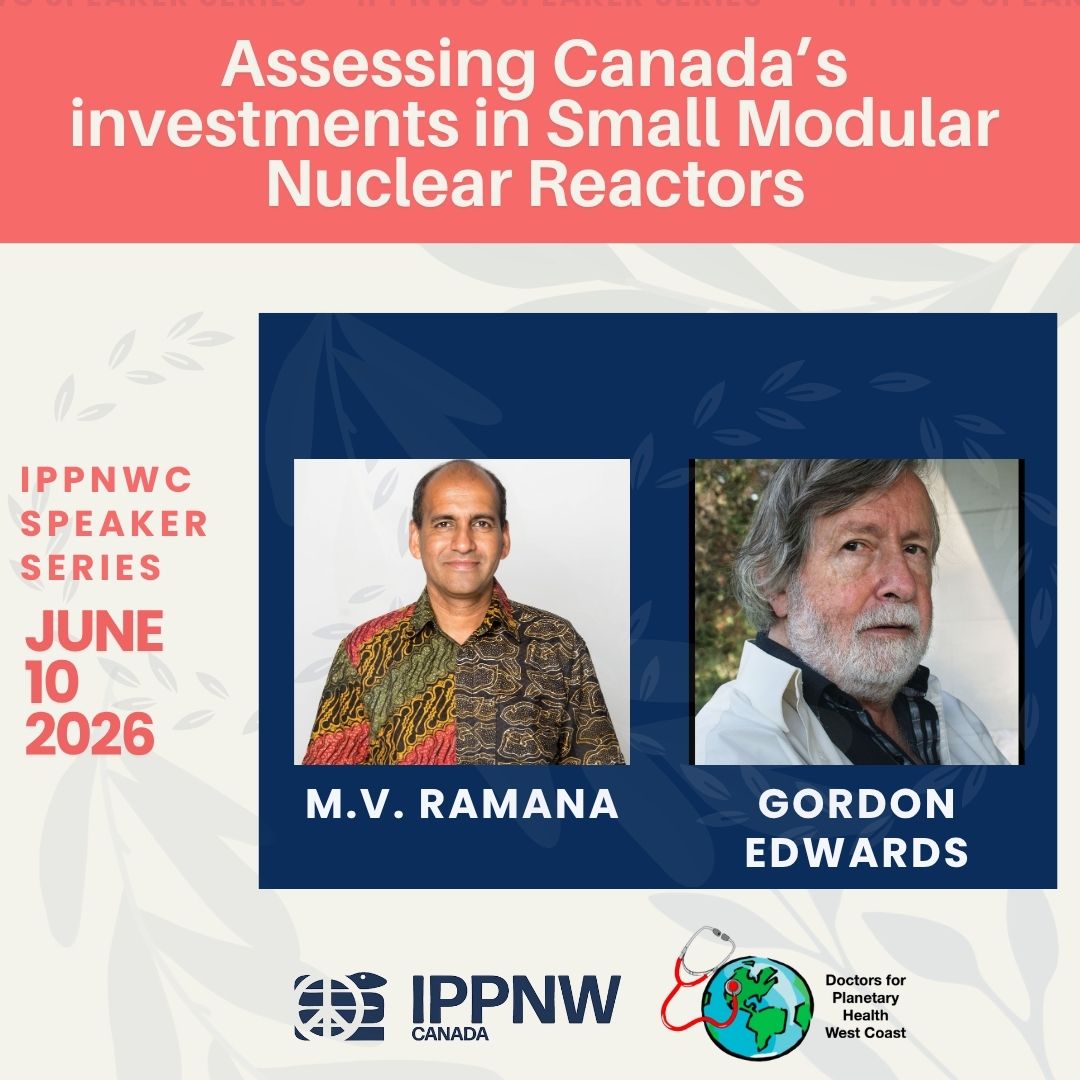
10 June – Assessing Canada’s Investments in Small Modular Nuclear Reactors – https://zoom.us/meeting/register/IiqHA5feRhaEBycOLNTJlA#/registration


Cuba Is Not a Failed State – It Is a Besieged State
PETITION: “Global Appeal to Endorse Palestinian Right of Return of Refugees”
To see nuclear-related stories in greater depth and intensity – go to https://nuclearinformation.wordpress.com
-
Archives
- June 2026 (79)
- May 2026 (306)
- April 2026 (356)
- March 2026 (251)
- February 2026 (268)
- January 2026 (308)
- December 2025 (358)
- November 2025 (359)
- October 2025 (376)
- September 2025 (257)
- August 2025 (319)
- July 2025 (230)
-
Categories
- 1
- 1 NUCLEAR ISSUES
- business and costs
- climate change
- culture and arts
- ENERGY
- environment
- health
- history
- indigenous issues
- Legal
- marketing of nuclear
- media
- opposition to nuclear
- PERSONAL STORIES
- politics
- politics international
- Religion and ethics
- safety
- secrets,lies and civil liberties
- spinbuster
- technology
- Uranium
- wastes
- weapons and war
- Women
- 2 WORLD
- ACTION
- AFRICA
- Atrocities
- AUSTRALIA
- Christina's notes
- Christina's themes
- culture and arts
- Events
- Fuk 2022
- Fuk 2023
- Fukushima 2017
- Fukushima 2018
- fukushima 2019
- Fukushima 2020
- Fukushima 2021
- general
- global warming
- Humour (God we need it)
- Nuclear
- RARE EARTHS
- Reference
- resources – print
- Resources -audiovicual
- Weekly Newsletter
- World
- World Nuclear
- YouTube
-
RSS
Entries RSS
Comments RSS
 nuclear-news