Nuclear power and indigenous peoples
The Nuclear Goliath: Confronting Industrial Energy TOWARD FREEDOM Frank Joseph Smecker 30 March 2009 – “……………………………………. the deleterious effects of uranium mining imposed on the environment have been felt worldwide–from Saskatchewan all the way to Rum Jungle in Australia, which is perhaps the world’s worst case of negligent mining.
………………………………………It is, by far, the indigenous peoples of the world who have most felt the encroaching and damaging effects of the nuclear industry. The aboriginals of Australia, perhaps the oldest human cultures of any still in existence, are threatened daily by the encroachment of uranium mining and the deadly legacy of uranium tailings.
In the U.S., the land surrounding Yucca Mountain (a proposed nuclear waste repository and current weapons testing site) is not U.S. territory, but legally belongs to the Shoshone Nation (
In Canada, ten lakes within the Lake Huron region are now radioactive waste sites due to uranium mining. Uranium mined from Elliot Lake in Ontario was used for U.S. nuclear weapons and the area is now infecund, emitting dangerous levels of radiation, immiserating the Northern Ojibwa peoples…………………
Nuclear power – a cause of global warming
……….. the nuclear industry is a large contributor to the greenhouse gas aggregate and global warming.
The mining of uranium is especially intensive in emitting CO2, alongside a stringent reliance on diesel fuel to operate the machinery. Considering as well the mining of uranium, fuel enrichment, and plant construction combined to culminate an operating facility, the equivalent of 34-60 grams of CO2 are emitted per kilowatt of energy (from each operational facility). In 2007 the U.S.’s total generation of energy from nuclear fission was 806.5 billion kWh (kilowatt hours).
That equals anywhere from 27,421 billion to 48,390 billion grams of CO2 released into the atmosphere in that year alone. The global emissions are much starker, ranging anywhere from 90,429.8 billion to 159,582 billion grams of CO2 released into the atmosphere.
Once again, these numbers will only climb drastically with demand. In order to replace the entire world’s fossil fuels, more than 2,000 new nuclear facilities would have to be built–an endeavor that would assail the ecology of the planet and its people. ………
http://towardfreedom.com/home/content/view/1552/1/
The Nuclear Goliath: Confronting Industrial Energy
TOWARD FREEDOM Frank Joseph Smecker 30 March 2009 Lately, many may have heard the affable radio jingles for nuclear energy as a clean and reliable candidate to supplant the U.S.’s reliance on foreign fossil fuels. This is sheer, malignant propaganda. Nuclear energy, along with its requisite mining, is not only unsustainable to a high degree, but is, in all aspects, violently rapacious as it dissolves the planet’s fecundity and ultimately encumbers the creation of life for generations to come. It is imperative that nuclear is removed from the lexicon of domestic energy policy and that we, as a people, consider alternative energy options while significantly reducing our consumption levels.
From its inception through mining processes to enrichment, fission, and post-fission, nuclear energy supplies the human race with more destructive waste than energy. A typical 1,000 megawatt plant produces roughly 500 pounds of plutonium and 20-30 tons of high-level radioactive waste annually. There is no known safe and secure way to dispose of the waste. The rate of decay of a radioactive isotope is called its half-life (e.g., the half-life of Plutonium-239 is 24,000 years). The hazardous life of a radioactive element–that being the amount of time needed before the element stops posing a significant risk to people’s mortal health–is at least 10 half-lives; that means plutonium-239 will remain deadly for at least 240,000 years.
DU (depleted uranium, U-238) has a half-life of 4.5 billion years–its hazardous life is uncertain. Despite there being no known safe and secure riddance of the material, the U.S. has made over 1 billion tons of DU for its own “practical” use. DU is used in armor-piercing incendiaries and has been released over Iraq, Afghanistan, Kosovo, and Bosnia. According to research done by the World Health Organization (WHO), DU emits an ionizing radiation responsible for irreversible DNA and genetic damage, and ultimately cancer, an assortment of lethal lung/kidney diseases, and/or death; not to mention its fallout rings the globe by way of the jet streams above…………
Uranium mining is culpable for radiological contamination of the environment and for impacting groundwater systems. It requires approximately a ton of ore to extract two pounds of uranium. The leftover debris is known as uranium tailings (“for each ton of uranium oxide approximately 40,000 tons of tailings remain behind”) and they contain 85 percent of the original radioactivity of the ore. These tailings are comprised of alpha-emitting substances such as thorium-230 (half-life of 80,000 years), radium-226, radon-222, lead-210, polonium-210, etc. The tailings emit at least 10,000 times more radon gas than does the undisturbed ore. Radon gas can travel 1,000 miles in a day and can deposit on vegetation, soil, and water. The above mentioned radium-226, ubiquitous in uranium tailings, is a highly lethal “bone-seeking” alpha-emitting carcinogen with a half-life of 1,600 years. This element is “blown in the wind, washed by the rain, and leached into waterways” from the tailings. It concentrates by factors of thousands in aquatic plants and by the hundreds in terra plants. Radon gas from inoperative mines and abandoned tailings can be culpable for radioactive contamination not only on a continental level, but on a global basis as well…………
New Book on Hiroshima. Author’s Comments Cast Shadow Over President Truman.
Aquinine Books to Publish New Book on Hiroshima. Author’s Comments Cast Shadow Over President Truman.
A new novel entitled ‘Hiroshima Sunset’ by Australian author John Kelly, questions the morality and military need behind the decision to drop the atomic bomb on Hiroshima in 1945. The author highlights disturbing evidence behind President Truman’s decision to proceed, against strong military advice at the time.
………………………… The theme of the book goes beyond that of a simple love story to where author Kelly questions the morality of the decision to drop the bomb, and debunks the theory that it avoided the need for a land invasion of Japan.
The book is available on-line through the Lulu.com publishing service. http://www.pr.com/press-release/142007
Dominion’s Conn. power station problem “more than minor”
Richmond Times Despatch March 27, 2009
WATERFORD, Conn. — Federal regulators are calling a piping system problem at Dominion Resources Inc.’s Millstone nuclear power plant a “more than minor” safety violation………………….. NRC officials said some gas became trapped in pipes designed to deliver cooling water to one of two operating reactors at the Millstone plant. Regulators were concerned that the gas could affect the operation of pumps in an emergency
Sarkozy in Niger to back deal
Sarkozy in Niger to back deal news 24.com 27/03/2009 (SA)
Nairoby/Niamey – French President Nicolas Sarkozy arrived in Niger on Friday to back a deal by French firm Areva to exploit uranium deposits in the north of the West African country.
………………Niger is Africa’s biggest uranium producer and a vital source for Areva………………..However, mining has caused problems in the north, where nomadic Tuareg are fighting the government, saying they have remained poverty-stricken despite the mineral uranium riches.
A victory of sorts
A victory of sorts
In August last year, the British government finally conceded, after years of denial and resistance, that servicemen had indeed been exposed to dangerous radiation levels during nuclear tests in Australia and the South Pacific in the 1950s, in which New Zealand sailors also participated or witnessed.
The admission came only after some 800 former servicemen from Britain, New Zealand and Fiji began a multimillion-dollar suit against the Ministry of Defence seeking compensation for being exposed to dangerous levels of radiation during tests at sites including Maralinga, in South Australia and at Christmas Island.
The admission was, however, a narrow one: the ministry agreed that the tests were responsible for the deaths of some British servicemen, but said only 159 were affected out of the 20,000 who were present………………. Just last week, after decades of refusal, France announced that it will compensate victims of past nuclear tests in the Pacific and the Sahara, and for the first time has formally recognised a link between the explosions and illnesses suffered by soldiers and civilians…………………………….
Quite properly, the French Government has decided the burden of proof should be reversed: victims will no longer have to prove that their illness was due to the nuclear tests; it will be up the state to prove otherwise.
Furthermore, compensation will apply to any nationality.
Given past attitudes, however, we may expect that getting it will prove to be extremely difficult.
‘Divided society’ without treaty
‘Divided society’ without treaty The Canberra Times 30 March 09 Australia must modernise its ”horse and buggy era” constitution to enshrine Aboriginal land rights, customary law and social equality, Australian of the Year Mick Dodson says………………………..
Professor Dodson’s call comes as the United Nations has formally warned the Rudd Government to show it is making progress to end the suspension of Australia’s racial discrimination laws.
The laws were suspended by the Howard government in 2007 to push ahead with the emergency intervention in Aboriginal communities.
The UN’s racial discrimination committee wrote to Australia’s UN ambassador two weeks ago, after receiving formal complaints from Aboriginal representatives claiming intervention measures had ”allegedly led to serious discrimination”.
The committee has questioned the necessity for the Racial Discrimination Act to be suspended. The act is being redrafted in consultation with Aboriginal communities, and the UN has asked the Rudd Government to provide details of all proposed amendments by the end of July.
‘Divided society’ without treaty – National News – National – General – The Canberra Times
Nuclear power still offers no safe bets
Nuclear power still offers no safe bets The Philadelphia Inquirer Mar. 29, 2009 Waste disposal and reactor designs are problematic. Susan Q. Stranahan
……………………Today, as the ailing United States again searches for cheap, dependable, and environmentally benign sources of energy, the self-burnished nuclear industry is back at the table, touting a nuclear renaissance and promoting itself as the answer to our needs. How short is our memory?
As many as 30 new reactors are planned for the United States. (That number may drop now that $50 billion in subsidies were eliminated from the federal stimulus bill and credit is scarce.) Among them is a reactor proposed for the Chesapeake Bay about 150 miles south of Three Mile Island, called Calvert Cliffs-3. (Two other reactors already occupy the site.)
Calvert Cliffs-3 has been heralded as the flagship of the nuclear renaissance. But in the words of one nuclear-safety watchdog, it’s more of a rerun…………
The reactor design is so new it has not even been certified for construction in the United States. A similar design, currently being built in Finland, is nearly two years behind schedule and double its original cost. This so-called European Pressurized Reactor has been plagued with quality-control problems – including substandard cooling pipes and slumping concrete. Its owner has reported $1.7 billion in losses. The final tally will not be known until all the lawsuits are resolved………………………Especially problematic is the issue that has haunted nuclear power since Day One: Waste disposal. Despite all the talk about 30 new reactors, there is no place to put the spent fuel those plants would spew out – waste that remains dangerous for thousands of years. Actually, there is no place to put the tons of waste produced by the nation’s 103 operating reactors – and the prospects of finding a home for that have dimmed considerably in recent weeks.
The Obama administration has eliminated almost all funding for Yucca Mountain, the controversial and costly ($8 billion so far, and counting) site designated 22 years ago as the permanent repository for spent reactor fuel. Absent its completion, spent fuel currently is stored at the reactors themselves, although some facilities no longer have space for more. By most accounts, Yucca Mountain will never open. Thus, we are no closer to a waste repository than we were 30 years ago.
Come to think of it, nuclear power is not our energy salvation; it is still a high-stakes gamble.
Nuclear power still offers no safe bets | Philadelphia Inquirer | 03/29/2009
Anti-nuclear groups fear danger at new reactor
Anti-nuclear groups fear danger at new reactor Mar 28 2009 by Darren Devine, Western Mail ANTI-NUCLEAR campaigners have warned a type of uranium that is up to 15% more radioactive and has to be stored on site for 100 years will be used, should a new Welsh plant get the go-ahead.The warning came as the Government’s deadline for nominations for sites to house a new generation of nuclear plants passes on Tuesday.The Nuclear Decommissioning Authority (NDA), which owns Wales’ only nuclear power station at Wylfa, on Anglesey, has already indicated it intends to nominate the site as suitable for a new facility.But the Wales Anti-Nuclear Alliance and Anglesey group Pawb warned that the only two firms left in the bidding process to build and run the new plants intend to use so-called “high burn-up uranium”.The two firms hoping to build the new nuclear sites are US company Westinghouse Electric and Areva of France.
WalesOnline – News – Wales News – Anti-nuclear groups fear danger at new reactor
A little insight into uranium
A little insight into uranium – Marketplace 27 march 09 – Interview with Tom Zoellner,”………………………….the Atomic Energy Commission gave these fantastic bonuses for prospectors and minors to go out into the American southwest and dig up as much of it as they could. This amounted to the last, kind of, gold rush in American history. And on the other side of the planet the Soviets were up to the same thing…………………………This is a really fascinating market, and talk about volatility. We’ve seen the price go up to 135 bucks a pound. It’s tied to perceptions of supply and demand. It’s tied to, most importantly, the prognosis for worldwide enthusiasm for nuclear power. And now with the president giving a signal that the United States is not going to rely on nuclear power as a short-term energy solution, this price is most likely going to drop further……………………………..what do you suppose the future of the uranium market is, at least in the short term? Zoellner: Dismal. Wall Street has consistently refused to finance the construction of new nuclear power and this has been the reality since the early ’80s.
Central Australia solar technology could light up India – 30/03/2009
Central Australia solar technology could light up India ABC Rural News 30/03/2009 Children living in rural India may soon be able to study at night, thanks to technology developed in Central Australia.The Centre for Appropriate Technologies’ Bushlight program has worked in the NorthernTerritory to provide renewable energy sources for Aboriginal communities.Joe Madiath is from an organisation based in the Indian state of Harissa, which is interested in adapting the program.”We feel that taking solar energy into these villages, these people would have a better quality of life in the form that their evenings can be lengthened and there can be sanitation and water supply.”
Central Australia solar technology could light up India – 30/03/2009
French nuclear bomb victims get payouts while British veterans are ignored
French nuclear bomb victims get payouts while British veterans are ignored * *By Susie Boniface, sundaymirror.co.uk 29/03/2009
French victims of nuclear bomb testing are getting a multimillion-pound payout… while British veterans are still being ignored.
This week the French government announced it was “time to be true to its conscience” and revealed a £9million compensation package.
In Britain the Ministry of Defence continues to fight claims by veterans who suffer health problems such as cancers, skin conditions, bone disorders and 10 times the normal rate of birth defects in their children.
But after more than 40 years of similar denials, the authorities in France have agreed to pay out to veterans and civilians who fell ill following tests in the Pacific.
Each claim will be dealt with by a tribunal and – in a major breakthrough – victims will not have to prove they were irradiated, as many records were lost or destroyed.
If the French government wants to fight each payout it must prove something else caused the illnesses.
Meanwhile, of 22,000 British veterans who witnessed test blasts between 1952 and 1967, only 3,000 are still alive.
French nuclear bomb victims get payouts while British veterans are ignored – mirror.co.uk
State House energy panel votes no on lifting nuclear ban
State House energy panel votes no on lifting nuclear banB Star Tribune by ELIZABETH DUNBAR , Associated PressL March 27, 2009 ST. PAUL, Minn. – A state law prevents new nuclear power plants from being built in Minnesota,………………..An effort to change that suffered a setback Thursday, when members of a House energy committee voted down a bill that would lift the ban……………………many, including environmental groups, have argued that little has changed in the more than 15 years Minnesota has had a law banning new nuclear plants. Nuclear waste storage can still be a problem, and President Barack Obama’s budget calls for eliminating funding for a proposed nuclear waste site at Yucca Mountain in Nevada that might have helped states looking for a more permanent place to store the waste…………………
Even if Minnesota were to lift its moratorium, lawmakers on both sides of the issue have acknowledged it would take anywhere from 12 to 14 years and perhaps longer for a nuclear plant to come online in the state.
Some think that’s too long when it comes to finding ways to reduce greenhouse gas emissions.
“We can’t afford to wait,” said Sen. Ellen Anderson, a St. Paul Democrat who opposes lifting the nuclear ban. “I think it will distract from maximizing the potential for wind and other energy sources in Minnesota.”
Daniel Kessler: Remembering the Three Mile Island Meltdown
Remembering the Three Mile Island Meltdown THE HUFFINGTON POST Daniel Kessler 27 March 09 Thirty years ago, the word “meltdown” was seared into the American consciousness ……………. in the early morning hours of March 28, 1979…………
………. Contrary to the claims of the nuclear lobby, the Three Mile Island accident spewed radiation into the environment for days and crippled the U.S. nuclear industry. The question that has persisted since the accident isn’t whether radiation was released but how much radiation was released. Even the Nuclear Regulatory Commission’s (NRC) fact sheet on the Three Mile Island accident acknowledges that the meltdown resulted in a significant release of radiation. According to the U.S. Nuclear Regulatory Commission, 10 million curies of radiation escaped the damaged reactor core (a “curie” is a unit of radioactivity that denotes how many radioactive atoms in a particular collection of atoms are giving off radiation; 1 curie = 37 billion atoms giving off radiation). However, independent and unbiased nuclear engineers who reexamined the accident estimate that as much as 150 million curies of radiation may have escaped to the environment.
According to government reports on the accident, the radiation monitors went off scale before 8:00 a.m. on March 28, eliminating the only direct means of assessing the quantities and rate of release of radiation from the reactor. This information was vital to an accurate evaluation of the consequences of the meltdown……………..Even the nuclear cheerleaders at the NRC acknowledge that “exposure to any level of radiation is assumed to carry with it a certain amount of risk.” The scientific community generally assumes that any exposure to ionizing radiation may cause undesirable biological effects and that the likelihood of these effects increases as the dose increases. The NRC’s fact sheet on the Biological Effects of Ionizing Radiation states that, “any amount of radiation may pose some risk for causing cancer and hereditary effect, and that the risk is higher for higher radiation exposures.” There is no such thing as a “safe” dose of radiation…………..
………As nuclear corporations attempt to resell reactors as clean and safe, we must remember that Three Mile Island revealed the truth about the nuclear industry. Not only is nuclear power expensive; it’s also dangerous and deadly.
1 This Month
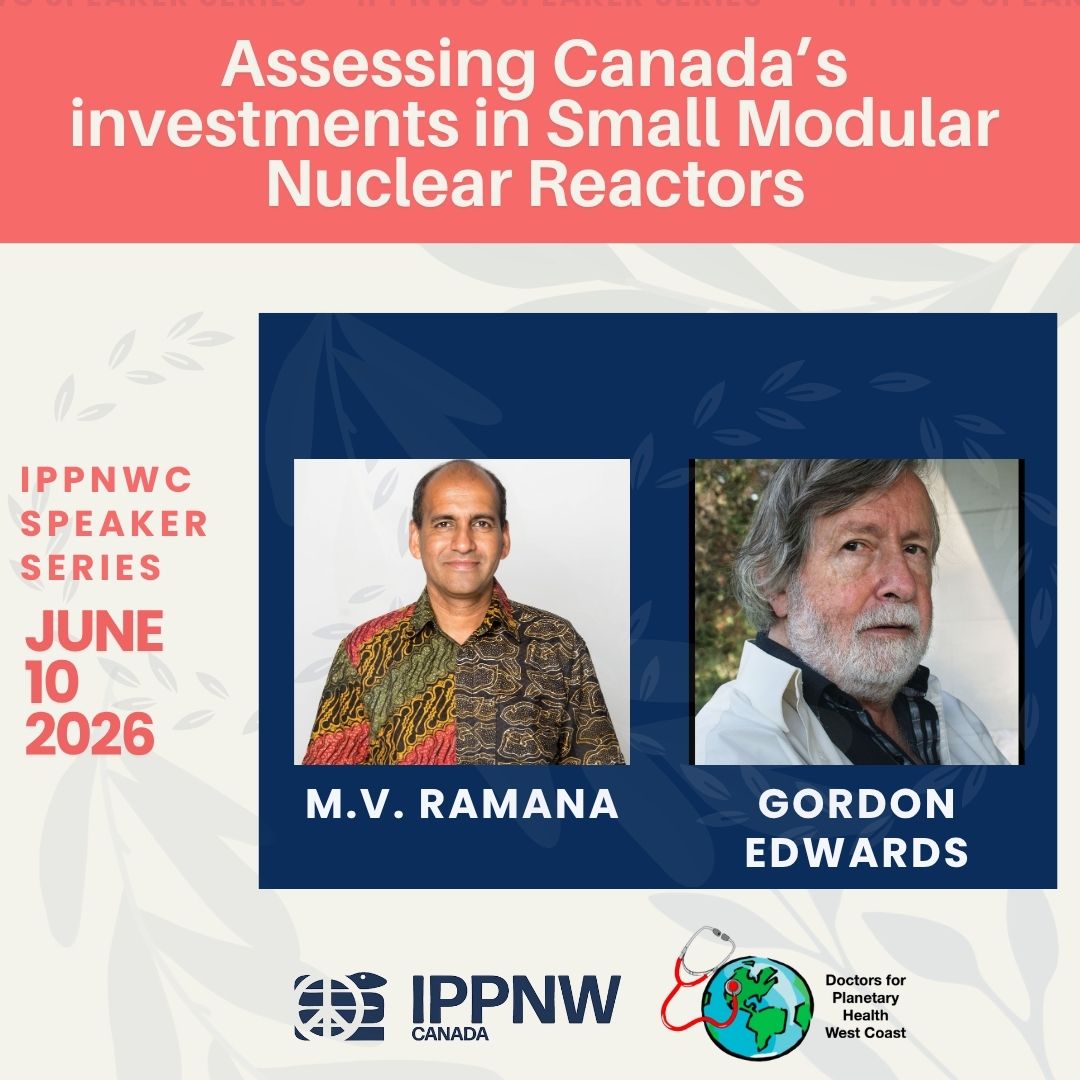
10 June – Assessing Canada’s Investments in Small Modular Nuclear Reactors – https://zoom.us/meeting/register/IiqHA5feRhaEBycOLNTJlA#/registration


Cuba Is Not a Failed State – It Is a Besieged State
PETITION: “Global Appeal to Endorse Palestinian Right of Return of Refugees”
To see nuclear-related stories in greater depth and intensity – go to https://nuclearinformation.wordpress.com
-
Archives
- June 2026 (79)
- May 2026 (306)
- April 2026 (356)
- March 2026 (251)
- February 2026 (268)
- January 2026 (308)
- December 2025 (358)
- November 2025 (359)
- October 2025 (376)
- September 2025 (257)
- August 2025 (319)
- July 2025 (230)
-
Categories
- 1
- 1 NUCLEAR ISSUES
- business and costs
- climate change
- culture and arts
- ENERGY
- environment
- health
- history
- indigenous issues
- Legal
- marketing of nuclear
- media
- opposition to nuclear
- PERSONAL STORIES
- politics
- politics international
- Religion and ethics
- safety
- secrets,lies and civil liberties
- spinbuster
- technology
- Uranium
- wastes
- weapons and war
- Women
- 2 WORLD
- ACTION
- AFRICA
- Atrocities
- AUSTRALIA
- Christina's notes
- Christina's themes
- culture and arts
- Events
- Fuk 2022
- Fuk 2023
- Fukushima 2017
- Fukushima 2018
- fukushima 2019
- Fukushima 2020
- Fukushima 2021
- general
- global warming
- Humour (God we need it)
- Nuclear
- RARE EARTHS
- Reference
- resources – print
- Resources -audiovicual
- Weekly Newsletter
- World
- World Nuclear
- YouTube
-
RSS
Entries RSS
Comments RSS
 nuclear-news