Nuclear Waste Disposal System: Great Idea?
Nuclear Waste Disposal System: Great Idea?
INVENTOR SPOT by Cosetta 31 Dec 08 The nuclear waste disposal system known surreptitiously as Patent US 6846967 provides a means for disposing of nuclear waste which includes filling steel containers with nuclear waste and then dropping the containers into the sea in the path of an undersea volcano. The volcano in turn pours lava onto the sea bed with the toxic substances, which the inventor swears are safe to put in the ocean and will not harm the environment The question is: What if he is wrong?…………………The attempt to challenge this important problem is noble and important. Nuclear wastes are fast becoming a growing menace to humanity and the environment and this idea is not the first to address it nor will it be the last. (It is, however, probably the silliest to come along.)The process begins with mixing the nuclear waste with a molten substance (lead). But alas, where does it end? What if the radioactive containers are dumped according to the inventor’s instructions and there’s not quite enough lava to hide the evidence? There’s no way to control that, ut the inventor says that in that event:
“If the lava flow is deemed inadequate, high explosives may be used to increase the lava flow by breaking the volcano walls.”
I don’t know about you, but to my ebbing and flowing sense of paranoia, it seems that one disaster is causing another that has already started and needs no additional help
Tags: nuclear, antinuclear, radioactive, uranium
The Goldilocks Problem – Renewable Energy
The Goldilocks Problem
RENEWABLE ENERGY WORLD by Tam Hunt, Community Environmental Council December 30, 2008 “…………….Regarding the goldilocks problem of renewable energy, it’s important to be aware of the costs and feasibility of the various market segments. I divide the renewable energy market into three segments: small-scale (one megawatt (MW) and less); medium-scale (one to twenty MW); and large-scale (above 20 MW)………..
The advantage of small-scale renewables like rooftop solar photovoltaics is that they can be built relatively quickly due to fewer permitting hurdles. They also take advantage of rooftops or parking lots, so don’t require disturbing large amounts of land. Even though there are still permitting problems in many jurisdictions, conditions have improved remarkably in recent years. At the same time, the general public has become more tolerant of seeing solar panels on rooftops. And installers have become more adept at installing small installations tastefully.
The primary downside to small-scale renewables is that they are often still relatively expensive. It also requires a lot of small-scale renewables to add up to a large-scale impact in terms of climate change mitigation or energy independence……………………So what should policymakers do? Which size is “just right”? Again, we need all the renewable energy we can get – and quickly. So while the answer does depend on many facts specific to each case, the complete answer is that no size is just right — we need them all. But we should also keep in mind that there are tradeoffs for each market segment.
The Goldilocks Problem – Renewable Energy World
Tags: renewables
Head-to-toe executive physicals get their own checkup
Head-to-toe executive physicals get their own checkup
Quality health care or snake oil for VIPs? The Montreal Gazette By EVRA TAYLOR LEVY & EDDY LANGDecember 30, 2008 – “……………………Executive physicals that include total body CT scans – which have no proven benefit but subject patients to a significant dose of radiation – may, several years down the road, increase the risk of the very cancers that the test was trying to detect.
Head-to-toe executive physicals get their own checkup
Tags: nuclear, antinuclear, radioactive, uranium
Real change: Take an axe to U.S. budget | mansfieldnewsjournal.com | Mansfield News Journal
Real change: Take an axe to U.S. budget Mansfield News Journal By Ryan Alexander • Minuteman Media • December 30, 2008 The watchword for the recent election was “change.” Considering the mandate for change and soaring costs of a sight-unseen stimulus package, we have listed a few suggestions for agencies that the new administration and Congress should target for reform and increased accountability……………………
Department of Energy
DOE’s Loan Guarantee Program is currently slated to dole out $38.5 billion in loan guarantees to high risk projects like nuclear reactors. The Congressional Budget Office found nuclear loan guarantees have a 50 percent default rate and GAO has warned DOE is not prepared to administer the multi-billion dollar program.
It’s also time for DOE to put the final stake in its international initiative to expand nuclear power and commercially reprocess nuclear waste. Known as Global Nuclear Energy Partnership (GNEP) the program began in 2006 and has continuously been riddled with controversy for its high costs and sketchy details. The National Academy of Sciences has estimated that reprocessing existing domestic nuclear waste could cost more than $100 billion dollars.
Real change: Take an axe to U.S. budget | mansfieldnewsjournal.com | Mansfield News Journal
Tags: nuclear, antinuclear.radioactive, uranium
Country needs Kiwi culture not consumer culture
Country needs Kiwi culture not consumer culture
The Gisborne Herald Peter Jones 31 December 2008 Nuclear power is probably only needed if NZ is going to remain mindlessly addicted to the compounding growth theory that is being blasted out of the water right now.We only need nuclear power if we keep importing consumers and destroying our social values by trying to perpetuate a consumer culture.
We want Kiwi culture not consumer culture…………………Spend your way out of trouble. Yes, another inspired concept doing the rounds at the moment.
So why not have nuclear power. Then the Maori and Pakeha culture and values can be resigned to history
Country needs Kiwi culture not consumer culture – The Gisborne Herald
Tags: energy
bt – Full Story
Alternative Energy Goes Mainstream
Business Today By James Chester January 2009
Egypt and a number of other countries in North Africa are not only capable of generating enough electricity using PV cells to supply all their domestic needs, but many claim, enough for the world.While it is difficult to imagine the world’s energy companies embracing energy from one source, the Egyptian government does recognize the potential to export electricity.“We are looking forward to integration with the Mediterranean countries to be an exporting country. We have endless resources of solar energy and [] we target to interconnect, actually establishing a super high voltage DC connection [from the south Mediterranean to Europe] but we don’t want to wait for this,” says El Salmawy. A lot depends on the transmission company’s capacity and Egypt’s relations with its Nile basin neighbors. If capacity can be increased then Egypt can position itself as an energy transit country, claims El Salmawy, as well as exporting to its neighbors and Europe: “I am fully optimistic for renewable energy but we need to come up with the proper mechanism and be liberal in thinking, dynamic, more open for new ideas.”………….
……….While Egypt only contributes 0.57% of greenhouse gas emissions worldwide, low-lying areas of the country are likely to be affected severely by sea-level rises caused by global warming. Up to now, clean energy has just not been cheap enough. Now, however, there is no excuse for not investing in renewables. The small companies and research centers that have invested so much time and money in solar, wind and other alternative energy technologies are finally getting some financial reward for their work. Unlike countries in the region like Saudi Arabia and Libya that rely heavily on massive fossil fuel reserves, Egypt’s comparatively small reserves provide incentive to find energy from other sources.
Tags: renewables
Indecision and delay characterized Bush’s OSHA
Indecision and delay characterized Bush’s OSHA chron.com By R. JEFFREY SMITH Associated Press
Dec. 29, 2008 – “……………..during the Bush administration, as political appointees ordered the withdrawal of dozens of workplace health regulations, slow-rolled others, and altered the reach of its warnings and rules in response to industry pressure. The result is a legacy of unregulation common to several health-protection agencies under Bush………………………In the spring, political appointees quietly scrapped work on another long-pending regulation of hazardous exposure to ionizing radiation in mailrooms, food warehouses, and hospitals and airports. It cited “resource constraints and other priorities” — the same reason officials gave for withdrawing more than a dozen regulatory proposals in 2001………………….Under Bush, the agency was reluctant even to issue health warnings that fall short of regulations, if doing so might make it easier for workers to collect damages for diseases.
Indecision and delay characterized Bush’s OSHA | Business | Chron.com – Houston Chronicle
No such thing as clean coal
Clean Coal? There’s No Such Thing – North Star
Eric
Baerren
December 29, 2008 “……………………………The term “clean coal” is cleverly designed. It’s supposed to seduce people into thinking that coal – the dirtiest source of energy we have – can be scrubbed and made as clean and fresh as a sunny spring afternoon……………………..
The last few months, coal and energy producers have attempted to put lipstick on the coal pig. They’ve pitched new and innovative ways to clean up coal’s image, almost all of which have involved finding ways to address the problems of coal’s waste released into the air.
Just as you can’t put lipstick on a pig, there is no clean way to burn coal. None of the ways proposed to address coal’s emissions have been made to work anywhere on the kind of large scale necessary to meet the nation’s energy needs, and none of them begin to approach the issue of what to do about the solid waste.
Solid waste helped give nuclear energy a bad name in the United States (although cost overruns, constant design changes and the uncertainty of return on investment killed the industry), and environmentalists rightly say that going nuclear means finding some long-term solution to the waste. The same ought to apply to coal plants,……………..
The Obama Administration could simply answer the question by not allowing any more traditional coal-fired plants to be built. The authority to regulate carbon dioxide as a pollutant was handed to the Bush Administration by the U.S. Supreme Court, and the Obama Administration could overturn some of the enforcement rules that have prevented the enactment of a climate change policy. It could be that President Obama’s approach to coal emissions is to let America’s coal-fired power plant fleet die of old age.
North Star Writers Group – Syndicated Commentary: Opinion, Humor and Features
Nuclear Material Disposal an Issue
Nuclear Material Disposal an Issue
The Intelligencer News register By The Intelligencer December 29, 2008
Among the most important – and politically sensitive – questions facing President-elect Barack Obama and the new Congress is disposal of nuclear waste. Because the matter is so controversial, the current Congress and president have not had the courage to address it.
Not much was said about the matter during the presidential election campaign earlier this year – again, because it is such a political hot potato.
The problem involves nuclear waste that comes from a variety of facilities, ranging from health care institutions to nuclear power plants. As matters stand, the radioactive waste is being stored “temporarily” at hundreds of sites throughout the country. The danger in allowing that to continue is obvious. Just one possibility, that terrorists could get their hands on some of the waste and use it as a weapon of mass destruction, is worrisome. Though the waste could not be used to make an atomic device, it could be used in a “dirty bomb” that could spread radioactive material in a wide area…………………….Once Obama takes office, he should make it a priority to either proceed with Yucca Mountain or find another suitable alternative. Doing nothing is simply not prudent.
Nuclear Material Disposal an Issue – News, Sports, Jobs – The Intelligencer / Wheeling News-Register
Nuclear Material Disposal an Issue
Nuclear Material Disposal an Issue
The Intelligencer News register By The Intelligencer December 29, 2008
Among the most important – and politically sensitive – questions facing President-elect Barack Obama and the new Congress is disposal of nuclear waste. Because the matter is so controversial, the current Congress and president have not had the courage to address it.
Not much was said about the matter during the presidential election campaign earlier this year – again, because it is such a political hot potato.
The problem involves nuclear waste that comes from a variety of facilities, ranging from health care institutions to nuclear power plants. As matters stand, the radioactive waste is being stored “temporarily” at hundreds of sites throughout the country. The danger in allowing that to continue is obvious. Just one possibility, that terrorists could get their hands on some of the waste and use it as a weapon of mass destruction, is worrisome. Though the waste could not be used to make an atomic device, it could be used in a “dirty bomb” that could spread radioactive material in a wide area…………………….Once Obama takes office, he should make it a priority to either proceed with Yucca Mountain or find another suitable alternative. Doing nothing is simply not prudent.
Nuclear Material Disposal an Issue – News, Sports, Jobs – The Intelligencer / Wheeling News-Register
Business Spectator – Ending the energy binge
Business Spectator
by Keith OrchisonPosted 29 Dec 2008 11:22 AM Ending the energy binge While much of the debate on Australian carbon abatement focuses on the use of renewable energy versus fossil fuels to make electricity, one of the most important developments over the next 10-12 years will be how users manage power consumption.The latest Federal government report, released in mid-December by the Australian Bureau of Agricultural & Resource Economics (ABARE), shows both how business, which accounts for 72 percent of electricity demand, has made some gains and how complex the issue is………………… without the efficiency gains since 1989-90, Australian manufacturing, mining, construction, services and agriculture would have used 759 PJ more energy by 2005-06.The gains would be greater if the mining and petroleum sector had been able to follow the trend – ABARE reports that its energy intensity has risen as miners dig deeper and exploit lower grade ores.
British secretly dumped Maralinga plutonium in ocean | The Courier-Mail
British secretly dumped Maralinga plutonium in ocean Courier Mail
December 29, 2008
………………………..Just how much radioactive waste resulted from the British series of tests at Maralinga, in South Australia, and how the then British government disposed of it has always been a mystery. However, declassified British Government documents to be released publicly today under the 30-year rule reveal for the first time the plutonium’s final resting place was probably the ocean floor……………………………….At the height of the nuclear debate in Australia in 1978 the British agreed to clean the site they contaminated between 1955 and 1963, predominantly because they wanted to win favour with then prime minister Malcolm Fraser (Liberal Party) to secure exports of mined uranium to meet their growing energy needs.
They agreed to secretly remove half a kilogram of plutonium and about 20kg of radioactive waste, intermingled with debris, on condition its final resting place was never publicly revealed and Australia never repeated its clean-up request.
“The Ministry of Defence considers that, however carefully presented, a reference to disposal of plutonium at sea could provoke opposition, eg from the Greenpeace movement, to our sea-dumping program,” one confidential memo seen by The Courier-Mail states.
“It will also focus public attention on sea dumping at a time when we are likely to face pressure from the United States to reduce our sea-dumping activities, which are internationally supervised.” The British authorities demanded their Australian counterparts maintain maximum secrecy over the issue and reminded them they were under no legal obligation to clean up their contaminated work in Australia.
Another clean-up involving 350,000 cubic metres of soil was conducted in 2000 at a cost of $110 million.
Hundreds of servicemen and their families from Britain and Australia have sought compensation for exposure and a range of contracted cancers.
British secretly dumped Maralinga plutonium in ocean | The Courier-Mail
Bomb survivors seek end to nuclear arms – Breaking News – National – Breaking News
Bomb survivors seek end to nuclear arms The Age December 29, 2008 Ikeda Michiaki closes his eyes and clenches his fist as he remembers the darkness that descended upon Nagasaki after an atomic bomb was dropped on the Japanese city in 1945.
Mr Michiaki, 69, remembers waking in the wreckage of the building and running past mangled bodies as he tried to escape to a nearby mountain.
Dark clouds covered the city and large drops of black rain fell from the sky………………”When I got out to the yard, what I saw was many people who had been killed and their eyeballs were literally popping out of their faces … and all parts of their bodies were puffed and swollen to over twice their normal size.”………….
The Nagasaki bombing killed about 80,000 people, three days after the bombing of Hiroshima killed just as many.
Mr Michiaki was in Sydney with other Hibakusha – or atomic bomb survivors – on a stop-off as part of a three-month global sea voyage to share their experiences and oppose nuclear weapons.
They presented a letter to the federal government praising Australia for its decision to establish the International Commission on Nuclear Non-Proliferation and Disarmament.
The letter urged Australia to lead other countries in the abolition of nuclear weapons……………………..
Western Australian Greens senator Scott Ludlam, who travelled with the survivors for five days, said the government needed to remove any mention of nuclear weapons from its security policy.
“We still have nuclear weapons embedded in our security policy. We lie under the United States’ nuclear umbrella,” Mr Ludlam told reporters.
“Every time a warship comes into an Australian port carrying nuclear weapons, that is one instance of US nuclear weapons being part of our security policy.”
Bomb survivors seek end to nuclear arms – Breaking News – National – Breaking News
Rights push by Indigenous South Australians – ABC News (Australian Broadcasting Corporation)
Rights push by Indigenous South Australians
Calls for an an Indigenous bill of rights have been supported by the Aboriginal Legal Rights Movement (ALRM).
Kaurna elders used Sunday’s Proclamation Day anniversary in South Australia to call on government to honour a promise made in 1836 to establish a treaty……………………….CEO of the Aboriginal Legal Rights Movement, Neil Gillespie, says the Government is failing to provide Indigenous people with access to the basic human rights outlined in international conventions.
“Australia, except for the declaration of rights for Indigenous people is, as I understand it, a signatory to these international conventions and yet we are continuing to fail in meeting our obligations to the extent that ALRM has lodged a formal complaint against both the federal and state governments for their continued breaching of basic human rights for Aboriginal people,” he said.
Rights push by Indigenous South Australians – ABC News (Australian Broadcasting Corporation)
Bill levies waste fee on haulers
Bill levies waste fee on haulers
By JANESE HEAVIN of the Columbia Tribune’s staff December 27, 2008 “………………….Sen.-elect Kurt Schaefer, R-Columbia, has pre-filed a bill that would charge trucking companies $1,800 to haul a container of radioactive wastes through the state and $1,300 for every load transported via rail. The money would be used to reimburse the Missouri State Highway Patrol, which, by law, must escort rigs that ship radioactive waste.
Bill levies waste fee on haulers
Tags: nuclear
1 This Month
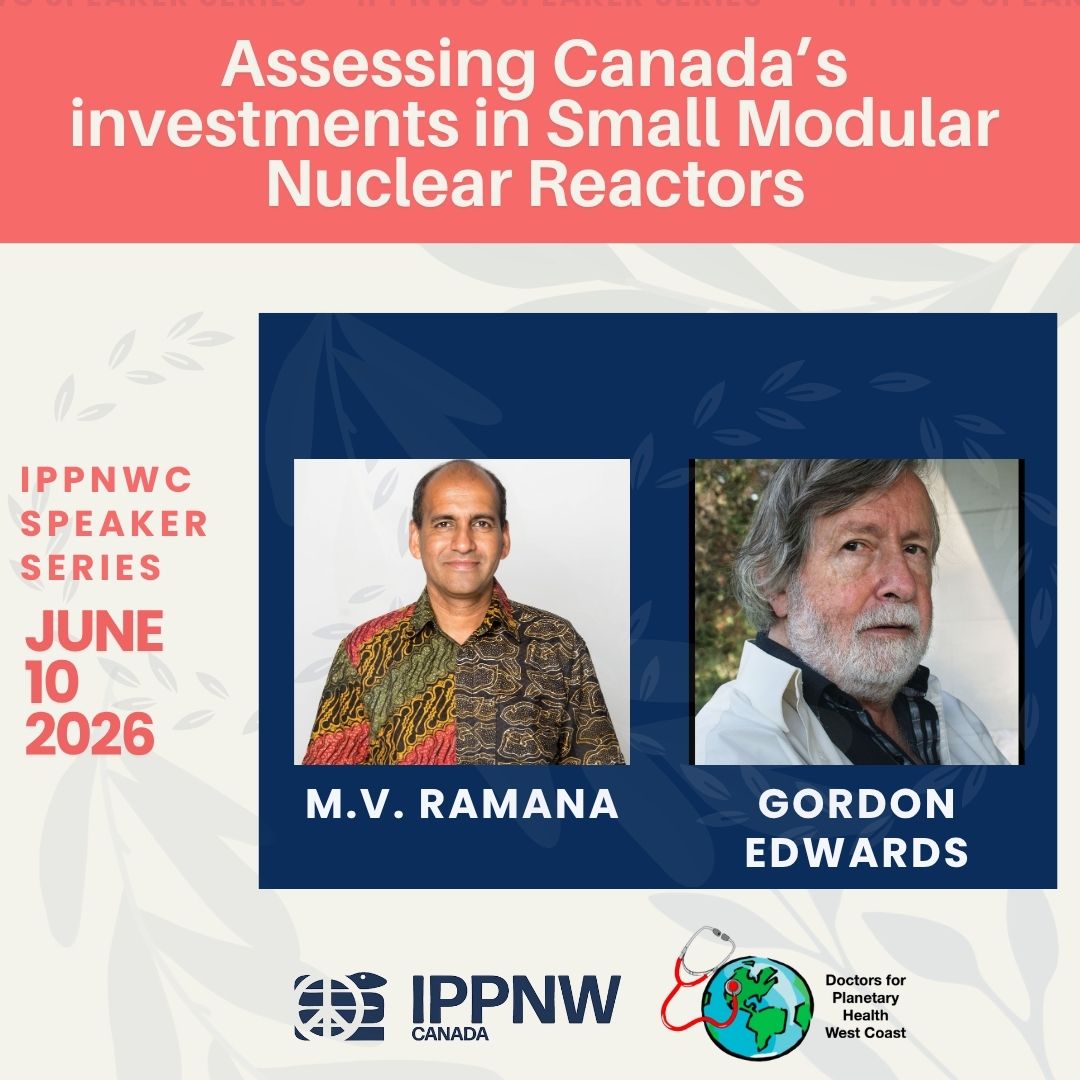
10 June – Assessing Canada’s Investments in Small Modular Nuclear Reactors – https://zoom.us/meeting/register/IiqHA5feRhaEBycOLNTJlA#/registration


Cuba Is Not a Failed State – It Is a Besieged State
PETITION: “Global Appeal to Endorse Palestinian Right of Return of Refugees”
To see nuclear-related stories in greater depth and intensity – go to https://nuclearinformation.wordpress.com
-
Archives
- June 2026 (79)
- May 2026 (306)
- April 2026 (356)
- March 2026 (251)
- February 2026 (268)
- January 2026 (308)
- December 2025 (358)
- November 2025 (359)
- October 2025 (376)
- September 2025 (257)
- August 2025 (319)
- July 2025 (230)
-
Categories
- 1
- 1 NUCLEAR ISSUES
- business and costs
- climate change
- culture and arts
- ENERGY
- environment
- health
- history
- indigenous issues
- Legal
- marketing of nuclear
- media
- opposition to nuclear
- PERSONAL STORIES
- politics
- politics international
- Religion and ethics
- safety
- secrets,lies and civil liberties
- spinbuster
- technology
- Uranium
- wastes
- weapons and war
- Women
- 2 WORLD
- ACTION
- AFRICA
- Atrocities
- AUSTRALIA
- Christina's notes
- Christina's themes
- culture and arts
- Events
- Fuk 2022
- Fuk 2023
- Fukushima 2017
- Fukushima 2018
- fukushima 2019
- Fukushima 2020
- Fukushima 2021
- general
- global warming
- Humour (God we need it)
- Nuclear
- RARE EARTHS
- Reference
- resources – print
- Resources -audiovicual
- Weekly Newsletter
- World
- World Nuclear
- YouTube
-
RSS
Entries RSS
Comments RSS
 nuclear-news